Chose Joomla!
Joomla is more of a developer's CMS. It is much more customizable than WordPress.

| Product | Rating | Most Used By | Product Summary | Starting Price |
|---|---|---|---|---|
 Joomla | N/A | Joomla! is a free and open source content management system used to publish web content. Included features are page caching, RSS feeds, printable versions of pages, news flashes, blogs, polls, a search function, and support for language internationalization. | N/A | |
 Plone | N/A | Plone is a free and open source content management system built on top of the Zope application server. Plone can be used for any kind of website, including blogs, internet sites, webshops, and internal websites. | N/A | |
 Progress Sitefinity | N/A | Progress Sitefinity is a content management and customer analytics platform. It supports content management, tailored marketing, multi-channel management, and ecommerce sites. | N/A |
| Joomla! | Plone | Progress Sitefinity | ||||||||||||||||||||||
|---|---|---|---|---|---|---|---|---|---|---|---|---|---|---|---|---|---|---|---|---|---|---|---|---|
| Editions & Modules | No answers on this topic | No answers on this topic | No answers on this topic | |||||||||||||||||||||
| Offerings |
| |||||||||||||||||||||||
| Entry-level Setup Fee | No setup fee | No setup fee | No setup fee | |||||||||||||||||||||
| Additional Details | — | — | — | |||||||||||||||||||||
| More Pricing Information | ||||||||||||||||||||||||
| Joomla! | Plone | Progress Sitefinity | |
|---|---|---|---|
| Considered Multiple Products | Joomla |  Plone  Mauricio Quiroga-Pascal Ortega Founder & CEO Chose Plone  Ronnie Stevens Owner Chose Plone Plone is much harder to learn then Wordpress. Development in Wordpress is learnt in day's, where development in Plone really takes years to get to the full depth. That said, once you're able to develop in Plone, is it a rock solid system, with readable code. In my experience … | Progress Sitefinity  Dave Johnson Sr Marketing Communications Manager Chose Progress Sitefinity  Tony Giruzzi Coordinator of Network Support Chose Progress Sitefinity Two-thirds of our websites use Sitefinity. More will be added soon as a work in progress.  Paul Immediato Sr. Associate - Project Management and Information Technology Chose Progress Sitefinity All continent management systems are built to do basically, the same thing...manage content. When Trellist makes a CMS recommendation to a client, it is primarily based on the project requirements, how easy it is to customize the CMS, how intuitive it is for the content …  Mohammad Elsheimy Solution Developer Chose Progress Sitefinity As it is .NET-based it opens the door for lots of implementations and third-party tools for us. |
| Joomla! | Plone | Progress Sitefinity | |||||||||||||||||||||||||||||||||||
|---|---|---|---|---|---|---|---|---|---|---|---|---|---|---|---|---|---|---|---|---|---|---|---|---|---|---|---|---|---|---|---|---|---|---|---|---|---|
| Security |
| ||||||||||||||||||||||||||||||||||||
| Platform & Infrastructure |
| ||||||||||||||||||||||||||||||||||||
| Web Content Creation |
| ||||||||||||||||||||||||||||||||||||
| Web Content Management |
|
| Joomla! | Plone | Progress Sitefinity | |
|---|---|---|---|
| Small Businesses |  ManageWP Score 10.0 out of 10 | ManageWP Score 10.0 out of 10 |  Bloomreach - The Agentic Platform for Personalization Score 8.9 out of 10 |
| Medium-sized Companies |  RWS Tridion Sites Score 9.0 out of 10 | RWS Tridion Sites Score 9.0 out of 10 | RWS Tridion Sites Score 9.0 out of 10 |
| Enterprises | RWS Tridion Sites Score 9.0 out of 10 | RWS Tridion Sites Score 9.0 out of 10 | RWS Tridion Sites Score 9.0 out of 10 |
| All Alternatives | View all alternatives | View all alternatives | View all alternatives |
| Joomla! | Plone | Progress Sitefinity | |
|---|---|---|---|
| Likelihood to Recommend | 8.2 (75 ratings) | 10.0 (13 ratings) | 7.1 (171 ratings) |
| Likelihood to Renew | 10.0 (28 ratings) | 10.0 (11 ratings) | 7.2 (7 ratings) |
| Usability | 8.1 (14 ratings) | 10.0 (1 ratings) | 8.9 (10 ratings) |
| Availability | 9.9 (2 ratings) | 10.0 (1 ratings) | 8.2 (1 ratings) |
| Performance | 7.8 (2 ratings) | 10.0 (2 ratings) | 5.5 (1 ratings) |
| Support Rating | 10.0 (4 ratings) | 8.0 (1 ratings) | 9.0 (7 ratings) |
| In-Person Training | - (0 ratings) | 10.0 (1 ratings) | - (0 ratings) |
| Online Training | 8.0 (2 ratings) | 10.0 (1 ratings) | - (0 ratings) |
| Implementation Rating | 8.7 (3 ratings) | - (0 ratings) | 4.6 (4 ratings) |
| Configurability | - (0 ratings) | - (0 ratings) | 5.5 (1 ratings) |
| Ease of integration | - (0 ratings) | 10.0 (1 ratings) | - (0 ratings) |
| Product Scalability | 9.9 (3 ratings) | 10.0 (1 ratings) | 4.5 (1 ratings) |
| Vendor post-sale | - (0 ratings) | - (0 ratings) | 6.4 (1 ratings) |
| Vendor pre-sale | - (0 ratings) | - (0 ratings) | 5.5 (1 ratings) |
| Joomla! | Plone | Progress Sitefinity | |
|---|---|---|---|
| Likelihood to Recommend | The Joomla Project
| Plone
 Fulvio Casali Principal - Soliton Consulting | Progress Software Corporation
 Justin Cawthorne Senior Project Manager |
| Pros | The Joomla Project
| Plone
Ronnie Stevens Owner | Progress Software Corporation
 Jochem Bökkers Sitefinity lead |
| Cons | The Joomla Project
 Lisa Keyser Owner | Principal | Plone
 Kelv Cutler Software Engineer | Progress Software Corporation
|
| Likelihood to Renew | The Joomla Project
 Leontine Vandermeer Owner | Plone
 Rikupekka Oksanen IT Specialist | Progress Software Corporation
|
| Usability | The Joomla Project
 Rita Lewis Freelance Web Designer and Content Strategist | Plone
Rikupekka Oksanen IT Specialist | Progress Software Corporation
|
| Reliability and Availability | The Joomla Project No answers on this topic | Plone
Rikupekka Oksanen IT Specialist | Progress Software Corporation
 Kelly Martinez Systems Manager / Application Developer |
| Performance | The Joomla Project
 James Fauria Webmaster \ Web Developer for the City of Pomona | Plone
| Progress Software Corporation
Kelly Martinez Systems Manager / Application Developer |
| Support Rating | The Joomla Project
 Jen Garfinkel-Canseco Owner - Web Designer/Developer/Marketer | Plone
Rikupekka Oksanen IT Specialist | Progress Software Corporation
|
| In-Person Training | The Joomla Project No answers on this topic | Plone
Rikupekka Oksanen IT Specialist | Progress Software Corporation No answers on this topic |
| Online Training | The Joomla Project
 Johann Joubert Owner | Plone
Rikupekka Oksanen IT Specialist | Progress Software Corporation No answers on this topic |
| Implementation Rating | The Joomla Project
James Fauria Webmaster \ Web Developer for the City of Pomona | Plone No answers on this topic | Progress Software Corporation
|
| Alternatives Considered | The Joomla Project
 Fernanda Ministerio Especialista de Desenvolvimento Industrial | Plone
Mauricio Quiroga Founder & CEO | Progress Software Corporation
 Alex Hood CTO |
| Scalability | The Joomla Project No answers on this topic | Plone
Rikupekka Oksanen IT Specialist | Progress Software Corporation
Kelly Martinez Systems Manager / Application Developer |
| Return on Investment | The Joomla Project
 Miles Szkoda Web Content Manager | Plone
 Gracie Wardin Social Media Intern | Progress Software Corporation
 Julia Spangler Creative Team Supervisor |
| ScreenShots | Progress Sitefinity Screenshots    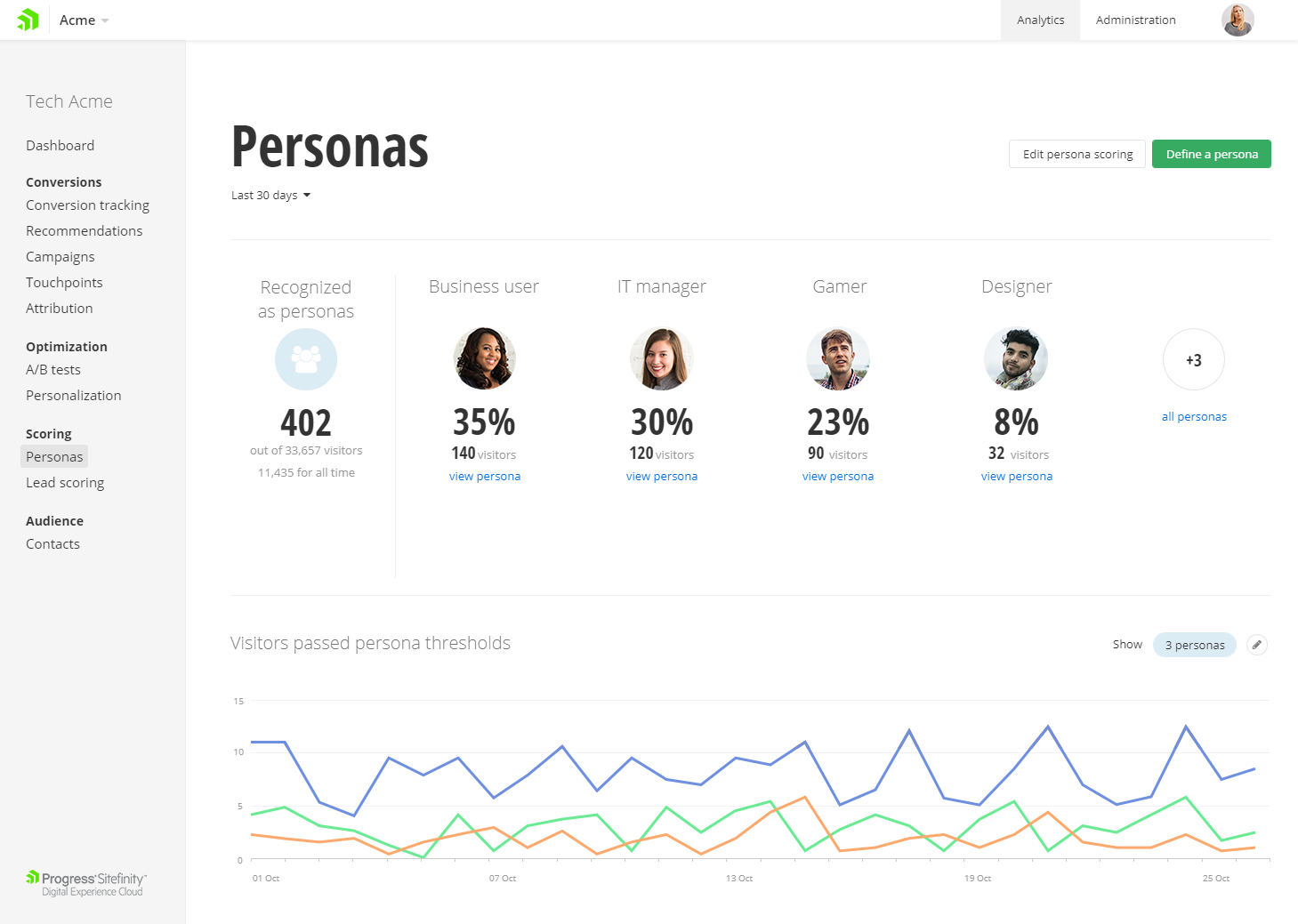 |