Magic xpa Application Platform is an application server and infrastructure from Magic Technologies in California.
N/A
.NET
Score 8.6 out of 10
N/A
Microsoft's .Net is an open source, freeware application infrastructure.
N/A
NGINX
Score 9.1 out of 10
Mid-Size Companies (51-1,000 employees)
NGINX, a business unit of F5 Networks, powers over 65% of the world's busiest websites and web applications. NGINX started out as an open source web server and reverse proxy, built to be faster and more efficient than Apache. Over the years, NGINX has built a suite of infrastructure software products o tackle some of the biggest challenges in managing high-transaction applications. NGINX offers a suite of products to form the core of what organizations need to create…
In our experience, the product performs really well when interfacing systems with ERP's through SQL server database tables, but we've even made some interfaces with the web service functionality included with the magic xpi integration platform. Also, we've made some SAP Business One - SAP Business One interfaces, for copying information from one company to another and even between two different ERP systems.
.NET is well suited for any general purpose solution to a business problem, though if we are talking strictly the framework version - you have to be more or less tied to Microsoft Windows to run it. If this isn't a problem, then it will be able to address and solve any programming project you have.
Nginx is well-suited for any web server scenarios, such as web applications, backend or reverse proxy for both application and HTTP requests, and distribution. It is less appropriate for Windows-based applications that run directly on a Windows Server host. In any case, it is very easy to manage, through separate conf files for each application or site you want to host with it.
Although the scenarios may be online, the main service usually freezes and the processes can't transact any data. With a single restart of the service, the processes will be functioning again.
The support for more applications would be nice, even though there is a nice number of them. Most of the main applications in the market are supported.
The licensing for the software may be a little confusing; you can't buy individual licenses as they come in packages of four.
.NET is heavily Microsoft Windows oriented, and while .NET core tried to resolve that with MacOS and Linux support, .NET Core is still waiting for wider adoption.
While free for small projects, additional features for big projects can be a little expensive.
Can be resource-heavy upon deployment. We continuously have our more senior staff optimize the code of our junior developers for performance. Other languages are a little bit more forgiving in comparison.
Customer support can be strangely condescending, perhaps it's a language issue?
I find it a little weird how the release versions used for Nginx+ aren't the same as for open source version. It can be very confusing to determine the cross-compatibility of modules, etc., because of this.
It seems like some (most?) modules on their own site are ancient and no longer supported, so their documentation in this area needs work.
It's difficult to navigate between nginx.com commercial site and customer support. They need to be integrated together.
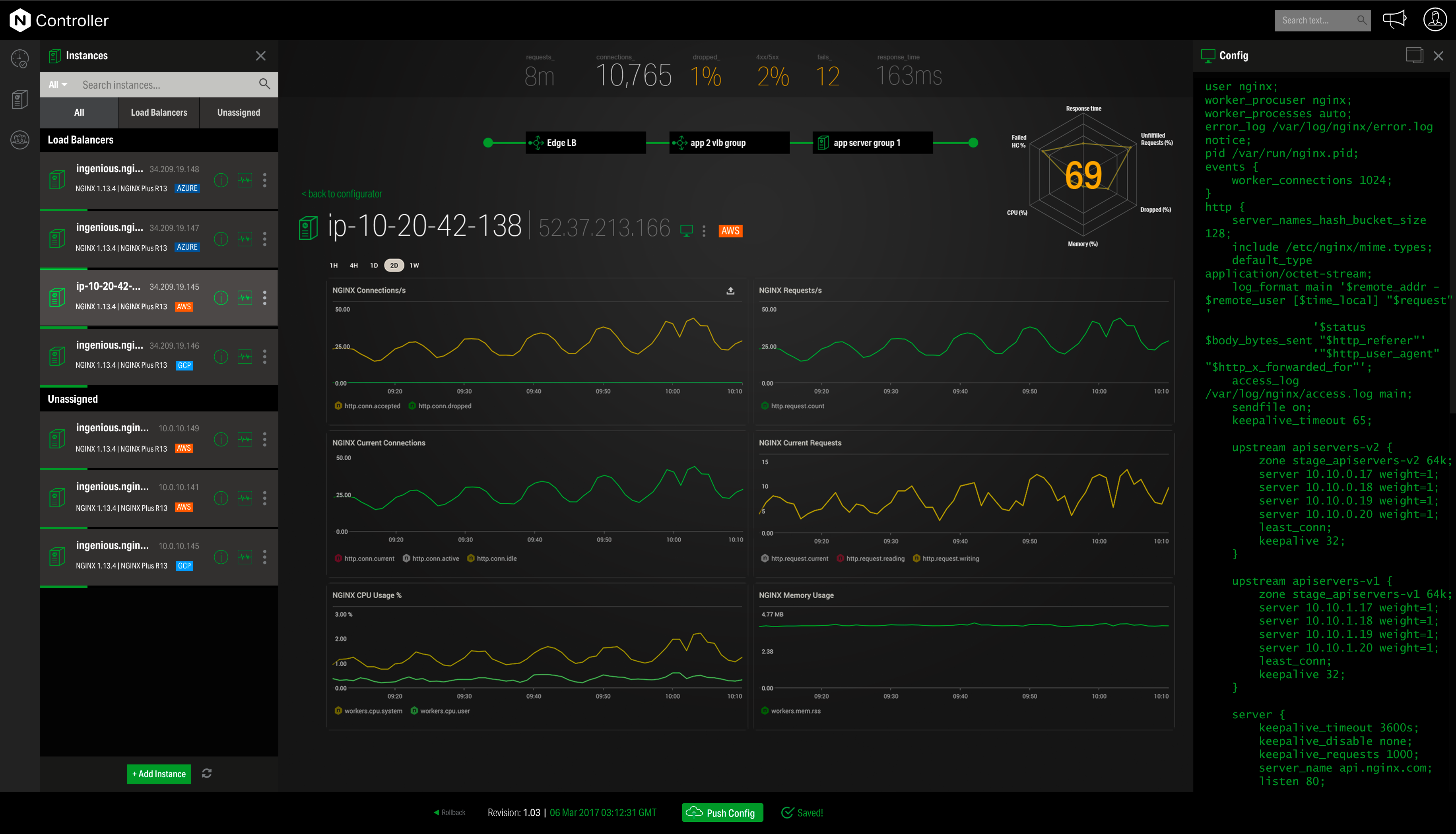
I'd love to see more work done on nginx+ monitoring without requiring logging every request. I understand that many statistics can only be derived from logs, but plenty should work without that. Logging is not an option in many environments.
The full .NET Framework is an amazing thing and is very robust. We have used it to create console apps, Windows apps, and online apps. When coupled with Visual Studio, development, testing, building, and deploying our applications has become 100 times easier as compared to doing those things manually before. The automation of this process has helped us push out changes to our applications faster to adapt to the ever-changing business requirements.
This tool is really easy to use and configure. Consumes very less system resources. It is highly modular and configurable. You can easily use it with other tools like certbot for SSLs. You can configure basic security with configuration and headers
You don't often need to reach out to Microsoft for .NET support. If you do, there are forums and websites that have active Microsoft support folks where you can provide feedback or get help. Microsoft support in general is quite good as well, but not cheap. The best support is from the community like StackOverflow.
Community support is great, and they've also had a presence at conferences. Overall, there is no shortage of documentation and community support. We're currently using it to serve up some WordPress sites, and configuring NGINX for this purpose is well documented.
Honestly, we have only used and evaluated magic xpi/xpa platforms because of the recommendation of our SAP Business One main supplier, who has previously used the platform for their developments. So far, we have no regrets with the acquisition of the platform and we are very happy with its performance.
The .NET platform has a much longer and broader history than Laravel, so we chose to go with it as the support will be far superior. Additionally, Laravel is tied to PHP, while you can use multiple different languages in .NET. The additional flexibility that .NET provides in the range of types of applications you can build with it sealed the deal.
I have found that [NGINX] seems to perform better throughout the years with less issues although I've used Apache more. I would definitely recommend [NGINX] for any high volume site and I've seen this to usually be the case from most provided web hosts who will pick [NGINX] over alternatives
The implementation time for this kind of projects has been greatly reduced.
Certifying an In-House resource in the Magix xpi and xpa platforms is probably the best option, considering all of the projects that can be developed in the future without the need of an external consultant.
The processes that have been automatized with the Magic xpi platform helped reduce human error and the time those processes took to finish.
There are few factors we needed for our custom development. Below are each of them. We were able to get a satisfactory outcome for each of these factors which made .NET platform a very good choice in developing enterprise applications.
Reusability of codes- Microsoft has given many re-usable codes and components in the framework to help developers do their job effortlessly. With the help of default features, developers can create end-to-end solutions and make the business operations more efficient. As codes and components are reusable, .NET reduces development time and if applications take less time to develop, they cost cheaper and you get faster return on investment.
Easy to maintain- Development cost is one time, but maintenance cost is incurring. .NET apps are easily maintainable, thanks to the configuration settings that can be modified without any need to rewrite the code.
Deployment is hassle free- Deploying software is always challenging and the most common problem developers face in this process is the existence of multiple DLLs. It’s hard to make sure that all DLLs will co-exist in the same machine. .NET framework solves this problem by allowing different versions of the same DLL to exist side-by-side on the same machine.
Security- .NET is one of the most secure web and application development frameworks available in the market. As it’s made by Microsoft, you can be absolutely sure about the security measurements. Hackers can never steal valuable data from your website or apps.
Cross platform friendly- What if you had developed an app for desktop and laptop computers and now after seeing the growth of mobile apps in the market, you want it in mobile version as well? You can easily develop an app that runs on the desktop and PDA without any issue. As you can re-use the codes and utilize the same development environment, your job becomes a lot simpler.
By using Nginx, we can host multiple web services on a single server, keeping our infrastructure costs lower.
Nginx maintains our HTTPS connections, allowing us to keep our promise to our customers that their data is safe in transit.
Due to Nginx's extremely low failure rate, our web addresses always return something meaningful, even when individual services go down. In sense, this means we are "always online" and allows us to maintain brand and support our customers even in the face of catastrophe.