MongoDB is an open source document-oriented database system. It is part of the NoSQL family of database systems. Instead of storing data in tables as is done in a "classical" relational database, MongoDB stores structured data as JSON-like documents with dynamic schemas (MongoDB calls the format BSON), making the integration of data in certain types of applications easier and faster.
$0.10
million reads
OCI
Score 8.1 out of 10
N/A
Oracle Cloud Infrastructure (OCI) is Oracles's infrastructure-as-a-service (IaaS) platform which combines the utility of public cloud with the granular control, security, and predictability of on-premises infrastructure.
N/A
SQLite
Score 8.0 out of 10
N/A
SQLite is an in-process library that implements a self-contained, serverless, zero-configuration, transactional SQL database engine. The code for SQLite is in the public domain and is thus free for use for any purpose, commercial or private. SQLite is one of the most widely deployed databases in the world.
N/A
Pricing
MongoDB
Oracle Cloud Infrastructure
SQLite
Editions & Modules
Shared
$0
per month
Serverless
$0.10million reads
million reads
Dedicated
$57
per month
No answers on this topic
No answers on this topic
Offerings
Pricing Offerings
MongoDB
OCI
SQLite
Free Trial
Yes
Yes
No
Free/Freemium Version
Yes
Yes
No
Premium Consulting/Integration Services
No
Yes
No
Entry-level Setup Fee
No setup fee
Optional
No setup fee
Additional Details
Fully managed, global cloud database on AWS, Azure, and GCP
—
—
More Pricing Information
Community Pulse
MongoDB
Oracle Cloud Infrastructure
SQLite
Considered Multiple Products
MongoDB
Verified User
Professional
Chose MongoDB
The flexible structure underlying MongoDB's construction is not found in other competitors; the ability to easily change the structure without affecting other stored documents. It is very ideal for projects that you cannot predict that the structure will change this way. Of …
MongoDB is probably the most famous NoSQL database of the moment. it has become one of the most promising startups. Some companies that currently use MongoDB are Foursquare or eBay. This type of database is designed to perform queries and aggregations on large amounts of data. …
MongoDB is the most complete database of NoSQL type. In my opinion, it has all the tools for a good development of a database. I have not had problems when using the application.
Right now we are evaluating the usage. Prima facie is that it will be game changer and we are supposed to start POC in next sprint. Can not put client details but on high level, clients are very excited to see if ML can predict areas of traction from where orders are created …
If asked by a colleague I would highly recommend MongoDB. MongoDB provides incredible flexibility and is quick and easy to set up. It also provides extensive documentation which is very useful for someone new to the tool. Though I've used it for years and still referenced the docs often. From my experience and the use cases I've worked on, I'd suggest using it anywhere that needs a fast, efficient storage space for non-relational data. If a relational database is needed then another tool would be more apt.
As per our usage Oracle Cloud Infrastructure for almost 6 years hosting 500 + customers I can say its well suited application for any small scale to larger scale application as it can handle that capacity and provide more reliable cloud service only if you need any messaging service like pub/sub or sqs better to consider other services.
SQLite is a lightweight and efficient database management system. With SQLite, performance increases as memory are added. It's reliable and well-tested before release. SQLite handles memory allocation and I/O errors gracefully. SQLite provides bug lists and code-change chronologies. All bugs are disclosed, and it's compatible with iOS, Android, MAC, and Windows. SQLite is open-source, allowing developers to tailor it to their specific needs.
Being a JSON language optimizes the response time of a query, you can directly build a query logic from the same service
You can install a local, database-based environment rather than the non-relational real-time bases such a firebase does not allow, the local environment is paramount since you can work without relying on the internet.
Forming collections in Mango is relatively simple, you do not need to know of query to work with it, since it has a simple graphic environment that allows you to manage databases for those who are not experts in console management.
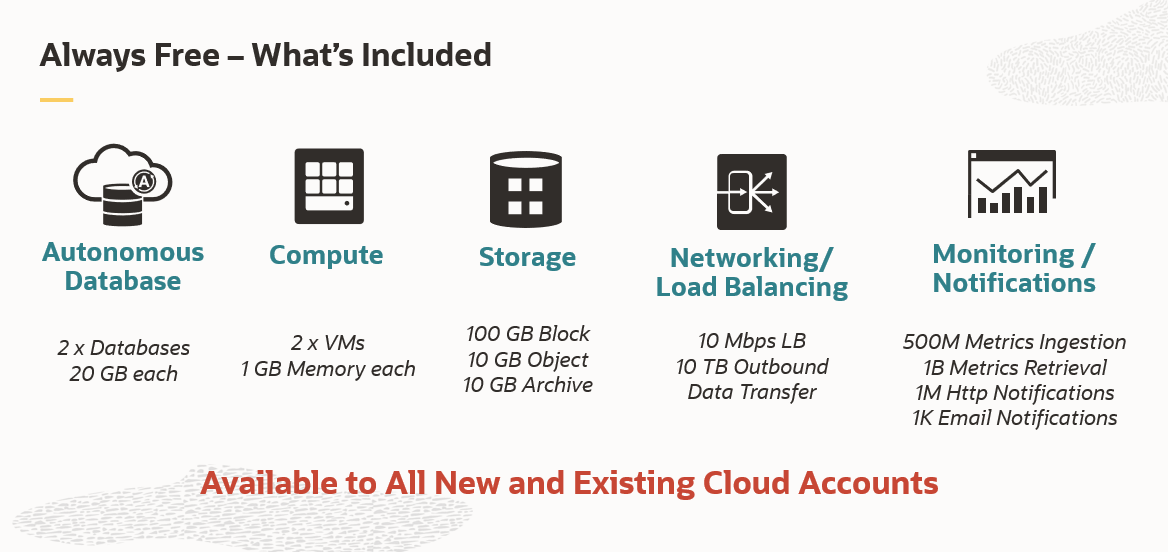
Oracle Cloud Infrastructure has a generous free tier, moreso than other hyperscalers, with an always-free tier that guarantees certain products are always free
Oracle Cloud Infrastructure allows you to size VMs with differing combinations of CPU and RAM, which is contrary to other hyperscalers that have specific pre-defined combinations only
An aggregate pipeline can be a bit overwhelming as a newcomer.
There's still no real concept of joins with references/foreign keys, although the aggregate framework has a feature that is close.
Database management/dev ops can still be time-consuming if rolling your own deployments. (Thankfully there are plenty of providers like Compose or even MongoDB's own Atlas that helps take care of the nitty-gritty.
Navigating the UI takes lots of getting used to. It reminds me of older GCP (just to get used to where everything is).
Permission for different things always seemed to be more difficult than it really needed to be. Once you got them set up you were good but updating anything or creating new permissions for just about anything took longer than I thought it should.
Based on how the buttons were laid out, it was pretty easy to delete all of your DNS records, and backing them up was not as intuitive as I'd like with the UI, but it was easy to do using a script.
Although it is excellent at what it does, you should be really careful and plan accordingly if you know that your database is going to scale at a huge level because it is not suitable of databases which are of Enterprise level and demands top-notch security and protection.
If your project involves multiple people working on the same database simultaneously, then that becomes a big problem, because it only allows single write at one time. You really need to be forward thinking in a manner to predict if this database will cater to all the needs of your project.
The most common difficulty with this is the lack of some of the basic functionality which is present in the other premier databases like Joints, Stored Procedure calls, Security and permission grants. If you do require all those things then you are better off not using this software.
Lastly, if you are using this in an Andriod App development cycle then also your options are limited because it does not integrate with PostgreSQL and MYSQL.
I am looking forward to increasing our SaaS subscriptions such that I get to experience global replica sets, working in reads from secondaries, and what not. Can't wait to be able to exploit some of the power that the "Big Boys" use MongoDB for.
Reliability: Very dependable and stable OCI services have been for the business operations.Performance: The speed and efficiency of OCI in meeting their computing and storage needs.Scalability: The ease and effectiveness of scaling resources up or down to accommodate changing demands.Security: The robustness and effectiveness of OCI's security features in protecting their data and applications.
NoSQL database systems such as MongoDB lack graphical interfaces by default and therefore to improve usability it is necessary to install third-party applications to see more visually the schemas and stored documents. In addition, these tools also allow us to visualize the commands to be executed for each operation.
The services & products in Oracle Cloud Infrastructure needs more improvement to beat other Cloud service providers. The price is good & Security processes are good. We are requiring to put more effort in supporting this Oracle Cloud Infrastructure than other Cloud service providers. Probably better ways are there but is not super easy to find or not super available
I have given this rating cause its irreplaceable in some of the areas like no more installation need except from a single library. I find dialect is simple in use cases. its suitable for any professionals with various skill levels. its easily connect with various os and devices. very less maintenance or administration required.
Yeah sometimes we had to face unplanned outages due to underlying infrastructure issues, so not every time,e but once in a while we face issues with availability. But the good thing is we have redundancy with DR setup and multi region so we can manage.
From the start, I was surprised by response times and image quality accessing windows VMs with RDP. GCP, Azure and -many offerings in AWS- don't perform this speed. Also, that's evident in the quality of Infrastructure Management Team, because I just received one warning regarding a region failure, what confirms that's a mature platform.
Finding support from local companies can be difficult. There were times when the local company could not find a solution and we reached a solution by getting support globally. If a good local company is found, it will overcome all your problems with its global support.
Overall it is amazing, there is always room for improvement. We have weekly updates that tend to slow the program used more and more. We had to change some reports within Oracle because the others wouldn’t load. This is tied to our payroll and the delays are causing many time constraint issues and panic. We have to create a new report when one breaks. Otherwise awesome!
While the setup and configuration of MongoDB is pretty straight forward, having a vendor that performs automatic backups and scales the cluster automatically is very convenient. If you do not have a system administrator or DBA familiar with MongoDB on hand, it's a very good idea to use a 3rd party vendor that specializes in MongoDB hosting. The value is very well worth it over hosting it yourself since the cost is often reasonable among providers.
We have [measured] the speed in reading/write operations in high load and finally select the winner = MongoDBWe have [not] too much data but in case there will be 10 [times] more we need Cassandra. Cassandra's storage engine provides constant-time writes no matter how big your data set grows. For analytics, MongoDB provides a custom map/reduce implementation; Cassandra provides native Hadoop support.
We used Microsoft Azure and Docker earlier and faced some difficulties like Microsoft Azure and Docker. Occasionally, the generation of large images can delay deployment. It is also necessary for me to admit that Microsoft Azure and Docker have a somewhat steep learning curve. Proper paperwork needs to be there. Docker has issues with performance on a number of platforms. On the other hand, OCI is easy to deploy and easy to understand.
We looked at other traditional RDBMS products, but found them to be cumbersome to deploy. They take up more space, and consume more computing resources than SQLite does. While the performance or direct integration to our primary applications may have been better or easier if we had gone with a traditional RDBMS, the performance of SQLite has been more than acceptable. The performance and speed to deploy made SQLite a much more attractive option for us than a traditional RDBMS.
was not part of initial purchase team. Anyways, i think unit pricing and billing frequency is good compared to other Cloud service providers, when it comes to Cloud Capital expenditure & Operational expenditure. Would be more interested in exploring more options where customers can get more cost relaxations on trying out new cloud services in Oracle Cloud Infrastructure for example a new App or a feature
We have hosted around 500 + customers on this cloud so till day not faced any major issues, so we can use it for any kind of products and it can hold the load and easily scale based on need.
Services & Infra wise is ok to use & host applications & services. Security wise also good for a Cloud service provider. It is a interesting area to explore & using it for day to day needs can be further improvised in future probably. Modern day Services like AI and Machine learning could be improved
Open Source w/ reasonable support costs have a direct, positive impact on the ROI (we moved away from large, monolithic, locked in licensing models)
You do have to balance the necessary level of HA & DR with the number of servers required to scale up and scale out. Servers cost money - so DR & HR doesn't come for free (even though it's built into the architecture of MongoDB
The active community has kept support costs low, further increasing ROI
The wide range of supported platforms and high level of compatibility has increased ROI by reducing time spent porting the database model to any platform specific solutions.