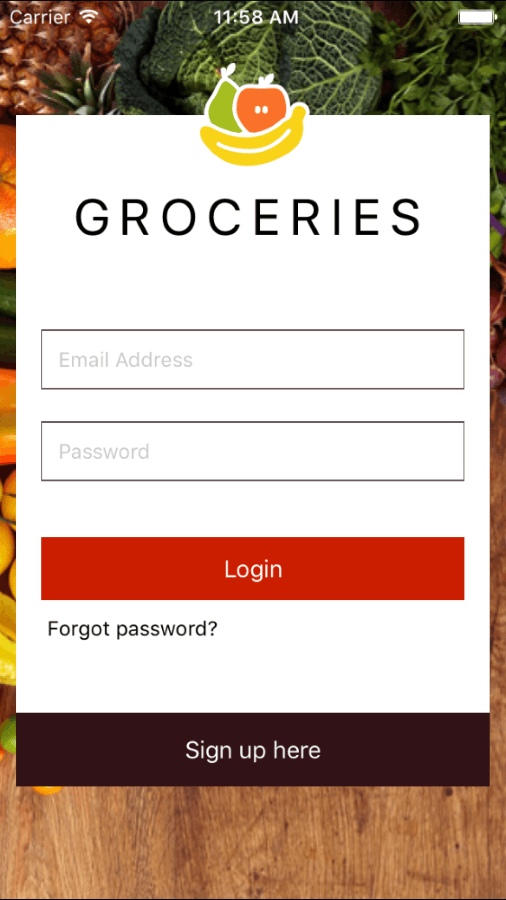
NativeScript is an open source framework that allows
you to create native iOS and Android apps, with one codebase, using the web
skills you already have (JavaScript and CSS) and the libraries you already
love.
N/A
Plone
Score10 out of 10
N/A
Plone is a free and open source content management system built on top of the Zope application server. Plone can be used for any kind of website, including blogs, internet sites, webshops, and internal websites.
N/A
Pricing
NativeScript
Plone
Editions & Modules
No answers on this topic
No answers on this topic
Offerings
Pricing Offerings
NativeScript
Plone
Free Trial
Yes
No
Free/Freemium Version
Yes
No
Premium Consulting/Integration Services
No
No
Entry-level Setup Fee
No setup fee
No setup fee
Additional Details
The NativeScript framework and CLI are completely free and open source. NativeScript Sidekick is a free download to improve developer productivity with optional paid tiers for power users.
—
More Pricing Information
Features
NativeScript
Plone
Security
Comparison of Security features of NativeScript and Plone
Feature
NativeScript
-
Ratings
Plone
10.0
5 Ratings
19% above category average
Role-based user permissions
00 Ratings
10.05 Ratings
Platform & Infrastructure
Comparison of Platform & Infrastructure features of NativeScript and Plone
Feature
NativeScript
-
Ratings
Plone
10.0
5 Ratings
25% above category average
API
00 Ratings
10.05 Ratings
Internationalization / multi-language
00 Ratings
10.05 Ratings
Web Content Creation
Comparison of Web Content Creation features of NativeScript and Plone
Feature
NativeScript
-
Ratings
Plone
9.4
6 Ratings
18% above category average
WYSIWYG editor
00 Ratings
10.06 Ratings
Code quality / cleanliness
00 Ratings
10.05 Ratings
Admin section
00 Ratings
10.05 Ratings
Page templates
00 Ratings
10.05 Ratings
Library of website themes
00 Ratings
5.05 Ratings
Mobile optimization / responsive design
00 Ratings
10.05 Ratings
Publishing workflow
00 Ratings
10.05 Ratings
Form generator
00 Ratings
10.05 Ratings
Web Content Management
Comparison of Web Content Management features of NativeScript and Plone
I gotta be honest, after a PoC period, we choose to rewrite the whole application in a different cross-platform app. Our developers had to invest a lot of time and effort to debug a lot of plugin-related issues, which we needed to utilize the android mobile phone capabilities. QR reader, special visualizations, and fine-tuning were really hard and often resulted in writing native Android code instead of using the shared Angular code. In the end, we think that writing a standalone Android app and an Angular app would have been a better alternative, as the shared code base was so unreliable that it did not save us any time.
A de minimis incentive was given to thank the reviewer for their time. The incentive was not used to bias or drive a particular response, nor was the incentive contingent on a positive endorsement. More Info
The larger your organization, the more appropriate Plone will be. This is not to say that Plone is a worse choice for small websites, only that the minimum investment for a Plone site is certainly higher than for other platforms. If you already use Plone for your site and are looking for a redesign or an overhaul, I would only advise switching to a different platform such as WordPress or Drupal if your organization is downsizing. For any other situation, Plone is the natural choice for your growth.
True native app. The app uses native components and that is quite noticeable in the overall performance of the app. NativeScript is also awesome in the way we can access the native APIs, so we are never really constrained by the framework. If we need, we can just dive into the native APIs without leaving our environment and language (JS).
Cross-platform. Builds for Android and iOS. It deals with the platforms differences very well.
Support for Vue.js. Even though it is just a community effort, the NativeScript-Vue plugin is the best alternative to build native Apps with Vue.js. That was a major factor to go with NativeScript.
A de minimis incentive was given to thank the reviewer for their time. The incentive was not used to bias or drive a particular response, nor was the incentive contingent on a positive endorsement. More Info
Plone is a folder-based system, organising content in a similar way desktop-users are doing for the last two decades. No need to teach non-tech customers some relational-database like paradigm for content management.
Plone is secure. It is the most secure CMS you can get your hands on.
Plone is flexible, and makes fast development easy.
A de minimis incentive was given to thank the reviewer for their time. The incentive was not used to bias or drive a particular response, nor was the incentive contingent on a positive endorsement. More Info
Not everything is configurable or editable by Plone, and when you need to adjust or add custom pieces in, you need to deal with Zope. Zope has an ugly, confusing and difficult UI and structure as a backend.
Using 3rd party products is difficult to do - there are a few different ways to get them installed, all of which take a bit of luck to get right.
Building custom products for Plone is not fun. You've got to deal with an archaic framework to tie in that is not well documented (there is documentation about many things, but not great documentation and there are a lot of holes in the documentation).
The hybrid is ok but native is better for performance and the right use case I want to go for is the performance without dealing with too many development tools.
A de minimis incentive was given to thank the reviewer for their time. The incentive was not used to bias or drive a particular response, nor was the incentive contingent on a positive endorsement. More Info
Compared to the amount of Plone sites, users and customizations we have in our organization, the amount of support requests and training needed is really small.
The new user interface in Plone 6 is even better, it is super fast, has lots of different blocks for enhancing the page, has flexible layout system and is easy to extend with more features.
Our Plone sites are very robust. We have critical systems on Plone and we have been running sites on Plone for over 20 years with very little unexpected downtime.
Plone is very intensive in its operations, and if not configured well it can be slow. However it is designed and built with speed in mind and with proper use of coding, templates and caching can perform extremely well under high loads. It is capable of scaling to very high load availability environments with no specific coding requirements.
The community support is excellent. They have a slack community as well as a discourse forum forum.nativescript.org Both of these offer community driven support. The forum is more for a threaded discussion. The slack community is more for a quick talk.
A de minimis incentive was given to thank the reviewer for their time. The incentive was not used to bias or drive a particular response, nor was the incentive contingent on a positive endorsement. More Info
Ionic Ionic is an excellent Angular-based framework for mobile, and it does give a lot of access to the native device api's. However, the technology is based on Cordova, which means the apps being built are just webviews, with html, css and JS all running on the UI thread, and potentially creating very slow experiences for users. NativeScript is a truly native solution, and so provides a faster user experience. ReactNative We evaluate ReactNative, and found it much the same as NativeScript. The main difference is that your JS is all written with React, while NativeScript lets you choose between normal JS, Angular, and Vue. For our team, Angular was the most appropriate choice.
A de minimis incentive was given to thank the reviewer for their time. The incentive was not used to bias or drive a particular response, nor was the incentive contingent on a positive endorsement. More Info
Drupal: Plone is cheaper, so with Drupal is more complex to reach the required ROI. However, Drupal has a lower learning curve WordPress: For our necessities it has a more expensive learning curve than plone. Joomla, is easier to use. However, it have some issues on security and web content where Plone is much better
A de minimis incentive was given to thank the reviewer for their time. The incentive was not used to bias or drive a particular response, nor was the incentive contingent on a positive endorsement. More Info
The poor quality of NativeScript documentation has the potential to weigh heavily on development timelines, budgets, and QA resources in a NEGATIVE manner.
The poor interoperability of NativeScript plugins can significantly increase development time.
The need to seek out professional instruction to learn how to use NativeScript effectively may become a burden on your budget.
The number of breaking changes between versions of NativeScript, may cause your development efforts to lag further behind the most recent releases of NativeScript and your other chosen environments than you are accustomed to.
NativeScript still does not support the latest major version of Angular. Any significant changes to the other environment components of your systems may hold you back even further while NativeScript plays catch-up.
The impact Plone has had at the University of Oshkosh is as follows: this software allows student workers to learn about IT departments and CMS's in a user-friendly way. It gives many students great jobs that look great on their resumes.
Since there are great training manuals for Plone, there is increased employee efficient in the workplace. Training doesn't take long, and if there's ever a question, the Plone manual is a great tool to refer to.
If an employee using Plone quits, its easy to find someone to replace them with quick training and great resources.