Chose PractiTest
Jira Software

| Product | Rating | Most Used By | Product Summary | Starting Price |
|---|---|---|---|---|
 PractiTest | N/A | PractiTest is presented as a cloud-based test management tool that provides its customers with an end-to-end system to meet testing and QA needs. It is described by the vendor as flexible but methodological, enabling organizations to ensure visibility and communication at all levels. The solution aims to help users and project development teams streamline and manage their testing processes, while providing management with a clear and simple view of their project status at all times. | $39 user | |
 Rally Software | N/A | Rally Software headquartered in Boulder, Colorado developed the Rally agile software development / ALM platform which was acquired by CA Technologies and rebranded as CA Agile Central. After CA's acquisition by Broadcom the software was once again rebranded as Rally. | N/A | |
 Jile | N/A | Jile from TCS (Tata Consultany Services) is an agile devops platform, supporting users with release management and iteration planning, task management for continuous integration and delivery (CI / CD), and OKR. | $12 per month per user |
| PractiTest | Rally Software | Jile | ||||||||||||||||||||||
|---|---|---|---|---|---|---|---|---|---|---|---|---|---|---|---|---|---|---|---|---|---|---|---|---|
| Editions & Modules |
| No answers on this topic |
| |||||||||||||||||||||
| Offerings |
| |||||||||||||||||||||||
| Entry-level Setup Fee | Optional | No setup fee | No setup fee | |||||||||||||||||||||
| Additional Details | — | — | 1. Standard Edition -$12 per user/per month: Ideal for organizations with multiple program and project team 2. Enterprise Edition - $20 per user/per month: Ideal for organizations with multiple portfolios | |||||||||||||||||||||
| More Pricing Information | ||||||||||||||||||||||||
| PractiTest | Rally Software | Jile | |
|---|---|---|---|
| Considered Multiple Products |  PractiTest  Michael Walkowski Senior Business Consultant Chose PractiTest I've used many different Test Case Repository tools, and while each of them has its perks, I like the capabilities of PractiTest best. When creating a test in qTest for example, you can only input information into the fields provided, and you have everything set up in a folder … | Rally Software  Peter Lucan Software Engineer II Chose Rally Software Rally Software and Jira are both good. Rally Software is better at handling large scale projects. It offers advanced reporting, release tracking and portfolio management. Jira is more flexible but Rally Software is definitely better for large organizations. We selected Rally …  Chad Howell Scrum Master Chose Rally Software I believe that it stacks up well against any other software. There are several things they do better and there are several things it doesn't do better. However, in the end it seems all of the software can get the job done.  Punnareddy Pallerla Sr Software Engineer Chose Rally Software Rally is very good in tracking, compared with others, and also reporting is made very helpful for our business growth, tracking the deliverables, and making sure we have the proper capacity planning for completing the project in a timely manner. really Rally made us very happy …  Kathy Ding Design V&V Engineer Chose Rally Software Overall, Rally Software is a better and more powerful tool than Jira for the same exact purposes. Jira cannot function as a requirements repository so it needs plugins or separate tools to do the same thing. There is no space or option to see all defects or user stories or …  Sourav Singla ,Safe Agilist, CSP, ICP-ACC, CSM, CSPO, SSM, LSSG Enterprise Agile Coach Chose Rally Software Scaled Agile Framework (SAFe) & through Test Management were two critical factors that lead to selection of CA Agile Central (formerly Rally). Executives want to maintain trace-ability & detailed test management options like we get in ALM along with SAFe implementation support. …  Bob Lieberman Agile Coach for Technology Development Chose Rally Software Selected because the others seemed worse two years ago when the decision was made. VersionOne seemed ugly and too restricted. Might look better now. Microsoft TFS, now VSO, looked limited but also might look better now. Microsoft is improving it at a remarkably rapid pace. Jira …  Joseph Ruffolo Strategic Analyst Chose Rally Software The process we used to select a tool was to create a scorecard of IT and Business stakeholder needs. We then reviewed seven tools and graded them against the scorecard requirements. We took the top two products and had a one day hands on demonstration with selected IT and …  Dmitry Shyshkin Lead QA Automation Engineer Chose Rally Software We used CA Agile Central (formerly Rally) before but recently switched to Jira. I used jira before Rally too, and I think it was easier to manage defects in Jira. Also, I think Jira is better for teams and companies that want to implement agile/scrum life cycles. It's easier to …  Henry PAN NAS SME, ESE Chose Rally Software I've also evaluated the following agile solutions: ActiveCollab, Agile Bench, Agilo for Scrum, Atlassian JIRA, Pivotal Tracker, SpringGround, Targetprocess. Telerik Teamprocess, VersionOne, ZebraPlan etc. If it’s time to transition to software that’s specific to your Agile …  Megan Kakitsubo Technical Producer Chose Rally Software Rally has much more features with regards to the the traditional Agile methodology and has more extensive tracking features for the project managers. Pivotal tracker was used for a smaller company and smaller teams but since my current company is larger in scale and has more to … |  Jile |
| PractiTest | Rally Software | Jile | |||||||||||||||||||||||||||||||||||||||||||||||||||||||||||
|---|---|---|---|---|---|---|---|---|---|---|---|---|---|---|---|---|---|---|---|---|---|---|---|---|---|---|---|---|---|---|---|---|---|---|---|---|---|---|---|---|---|---|---|---|---|---|---|---|---|---|---|---|---|---|---|---|---|---|---|---|---|
| Test Management |
| ||||||||||||||||||||||||||||||||||||||||||||||||||||||||||||
| Project Management |
| ||||||||||||||||||||||||||||||||||||||||||||||||||||||||||||
| Agile Development |
|
| PractiTest | Rally Software | Jile | |
|---|---|---|---|
| Small Businesses |  BrowserStack Score 8.4 out of 10 |  GitLab Score 8.8 out of 10 | GitLab Score 8.8 out of 10 |
| Medium-sized Companies |  OpenText ALM/Quality Center Score 9.2 out of 10 |  Planview AgilePlace Score 8.0 out of 10 | Planview AgilePlace Score 8.0 out of 10 |
| Enterprises | OpenText ALM/Quality Center Score 9.2 out of 10 | Planview AgilePlace Score 8.0 out of 10 | Planview AgilePlace Score 8.0 out of 10 |
| All Alternatives | View all alternatives | View all alternatives | View all alternatives |
| PractiTest | Rally Software | Jile | |
|---|---|---|---|
| Likelihood to Recommend | 8.7 (0 ratings) | 8.7 (0 ratings) | 7.0 (0 ratings) |
| Likelihood to Renew | - (0 ratings) | 9.0 (0 ratings) | - (0 ratings) |
| Usability | - (0 ratings) | 8.0 (0 ratings) | - (0 ratings) |
| Availability | - (0 ratings) | 10.0 (0 ratings) | - (0 ratings) |
| Performance | - (0 ratings) | 7.0 (0 ratings) | - (0 ratings) |
| Support Rating | 10.0 (0 ratings) | 5.7 (0 ratings) | - (0 ratings) |
| Online Training | - (0 ratings) | 7.0 (0 ratings) | - (0 ratings) |
| Implementation Rating | - (0 ratings) | 8.0 (0 ratings) | - (0 ratings) |
| Configurability | - (0 ratings) | 7.0 (0 ratings) | - (0 ratings) |
| Ease of integration | - (0 ratings) | 7.0 (0 ratings) | - (0 ratings) |
| PractiTest | Rally Software | Jile | |
|---|---|---|---|
| Likelihood to Recommend |
 DHIRAJ PATEL Trainee - Software Engineer |
|
|
| Pros |
|
Joseph Ruffolo Strategic Analyst |
|
| Cons |
Michael Walkowski Senior Business Consultant |
|
|
| Likelihood to Renew | No answers on this topic |
| No answers on this topic |
| Usability | No answers on this topic |
 Gary Allison Vice President Research & Development | No answers on this topic |
| Reliability and Availability | No answers on this topic |
| No answers on this topic |
| Performance | No answers on this topic |
| No answers on this topic |
| Support Rating |
Michael Walkowski Senior Business Consultant |
Kathy Ding Design V&V Engineer | No answers on this topic |
| Online Training | No answers on this topic |
| No answers on this topic |
| Implementation Rating | No answers on this topic |
Henry PAN NAS SME, ESE | No answers on this topic |
| Alternatives Considered |
Michael Walkowski Senior Business Consultant |
Peter Lucan Software Engineer II |
|
| Return on Investment |
|
Sourav Singla ,Safe Agilist, CSP, ICP-ACC, CSM, CSPO, SSM, LSSG Enterprise Agile Coach |
|
| ScreenShots | PractiTest Screenshots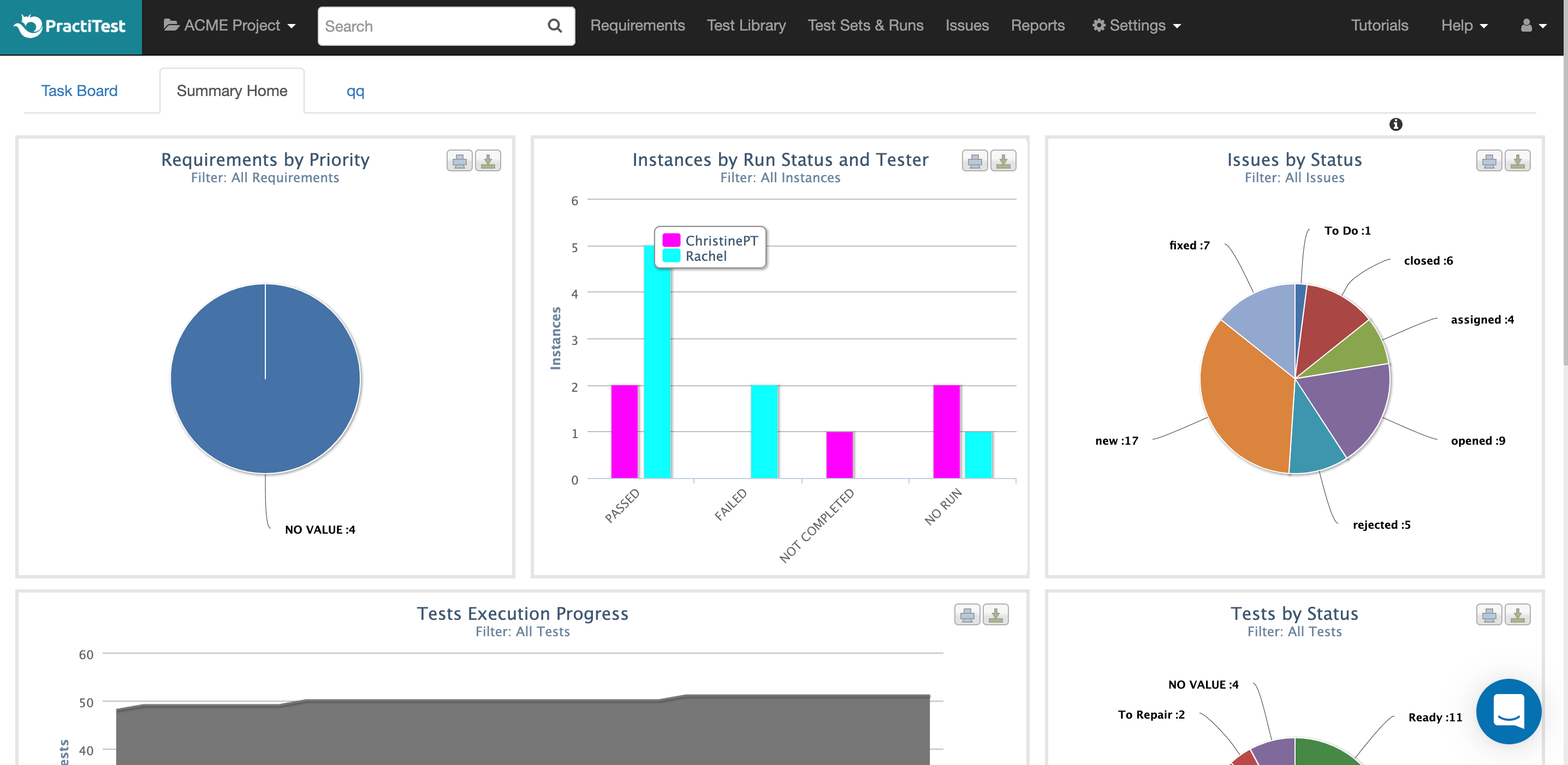    |