Priority Matrix is a prioritization, collaborative, task management software used by more than 2500 businesses worldwide and 85,000 paid customers. Priority Matrix is used by customers who need visibility and alignment in team priorities. Priority Matrix uses the 4-quadrants to help customers prioritize by critical and urgency.
$10
per month
StoriesOnBoard
Score 1.1 out of 10
N/A
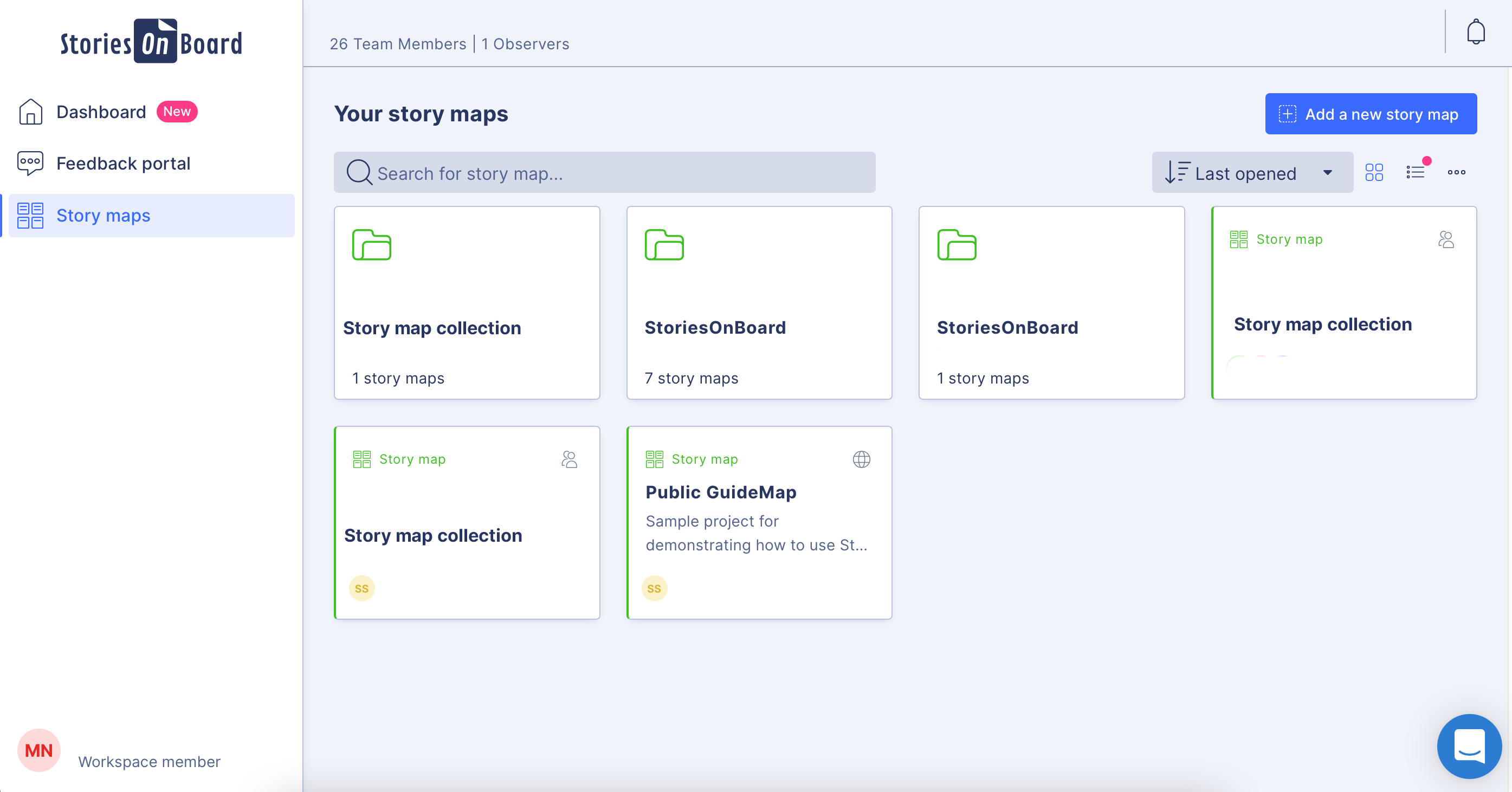
StoriesOnBoard is a holistic product management tool powered by user feedback. Through collecting user and customer feedback into a single repository and sorting it based on custom rules and collaborating with stakeholders to form actionable feature ideas from them, users can make sure their ideas will be driven by real user needs. Ideas can be validated on a public roadmap and then placed on a user story map to plan releases. StoriesOnBoard supports the product management…
$19
per edior
Trello
Score 8.4 out of 10
N/A
Trello from Atlassian is a project management tool based on a Kanban framework. Trello is ideal for task-management in a to-do list format. It supports sharing boards and cards across users or teams. The product offers a free version, and paid versions add greater automation, collaboration, and administrative control.
$6
per month per user
Pricing
Priority Matrix
StoriesOnBoard
Trello
Editions & Modules
No answers on this topic
Basic - billed annually
$19
per edior
Standard - billed annually
$26
per edior
Pro - billed annually
$45
per edior
Enterprise - billed annually
$499
40+ users
Standard
$6
per month per user
Premium
$12.50
per month per user
Enterprise
$17.50
per month per user
Free
Forever Free
Offerings
Pricing Offerings
Priority Matrix
StoriesOnBoard
Trello
Free Trial
Yes
Yes
No
Free/Freemium Version
Yes
No
Yes
Premium Consulting/Integration Services
Yes
Yes
No
Entry-level Setup Fee
No setup fee
No setup fee
No setup fee
Additional Details
30-day money back guarantee. Free 14-day trial.
—
A discount is offered for annual billing and for larger numbers of users.
More Pricing Information
Community Pulse
Priority Matrix
StoriesOnBoard
Trello
Considered Multiple Products
Priority Matrix
Verified User
Team Lead
Chose Priority Matrix
The focus of Priority Matrix is on prioritization. Other apps exist that do a fine job with task and project management, but none of them equal Priority Matrix in terms of focusing your attention on the right task. The 80/20 principle that people often talk about (80% of the …
StoriesOnBoard
No answer on this topic
Trello
No answer on this topic
Features
Priority Matrix
StoriesOnBoard
Trello
Project Management
Comparison of Project Management features of Product A and Product B
Priority Matrix
8.4
1 Ratings
8% above category average
StoriesOnBoard
-
Ratings
Trello
8.5
222 Ratings
9% above category average
Task Management
10.01 Ratings
00 Ratings
9.5222 Ratings
Resource Management
8.01 Ratings
00 Ratings
9.3185 Ratings
Gantt Charts
9.01 Ratings
00 Ratings
7.173 Ratings
Scheduling
8.01 Ratings
00 Ratings
9.1168 Ratings
Workflow Automation
5.01 Ratings
00 Ratings
8.2142 Ratings
Team Collaboration
10.01 Ratings
00 Ratings
9.0218 Ratings
Support for Agile Methodology
10.01 Ratings
00 Ratings
8.9147 Ratings
Support for Waterfall Methodology
6.01 Ratings
00 Ratings
7.6115 Ratings
Email integration
10.01 Ratings
00 Ratings
7.7146 Ratings
Mobile Access
10.01 Ratings
00 Ratings
9.1192 Ratings
Timesheet Tracking
6.01 Ratings
00 Ratings
9.388 Ratings
Document Management
00 Ratings
00 Ratings
8.2159 Ratings
Change request and Case Management
00 Ratings
00 Ratings
8.8102 Ratings
Budget and Expense Management
00 Ratings
00 Ratings
7.773 Ratings
Professional Services Automation
Comparison of Professional Services Automation features of Product A and Product B
If you're overwhelmed with too many things to do, and need help deciding which tasks to focus on, Priority Matrix is for you. Priority Matrix uses the classic Eisenhower matrix methodology which has been shown to be really effective for this purpose. Now you can use an app for that, instead of a piece of paper or Excel.
As mentioned earlier, we also use StoriesOnBoard to create other processes (customer and employee journey). We use the swim lanes to differentiate between measures, tools and processes and working with them is very easy and understandable for this purpose.
Less easy is the use of context, i.e. when one part of a story map depends on another story map. This cannot be avoided (at least for us) to avoid creating redundancy (and the risk of creating different stages). At appropriate places, we refer to the other map in the title.
For teams or individuals with lots of individual tasks/details to track, Trello is perfect! It basically removes the need for a paper checklist. For those that need an overall project management tool that requires less tasks and more overarching goals, collaboration amongst various teams, and gantt charts I would suggest monday.com
I am very likely to renew Trello, because it doesn't cost anything to do so. I am also very likely to use Trello's upgraded features in the future because a lot of my team's data is stored on there and they have already gotten used to the platform. Trello is very easy for new team members to pick up, making the onboarding and usability very streamlined.
StoriesOnBoard works really well; all features are well thought through. It could look a bit fresher, although the new updated dashboard is already much better than it was.
Trello is incredibly intuitive, both on desktop and mobile right away. It is also full of helpful features that make it even easier to use, and is flexible enough to suit almost any organizational need. Onboarding for the software is thorough, but concise, and the service is frequently updated with even more QOL improvements.
I haven't reached out to their support very often and their support is very limited anyway for the free users. They do have tons of great articles and videos in their Help Center and constantly send emails with updates and add-ons to the product. The fact that I've barely ever had to contact their support team means that they've developed a great product.
For our small business, getting a few of us started well on Trello was the key, I think. As long as a couple of us were really comfortable with the interface, we could lead others and help them with any questions. From now on, anyone who works with us just naturally uses Trello for information sharing - it's just part of what we do.
The focus of Priority Matrix is on prioritization. Other apps exist that do a fine job with task and project management, but none of them equal Priority Matrix in terms of focusing your attention on the right task. The 80/20 principle that people often talk about (80% of the results come from 20% of the inputs) is clearly visible when you use PM.
The only other competitor we looked at was cardboardit.com. Both had solid functionality, but StoriesOnBoard was more user-friendly and quick to learn and use in our opinion.
Trello is more simple and not as "robust" as the other tools, but it's easier to use and manage and understand and ACTUALLY get stuff done with. It's simplicity is part of the beauty of using it. You don't need a million options that nobody uses, you just need to get stuff done.
StoriesOnBoard (and story mapping in general) creates a low-cost visual method of aligning on high-level business and technical requirements early in a project and provides an ongoing reference as the project progresses. Having this alignment is critical for the later stages of the project.
Trello keeps me organized, focused, and on track. I could filter the Trello board to only see my issues and understand what I needed to work on and when.
Trello helped our team implement an agile structure. It's a very simple kanban method of viewing all of your team's tasks and statuses. You can completely customize the columns to your team's specific workflow and create tags relevant to your work.
Trello helps reduce unnecessary communications between teams. When I want to request translations, I simply create a card on the localization Trello board -- no need to directly message anyone on the team, and I can watch the status of the card change from "in progress" to "in review" to "translated," all without having to directly ask for updates.