Red Hat Virtualization (formerly Red Hat Enterprise Virtualization, broadly known as RHEV) is an enterprise level server and desktop virtualization solution. Red Hat Virtualization also contains the functionality of Red Hat Enterprise Virtualization for Desktop in later editions of the platform.
$999
Per Year Per Hypervisor
Scale Computing Platform
Score 8.8 out of 10
Mid-Size Companies (51-1,000 employees)
Scale Computing offers edge computing, virtualization, and hyperconverged solutions for customers around the globe. Scale Computing HyperCore software promises to eliminate traditional virtualization software, disaster recovery software, servers, and shared storage, replacing these with a fully integrated, highly available system for running applications. The vendor says that, using patented HyperCore™ technology, the SC//HyperCore self-healing platform automatically identifies, mitigates, and…
$249
per year per core
StorMagic SvSAN
Score 7.0 out of 10
N/A
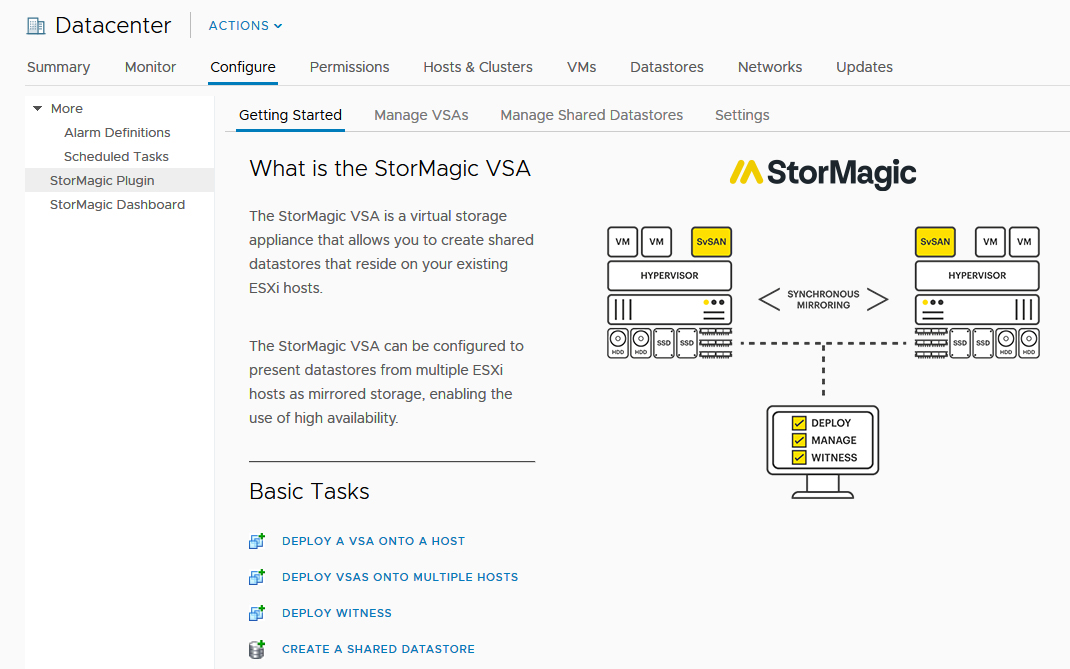
StorMagic SvSAN is simple storage virtualization that eliminates downtime. It provides high availability with two nodes per cluster. Organizations use the solution to keep mission-critical applications and data online and available 24 hours a day, 365 days a year.
N/A
Pricing
Red Hat Virtualization (discontinued)
Scale Computing Platform
StorMagic SvSAN
Editions & Modules
Standard
$999.00
Per Year Per Hypervisor
Premium
$1,499.00
Per Year Per Hypervisor
Standard
$249
per year per core
Professional
$312
per year per core
Professional Essentials
$5,600
one-time fee
No answers on this topic
Offerings
Pricing Offerings
Red Hat Virtualization (discontinued)
Scale Computing Platform
StorMagic SvSAN
Free Trial
No
Yes
Yes
Free/Freemium Version
No
No
No
Premium Consulting/Integration Services
No
Yes
Yes
Entry-level Setup Fee
No setup fee
Optional
Optional
Additional Details
—
Pricing shown in U.S. Dollar.
Pricing for other regions available on request.
We had looked at hyperconverged systems from Nutanix, HPE (Simplivity) and NetApp - all wanted a very high premium on top of which there were still additional licenses.
Their individual high costs meant they were never viable despite some attractive feature sets.
RHEV is well suited for organizations that need a cost-effective and flexible solution for their environment. As its vendor-independent software, easily install on any type of hardware. RHEV provides a GUI interface to manage the software, which makes the management of the software easier for the end-user. RHEV is best for non-production or less critical applications. RHEV can be easily integrated with other REDHAT software.
Scale is best suited to environments that do not have excessive external or proprietary peripherals. Integrating with tape drive backups or robot tape libraries can be problematic. The most effective use of Scale systems is for companies running multiple instances of the same operating system. The hypervisor's code/file-sharing nature does an excellent job managing new instances while keeping the increase in storage to a minimum.
The StorMagic SvSAN solution is certainly suitable for two-node architectures where business continuity is required at a reasonable price, with a workload that is not particularly complex. It is not the right solution if you have a virtual environment with a large number of VMs and workloads that require high performance.
1- RHVM API is pretty slow, especially after creating a VM it is not possible to retrieve the VM details (i.e VM's MAC Address) fast enough, where we need to place a pause in our Ansible Playbook, make the automation process slow.
2- RHV is still using collected to monitor the hypervisors which is deviating from Red Hat policy for other RHEL based applications to use PCP to monitor, which is richer in features.
3- It will be great if it is possible to patch the hypervisors using other tools such as satellite and not only via RHVM.
4- In the past Red Hat used to present patches in the z release (i.e. 4.3.z), and features in the y release (i.e 4. y), but starting from 4.4 that is mixed together wherein the Z release you get both patches and features, that is not good because that requires a lot of time to test when we patch as it includes features as well.
5- Engineering team has to be more reactive when new feature is requested.
Since I have had no issues with downtime; easier management of my cluster and the ability to lower the number of devices in my Infrastructure, I will gladly renew my support contract with Scale Computing HC3 and upgrade my equipment with them when it comes time for it.
Everything you need to do is point-and-click easy. If you are the kind of admin who wants to edit every config file and endlessly customize your environment, then Scale may not be for you. On the other hand, if you just want it to work really well, and do what they told you it will do, then Scale is the ideal system.
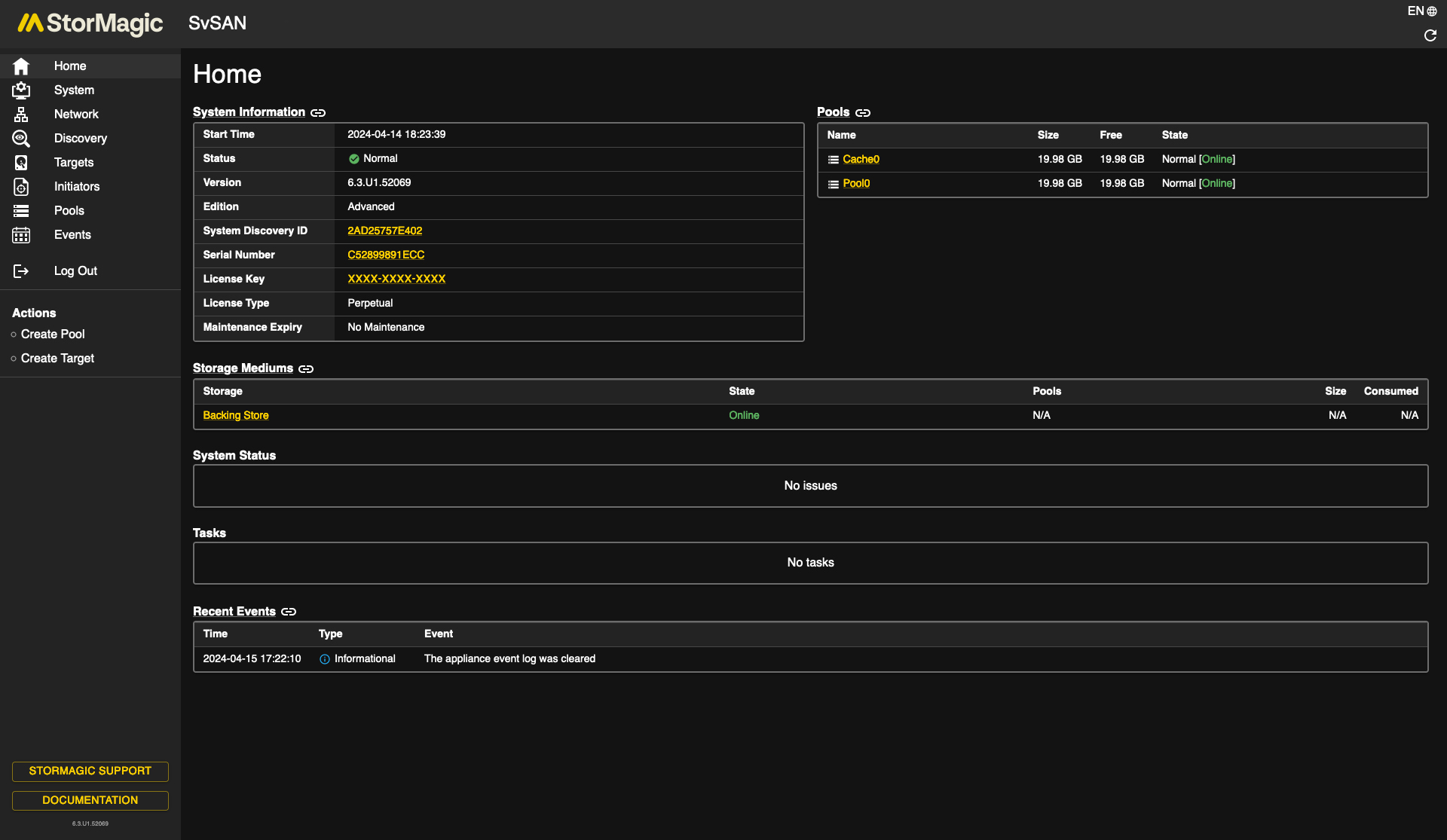
Deploying the solution is fairly simple. A system administrator with basic data centre knowledge can configure the StorMagic SvSAN suite independently by following the guides provided. Troubleshooting is greatly simplified thanks to the features available in the management interface. The dashboard allows you to easily manage the technology thanks to a very intuitive and well-designed interface.
They are very knowledgeable about their own products and hardware addressing my concerns or issues very quickly and on the first contact. Calls concerning VMware migrations and Acronis backup took a little more time for more complicated issues, but the Scale Computing Platform techs were diligent to stay on top of issues until they were resolved. Most of my issues have been with the initial setup/migration.
The implementation was very easy. We had Scale support on standby and they were ready and eager to help if needed. The process went so fast the employees in the organization did not even know it was done.
RHEV is an excellent product, includes more features, is less expensive, and has rock solid reliability and is backed with the best Red Hat Support in the industry. RHEV uses KVM under the hood which is used by all the big players in the industry (AWS, Rackspace, etc) to lower their overall costs and improve efficiency and profits and that's why RHEV is an excellent solution!
We previously used Microsoft Hyper V and VMWare and, before that, a room for single-purpose servers. My satisfaction with Scale is because it is a more straightforward product to install and use; it has incredible speed and reliability. In the past, getting support from Microsoft was labor intensive, and with VMWare, there was a language accent barrier.
HC3 is one of the best products I have purchased for our district. It is unbelievably reliable to the point that they shoot themselves in the foot on support contracts.