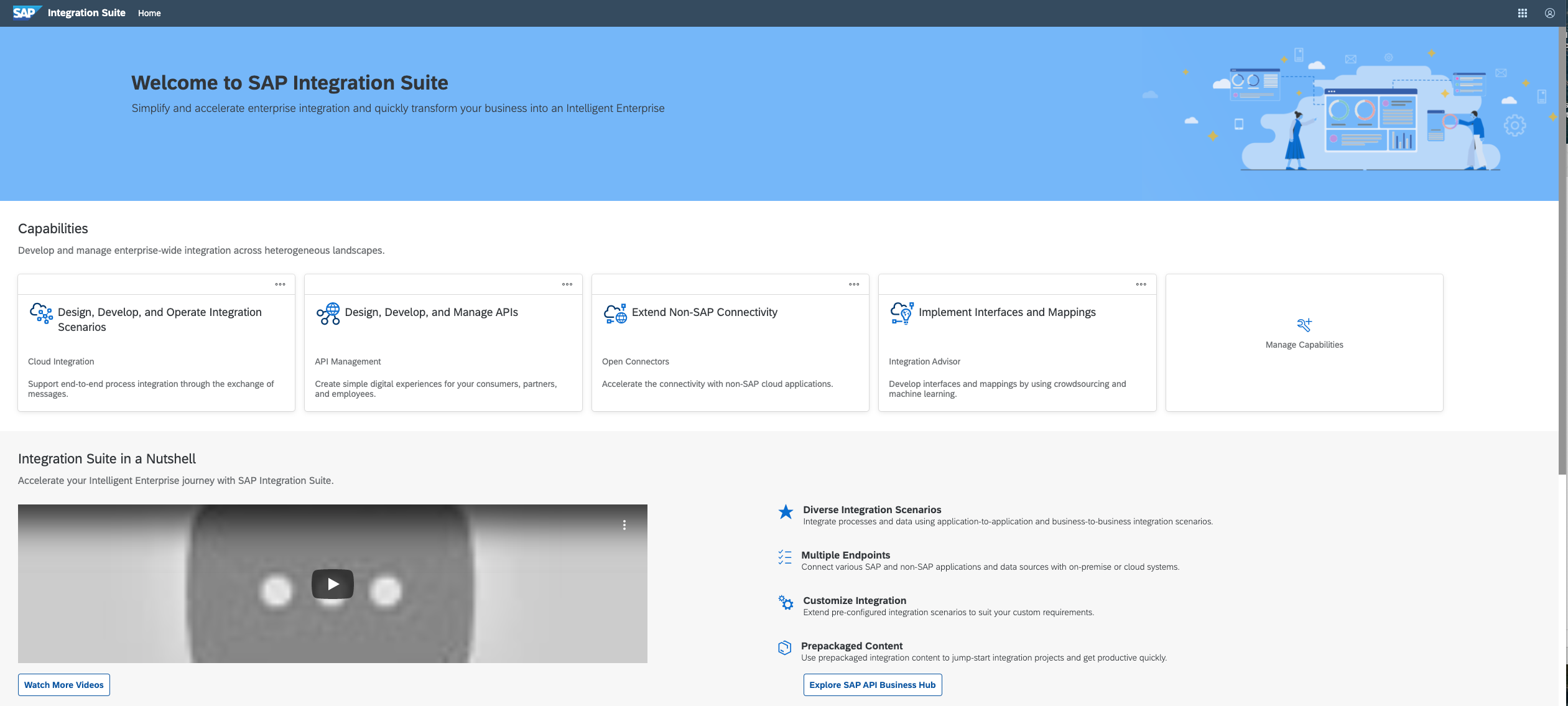
SAP Integration Suite is a modern, secure integration platform as a service (iPaaS) that connects applications, data, processes, and AI agents across SAP and non‑SAP environments.
$11,199
per year
Teradata Autonomous Knowledge Platform
Score8 out of 10
N/A
Teradata Vantage is presented as a modern analytics cloud platform that unifies everything—data lakes, data warehouses, analytics, and new data sources and types. Supports hybrid multi-cloud environments and priced for flexibility, Vantage delivers unlimited intelligence to build the future of business.
Users can deploy Vantage on public clouds (such as AWS, Azure, and GCP), hybrid multi-cloud environments, on-premises with Teradata IntelliFlex, or on commodity hardware with VMware.
$4,800
per month
Pricing
SAP Integration Suite
Teradata Autonomous Knowledge Platform
Editions & Modules
No answers on this topic
Teradata VantageCloud Lake
from $4800
per month
Teradata VantageCloud Enterprise
from $9000
per month
Offerings
Pricing Offerings
SAP Integration Suite
Teradata Autonomous Knowledge Platform
Free Trial
Yes
Yes
Free/Freemium Version
No
No
Premium Consulting/Integration Services
No
Yes
Entry-level Setup Fee
No setup fee
Optional
Additional Details
Access to free tier services does not expire while there is an active Pay-As-You-Go or CPEA account with SAP. Once a free tier service limit has been reached users have the option to update from a free to a paid service plan in the same account.
Good at: 1. Integrations with in SAP applications, especially with event based triggers 2. Can be integrated very well with other BTP services to attain Batch processing and store credentials 3. Supports many authentication models Improvements: 1. No version history available compared to as it is available in S4HANA 2. Need a lot of improvement in git hub connections
A de minimis incentive was given to thank the reviewer for their time. The incentive was not used to bias or drive a particular response, nor was the incentive contingent on a positive endorsement. More Info
Teradata Vantage is well suited for large scale ETL pipelines like the ones we developed for anti money laundering risk matrices. It handles heavy joins, aggregations, and transformations on transactional data efficiently. We generate alert variables, adjust for inflation, and monitor establishments monthly with it, all integrated with Python and Control-M for a centralised automation across the company. For less appropriate, I would say that heavy resource demands might slow down experimentation for iterative work.
A de minimis incentive was given to thank the reviewer for their time. The incentive was not used to bias or drive a particular response, nor was the incentive contingent on a positive endorsement. More Info
A de minimis incentive was given to thank the reviewer for their time. The incentive was not used to bias or drive a particular response, nor was the incentive contingent on a positive endorsement. More Info
Provide more pre-built integrations to use within SuccessFactors or other modules instead of everything having to be custom built
Support is unable to provide advice on custom builds so you often have to engage a 3rd party partner
Works best when you have the functional and technical teams working together. Otherwise, the system is too technical for a functional user to create integration and a technical user not always understand the functional perspective
A de minimis incentive was given to thank the reviewer for their time. The incentive was not used to bias or drive a particular response, nor was the incentive contingent on a positive endorsement. TR verified that a representative sample of customers was invited. More Info
Teradata is an excellent option but only for a massive amount of data warehousing or analysis. If your data is not that big then it could be a misfit for your company and cost you a lot. The cost associated is quite extensive as compared to some other alternative RDBMS systems available in the market.
Migration of data from Teradata to some other RDBMS systems is quite painful as the transition is not that smooth and you need to follow many steps and even if one of them fails. You need to start from the beginning almost.
Last but not least the UI is pretty outdated and needs a revamp. Though it is simple, it needs to be presented in a much better way and more advanced options need to bee presented on the front page itself.
A de minimis incentive was given to thank the reviewer for their time. The incentive was not used to bias or drive a particular response, nor was the incentive contingent on a positive endorsement. More Info
It is in place, our system integrators are familiar with it, and it fits into the ecosystem. A better user interface, flow build and debugging experience would see it grow, many technical staff do not enjoy using it for this reason, however it is quite capable and powerful behind this one shortcoming.
A de minimis incentive was given to thank the reviewer for their time. The incentive was not used to bias or drive a particular response, nor was the incentive contingent on a positive endorsement. TR verified that a representative sample of customers was invited. More Info
Teradata is a mature RDBMS system that expands its functionality towards the current cloud capabilities like object storage and flexible compute scale.
A de minimis incentive was given to thank the reviewer for their time. The incentive was not used to bias or drive a particular response, nor was the incentive contingent on a positive endorsement. More Info
The user interface is messy and not intuitive. It has a steep learning curve, and flows developed around are easy to make a mess with layout and can be difficult to follow. The debugging is also quite difficult, it takes some time to figure out how to follow the flow and examine data. Error handling is also difficult and not intuitive, it is better to let some errors leak and monitor through ALM.
A de minimis incentive was given to thank the reviewer for their time. The incentive was not used to bias or drive a particular response, nor was the incentive contingent on a positive endorsement. TR verified that a representative sample of customers was invited. More Info
Teradata Vantage allows us to create a scalable infrastructure to support our strategic initiatives. The dedicated compute power ensures reliable performance with isolated workloads and dedicated resources, optimizing workflows for faster, more efficient data transfers. The compute clusters support ETL processes and OSF’s developers and data science team with the flexibility to create self-service analytics, to spin up/down at any time, driving better performance and minimizing costs.
The support for SAP Integration Suite is satisfactory. We leverage SAP support through our manage services partner. So far, we have not had many major issues. One concern, to make our rating a ten, would be turnaround time on high priority incidents. SAP Integration Suite drives our key business functions forward. Without a reasonable service level agreement on turnaround, we sometimes find us running into issues running pay, etc.
A de minimis incentive was given to thank the reviewer for their time. The incentive was not used to bias or drive a particular response, nor was the incentive contingent on a positive endorsement. More Info
We have meetings at the beginning with the technical team to explain our requirements to them and they were really putting in a lot of effort to come up with a solution which will address all our needs. They implemented the software and also trained a few of our resources on the same too. We can get in touch with them now as well whenever we run into a roadblock but it's very less now.
A de minimis incentive was given to thank the reviewer for their time. The incentive was not used to bias or drive a particular response, nor was the incentive contingent on a positive endorsement. More Info
A de minimis incentive was given to thank the reviewer for their time. The incentive was not used to bias or drive a particular response, nor was the incentive contingent on a positive endorsement. More Info
Before deploying SAP Integration Suite, we assessed Oracle Financial Services Analytics and IBM Risk Analytics. While Oracle had proved its mettle in the exceptional database support and IBM in presenting risk model tools, SAP Integration Suite overwhelmed others by being effortlessly integrated with our existing banking framework.
Teradata is way ahead of its competitor because of its unique features of ensuring data privacy and data never gets corrupted even in worst case scenario. In most cases, the data corruption is a major issue if left unused and it leads to important data being wiped off which in ideal case should be stored for 3 years
A de minimis incentive was given to thank the reviewer for their time. The incentive was not used to bias or drive a particular response, nor was the incentive contingent on a positive endorsement. More Info
A de minimis incentive was given to thank the reviewer for their time. The incentive was not used to bias or drive a particular response, nor was the incentive contingent on a positive endorsement. TR verified that a representative sample of customers was invited. More Info
Moving to Teradata in the Cloud-enabled a level of agility that previously didn't exist in the organization. It also enabled a level of analytic competency that was not achievable using other options on the aggressive timeline that was required. We didn't want to settle for reinventing a wheel when we had a super tuned performance capable beast readily available in Teradata. Teradata lets us focus on our business rather than spending money and effort trying to design software or database foundations features on an open source or lower performance platform.
A de minimis incentive was given to thank the reviewer for their time. The incentive was not used to bias or drive a particular response, nor was the incentive contingent on a positive endorsement. More Info