Frontline Systems Analytic Solver is an Excel add-on for performing data mining, and predictive analytics from within Microsoft Excel.
N/A
Microsoft BI (MSBI)
Score 8.7 out of 10
N/A
Microsoft BI is a business intelligence product used for data analysis and generating reports on server-based data. It features unlimited data analysis capacity with its reporting engine, SQL Server Reporting Services alongside ETL, master data management, and data cleansing.
$14
per month per user
OpenText Magellan
Score 9.0 out of 10
N/A
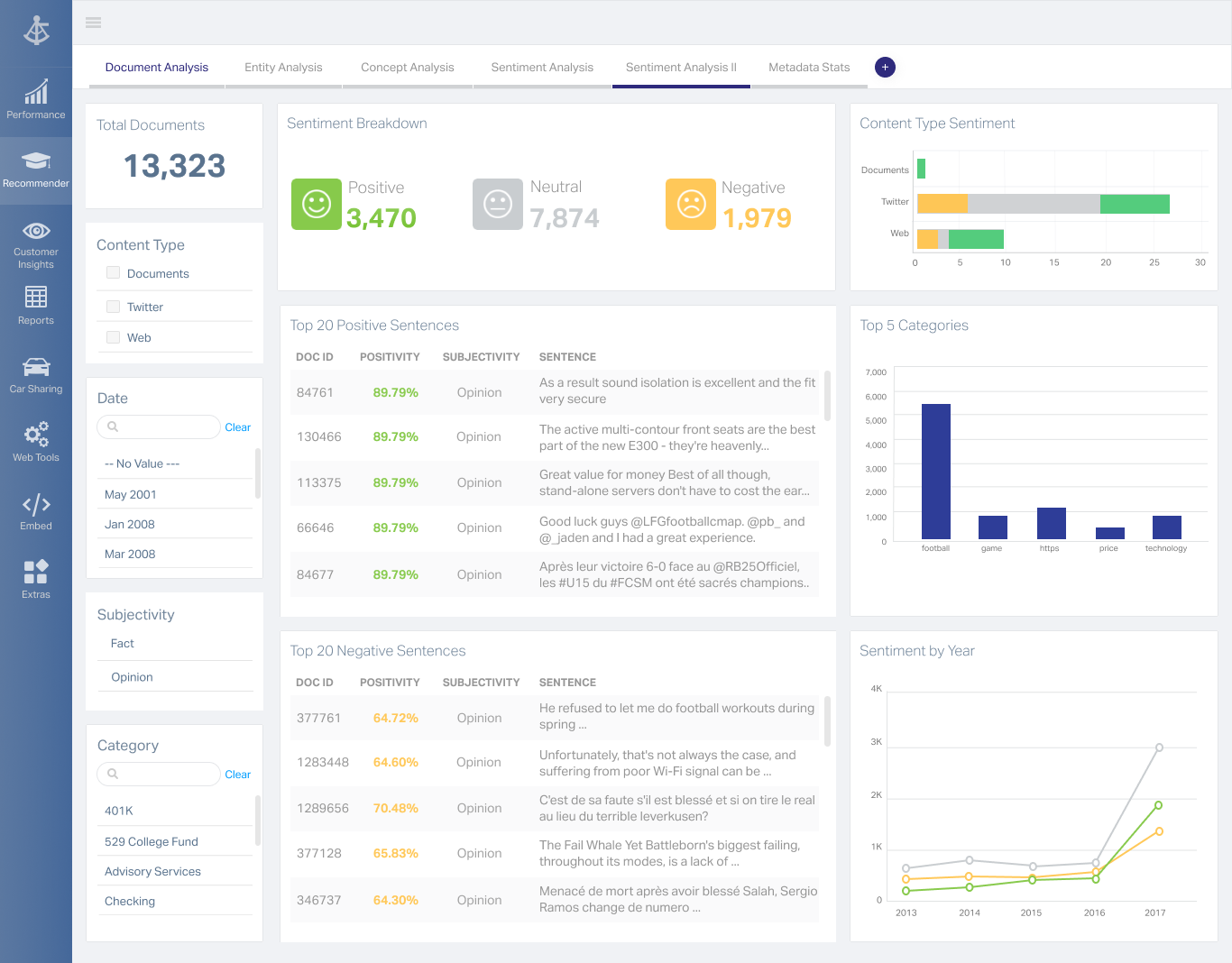
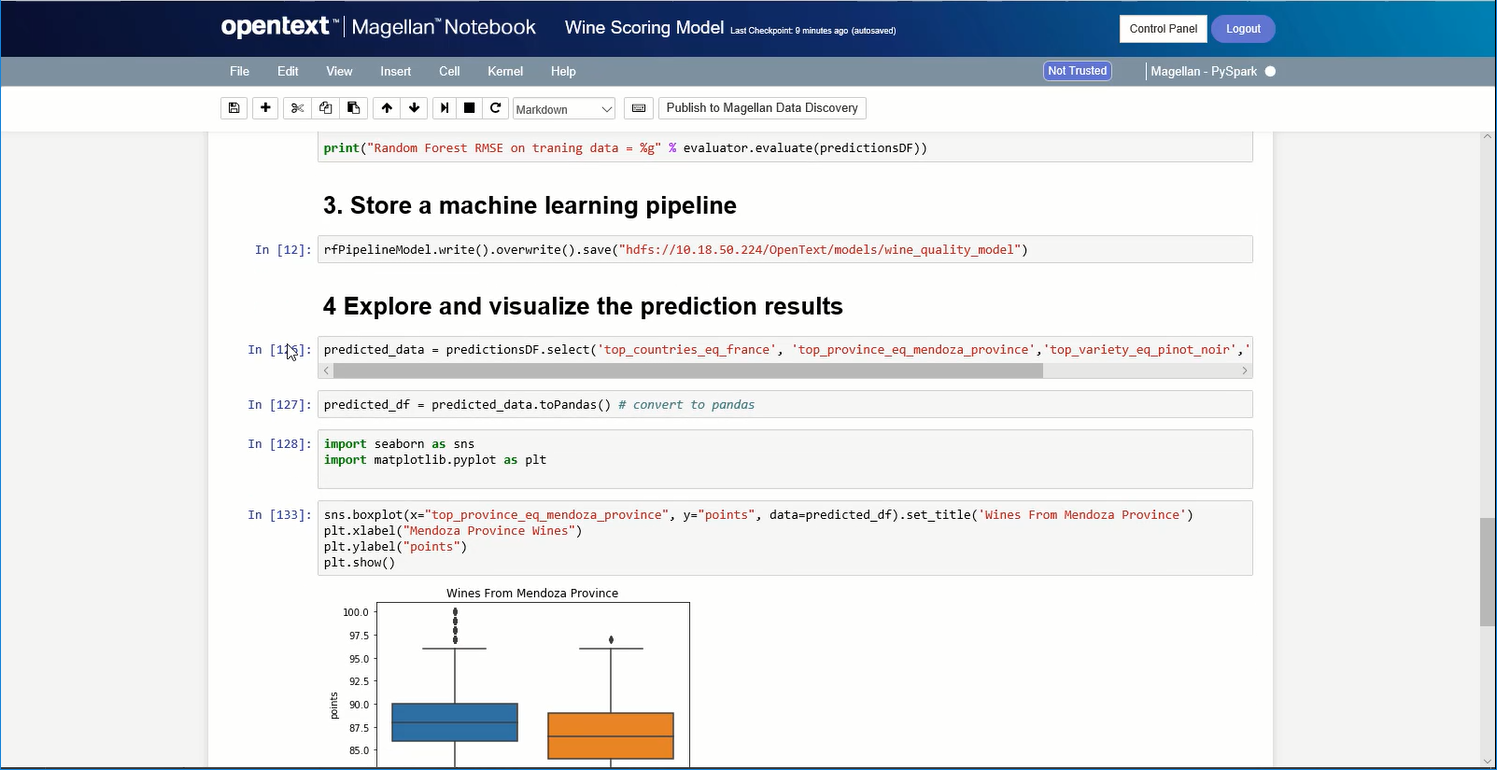
OpenText Magellan Analytics Suite leverages a comprehensive set of data analytics software to identify patterns, relationships and trends through data visualizations and interactive dashboards.
N/A
Pricing
Analytic Solver
Microsoft BI (MSBI)
OpenText Magellan
Editions & Modules
No answers on this topic
Power BI Pro
$14
per month per user
Power BI Premium
$24
per month per user
No answers on this topic
Offerings
Pricing Offerings
Analytic Solver
Microsoft BI (MSBI)
OpenText Magellan
Free Trial
No
No
No
Free/Freemium Version
No
Yes
No
Premium Consulting/Integration Services
No
No
No
Entry-level Setup Fee
No setup fee
No setup fee
No setup fee
Additional Details
—
—
—
More Pricing Information
Community Pulse
Analytic Solver
Microsoft BI (MSBI)
OpenText Magellan
Considered Multiple Products
Analytic Solver
Verified User
Analyst
Chose Analytic Solver
We believe in building the models in Excel. A limitation with Excel is that Excel Solver can not take more than 200 decision variables with multiple constraints. It is cheap in terms of license and maintenance fees against other softwares which are available in the market.
Based on my limited experience and use, and therefore limited global knowledge of the software, I would recommend it especially if the data that will be used as inputs to the model has previously worked on a spreadsheet such as Excel. I would also recommend it to analyze problems of medium and small size. Given the experience I have had when I have used it with large problems, there have been noticeable decreases in the speed of response (which are not associated with the size of the system of equations involved in the calculation). Excellent for processing linear programming models.
Microsoft BI has a lot of features and is a very powerful tool, especially if you have folks on your team that know how to utilize all of its capabilities. To truly unlock all that it can do, it does require people to have a deep understanding of its capabilities. That's where the software really shines. If you are looking for a simpler, more basic reporting tool, there are other programs available that do not require such a steep learning curve.
If you do not have a large budget and are a large organization, I would steer clear of Actuate. If you are looking to do very complex washboarding, I would not use them. Your developers have to be very skilled to work with this. Plan to bring in consultants if necessary to help your process. Adhoc reporting is weak. If your pricing is user based and you expand, this could be very expensive.
On the few occasions when I have used it to deal with problems of optimization of relatively large parameters (with a large number of restrictions and decision variables), the program has been slower, not substantially but slower, than programs such as the WinQsb, even when the latter runs on 32-bit machines and not 64. That has caught my attention, even though it is not a real problem for the uses I give to the program.
Given my partial function as a university professor, it has been much more effective and practical to use other software, due to the limited options that the educational license associated with the software has.
Microsoft BI is fundamental to our suite of BI applications. That being said, Northcraft Analytics is focused on delighting our customers, so if the underlying factors of our decision change, we would choose to re-write our BI applications on a different stack. Luckily, mathematics are the fundamental IP of our technology... and is portable across all BI platforms for the foreseeable future.
I am no longer working for the company that was using Actuate but I believe they would continue to use it because the stitching costs would be to high. It would require a complete rewrite of the reports and the never version of Actuate (BIRT) even required an almost complete report rewrite
The Microsoft BI tools have great usability for both developers and end users alike. For developers familiar with Visual Studio, there is little learning curve. For those not, the single Visual Studio IDE means not having to learn separate tools for each component. For end-users, the web interface for SSRS is simple to navigate with intuitive controls. For ad-hoc analysis, Excel can connect directly to SSAS and provide a pivot table like experience which is familiar to many users. For database development, there is beginning to be some confusion, as there are now three tool choices (VS, SSMS, Azure Data Studio) for developers. I would like to see Azure Data Studio become the superset of SSMS and eventually supplant it.
It is quite intuitive to use. It is fit specifically for doing sentiment, emotion, and intention analysis as well as text classification and text summarization. I would have given 10 if it is fit for the purpose of doing image processing and analysis as well. There is a huge market to analyze video and image data.
SQL Server Reporting Services (SSRS) can drag at times. We created two report servers and placed them under an F5 load balancer. This configuration has worked well. We have seen sluggish performance at times due to the Windows Firewall.
MSBI natively has a site that allows you to vote on user enhancements and bug fixes. This allows the largest nagging issues to float to the top and the development team can prioritize accordingly. As mentioned earlier, the large community base of MSBI developers assist technical resources in handling technical questions.
I have used on-line training from Microsoft and from Pragmatic Works. I would recommend Pragmatic Works as the best way to get up to speed quickly, and then use the Microsoft on-line training to deep dive into specific features that you need to get depth with.
We are a consulting firm and as such our best resources are always billing on client projects. Our internal implementation has weaknesses, but that's true for any company like ours. My rating is based on the product's ease of implementation.
We believe in building the models in Excel. A limitation with Excel is that Excel Solver can not take more than 200 decision variables with multiple constraints. It is cheap in terms of license and maintenance fees against other softwares which are available in the market.
We have used the built in ConnectWise Manager reports and custom reports. The reports provide static data. PowerBI shows us live data we can drill down into and easily adjust parameters. It's much more useful than a static PDF report.
It is vastly superior to these in many ways, for complex reporting it is a much more sophisticated solution. Visualizations are very good. Javascript extensibility is very powerful, others don't support this or as well. Pentaho and MS are both OLAP oriented. Pentaho is moving more toward big data, which was not our primary focus. Others are stuck in the Crystal Reports Band metaphor.
- It has allowed finding ways to optimize (minimizing costs or times) the field processes involved in various projects.
It has even allowed, in specific cases where it was used for that purpose, to optimize the allocation of resources (people) to work in different jobs that present weekly variations of the activity that these people must perform.
It has allowed the sensitivity analysis of projects to changes in the decision variables related to them, which, and in very dynamic and changing environments, resulted in substantial decreases in money losses.
As a SaaS provider we see being able to provide self-service BI to our client users as a competitive advantage. In fact the MSSQL enabled BI is a contributing factor to many winning RFPs we have done for prospective client organisations.
However MSSQL BI requires extensive knowledge and skills to design and develop data warehouses & data models as a foundation to support business analysts and users to interrogate data effectively and efficiently. Often times we find having strong in-house MSSQL expertise is a bless.
Actuate can handle 50 to 60 sub reports inside a report very well.
Dynamically creating the datasource, chart, graph, reports are the main advantages. We can do any level of drilling, and can create a performance matrix dashboard efficiently.