Apache Camel is an open source integration platform.
N/A
Matillion
Score 8.5 out of 10
N/A
Matillion is a data pipeline platform used to build and manage pipelines. Matillion empowers data teams with no-code and AI capabilities to be more productive, integrating data wherever it lives and delivering data that’s ready for AI and analytics.
$2.50
Pay as you go per user
Pricing
Apache Camel
Matillion
Editions & Modules
No answers on this topic
Developer: For Individuals
$2.50/credit
Pay as you go per user
Basic
$1000
per month 500 prepaid credits (additional credits: $2.18/credit)
Advanced
$2000
per month 750 prepaid credits (additional credits: $2.73/credit)
Enterprise
Request a Quote
Offerings
Pricing Offerings
Apache Camel
Matillion
Free Trial
No
Yes
Free/Freemium Version
No
No
Premium Consulting/Integration Services
No
Yes
Entry-level Setup Fee
No setup fee
No setup fee
Additional Details
—
Billed directly via cloud marketplace on an hourly basis, with annual subscriptions available depending on the customer's cloud data warehouse provider.
Message brokering across different systems, with transactionality and the ability to have fine tuned control over what happens using Java (or other languages), instead of a heavy, proprietary languages. One situation that it doesn't fit very well (as far as I have experienced) is when your workflow requires significant data mapping. While possible when using Java tooling, some other visual data mapping tools in other integration frameworks are easier to work with.
Great: Need to query simpler APIs, or utilize well known services such as GSheets etc.? Matillion has got some of the best and easiest to use connectors out there. Not so great: Do you need have a competent CI/CD flow that you will be able to update / compare from Matillion as well as other sources at the same time? Good luck, you will need to be extra careful, as you might have to have a deeper dive into your servers Terminal each time you have a git conflict.
Camel has an easy learning curve. It is fairly well documented and there are about 5-6 books on Camel.
There is a large user group and blogs devoted to all things Camel and the developers of Camel provide quick answers and have also been very quick to patch Camel, when bugs are reported.
Camel integrates well with well known frameworks like Spring, and other middleware products like Apache Karaf and Servicemix.
There are over 150 components for the Camel framework that help integrate with diverse software platforms.
Matillion is brilliant at importing data -- it would be amazing to have more ways to export data, from emailed exports to API pushes.
Any Python that takes more than a few lines of code requires an external server to run it. It would be great to have more integration (perhaps in a connected virtual environment) to easily integrate customized code.
Troubleshooting server logs requires quite a bit of technical expertise. More human readable detailed error handling would be greatly appreciated.
With the current experience of Matillion, we are likely to renew with the current feature option but will also look for improvement in various areas including scalability and dependability. 1. Connectors: It offers various connectors option but isn't full proof which we will be looking forward as we grow. 2. Scalability: As usage increase, we want Matillion system to be more stable.
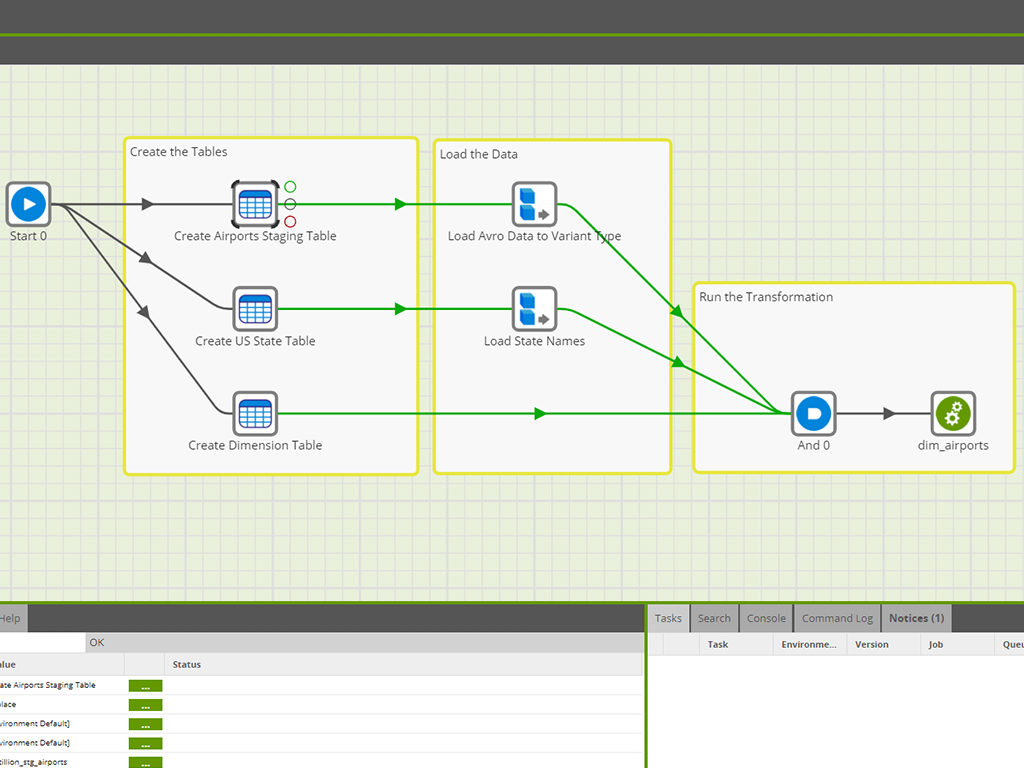
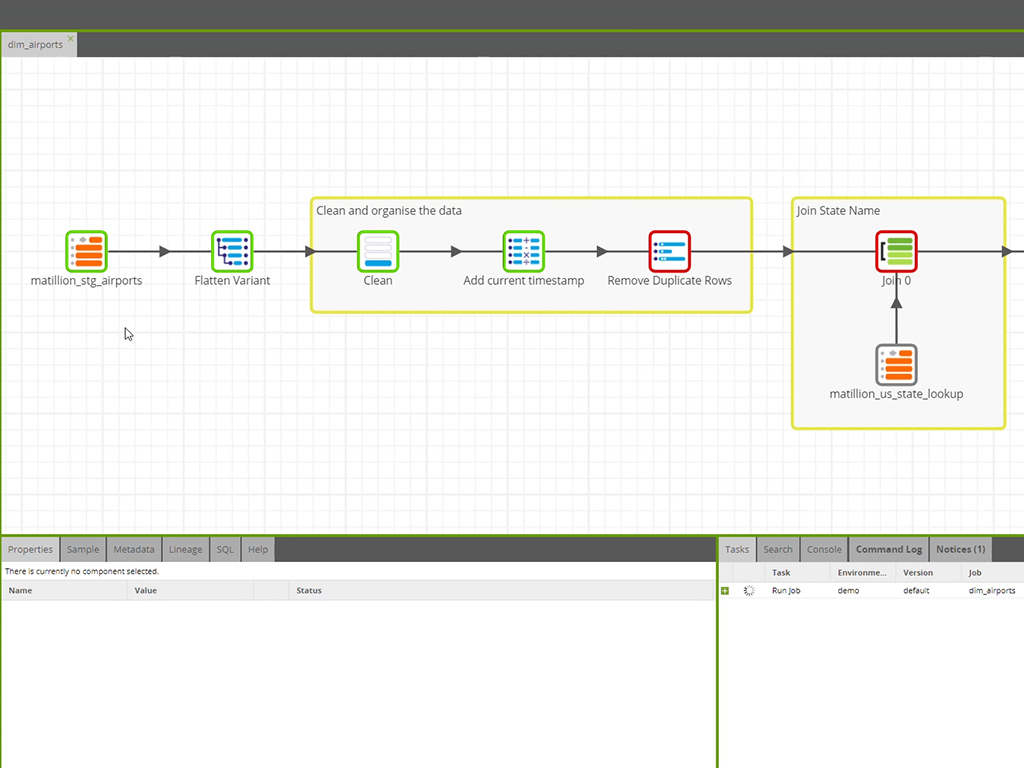
We are able to bring on new resources and teach them how to use Matillion without having to invest a significant amount of time. We prefer looking for resources with any type of ETL skill-set and feel that they can learn Matillion without problem. In addition, the prebuilt objects cover more than 95% of our use cases and we do not have to build much from scratch.
Overall, I've found Matillion to be responsive and considerate. I feel like they value us as a customer even when I know they have customers who spend more on the product than we do. That speaks to a motive higher than money. They want to make a good product and a good experience for their customers. If I have any complaint, it's that support sometimes feels community-oriented. It isn't always immediately clear to me that my support requests are going to a support engineer and not to the community at large. Usually, though, after a bit of conversation, it's clear that Matillion is watching and responding. And responses are generally quick in coming.
If you are looking for a Java-based open source low cost equivalent to webMethods or Azure Logic Apps, Apache Camel is an excellent choice as it is mature and widely deployed, and included in many vendored Java application servers too such as Redhat JBoss EAP. Apache Camel is lacking on the GUI tooling side compared to commercial products such as webMethods or Azure Logic Apps.
Fivetran offers a managed service and pre-configured schemas/models for data loading, which means much less administrative work for initial setup and ongoing maintenance. But it comes at a much higher price tag. So, knowing where your sweet spot is in the build vs. buy spectrum is essential to deciding which tool fits better. For the transformation part, dbt is purely (SQL-) code-based. So, it is mainly whether your developers prefer a GUI or code-based approach.
We're using Matillion on EC2 instances, and we have about 20 projects for our clients in the same instance. Sometimes, we're struggling to manage schedules for all projects because thread management is not visible, and we can't see the process at the instance level.
Very fast time to market in that so many components are available to use immediately.
Error handling mechanisms and patterns of practice are robust and easy to use which in turn has made our application more robust from the start, so fewer bugs.
However, testing and debugging routes is more challenging than working is standard Java so that takes more time (less time than writing the components from scratch).
Most people don't know Camel coming in and many junior developers find it overwhelming and are not enthusiastic to learn it. So finding people that want to develop/maintain it is a challenge.