
Priti Asai / Thakkar
Lead Software Engineer
Chose Cassandra
Cassandra handles high traffic transactions more powerfully compared to MongoDB.

| Product | Rating | Most Used By | Product Summary | Starting Price |
|---|---|---|---|---|
 Cassandra | N/A | Cassandra is a no-SQL database from Apache. | N/A | |
 IBM FileNet Content Manager | N/A | IBM FileNet Content Manager is a cloud-native content services solution to manage, share and collaborate on content to save employees’ time and improve customer experiences. This ECM solution includes functionality for document management, business process management, case management, content analytics, imaging, records management, and information governance. The IBM FileNet Content Manager content management solution provides the foundation for IBM Cloud Pak® for Business Automation. It uses AI… | N/A | |
 MongoDB | N/A | MongoDB is an open source document-oriented database system. It is part of the NoSQL family of database systems. Instead of storing data in tables as is done in a "classical" relational database, MongoDB stores structured data as JSON-like documents with dynamic schemas (MongoDB calls the format BSON), making the integration of data in certain types of applications easier and faster. | $0 per month |
| Apache Cassandra | IBM FileNet Content Manager | MongoDB | ||||||||||||||||||||||
|---|---|---|---|---|---|---|---|---|---|---|---|---|---|---|---|---|---|---|---|---|---|---|---|---|
| Editions & Modules | No answers on this topic | No answers on this topic |
| |||||||||||||||||||||
| Offerings |
| |||||||||||||||||||||||
| Entry-level Setup Fee | No setup fee | Optional | No setup fee | |||||||||||||||||||||
| Additional Details | — | — | Fully managed, global cloud database on AWS, Azure, and GCP | |||||||||||||||||||||
| More Pricing Information | ||||||||||||||||||||||||
| Apache Cassandra | IBM FileNet Content Manager | MongoDB | |
|---|---|---|---|
| Considered Multiple Products |  Cassandra Priti Asai / Thakkar Lead Software Engineer Chose Cassandra Cassandra handles high traffic transactions more powerfully compared to MongoDB.  Glen Kim Senior Software Engineer Chose Cassandra It was packaged with the vendor product we bought. Also, it’s good for high performance transactional systems. I'm part of our NoSQL team and Cassandra quickly became a favorite for developers with agile teams.  Dhruba Jyoti Nag Associate Chose Cassandra Cassandra has its own use case. It performs very well as a data store. Data can be written to it at a high rate. It cannot be compared to traditional RDBMS like Oracle, because they all have their own usage. Even MongoDB, which is somewhat similar, cannot be stacked up against …  yixiang Shan IT Strategic Technical Advisor Chose Cassandra We evaluated MongoDB also, but don't like the single point failure possibility. The HBase coupled us too tightly to the Hadoop world while we prefer more technical flexibility. Also HBase is designed for "cold"/old historical data lake use cases and is not typically used for …  Ravi Reddy Lead Engineer Consultant Chose Cassandra Technology selection should be done based on the need and not based on buzz words in the market (google searching). If your data need flat file approach and more searchable based on index and partition keys, then it's better to go for Cassandra. Cassandra is a better choice …  Anson Abraham Data Lord Chose Cassandra Against HBASE, writes were faster. Reads not so much. Also ability to store in other formats would be good (such as objects). Compared to aerospike, does not compare. Aerospike blows it out of water.  Abdel Kamel DevOps Manager Chose Cassandra Cassandra does one thing very well. It's able to collect any type of metrics and analytics and store them at very fast speeds. But when it comes to reading the data, there are minor performance issues. That's when other databases such as couchdb or couchbase come in. They can …  Rekha Joshi Staff Software Engineer Chose Cassandra Apache Cassandra has the best of both worlds, it is a Java based NoSQL, linearly scalable, best in class
tunable performance across different workloads, fault tolerant, distributed, masterless, time series database. We have used both Apache HBase and MongoDB for some use cases …  David Prinzing Chief Technology Officer Chose Cassandra Four years ago, I needed to choose a web-scale database. Having used relational databases for years (PostgreSQL is my favorite), I needed something that could perform well at scale with no downtime. I considered VoltDB for its in-memory speed, but it's limited in scale. I …  Kalpesh Gada Software Engineer Chose Cassandra I tried to evaluate Cassandra against Voldemort and found Cassandra more efficient when writing scalable applications.  Gary Ogasawara VP Engineering Chose Cassandra Cassandra is well suited to more complex networks like multiple data centers. The underlying distributed systems logic is fundamentally sound. | IBM FileNet Content Manager  Gregory Jones Cyber Security Engineer Chose IBM FileNet Content Manager IBM FileNet Content Manager unlike other similar products, it has advanced security features like ACLs and digital signatures that help our organization protect our content from unauthorized access. It is highly scalable as it can handle large volumes of content and users. It …  Moshe Elbaz IT MAnager Chose IBM FileNet Content Manager Microsoft SharePoint and Alfresco Activiti  Ben Williams Automation Developer (RPA and OCR Datacap) Chose IBM FileNet Content Manager Not used many others like this. However, the others do seem more lightweight and easier to deploy. |  MongoDB  Kendal Droddy Senior System Engineer Chose MongoDB The environment I work in is somewhat unique in that we use both MySQL and MongoDB. However, each is used for specific purposes that the other is not well suited for. MongoDB is not a relational database like MySQL, so it serves as the perfect place to dump key bits of data for …  Gaurav Pandey - PMP,ITIL,CSM SAP Application Manager Chose MongoDB We wanted to try something which is not a relation DB and has more of distributed architecture. MongoDB turned out to be a great choice.  Pablo Alejandro Laborde Coordinador Datacenter Backup&Storage Chose MongoDB None  Oleg Chumin Java Software Engineer Chose MongoDB We have [measured] the speed in reading/write operations in high load and finally select the winner = MongoDBWe have [not] too much data but in case there will be 10 [times] more we need Cassandra. Cassandra's storage engine provides constant-time writes no matter how big your …  Jose Manuel Ortega Software Engineer && Security researcher Chose MongoDB MongoDB is more of a general purpose nosql database, while elasticSearch is a search engine oriented nosql solution. Percona Server for MongoDB is a more suitable solution for the enterprise field.  Balázs Kiss Software Developer Chose MongoDB MongoDB is the most reliable and fastest for storing document-based data. It has a place among the most popular DB's these days.  Gregory Pecqueur Développeur Web Full Stack MEAN LAMP Chose MongoDB MySQL and PostgreSQL  Duncan Hernandez Product Owner, Business Intelligence Chose MongoDB Snowflake and Redshift are much more mature and have been around longer. MongoDB is definitely much less expensive and if you are in a startup, this is an almost for-sure option. Redshift can be slow and Mongo is much faster. However, losing the relational database aspect could …  Gene Baker Vice President, Chief Architect, Development Manager and Software Engineer Chose MongoDB I just felt MongoDB was easier to use and more cost-effective. Aggregation pipelines are great.  Thuvaragan Amarasingam Trainee software engineer Chose MongoDB It's very fast and easiest to use. Many companies are using this nowadays. It's helped to complete many software products very quickly so the year income has increased compared with last years. Many programmers are now leaning this tool as back end developers so that we changed …  Sagiv Frankel Senior Software Engineer Chose MongoDB Your default choice should not be MongoDB in my opinion. Most user-facing systems are relational by nature so a well known and reliable SQL database would be easier to maintain and simpler to develop long term. If you highly value speed of development go with firebase. If you …  Rounak Jangir Ab Initio Developer Chose MongoDB MongoDB and Cassandra are both database system from the NoSQL family. MongoDB can be used in lots of use cases while Cassandra has a specific usage. There are some features that MongoDB provides efficiently while Cassandra doesn't and vice-versa. Like, you can update the data … |
| Apache Cassandra | IBM FileNet Content Manager | MongoDB | |||||||||||||||||||||||||||||||||||||||||||||||||||||||
|---|---|---|---|---|---|---|---|---|---|---|---|---|---|---|---|---|---|---|---|---|---|---|---|---|---|---|---|---|---|---|---|---|---|---|---|---|---|---|---|---|---|---|---|---|---|---|---|---|---|---|---|---|---|---|---|---|---|
| Enterprise Content Management |
| ||||||||||||||||||||||||||||||||||||||||||||||||||||||||
| NoSQL Databases |
|
| Apache Cassandra | IBM FileNet Content Manager | MongoDB | |
|---|---|---|---|
| Small Businesses | No answers on this topic |  Square 9 Softworks Score 9.3 out of 10 |  IBM Cloudant Score 7.4 out of 10 |
| Medium-sized Companies |  Azure Cosmos DB Score 9.0 out of 10 |  MediaValet Score 8.8 out of 10 | IBM Cloudant Score 7.4 out of 10 |
| Enterprises | Azure Cosmos DB Score 9.0 out of 10 | MediaValet Score 8.8 out of 10 | IBM Cloudant Score 7.4 out of 10 |
| All Alternatives | View all alternatives | View all alternatives | View all alternatives |
| Apache Cassandra | IBM FileNet Content Manager | MongoDB | |
|---|---|---|---|
| Likelihood to Recommend | 6.0 (0 ratings) | 8.2 (0 ratings) | 10.0 (0 ratings) |
| Likelihood to Renew | 8.6 (0 ratings) | - (0 ratings) | 10.0 (0 ratings) |
| Usability | 7.0 (0 ratings) | - (0 ratings) | 10.0 (0 ratings) |
| Availability | - (0 ratings) | - (0 ratings) | 9.0 (0 ratings) |
| Support Rating | 7.0 (0 ratings) | 6.0 (0 ratings) | 9.6 (0 ratings) |
| Implementation Rating | 7.0 (0 ratings) | - (0 ratings) | 8.4 (0 ratings) |
| Ease of integration | - (0 ratings) | 5.2 (0 ratings) | - (0 ratings) |
| Apache Cassandra | IBM FileNet Content Manager | MongoDB | |
|---|---|---|---|
| Likelihood to Recommend |
David Prinzing Chief Technology Officer |
 Ankit Kumar Saxena Solutions Architect |
Oleg Chumin Java Software Engineer |
| Pros |
|
|
 Joshua Weaver Developer |
| Cons |
Ravi Reddy Lead Engineer Consultant |
|
 Jon Kern Manager Strategic Products |
| Likelihood to Renew |
| No answers on this topic |
 Ronald Melendez Desarrollador de software |
| Usability |
Glen Kim Senior Software Engineer | No answers on this topic |
 Mehmet Fatih Onal Technical Architect |
| Support Rating |
Glen Kim Senior Software Engineer |
Ben Williams Automation Developer (RPA and OCR Datacap) |
|
| Implementation Rating | No answers on this topic | No answers on this topic |
 Tom Maiaroto Sr. Platform Developer / UX Designer / Optimization Engineer |
| Alternatives Considered |
Rekha Joshi Staff Software Engineer |
Gregory Jones Cyber Security Engineer |
Kendal Droddy Senior System Engineer |
| Return on Investment |
yixiang Shan IT Strategic Technical Advisor |
|
Jose Manuel Ortega Software Engineer && Security researcher |
| ScreenShots | IBM FileNet Content Manager Screenshots   | MongoDB Screenshots     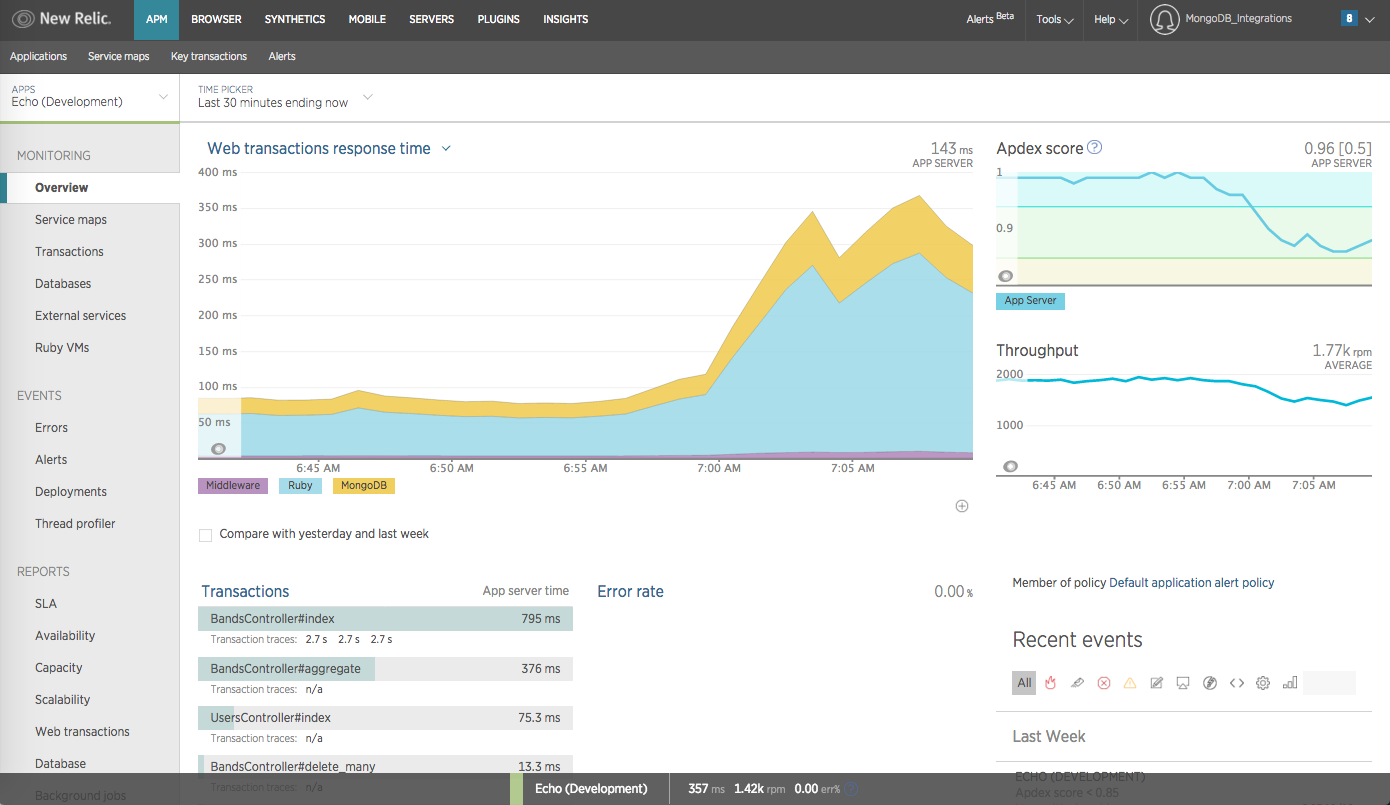 |