
Chris Coppenbarger
Web & Computer Programmer
Chose Apache HTTP Server

| Product | Rating | Most Used By | Product Summary | Starting Price |
|---|---|---|---|---|
 Apache HTTP Server | N/A | Apache Web Server (Apache HTTP Server) is an open source HTTP web server for modern operating systems including UNIX and Windows. | N/A | |
 Gradle Build Tool (Open Source) | N/A | Gradle is an open source build system. Gradle boasts a rich API and mature ecosystem of plugins and integrations to support automation. Users can model, integrate and systematize the delivery of software from end to end. | $0 per month | |
 NGINX | Mid-Size Companies (51-1,000 employees) | NGINX, a business unit of F5 Networks, powers over 65% of the world's busiest websites and web applications. NGINX started out as an open source web server and reverse proxy, built to be faster and more efficient than Apache. Over the years, NGINX has built a suite of infrastructure software products o tackle some of the biggest challenges in managing high-transaction applications. NGINX offers a suite of products to form the core of what organizations need to create… | N/A |
| Apache HTTP Server | Gradle Build Tool (Open Source) | NGINX | ||||||||||||||||||||||
|---|---|---|---|---|---|---|---|---|---|---|---|---|---|---|---|---|---|---|---|---|---|---|---|---|
| Editions & Modules | No answers on this topic | No answers on this topic | No answers on this topic | |||||||||||||||||||||
| Offerings |
| |||||||||||||||||||||||
| Entry-level Setup Fee | No setup fee | No setup fee | Optional | |||||||||||||||||||||
| Additional Details | — | — | — | |||||||||||||||||||||
| More Pricing Information | ||||||||||||||||||||||||
| Apache HTTP Server | Gradle Build Tool (Open Source) | NGINX | |
|---|---|---|---|
| Considered Multiple Products | Apache HTTP Server Chris Coppenbarger Web & Computer Programmer Chose Apache HTTP Server  Tyler Longren Wordpress Developer Chose Apache HTTP Server  Justin Roodman Product Marketing Manager Chose Apache HTTP Server  Jason Smith, DPA Instructional Technologist Chose Apache HTTP Server To be quite honest I often select Apache because it is the world's most commonly used web server and I have been using it for more than 20 years across many organizations. I have never been burned using Apache. Apache rises above IIS in functionality, configurability, and the …  Ryan Prather Account Manager Chose Apache HTTP Server  Josh Stapp Sr Application Developer Chose Apache HTTP Server I have loved Apache and the brief experience I had with IIS wasn't as good. Nginx I have heard good things and though we use it heavily for our servers now without problems, I haven't configured it myself.  Rudolph Pereira Team Lead Chose Apache HTTP Server Apache HTTP Server has more stability and features than the other products. It is also more secure. Apache HTTP Server has a more developer base so it is easier to find resources on it.  Rahul Dhangar Web Technologist Chose Apache HTTP Server Apache Web Server is the oldest among all of these above-mentioned web server solutions provide a wider range of tools and support available which is of great help when creating a web app because less investment of time and money is what contributes to the success of a project … | Gradle Build Tool (Open Source) No answer on this topic |  NGINX Rudolph Pereira Team Lead Chose NGINX NGINX is faster and easier to configure. It has better reverse proxy features which is much easy to configure.  Anatoly Geyfman Founder & CEO Chose NGINX Nnginx is more light-weight than many other web servers, has a very expressive configuration language, easier to configure than tools like IIS and Apache, easy to install certificates for SSL, much easier to model complex routing scenarios than IIS, easier to configure than … Josh Stapp Sr. Software Engineer Chose NGINX I have found that [NGINX] seems to perform better throughout the years with less issues although I've used Apache more. I would definitely recommend [NGINX] for any high volume site and I've seen this to usually be the case from most provided web hosts who will pick [NGINX] …  Sandesh Singh FrontEnd Development Engineer Chose NGINX NGINX Stacks up at the top for me because it's fast, reliable, and secure and apache is also usable but not so good in comparison to NGINX and since I and my organization have switched to NGINX I also don't want to look back at apache as NGINX works the best for our use case …  John Reeve Principal, Lead developer, Lead designer Chose NGINX NGINX's footprint is much smaller than Apache, and it's great for serving up static content. The URL rewriting was not as familiar as Apache, but just as powerful once configured correctly. As a load balancer, it's much more affordable than Citrix ADC. We used the load …  Alan Matson, CCNA:S, MCP Sr. Network Security Engineer Chose NGINX NGINX has been more stable and customizable than we have had with APACHE.  Tom Erdman Network Systems Administrator Chose NGINX Nginx is way easier to configure and runs better than Microsoft’s offering, in my opinion, and I’ll take it over Apache for its simplicity.  Leonel Quinteros Director of Technology Chose NGINX Other Web servers are either not performant enough or locked to a platform. The main competitor in my opinion is the Apache Web Server, that can be extended in functionality through a diverse set of modules to perform almost any task related to a network server. But at scale, I …  Gregory Pecqueur Développeur Web Full Stack MEAN LAMP Chose NGINX We were happy to drop Apache to serve our applications. Rahul Dhangar Web Technologist Chose NGINX Microsoft IIS server is not open source and it comes with its own overhead in terms of cost which is not the case with Nginx as we do not need to purchase a handful of other products in order to get an HTTP server up and running. If I compare it to Apache Server, it …  Nitin Bhadauria Manager DevOps Chose NGINX Nginx works on basic operating system principles and what I like the most about it is that even after being feature-rich and easily customizable it uses minimum resources.  Shea Bunge Web Developer Chose NGINX Apache has the advantage of being very widely supported and well-known, which makes integration with various tools and software simple, whereas Nginx often requires manual configuration to achieve the same thing. However, the ease of use, configurability, and relatively small …  Gabriel Samaroo Senior Software Engineer Chose NGINX Apache is still widely used by the software community and can accomplish many of the same things Nginx can. Nginx is a better solution when you are serving static content (vs. dynamic content), are on a Unix-system, and have a high-traffic website. In addition, certain things …  L Matthew Blancett Senior DevOps Engineer Chose NGINX NetApp, f1, etc., [I've] used them all. I find using commodity hardware across diverse endpoints running software solutions is cheaper while being more available than individual hardware solutions. and I find Nginx to be the best proxy solution that can do everything we need.  Ilya Popovich QA Test Lead Chose NGINX Configuration options are easier on Nginx. It's better suited for our cases. It's easier to find specialists for Nginx in our area.  Jhonattan Smith Peláez Nimisica Líder de gestión de la configuración e infraestructura Chose NGINX When we did load and performance testing we got better results with Nginx |
| Apache HTTP Server | Gradle Build Tool (Open Source) | NGINX | |||||||||||||||||||||||||||
|---|---|---|---|---|---|---|---|---|---|---|---|---|---|---|---|---|---|---|---|---|---|---|---|---|---|---|---|---|---|
| Application Servers |
|
| Apache HTTP Server | Gradle Build Tool (Open Source) | NGINX | |
|---|---|---|---|
| Small Businesses | NGINX Score 9.2 out of 10 |  GitLab Score 8.8 out of 10 | Apache HTTP Server Score 9.1 out of 10 |
| Medium-sized Companies | NGINX Score 9.2 out of 10 | GitLab Score 8.8 out of 10 |  Apache Tomcat Score 8.0 out of 10 |
| Enterprises | NGINX Score 9.2 out of 10 | GitLab Score 8.8 out of 10 | Apache Tomcat Score 8.0 out of 10 |
| All Alternatives | View all alternatives | View all alternatives | View all alternatives |
| Apache HTTP Server | Gradle Build Tool (Open Source) | NGINX | |
|---|---|---|---|
| Likelihood to Recommend | 8.0 (20 ratings) | 9.0 (12 ratings) | 8.9 (50 ratings) |
| Likelihood to Renew | - (0 ratings) | - (0 ratings) | 9.1 (1 ratings) |
| Usability | - (0 ratings) | 10.0 (1 ratings) | 8.3 (3 ratings) |
| Performance | - (0 ratings) | 3.0 (1 ratings) | - (0 ratings) |
| Support Rating | 9.3 (2 ratings) | 9.0 (4 ratings) | 8.1 (4 ratings) |
| Apache HTTP Server | Gradle Build Tool (Open Source) | NGINX | |
|---|---|---|---|
| Likelihood to Recommend | Apache
| Open Source
 Sayam Jain Software Architect | F5
 Luiz Eduardo Garcia System Administrator |
| Pros | Apache
| Open Source
 Dirce Richards Sr. Software Engineer/Devops | F5
Gabriel Samaroo Senior Software Engineer |
| Cons | Apache
Rahul Dhangar Web Technologist | Open Source
| F5
L Matthew Blancett Senior DevOps Engineer |
| Likelihood to Renew | Apache No answers on this topic | Open Source No answers on this topic | F5
|
| Usability | Apache No answers on this topic | Open Source
| F5
|
| Performance | Apache No answers on this topic | Open Source
 David Tanner Devops Engineer | F5 No answers on this topic |
| Support Rating | Apache
Jason Smith, DPA Instructional Technologist | Open Source
 Mohit Goenka Senior Engineering Manager | F5
John Reeve Principal, Lead developer, Lead designer |
| Alternatives Considered | Apache
| Open Source
 Sharique Khan Software Engineering Manager - Edge and Cloud Native Productline | F5
Josh Stapp Sr. Software Engineer |
| Return on Investment | Apache
| Open Source
Dirce Richards Sr. Software Engineer/Devops | F5
 Tyler Johnson Senior Software Architect |
| ScreenShots | NGINX Screenshots 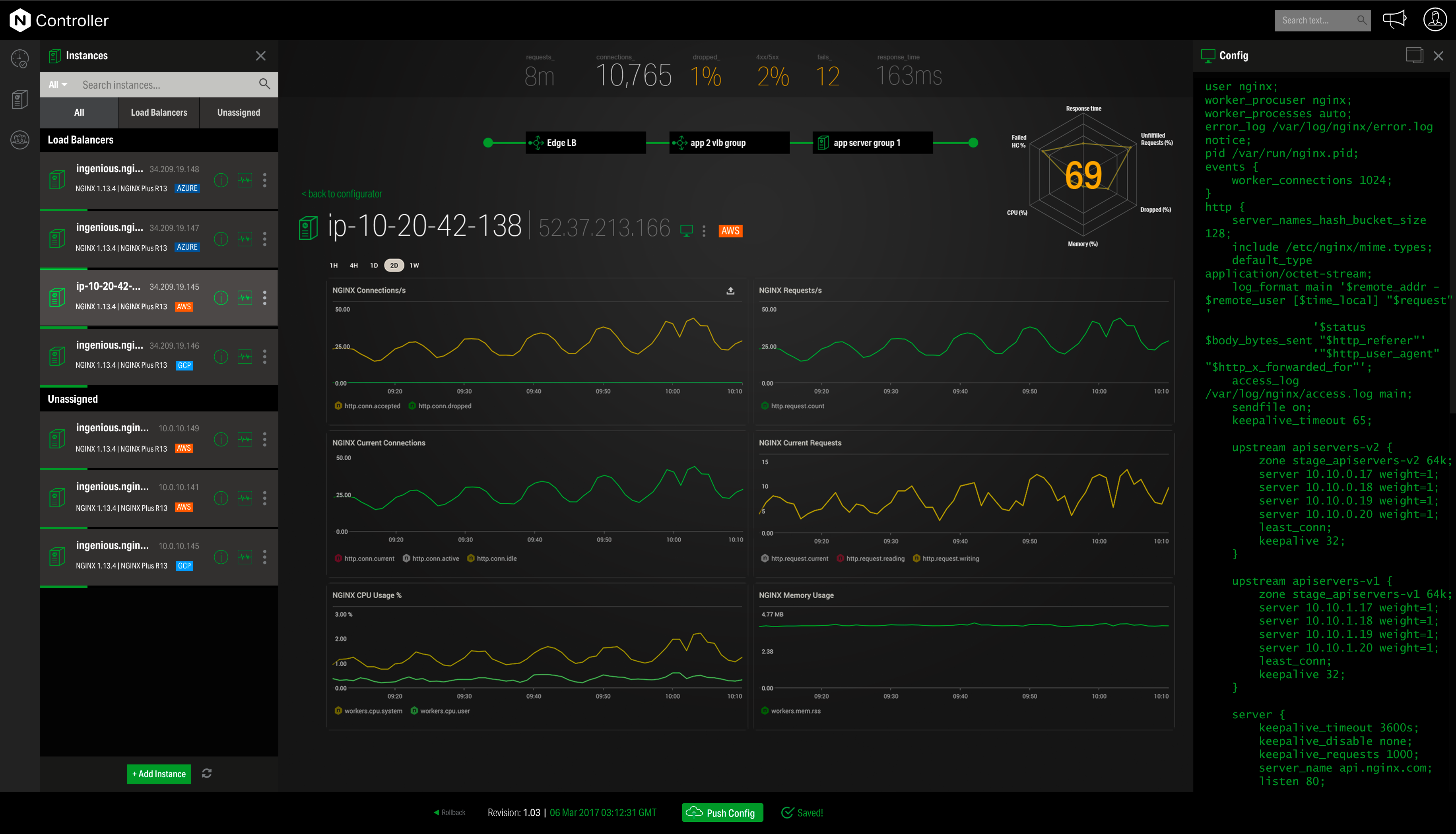  |