JMeter, from Apache, is a load and performance testing tool.
$0
Layer7 API Security
Score 9.0 out of 10
N/A
Layer7 API Management enables enterprises to test and monitor real-time in both development and production environments. Now under the brand Layer7 API Security from Broadcom, the service includes Layer7 API Gateway, and the Layer7 API Developer Portal.
N/A
SAP Integration Suite
Score 8.5 out of 10
N/A
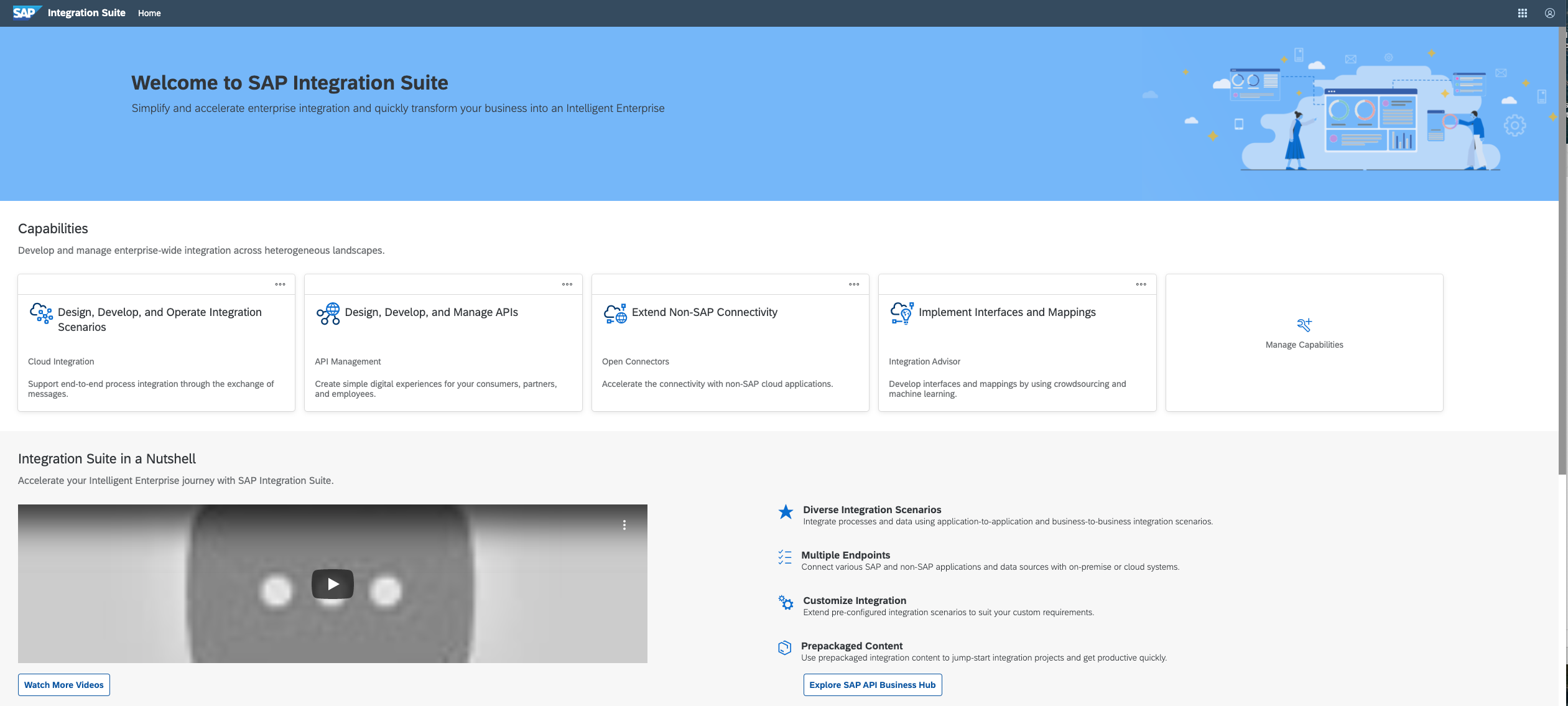
SAP Integration Suite is an integration platform-as-a-service (iPaaS) that helps quickly integrate on-premises and cloud-based processes, services, applications, events, and data. It is used to accelerate innovation, automate more processes, and realize a faster time to value.
$11,199
per year
Pricing
Apache JMeter
Layer7 API Security
SAP Integration Suite
Editions & Modules
No answers on this topic
No answers on this topic
No answers on this topic
Offerings
Pricing Offerings
JMeter
Layer7 API Security
SAP Integration Suite
Free Trial
No
No
Yes
Free/Freemium Version
Yes
No
No
Premium Consulting/Integration Services
No
No
No
Entry-level Setup Fee
No setup fee
No setup fee
No setup fee
Additional Details
—
—
Access to free tier services does not expire while there is an active Pay-As-You-Go or CPEA account with SAP. Once a free tier service limit has been reached users have the option to update from a free to a paid service plan in the same account.
JMeter is well suited for Java applications where the user can script the scenario once and make changes to accommodate for as many numbers of users for load test execution. The image and selection of any files or exporting files scenario is handled well.
It is less appropriate to test Ajax applications where it is required to script click per use.
Well suited for publishing internal services with very high security, protecting against attacks, and managing on-demand load. Also good for transform messages and SQL to Rest services. Not appropriate for business logic implementation.
In our case to have a such a poweful middleware in the cloud, give us a lot of benefits such as maintenance and support. In the integration part to be able to connect SAP and Non SAP applications makes SAP Integration Suite a good investment when our master data in this case is in S4HANA. Less appropriate is that sometimes the updates in production tenant failed and they have to downgrade or repair the issues. Affecting the usage of the tool. I guess SAP team have to be more aware of performing the changes and tested well on development environments and then when they know for sure that is the correct way to go with the update put it in production.
Easy of use - in generate load like HTTP requests, and processing/analyzing the responses. No coding is necessary at the basic level, just need to understand load testing and the infrastructure being tested.
Automatic management of things like cookies to help with session state support - so you don't specifically have to worry about it or handle it
Lots of testing/configuration options to suit your needs in making the right load generation (sampling requests), and analyzing the results, including any pre and post processing of the results first. Things like the Beanshell/BSF pre/post processors, response assertion, regular expression extractor, XPath extractor, CSV data set config
There is a JMeter cloud service called BlazeMeter that I think would be useful for those that need to scale up high load without provisioning their own systems. I've not personally tried it though, but I recently attended a meetup presentation that highlighted nice useful features that BlazeMeter provides. One should evaluate the service if they are considering JMeter and need to expand beyond existing hardware resources.
Jmeter requires many tweaks with respect to its configuration file and thread properties. users need to edit theses files themselves. There could be some interface where we can edit this fields.
Jmeter cannot handle more threads and hangs up when we increase the number of threads. This causes lot of inconvenience. In these situations, user can be notified that such change would be lead to slow performance so that user can do as required. The same appears when we try to view huge files on graph listener.
Jmeter should optimize the read and write access to output csv since it acts as overhead to the I/O performance. This affects our test results for the application which we are testing.
Provide more pre-built integrations to use within SuccessFactors or other modules instead of everything having to be custom built
Support is unable to provide advice on custom builds so you often have to engage a 3rd party partner
Works best when you have the functional and technical teams working together. Otherwise, the system is too technical for a functional user to create integration and a technical user not always understand the functional perspective
Price, Wiki and user sharing. Having access to the information provided by the developers and other open source providers is key for me. The ability to share information and get answers directly is very important to success in software testing. And the price of this product currently is amazing. Too many companies charge way too much money for products that are far behind in their value and pertinence
It is in place, our system integrators are familiar with it, and it fits into the ecosystem. A better user interface, flow build and debugging experience would see it grow, many technical staff do not enjoy using it for this reason, however it is quite capable and powerful behind this one shortcoming.
The purpose related to performance and load testing through Apache JMeter works fine but the usability of the tool should be improved quite a lot. If someone starts with the Jmeter fresh without prior experience, they need to put more efforts in understanding the tool. The UI is not that great which is the main reason not to give high rating on usability.
The user interface is messy and not intuitive. It has a steep learning curve, and flows developed around are easy to make a mess with layout and can be difficult to follow. The debugging is also quite difficult, it takes some time to figure out how to follow the flow and examine data. Error handling is also difficult and not intuitive, it is better to let some errors leak and monitor through ALM.
I have been using JMeter for the last year. By using this tool, you can make sure the system will work under varied loads. It helps us to simulate real time scenarios by creating required virtual users and make sure the application will work under load. Perform load, stress, and stability testing using JMeter.
The support team is good and the response time is reasonable, but (there is always a but), when support inquiries are made by someone experienced, and the question is not trivial, it is boring and takes a long time to get the case escalated to the next level of support.
The support for SAP Integration Suite is satisfactory. We leverage SAP support through our manage services partner. So far, we have not had many major issues. One concern, to make our rating a ten, would be turnaround time on high priority incidents. SAP Integration Suite drives our key business functions forward. Without a reasonable service level agreement on turnaround, we sometimes find us running into issues running pay, etc.
I have used LoadRunner and Silkperformer, and so far Jmeter turns out be the easiest to use of all these. While each of them have their own ROI, Jmeter can be picked by anyone in hours and start testing within a day. While with other tools, we need to get license, install them (takes a while) and setup tests and firewalls, etc.
We evaluated 3 tools and decided on Layer7 API Management because it had the shortest implementation times and fastest learning curve, without losing power of customization and scalability.
SAP Integration Suite was already part of our SAP stack, part of Business Technology Platform, with out-of-the-box integration with S/4 HANA transactional and ERP system that we are using as our main back-end. Thus, we are achieving significant Total Cost Optimization benefits or running both solutions on the same platform, hosted on Azure cloud.