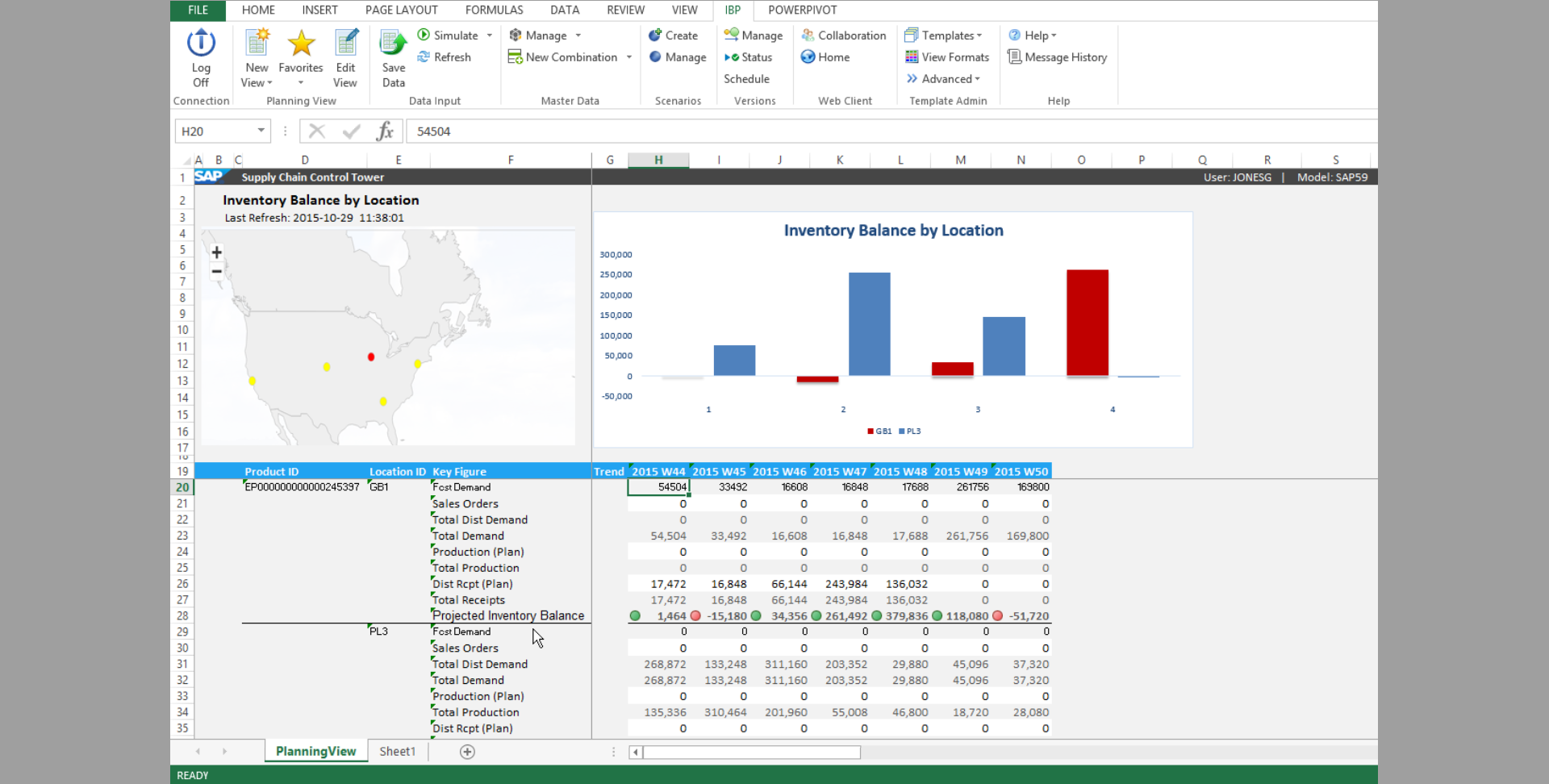
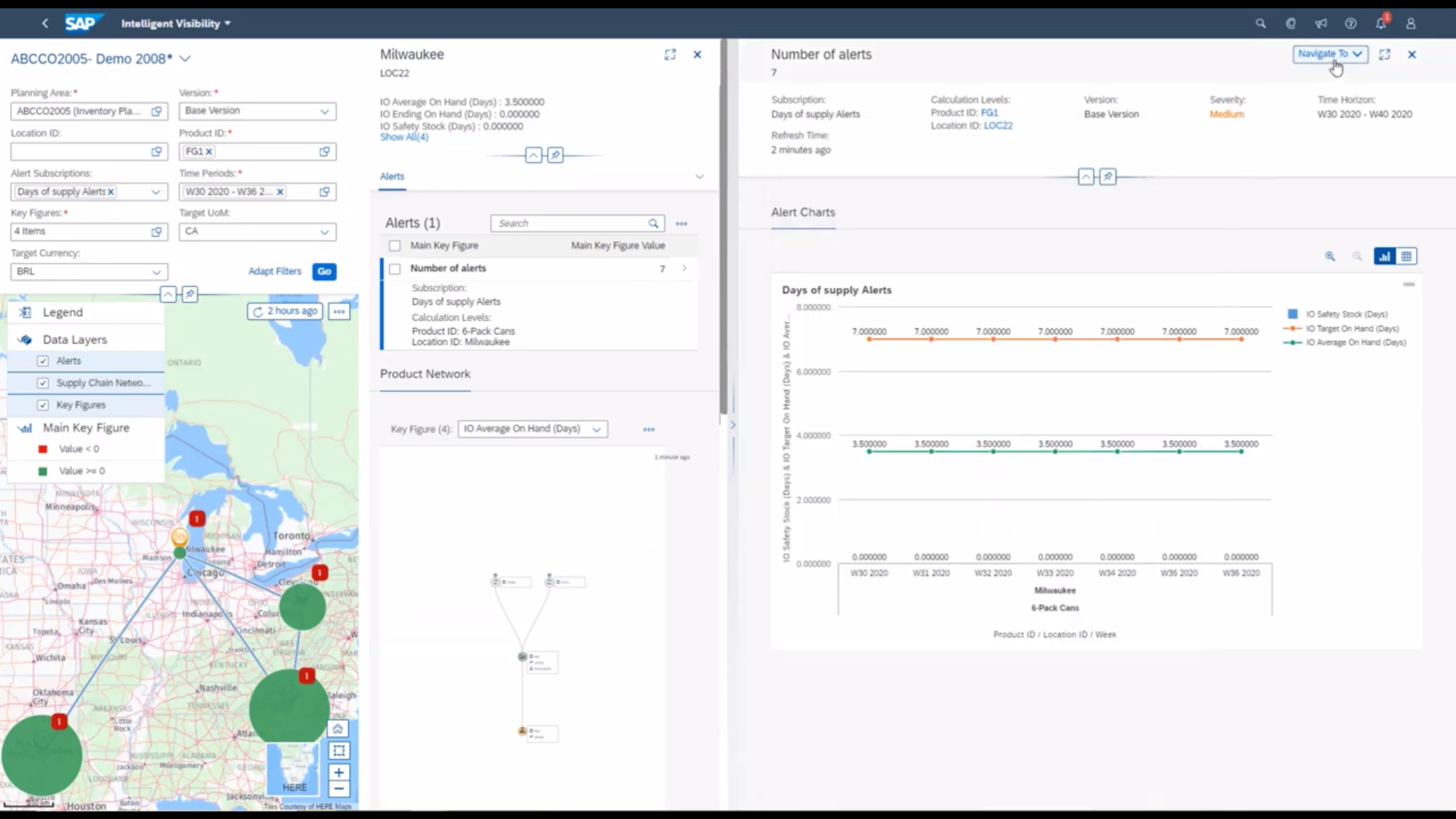
SAP supports supply chain management with Integrated Business Planning, the company's real-time cloud-based supply chain planning platform supporting demand response, supply planning and inventory management oriented features, with supply chain analytics to support decisioning.
Good for large organizations but can be used across various industries from manufacturing to even medical. Also very Citrix publishing friendly to allow multiple users located anywhere to use AspenOne Supply Chain Management across the organization while consolidating their data in a centralized secure place. This ability to consolidate and centralize applications and data within the same facility makes migration, high availability in DR scenario easier to configure as well.
One of the best parts is how it is suited to global or multi-site organizations with complex supply chains. It just operates across multiple regions with various manufacturing facilities, and that too with very much ease; it is simple, solid and very reliable in terms of working when the logistics is an issue and fetches data and insights very quickly.
While AspenOne Supply Chain Management generate a wealth of data and information, the ability to organize and create reports can be time consuming as well as steep learning curve.
While incremental updates are predictable, AspenOne major version updates can be difficult to implement with wide user impact causing more downtime than we prefer.
Report merge and legacy version conversion tools can be made easier to use with more GUI (graphical user interface) options and less command base as well as status progress graphic and confirmation of completion would be very helpful.
The system does not work as smoothly when processing large volumes of data. There are processing delays when we are busy planning.
Moreover, because inventory exceptions are not automatically alerted, employees have to check them manually, which takes extra time. Upgrades in these sections could raise our operational efficiency.
User experience has various issues, from the way to represent data on the Dashboard to complex graphical interfaces for making the right report of something that is easiest to make on other similar platforms. SAP Integrated Business Planning is difficult to integrate into other operating systems and ecosystems. Activity planning, in some cases, is confused, and access is limited if customers or end-users don´t use the platform over the internet using a desktop computer.
Set up a supply chain strategy. Define your north star. Follow it with good consultants. Get know how from consultants with a deep know how in the system. Do proper change management.
AspenOne Supply Chain Management was a cheaper alternative to SAP HANA and while as not feature-ful and not as easy to integrate with SAP data, the interface was easy enough to configure without the need for HANA. It was also easier and quicker to deploy and implement which alleviated our business pain point. It's like an old saying the best software is the one you can use, now! Our management and supply chain team members have been happy with the product and very few complaints arise from the production usage or performance.
Well at least, the cost factor und the implementation time. 4 month from the decision to the productive use. This is overall being accept very fast! SAP Integrated Business Planning definitely increased the quality of our data and decision making process.
We needed AspenOne Supply Chain Management quickly back in 2013 since our biggest pain point was tracking movement of products and ability for multiple departments and locations to access the information to complete their responsibilities within the organization. Was able to successfully implement in three quarters for go-live.
Since our initiation implementation our two major version upgrades did not go as smooth as we would like causing downtime of user access and the system does not have flexibility to run previous version while upgrading to new version. Upgrade path needs to improve to minimize downtime.
The business reported quick ROI of better than expected results and the software paid for itself in under three years which beats projection.
Centralized implementation makes disaster recovery (DR) configuration easier to manage.