AWS Lambda is a serverless computing platform that lets users run code without provisioning or managing servers. With Lambda, users can run code for virtually any type of app or backend service—all with zero administration. It takes of requirements to run and scale code with high availability.
$NaN
Per 1 ms
IBM Cloud Functions
Score 6.9 out of 10
N/A
IBM Cloud Functions is a PaaS platform based on Apache OpenWhisk. With it, developers write code (“actions”) that respond to external events. Actions are hosted, executed, and scaled on demand based on the number of events coming in. No servers or infrastructure to provision and manage.
$0
per second of execution
OCI
Score 8.2 out of 10
N/A
Oracle Cloud Infrastructure (OCI) is Oracles's infrastructure-as-a-service (IaaS) platform which combines the utility of public cloud with the granular control, security, and predictability of on-premises infrastructure.
N/A
Pricing
AWS Lambda
IBM Cloud Functions
Oracle Cloud Infrastructure
Editions & Modules
128 MB
$0.0000000021
Per 1 ms
1024 MB
$0.0000000167
Per 1 ms
10240 MB
$0.0000001667
Per 1 ms
Basic Cloud Functions Rate
$0.00017
per second of execution
API Gateway Rate
Free
No answers on this topic
Offerings
Pricing Offerings
AWS Lambda
IBM Cloud Functions
OCI
Free Trial
No
No
Yes
Free/Freemium Version
No
No
Yes
Premium Consulting/Integration Services
No
No
Yes
Entry-level Setup Fee
No setup fee
No setup fee
Optional
Additional Details
—
—
—
More Pricing Information
Community Pulse
AWS Lambda
IBM Cloud Functions
Oracle Cloud Infrastructure
Considered Multiple Products
AWS Lambda
No answer on this topic
IBM Cloud Functions
Verified User
Project Manager
Chose IBM Cloud Functions
AWS Lambda might be more suited for larger scaled companies looking to consistently access similar features at a higher volume/frequency, but for smaller teams with a limited budget, IBM's Cloud Functions are a competitive choice
AWS Lambda is 100 times more robust than IBM cloud functions. They essentially do the same thing, but AWS works. AWS is stable. we have had epic failures with cloud functions. Support was horrible. We literally had an open ticket with them for 2 months and it literally went …
Oracle Cloud Infrastructure typically offers lower pricing for compute and storage than AWS. There are no hidden charges, it is more transparent. It is built for running oracle databases which the application was using, and licensing is more cost effective as compared to AWS.
Performance and latency are excellent in Oracle Cloud Infrastructure. Except for AWS baremetal, I don't find anything like that. I found that, aside from conventional compute that works really good, they also offer HPC VDI. That's one of the strengths that should have more hype …
Lambda excels at event-driven, short-lived tasks, such as processing files or building simple APIs. However, it's less ideal for long-running, computationally intensive, or applications that rely on carrying the state between jobs. Cold starts and constant load can easily balloon the costs.
IBM Cloud Functions [is] not the worse product on the IBM cloud. I decided to write this review as I thought it would be balanced. I would still use functions to set up a serverless architecture where execution time is pretty quick and the code is relatively simple. I wouldn't use IBM Cloud Functions for async calls obviously, as costs could be higher. The functions documentation is lacking in terms of CI/CD, and there are unexplainable errors occurring - like the network connection that I mentioned. So I wouldn't just rely on IBM Cloud Functions too much for the entire system, but make sure it's diversified.
As per our usage Oracle Cloud Infrastructure for almost 6 years hosting 500 + customers I can say its well suited application for any small scale to larger scale application as it can handle that capacity and provide more reliable cloud service only if you need any messaging service like pub/sub or sqs better to consider other services.
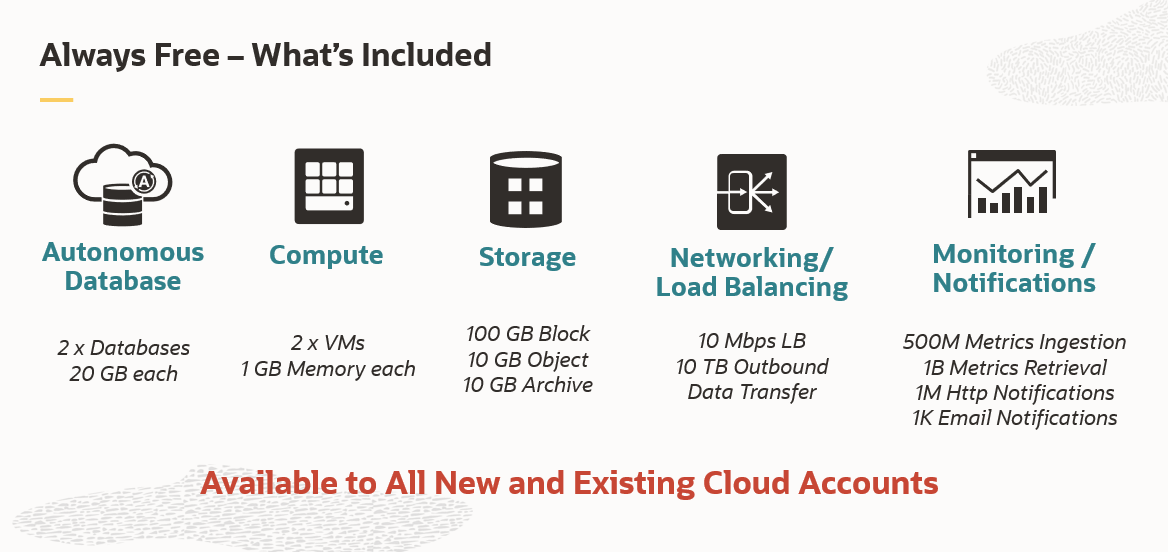
Oracle Cloud Infrastructure has a generous free tier, moreso than other hyperscalers, with an always-free tier that guarantees certain products are always free
Oracle Cloud Infrastructure allows you to size VMs with differing combinations of CPU and RAM, which is contrary to other hyperscalers that have specific pre-defined combinations only
Developing test cases for Lambda functions can be difficult. For functions that require some sort of input it can be tough to develop the proper payload and event for a test.
For the uninitiated, deploying functions with Infrastructure as Code tools can be a challenging undertaking.
Logging the output of a function feels disjointed from running the function in the console. A tighter integration with operational logging would be appreciated, perhaps being able to view function logs from the Lambda console instead of having to navigate over to CloudWatch.
Sometimes its difficult to determine the correct permissions needed for Lambda execution from other AWS services.
Navigating the UI takes lots of getting used to. It reminds me of older GCP (just to get used to where everything is).
Permission for different things always seemed to be more difficult than it really needed to be. Once you got them set up you were good but updating anything or creating new permissions for just about anything took longer than I thought it should.
Based on how the buttons were laid out, it was pretty easy to delete all of your DNS records, and backing them up was not as intuitive as I'd like with the UI, but it was easy to do using a script.
Reliability: Very dependable and stable OCI services have been for the business operations.Performance: The speed and efficiency of OCI in meeting their computing and storage needs.Scalability: The ease and effectiveness of scaling resources up or down to accommodate changing demands.Security: The robustness and effectiveness of OCI's security features in protecting their data and applications.
I give it a seven is usability because it's AWS. Their UI's are always clunkier than the competition and their documentation is rather cumbersome. There's SO MUCH to dig through and it's a gamble if you actually end up finding the corresponding info if it will actually help. Like I said before, going to google with a specific problem is likely a better route because AWS is quite ubiquitous and chances are you're not the first to encounter the problem. That being said, using SAM (Serverless application model) and it's SAM Local environment makes running local instances of your Lambdas in dev environments painless and quite fun. Using Nodejs + Lambda + SAM Local + VS Code debugger = AWESOME.
The services & products in Oracle Cloud Infrastructure needs more improvement to beat other Cloud service providers. The price is good & Security processes are good. We are requiring to put more effort in supporting this Oracle Cloud Infrastructure than other Cloud service providers. Probably better ways are there but is not super easy to find or not super available
Yeah sometimes we had to face unplanned outages due to underlying infrastructure issues, so not every time,e but once in a while we face issues with availability. But the good thing is we have redundancy with DR setup and multi region so we can manage.
From the start, I was surprised by response times and image quality accessing windows VMs with RDP. GCP, Azure and -many offerings in AWS- don't perform this speed. Also, that's evident in the quality of Infrastructure Management Team, because I just received one warning regarding a region failure, what confirms that's a mature platform.
Amazon consistently provides comprehensive and easy-to-parse documentation of all AWS features and services. Most development team members find what they need with a quick internet search of the AWS documentation available online. If you need advanced support, though, you might need to engage an AWS engineer, and that could be an unexpected (or unwelcome) expense.
Overall it is amazing, there is always room for improvement. We have weekly updates that tend to slow the program used more and more. We had to change some reports within Oracle because the others wouldn’t load. This is tied to our payroll and the delays are causing many time constraint issues and panic. We have to create a new report when one breaks. Otherwise awesome!
AWS Lambda is good for short running functions, and ideally in response to events within AWS. Google App Engine is a more robust environment which can have complex code running for long periods of time, and across more than one instance of hardware. Google App Engine allows for both front-end and back-end infrastructure, while AWS Lambda is only for small back-end functions
We used Microsoft Azure and Docker earlier and faced some difficulties like Microsoft Azure and Docker. Occasionally, the generation of large images can delay deployment. It is also necessary for me to admit that Microsoft Azure and Docker have a somewhat steep learning curve. Proper paperwork needs to be there. Docker has issues with performance on a number of platforms. On the other hand, OCI is easy to deploy and easy to understand.
was not part of initial purchase team. Anyways, i think unit pricing and billing frequency is good compared to other Cloud service providers, when it comes to Cloud Capital expenditure & Operational expenditure. Would be more interested in exploring more options where customers can get more cost relaxations on trying out new cloud services in Oracle Cloud Infrastructure for example a new App or a feature
We have hosted around 500 + customers on this cloud so till day not faced any major issues, so we can use it for any kind of products and it can hold the load and easily scale based on need.
Services & Infra wise is ok to use & host applications & services. Security wise also good for a Cloud service provider. It is a interesting area to explore & using it for day to day needs can be further improvised in future probably. Modern day Services like AI and Machine learning could be improved
Positive - Only paying for when code is run, unlike virtual machines where you pay always regardless of processing power usage.
Positive - Scalability and accommodating larger amounts of demand is much cheaper. Instead of scaling up virtual machines and increasing the prices you pay for that, you are just increasing the number of times your lambda function is run.
Negative - Debugging/troubleshooting, and developing for lambda functions take a bit more time to get used to, and migrating code from virtual machines and normal processes to Lambda functions can take a bit of time.