Microsoft Azure Cosmos DB is Microsoft's Big Data analysis platform. It is a NoSQL database service and is a replacement for the earlier DocumentDB NoSQL database.
N/A
Oracle Autonomous Database
Score 9.0 out of 10
N/A
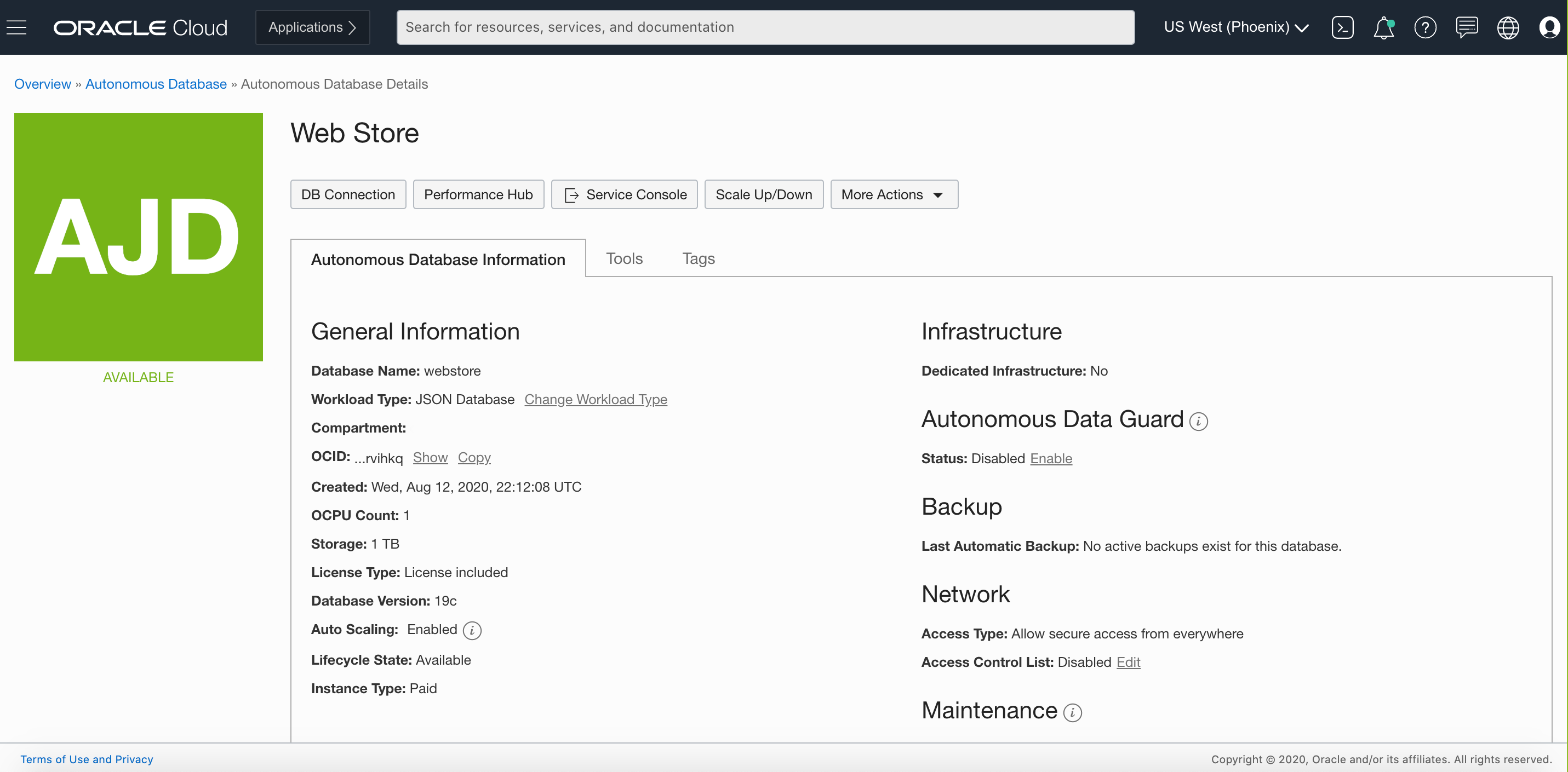
Oracle Autonomous Database provides a self-driving, self-securing, self-repairing cloud service that eliminate the overhead and human errors associated with traditional database administration. Oracle Autonomous Database takes care of configuration, tuning, backup, patching, encryption, scaling, and more.
N/A
Azure SQL Database
Score 8.4 out of 10
N/A
Azure SQL Database is Microsoft's relational database as a service (DBaaS).
Because we often use Microsoft products for large corporate projects and other customer projects, and compatibility and integration are important to us, we used this platform, which in addition to very high security, has a very good response speed, also, building modern …
Our development and administration teams are just more familiar with the Microsoft Stack, and there was very little additional knowledge required to put this into production.
Cosmos DB is unique in the industry as a true multi-model, cloud-native database engine that comes with solutions for geo-redundancy, multi-master writes, (globally!) low latency, and cost-effective hosting built in. I've yet to see anything else that even comes close to the …
I found Oracle Autonomous Database very secure to store data and private information.I always feel secure with Oracle Autonomous Databases disaster recovery features.It is very effective to build applications for mobile and desktop devices lesser code using a low code …
Oracle Autonomous Database has the warehouse extension, whose performance has no question, and it increases the relevancy of the company's operations and fosters performance. Further, Oracle Autonomous Database generates high-performance options, which navigates all the …
Actually, we used both Oracle Autonomous Database for our Oracle-related environments and Azure SQL and Azure VMs hosting SQL Server for our SQL Server-related environments. We have different products, some of them are platform independent (can be deployed on Oracle, SQL …
Oracle Autonomous Database is easy to deploy and use. Provides various supports with security. So it is much better in terms of complexity and performance to manage our application in real time. Cost is also less as compare to other databases. Easy development and deployment is …
Autonomous DB gives us the security we are looking for in this Financial Services application and peace of mind to CIO and infosys team that we can hold the data ouside of their firewall. We also have the application tuned to Oracle DB too.
Amazon's RDS offering is actually very good and is used in other parts of the company, we just have a lot of Azure experience so wanted to leverage that.
Like any NoSQL database, whether it's MongoDB or not, it's best suited for unstructured data. It's also well suited for storing raw data before processing it and performing any type of ETL on the data.
Pro - Stability. Does everything anyone could need. If it's not there it will be on the next update. There is plenty of support for it. It's been around for a long time and it's reliable. The support is well documented and has a great reputation. Cons - Errors have been found in the documentation provided by Oracle with guidelines, etc. Oracles salespeople have a reputation of being obnoxious and condescending.
We have found it's a great alternative for making older legacy applications work with online databases instead of only on-premises databases. We've converted over a dozen applications this way, and it has allowed our clients to have a distributed workforce using their applications without incurring the expense of a complete application rewrite.
Scalable Instantly and automatically serverless database for any large scale business.
Quick access and response to data queries due to high speed in reading and writing data
Create a powerful digital experience for your customers with real-time offers and agile access to DB with super-fast analysis and comparison for best recommendation
Maintenance is always an issue, so using a cloud solution saves a lot of trouble.
On premise solutions always suffer from fragmented implementations here and there, where several "dba's" keep track of security and maintenance. With a cloud database it's much easier to keep a central overview.
Security options in SQL database are next level... data masking, hiding sensitive data where always neglected on premise, whereas you'll get this automatically in the cloud.
We had a thought time migrating from traditional DBs to Cosmos. Azure should provide a seamless platform for the migration of data from on-premises to cloud.
There is no access to the physical host of the DB. This is expected from a managed DB. Everything must be done through the console or via API calls. This is a new learning curve for the DBAs.
Due to the lack of physical host access, certain features are not supported, such as Transportable tablespaces and Oracle LogMiner.
Certain special data types, (such as XMLType) are not allowed; be sure the app vendor certifies their product on this platform.
One needs to be aware that some T-SQL features are simply not available.
The programmatic access to server, trace flags, hardware from within Azure SQL Database is taken away (for a good reason).
No SQL Agent so your jobs need to be orchestrated differently.
The maximum concurrent logins maybe an unexpected problem.
Sudden disconnects.
The developers and admin must study the capacity and tier usage limits https://docs.microsoft.com/en-us/azure/azure-subscription-service-limits otherwise some errors or even transaction aborts never seen before can occur.
Only one Latin Collation choice.
There is no way to debug T-SQL ( a big drawback in my point of view).
It's efficient, easy to scale, and works. We do have to do a bit of administration, but less now than when we started with this a couple of years ago. Microsoft continues to improve its self-management capability.
Because it does exactly what we need: it enables us to manage our development and testing database environments in a quick and simple way without requiring support from a database administrators team.
It has very good compatibility and adaptability with other APIs and developers can safely create new apps because it is compatible with various tools and can be easily managed and run under the cloud, and in terms of security, it is one of the best of its kind, which is very powerful and excellent.
The product is continuously evolving and new features are added frequently. Management options through the OCI (Oracle Cloud Infrastructure) console and through the command line and API are being enhanced frequently.
The interfaces are intuitive once you are familiar with all the functions. The ability to use different tools to interact with the platform, such as directly via a browser or code editors such as VS Code or Visual Studio is a great option and allows for integrating withn the project and other testing and developing tools.
Microsoft is the best when it comes to after-sales support. They have a well-structured training and knowledge base portal that anyone can use. They are usually quick to respond to cases and are on point for on-call support. I have no complaints from a support standpoint. Pretty happy with the support.
We give the support a high rating simply because every time we've had issues or questions, representatives were in contact with us quickly. Without fail, our issues/questions were handled in a timely matter. That kind of response is integral when client data integrity and availability is in question. There is also a wealth of documentation for resolving issues on your own.
Cosmos DB is unique in the industry as a true multi-model, cloud-native database engine that comes with solutions for geo-redundancy, multi-master writes, (globally!) low latency, and cost-effective hosting built in. I've yet to see anything else that even comes close to the power that Cosmos DB packs into its solution. The simplicity and tooling support are nice bonus features as well.
I found Oracle Autonomous Database very secure to store data and private information.I always feel secure with Oracle Autonomous Databases disaster recovery features.It is very effective to build applications for mobile and desktop devices lesser code using a low code development framework namely Oracle Application Express (ApEx).
We moved away from Oracle and NoSQL because we had been so reliant on them for the last 25 years, the pricing was too much and we were looking for a way to cut the cord. Snowflake is just too up in the air, feels like it is soon to be just another line item to add to your Azure subscription. Azure was just priced right, easy to migrate to and plenty of resources to hire to support/maintain it. Very easy to learn, too.