
Brightspot vs. Paligo
Brightspot vs. Paligo
| Product | Rating | Most Used By | Product Summary | Starting Price |
|---|---|---|---|---|
 Brightspot | N/A | Brightspot (formerly Perfect Sense) is a content management system for businesses looking to distinguish themselves via digital transformation. The platform helps editors and developers to utilize publishing processes, customized workstreams and collaboration features. This helps users to deliver content to audiences without compromise. | N/A | |
 Paligo | N/A | Paligo is a component content management system (CCMS) that helps teams manage complex technical documentation through structured authoring, content reuse, and controlled publishing. | $4,800 per year per seat |
| Brightspot | Paligo | |||||||||||||||
|---|---|---|---|---|---|---|---|---|---|---|---|---|---|---|---|---|
| Editions & Modules | No answers on this topic |
| ||||||||||||||
| Offerings |
| |||||||||||||||
| Entry-level Setup Fee | Optional | Optional | ||||||||||||||
| Additional Details | — | — | ||||||||||||||
| More Pricing Information | ||||||||||||||||
| Brightspot | Paligo |
|---|
| Brightspot | Paligo | ||||||||||||||||||||||||
|---|---|---|---|---|---|---|---|---|---|---|---|---|---|---|---|---|---|---|---|---|---|---|---|---|---|
| Security |
| ||||||||||||||||||||||||
| Platform & Infrastructure |
| ||||||||||||||||||||||||
| Web Content Creation |
| ||||||||||||||||||||||||
| Web Content Management |
|
| Brightspot | Paligo | |
|---|---|---|
| Small Businesses |  ManageWP Score 10.0 out of 10 | No answers on this topic |
| Medium-sized Companies |  RWS Tridion Sites Score 9.0 out of 10 | RWS Tridion Sites Score 9.0 out of 10 |
| Enterprises | RWS Tridion Sites Score 9.0 out of 10 | RWS Tridion Sites Score 9.0 out of 10 |
| All Alternatives | View all alternatives | View all alternatives |
| Brightspot | Paligo | |
|---|---|---|
| Likelihood to Recommend | 9.1 (2 ratings) | 9.4 (31 ratings) |
| Likelihood to Renew | - (0 ratings) | 9.1 (3 ratings) |
| Usability | - (0 ratings) | 8.2 (24 ratings) |
| Support Rating | - (0 ratings) | 8.9 (26 ratings) |
| Implementation Rating | - (0 ratings) | 8.2 (1 ratings) |
| Brightspot | Paligo | |
|---|---|---|
| Likelihood to Recommend | Brightspot
 Mark Stahura Senior Product Owner | Paligo
|
| Pros | Brightspot
| Paligo
 Ricardo Jorge Da Costa Lima Technical Writer |
| Cons | Brightspot
Mark Stahura Senior Product Owner | Paligo
|
| Likelihood to Renew | Brightspot No answers on this topic | Paligo
 Rochelle Fisher Director of Knowledge and Technical Writing |
| Usability | Brightspot No answers on this topic | Paligo
|
| Support Rating | Brightspot No answers on this topic | Paligo
 Benjamin Spendlove Lead Technical Writer |
| Implementation Rating | Brightspot No answers on this topic | Paligo
 Robert Pruden Senior Content Manager |
| Alternatives Considered | Brightspot
| Paligo
|
| Return on Investment | Brightspot
Mark Stahura Senior Product Owner | Paligo
 Monica White Technical Writer |
| ScreenShots | Brightspot Screenshots   | Paligo Screenshots 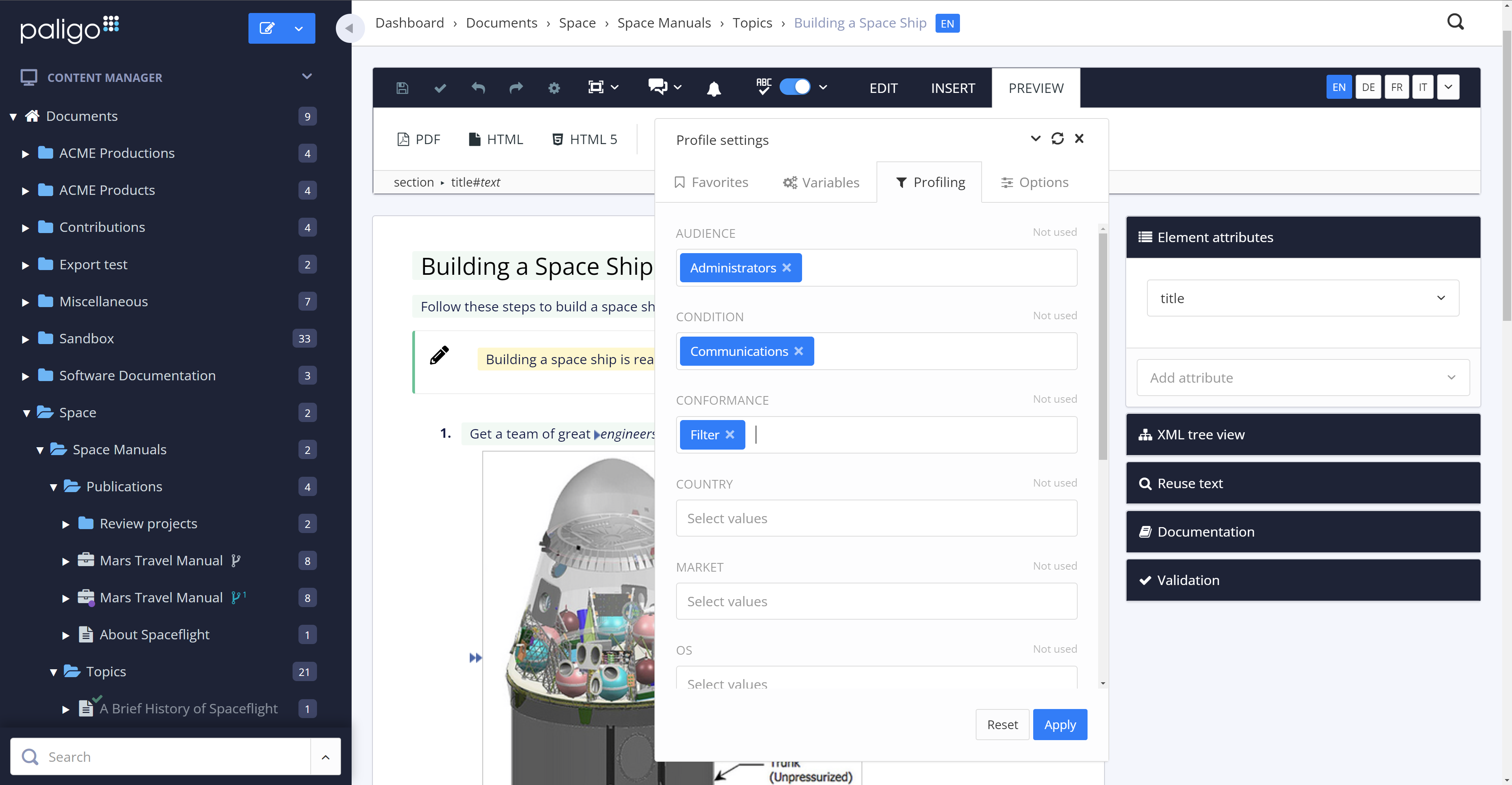   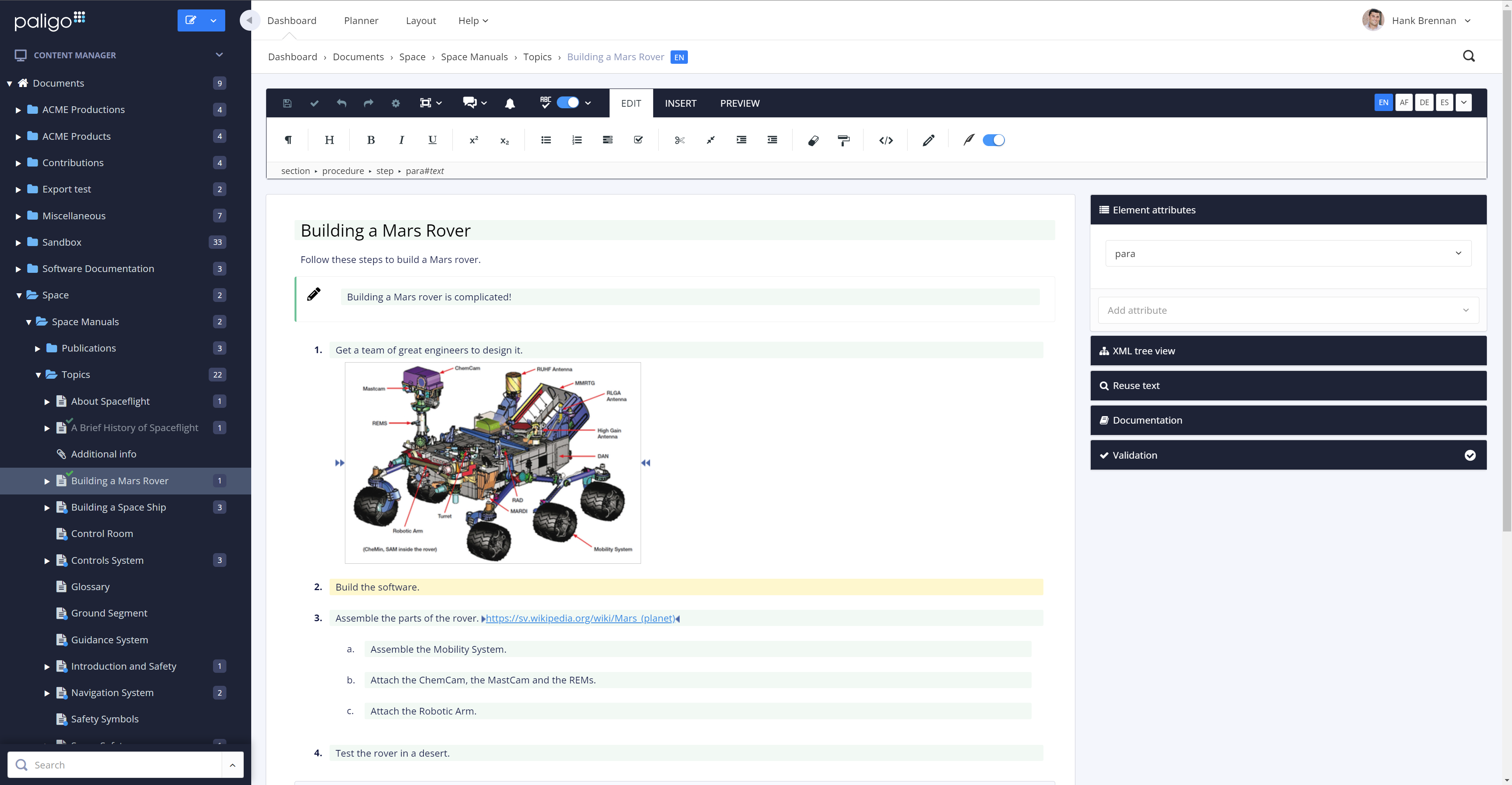  |