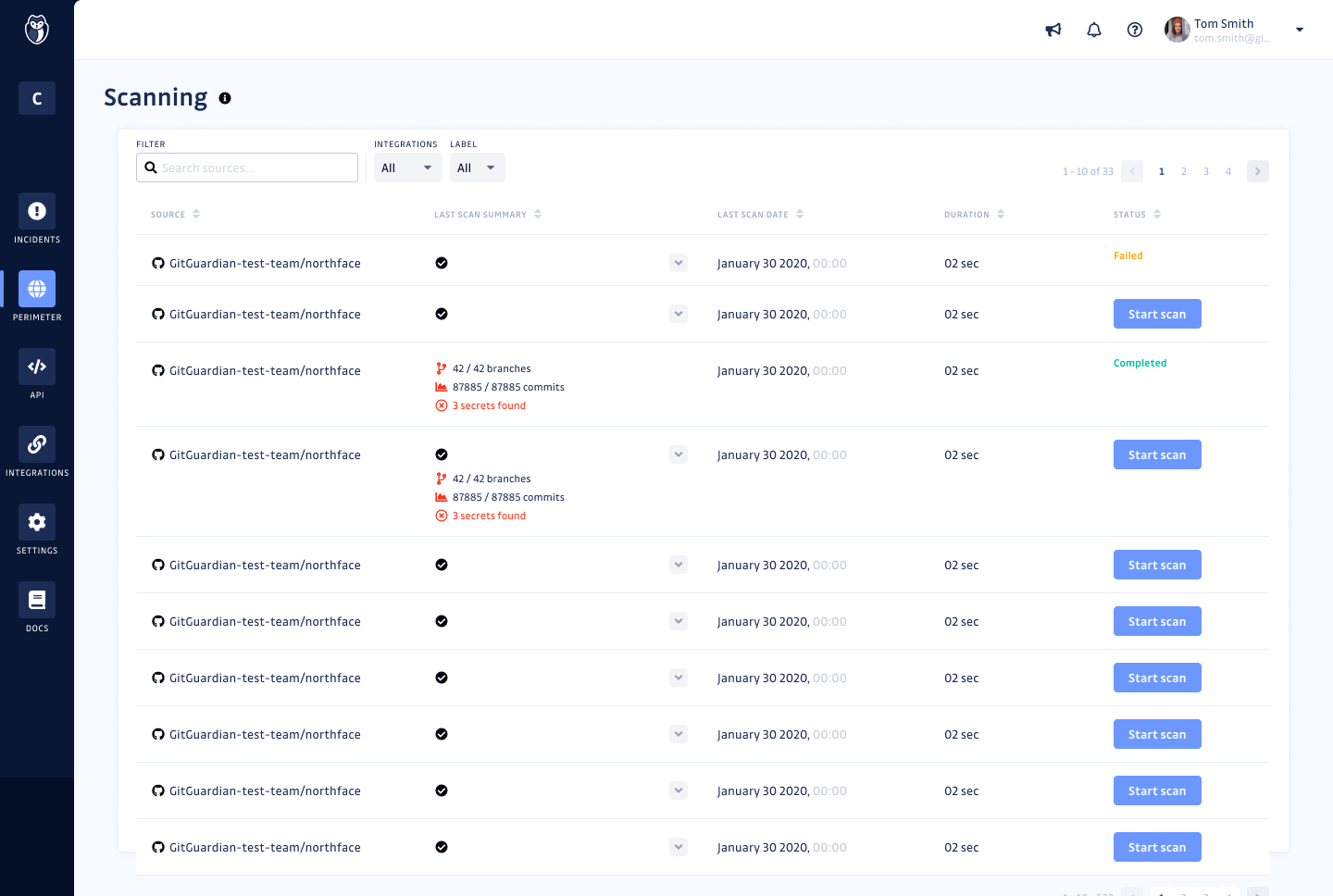
GitGuardian is an end-to-end NHI security platform designed to help organizations strengthen their Non-Human Identity (NHI) security posture and address compliance standards and regulations. As attackers increasingly target NHIs, such as service accounts, service principals, and applications, protecting and managing these critical assets has become paramount. NHIs rely on “secrets” like API keys and certificates for authentication, and their rapid proliferation has led to significant…
Buzilla is easy to use and provides basic functionality to use as a bug tracking tool. If big size attachments are allowed it would have been great. Also with Bugzilla home->Test management area is improved by allowing multiple sections it would be awesome!
A de minimis incentive was given to thank the reviewer for their time. The incentive was not used to bias or drive a particular response, nor was the incentive contingent on a positive endorsement. More Info
I do think it'll absolutely fit everyone who codes integrates with another platform or services. We all forget that one credentials one in a while, and especially those who managed public repository, it is important to keep an eye on accidentally committed credentials. While I think you don't really needs it for personal project, it's a nice to have, you don't want to waie up to 50k USD of sudden surcharge on resources you don't use.
A de minimis incentive was given to thank the reviewer for their time. The incentive was not used to bias or drive a particular response, nor was the incentive contingent on a positive endorsement. More Info
Open source! No license fee involved, no limit to the number of licenses.
Easy to install and maintain. Installation is very easy and hardly needs any maintenance efforts, except when migrating from one version to other. Each project can have its own group of users.
Includes all the core features/fields that are needed to log a software bug/issue.
Multiple attachments are possible, supports various formats.
Good for reporting. Filtering mechanism lets you query bugs by various parameters.
A de minimis incentive was given to thank the reviewer for their time. The incentive was not used to bias or drive a particular response, nor was the incentive contingent on a positive endorsement. More Info
GitGuardian monitors every public or private GitHub commit ( that have GitGuardian installed) and event in real-time for secrets and sensitive data. In a leak scenario it immediately notifies us.
It uses sophisticated pattern matching techniques to detect credentials that cannot be strictly defined with a distinctive pattern (like unprefixed credentials)
It covers several API providers, database connection strings, private keys, certificates, usernames and passwords etc
GitGuardian have high True Positive Rate of around 91% and reduces alert fatigue with smart occurrences regrouping
Cloud Based. I'd like to see bugzilla be cloud based. The company I currently work with made a final decision to change db's for this specific reason. Due to the frequency of travel in this company, they need access to bugzilla from differing national / international locations.
Larger File Attachments. I believe the limit of a bugzilla content upload is 4 megabytes. For many of our video'd issues, this file size is simply impractical without the additional effort exertion on video compressor applications.
A de minimis incentive was given to thank the reviewer for their time. The incentive was not used to bias or drive a particular response, nor was the incentive contingent on a positive endorsement. More Info
Improved user interface: It would be beneficial to have a more intuitive and user-friendly interface for Internal Monitoring on GitGuardian. This would make it easier for users to quickly access the data they need and understand the results of their scans.
Automated alerts: It would be helpful to have automated alerts when certain conditions are met, such as when a scan reveals sensitive data or when a new repository is created. This would help users stay informed and take action in a timely manner.
More detailed reports: Currently, Internal Monitoring reports are limited in terms of the depth of information they provide. It would be useful to have more detailed reports that include additional metrics, such as the number of repositories scanned and the types of sensitive data found.
Faster scan times: Scan times can be slow at times, making it difficult to stay on top of changes in repositories quickly. It would be beneficial to have faster scan times so that users can take action quickly when needed.
For future projects I will look at something that is hosted in the cloud that I don't have to manage. I would also like something that has a more modern feel to allow my customers to use it as well as my employees.
A de minimis incentive was given to thank the reviewer for their time. The incentive was not used to bias or drive a particular response, nor was the incentive contingent on a positive endorsement. More Info
This is a pretty straightforward system. You put in the bug details, a ticket is created, the team is notified. The user interface reflects this very simple and straightforward flow. It's certainly much easier than trying to track bugs with using Excel and email.
A de minimis incentive was given to thank the reviewer for their time. The incentive was not used to bias or drive a particular response, nor was the incentive contingent on a positive endorsement. More Info
A de minimis incentive was given to thank the reviewer for their time. The incentive was not used to bias or drive a particular response, nor was the incentive contingent on a positive endorsement. More Info
Since it is open source, it doesn't have customer service. However, the amount of information on forums is vast. If you can wade through it, you'll get what you need
A de minimis incentive was given to thank the reviewer for their time. The incentive was not used to bias or drive a particular response, nor was the incentive contingent on a positive endorsement. More Info
A de minimis incentive was given to thank the reviewer for their time. The incentive was not used to bias or drive a particular response, nor was the incentive contingent on a positive endorsement. More Info
Implementation was pretty simple. Particularly because the product cannot be customized so there is not much to do apart from getting it up and running.
We migrated away from the whole suite of Rational tools because of their massive complexity around administration and inflexibility regarding workflows. In addition, the suite was insanely expensive, and users hated the usability of the tools. We evaluated, and liked JIRA, but because the organization was looking for cost savings, we ended up going with Bugzilla and it's FOSS model so as to avoid ongoing costs.
A de minimis incentive was given to thank the reviewer for their time. The incentive was not used to bias or drive a particular response, nor was the incentive contingent on a positive endorsement. More Info
I've evaluated quite a few other tools, like git-secrets, Git-leaks, scan, and maybe a few more. They're all great but quite surprisingly none of them detected Github OAuth Secrets for us. A lot of the FOSS tools out there focus on much simpler, generic secrets, which is good in itself but with GitGuardian, it was dead simple from day one. I just connected our Github Account and set up the gg-shield cli and that was all.
A de minimis incentive was given to thank the reviewer for their time. The incentive was not used to bias or drive a particular response, nor was the incentive contingent on a positive endorsement. More Info
A de minimis incentive was given to thank the reviewer for their time. The incentive was not used to bias or drive a particular response, nor was the incentive contingent on a positive endorsement. More Info
It has made the SDLC process more efficient. Bugs were logged and tracked in emails or in Excel sheets leading to slow communication and at time version issues with multiple files. Being an online tool, Bugzilla solved those issues, improved communication, instant status updates and improved efficiency.
We have used Bugzilla with a lot of federal goverment agencies (DHS, CMS, SAMHSA, CDC, HHS etc). Project Directors adn Principle Investigators were at times given access to Bugzilla which provided a snapshot of open vs closed issues.
Some groups would resist using Bugzilla with the email reminders being the main reason. Turning off or reminding them of features where we can 'control' email notification helped a lot.
A de minimis incentive was given to thank the reviewer for their time. The incentive was not used to bias or drive a particular response, nor was the incentive contingent on a positive endorsement. More Info
GitGuardian Internal Monitoring has had a positive impact on our overall business objectives. By providing visibility into our code repositories and alerting us to potential security risks, we have been able to identify and mitigate security issues before they become a problem. This has allowed us to focus more on developing our product and less on responding to security incidents. We have also seen an increase in customer confidence in our product as a result of using GitGuardian Internal Monitoring, which has led to increased customer loyalty and retention. Overall, the ROI of using GitGuardian Internal Monitoring has been very positive for our business.
We have seen an increase in the security of our codebase, as well as an improvement in the speed and accuracy of our code reviews. This has enabled us to quickly identify and address any potential security issues before they become a problem. Additionally, we have seen an increase in our ROI as a result of using GitGuardian Internal Monitoring, as it has allowed us to save time and money by preventing costly security breaches.