Cisco Secure Endpoint is a comprehensive, cloud-managed endpoint security solution designed to protect devices from advanced malware and cyber threats throughout the entire attack lifecycle—before, during, and after an attack. It offers powerful prevention capabilities to identify and stop threats before they compromise your systems, using multifaceted techniques including risk-based vulnerability management and posture assessments. The solution provides deep visibility and advanced detection…
N/A
ManageEngine Patch Manager Plus
Score8.2 out of 10
N/A
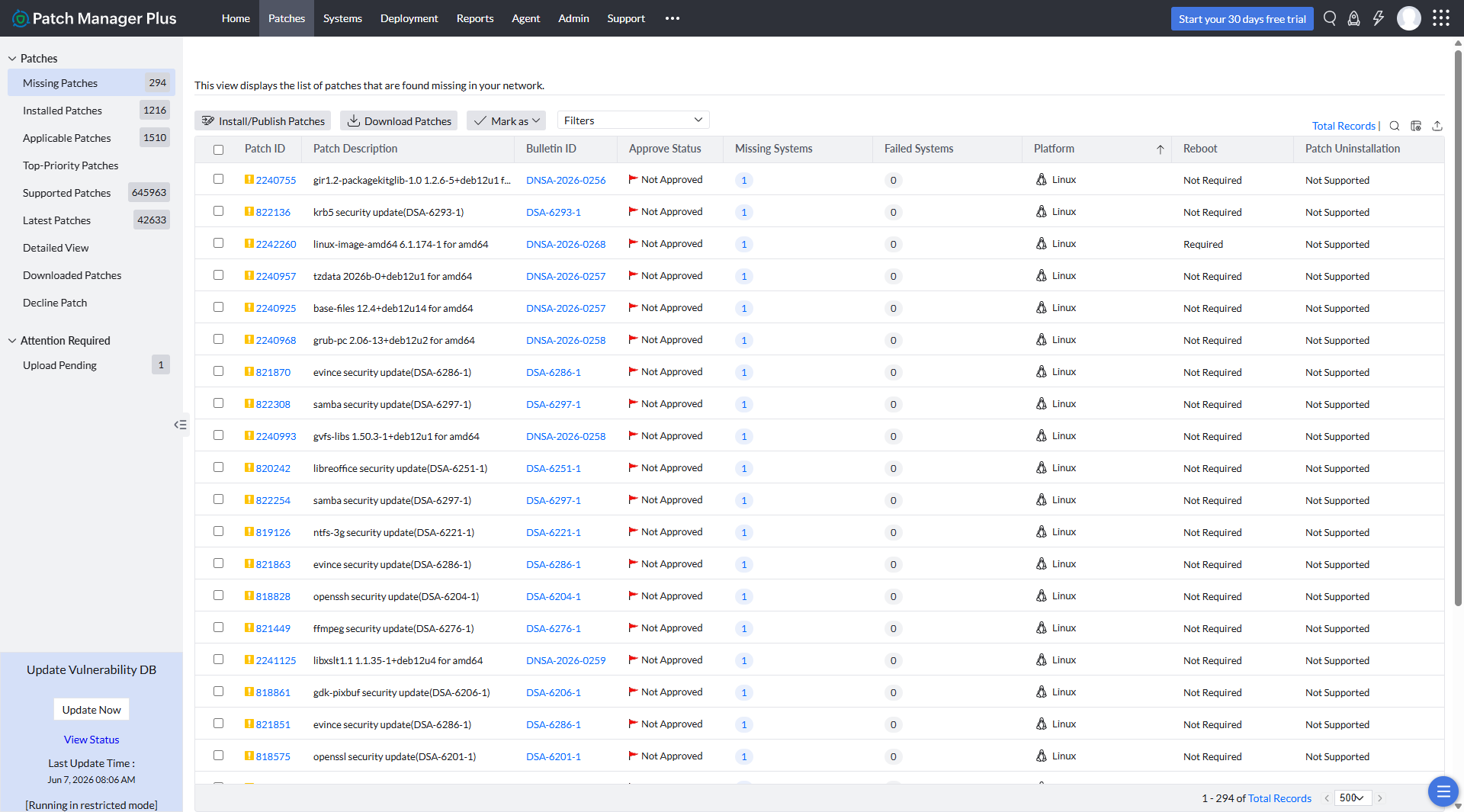
Patch Manager Plus is an automated patch management solution that enables organizations to manage the entire patching lifecycle from a single console. It supports patching across Windows, macOS, Linux, and over 1,100 third-party applications, helping IT teams keep endpoints secure and compliant. With Automated Patch Deployment (APD), organizations can streamline the complete patch management process by: Scanning endpoints to identify missing patches Testing and approving patches…
To handle modern cyber threats such as malware, ransomware, and other known and unknown threats, Cisco Secure Endpoint is a handy option because it is EDR-capable, always updated, and effectively hunts for threats and blocks them before they cause harm to the business. It is reliable, and I recommend it because it has always protected our business from cyber threats.
A de minimis incentive was given to thank the reviewer for their time. The incentive was not used to bias or drive a particular response, nor was the incentive contingent on a positive endorsement. More Info
If you are managing a very large number of computers, I would say 1000+, the standard patching tools provided by Microsoft will fail to do their job properly. This is where you will benefit from ManageEngine PATCH MANAGER Plus, being agent-based it is fast, easy to manage, and reliable. If you require functionality more than just patching, like security auditing, you have to look elsewhere.
A de minimis incentive was given to thank the reviewer for their time. The incentive was not used to bias or drive a particular response, nor was the incentive contingent on a positive endorsement. More Info
Once we, I guess one turned out that path because we have a small IT team, one of the big factors that came into play is how easy it was to deploy and the kind of security it provides for your endpoint devices. For us, it's got all those AI capabilities that really help. So traditionally when there was an incident on Alert on an antivirus program, you'd have a couple of guys run across the office to try to pull a plug. One of the awesome features with Secure Endpoint is its isolation mode that clamps down endpoint devices and then just isolate it. It's connected to, I think Cisco's tell us the threat intel environment. So they've got up-to-date metrics and fixes on threats out in the wild. And once they detect that, they apply it across your whole brand. So yeah, really effective for us.
One of the things that really stands out is the retrospective detections. So say something's detected two weeks later of a product that you had on your system. Initially it scanned it past, but then they discover vulnerability. The product has the ability to come back and retrospectively apply restrictions on specific applications you have on your environment. So I think that's one key winner.
A de minimis incentive was given to thank the reviewer for their time. The incentive was not used to bias or drive a particular response, nor was the incentive contingent on a positive endorsement. More Info
Some of the reports that get sent are very high-end reports with lots of information. It would be nice if there was a simplified report that could be sent automatically when an issue is identified on a computer
A de minimis incentive was given to thank the reviewer for their time. The incentive was not used to bias or drive a particular response, nor was the incentive contingent on a positive endorsement. TR verified that a representative sample of customers was invited. More Info
A de minimis incentive was given to thank the reviewer for their time. The incentive was not used to bias or drive a particular response, nor was the incentive contingent on a positive endorsement. More Info
A de minimis incentive was given to thank the reviewer for their time. The incentive was not used to bias or drive a particular response, nor was the incentive contingent on a positive endorsement. More Info
The interface is extremely difficult to navigate, even for a moderately familiar user. All the dashboards look the same, but have different functionalities. It looks like the place where you performed that task last time, but in fact the option you want is on a different dashboard. The menu is hard to navigate because the menu items are labeled with misleading descriptions or jargon specific to the product. This makes it even harder to find what you need. On the other hand, it does most of what you need it to do automatically, which helps the usability dramatically.
A de minimis incentive was given to thank the reviewer for their time. The incentive was not used to bias or drive a particular response, nor was the incentive contingent on a positive endorsement. More Info
The overall usability for the application is great precisely for the ease of use the application provides, if i would go in a different organisation, i would suggest implementing ManageEngine Patch Manager Plus or Endpoint Central due to its features, and productivity.
A de minimis incentive was given to thank the reviewer for their time. The incentive was not used to bias or drive a particular response, nor was the incentive contingent on a positive endorsement. TR verified that a representative sample of customers was invited. More Info
A de minimis incentive was given to thank the reviewer for their time. The incentive was not used to bias or drive a particular response, nor was the incentive contingent on a positive endorsement. More Info
In terms of technical support for Cisco Secure Endpoint, the support has been pretty good. All the cases I submitted were solved in a reasonable time frame, and it was a good experience. However, I find that not as many vendors have the expertise I would expect.
A de minimis incentive was given to thank the reviewer for their time. The incentive was not used to bias or drive a particular response, nor was the incentive contingent on a positive endorsement. TR verified that a representative sample of customers was invited. More Info
The support team at Patch Manager Plus has been awesome. Very responsive and knowledgeable. There are times when there is confusion between different tickets but there is still good service.
A de minimis incentive was given to thank the reviewer for their time. The incentive was not used to bias or drive a particular response, nor was the incentive contingent on a positive endorsement. More Info
A de minimis incentive was given to thank the reviewer for their time. The incentive was not used to bias or drive a particular response, nor was the incentive contingent on a positive endorsement. More Info
Cisco Secure Endpoint is an advanced EDR solution that is highly effective and scalable. Our experience previously with MalwareBytes and Microsoft Defender was not horrible, but these products were not as effective and did not integrate well with our other security products to allow us to monitor and react quickly to address threats that were within our network. Key to any security effort is mitigation and the ability to quickly identify and respond so any damage can be avoided or limited.
A de minimis incentive was given to thank the reviewer for their time. The incentive was not used to bias or drive a particular response, nor was the incentive contingent on a positive endorsement. TR verified that a representative sample of customers was invited. More Info
We were talking to Action1 and Adaptiva about their solutions of patch management. The main factor of choosing ManageEngine was pricing, which was considerably lower compared to these tools. Also, for Action1, it didn't featured some important features (like Linux patching), and it looked like a solution that is getting started in the market, even being more expensive than Patch Manager Plus.
A de minimis incentive was given to thank the reviewer for their time. The incentive was not used to bias or drive a particular response, nor was the incentive contingent on a positive endorsement. More Info
A de minimis incentive was given to thank the reviewer for their time. The incentive was not used to bias or drive a particular response, nor was the incentive contingent on a positive endorsement. More Info
ManageEngine Patch Manager Plus provides an excellent return on investment. We were able to get our systems fully patched, which we'd never been able to complete before. This provided excellent security to our organization.
ManageEngine Patch Manager Plus saved us a lot of time as most of our patching was fully automated.
ManageEngine took any issues we found and looked for solutions to further improve their product.
A de minimis incentive was given to thank the reviewer for their time. The incentive was not used to bias or drive a particular response, nor was the incentive contingent on a positive endorsement. More Info