Since it's acquisition in 2011 Compellent became a Dell product line of storage solutions (e.g. Dell Compellent Storage Center). Compellent products became part of the Dell EMC SC Series of enterprise flash and SAN storage devices and are now EOL.
N/A
Dell PowerScale
Score 10.0 out of 10
N/A
Dell Technologies presents Dell PowerScale (replacing EMC Isilon) as a scale-out NAS solution and server technology that provides the flexibility of a software-defined architecture with accelerated hardware innovations to harness the value of data.
Isilon Systems was acquired by EMC in 2010; some EMC Isilon NAS appliances are still available and supported under the PowerScale brand.
N/A
IBM Storage FlashSystem
Score 9.4 out of 10
N/A
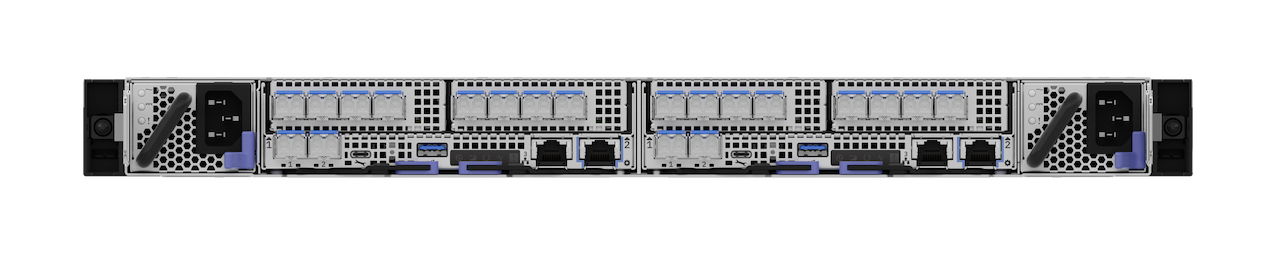
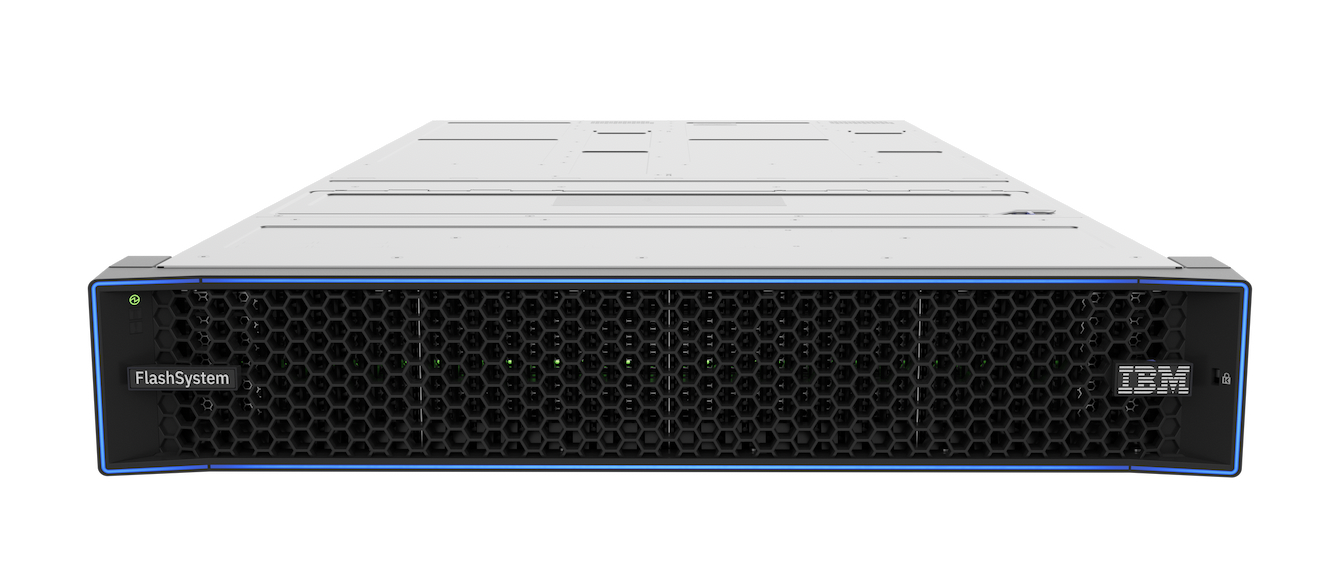
IBM Storage FlashSystem, an all-flash storage array, delivers ~2 PB of effective capacity per single rack unit. Engineered with unique FlashCore Modules, it offloads data services including compression, encryption, deduplication, and ransomware threat detection ensuring optimum performance and resiliency.
$14,200
Pricing
Dell Compellent (discontinued)
Dell PowerScale
IBM Storage FlashSystem
Editions & Modules
No answers on this topic
No answers on this topic
No answers on this topic
Offerings
Pricing Offerings
Dell Compellent (discontinued)
Dell PowerScale
IBM Storage FlashSystem
Free Trial
No
No
Yes
Free/Freemium Version
No
No
No
Premium Consulting/Integration Services
No
No
No
Entry-level Setup Fee
No setup fee
No setup fee
No setup fee
Additional Details
—
—
Entry-Level IBM Storage FlashSystem:
For any organization looking for an all-flash array with features that are both enterprise conducive and budget friendly, the small to entry level offering prices from IBM begin at $18,400.
Mid-Range IBM Storage FlashSystem:
For businesses wanting to take advantage of an enterprise-quality flash array for critical workloads (such as SQL databases, SAP, ERP, CRM, etc.), list prices start at $104,600.
High-Performance IBM Storage FlashSystem:
Organizations seeking a storage array with the ability to run multiple instances of critical applications that are both performance intensive and capacity sensitive, can find IBM prices starting at $368,500.
Contact IBM for configuration and pricing details.
IBM Storage FlashSystem is MUCH faster than the options listed above. We were able to remove 12U of Dell equipment and relaced it with a 2U IBM Storage FlashSystem that was faster and had more storage available. The setup was extremely easier than our initial deployment of our …
Since the dell option is end of life, the change in support and resources available with IBM’s flashsystem has been massive. The newer tech also enables much faster speeds and the box itself is much smaller.
All in all this series great in addressing issues applications that need flash storage as a backend storage supply. It addresses the need for fast, responsive servers that need to boot quickly. It is easy to use and for the most part there are few issues and none that can't be addressed/fixed quickly.
EMC Isilon Scale-Out NAS is well suited for larger files (greater the 128 Kb) and where you need to have everything in one common name space. Where it is less appropriate is for many small files (millions of files less than 128 Kb in size) - this causes the protection level to becoming mirroring, which will cost more space.
Top choice for IBMi integration. In general, it's a very good solution for quite a lot of customers. If you need a 3 site replication solution (HA + DR) maybe it's not the best solution, unless you use SVC. FlashCore Modules have very powerful compression rate, while mantaining good performance: high IOPS rate and really low latency
Dell Compellent support (Co-Pilot) and the add-on service (Optimize) are critical services that Dell Compellent does very well. Alerts from the array are sent to Co-Pilot where tickets are automatically generated and customers are notified of events. Of greater importance at times is the proactive support Co-Pilot and Optimize provide by contacting us of inefficiencies in the array and consulting on resolutions.
Enterprise Manager (Dell's "single pane of glass" management framework) is a useful tool for configuration/evaluation of the array and other Compellent products.
Ease of management. From firmware upgrades to managing server volumes the process is much simpler than with other arrays.
The GUI could be a little more updated with a lot more information regarding usage.
There could be some assistance with high I/O times where snapshots go to consolidate. There seems to be issues when that attempts to occur, and there will times where the virtual machine stuns due to the I/O intensity.
Modification of multiple volumes or the creation of multiple volumes is a pain in the DSM management console.
Some upgrades require the entire cluster to be rebooted simultaneously. In this day and age, that should not be necessary. This is my biggest disappointment with Isilon to date.
When using multiple storage pools you have to be very careful with your capacity management. Filling up one pool can cause an overflow of data to a pool that is less performance driven. Do not underestimate your capacities or you will find yourself in a tight spot.
Block size is almost always an issue with Isilon. It does not handle all types of data well. In many cases PACS and VNA data is best to be stored on a different storage platform that will utilize the capacity more efficiently that Isilon is capable of.
Deduplication seems to be less efficient on Isilon than on other platforms for similar types of data.
Definitely we need to be able to extend a volume that is part of a mirror pair or Policy-Based Replication(PBO) on the fly.
Expansion of mirrored volumes/volume groups should resynchronise only the changed data (Almost like making use of change-volumes) and not trigger a full resync.
Please allow us to select downloading drive microcode also from Fix Central directly onto the flashsystem like with updates.
As flash technology evolves rapidly, vendors should [adapt] to the changes and onboard them in their products. IBM is a bit slow in adopting advanced technology in [its] portfolio. Even though the current product is good, my decision is purely based on how the transformation of the product [is] being produced and supplied to [the] end-user.
The integration into our SVC and the midrange systems are very well working. We do use cross site replication and global mirror which in turn is easy setup and the consistency groups are well maintained. The storage does global mirroring but also internal cross room replication as well. The integration of cloud object storage also helps in tiering the overall system.
IBM Flashsystems is always available for me, it is fiberchannel storage without the fuzz of what iscsi brings. It is a very reliable storage system, I have almost never issues with this system. The only things which go wrong are the updates because the old updates which have been staged on the disks are not properly cleaned in my opinion.
Latency and throughput have been excellent. The compression is done natively on the NVME modules so we do not see an impact there. the distributed parity does not seem to impact write speeds at all. We have found database performace has increased quite a bit over our old hybrid storage solution.
Having a single tier of performance makes it easy to set up SLAs for workloads.
This is not solely based on the support engineers themselves but more so that the logging and gotcha's that their array has. There have been multiple times where logs are pulled, but the folder is not large enough, and it crashes the array. Other times there are certain aspects that support either does not know of or isn't knowledgable about how to look at particular issues that could be causing problems.
Sometimes the knowledge of the support agent is quite limited and the support always has to route through the level 1 agent to screen all the informtion provided. Then its esclated to the next level support with the all collected data . The logs are always uploaded along wiht the case but still its reviewed at the lower level and then escalated / handed over to the next level if its complex issue to solve.
THe training is often selfpaced and easy to follow if you have worked previously with other storage products. The content is clear and contains all the information needed for an admin to learn. However the troubleshooting part is not always included and this is dependent on forums or other sources where the information is not accessible very easily.
I was amazed by the way IBM Flash storage provides a huge amount of storage within the limited footprint, it helped us to replace big fat storage arrays, which aided in the process of moving towards lower hardware, carbon, and energy consumption footprint. We can comfortably say that Flash helped us to host applications fast with a blazing speed and user transactions are quite quick.
We selected Compellent solely based on price. Honestly I would rate it only slightly better than a QNAP we used (which was even cheaper). If performance and reliability are factors in your decision (and they should be) I would recommend looking at something like a VNXe.
Raw disk space vs. logical disk space ratio was significantly better on the Isilon. Fast cache using SSD drives for faster searching is available on the Isilon but not available on the Overland solution. Isilon solution included faster backend switching between nodes.
For the past six months, we have been utilizing this technology in our projects to manage a massive workload and produce swift business outcomes on a crucial production database. The IBM FlashSystem 7200, which offers high performance and compression, has so far been a great experience for us. The results and functionality of this product have delighted our consumers.
We have been able to scale this storage system whenever there has been requirement for additional capacity and performance. with the help of deduplication we have been able to build quite a robust environment.