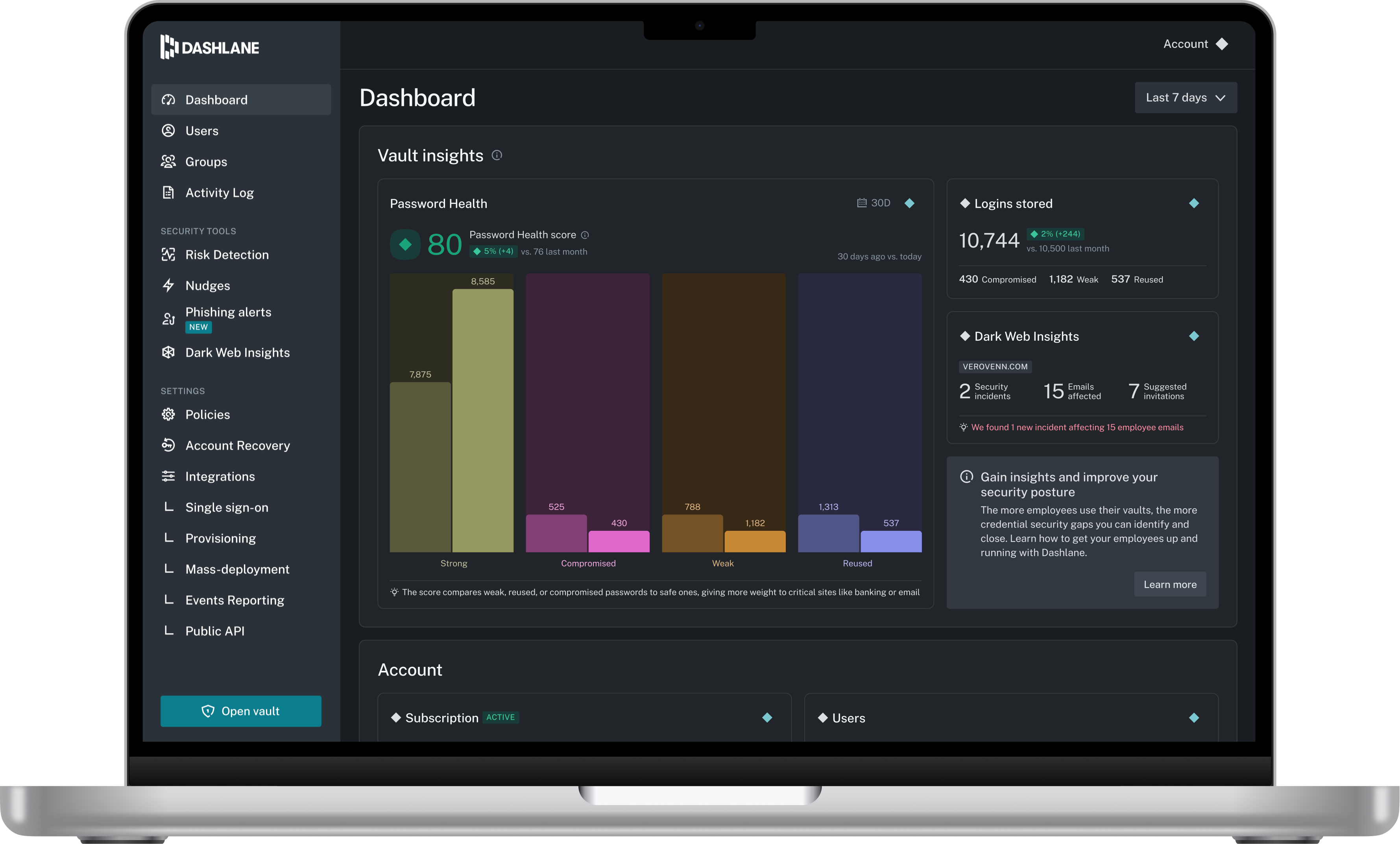
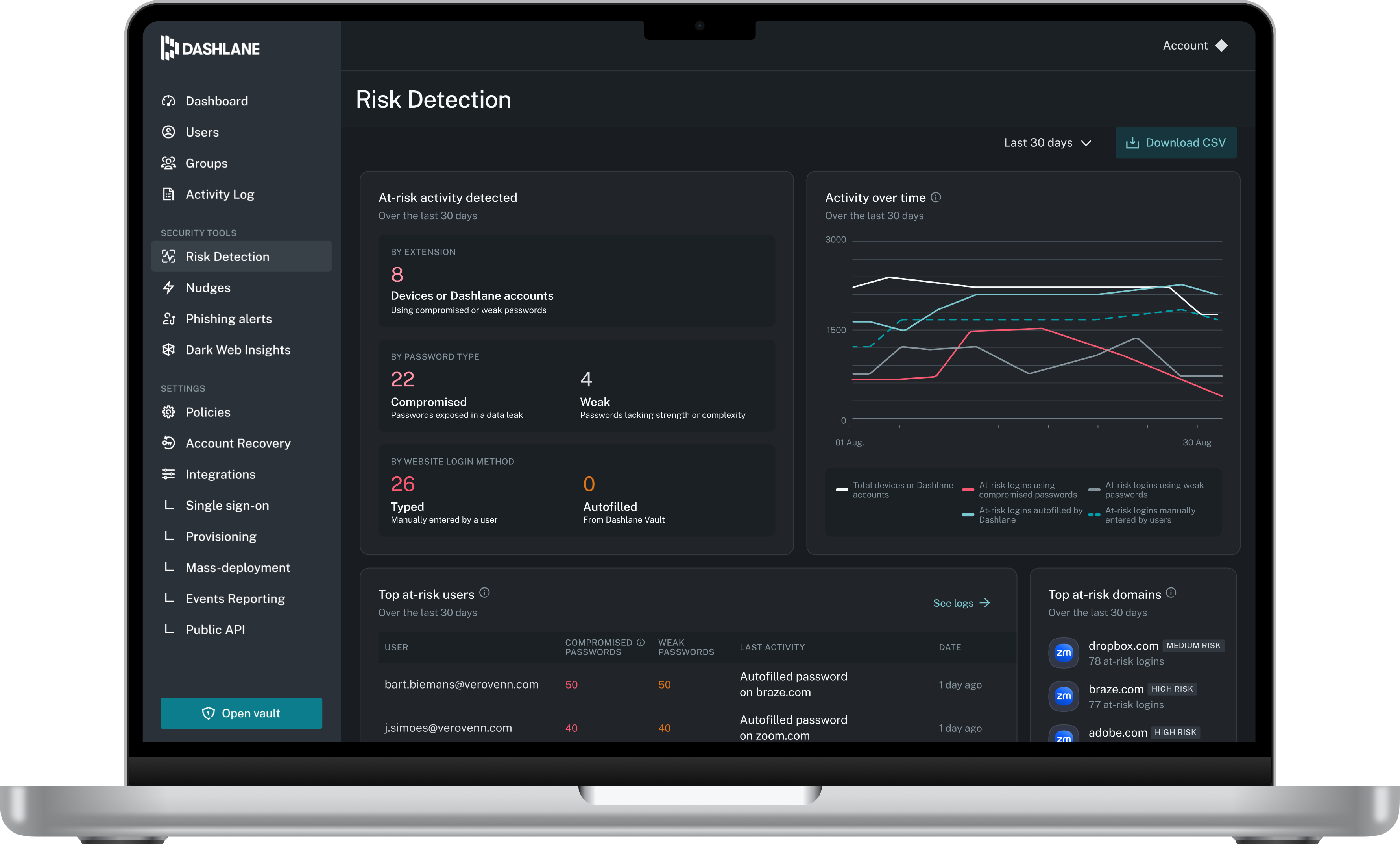
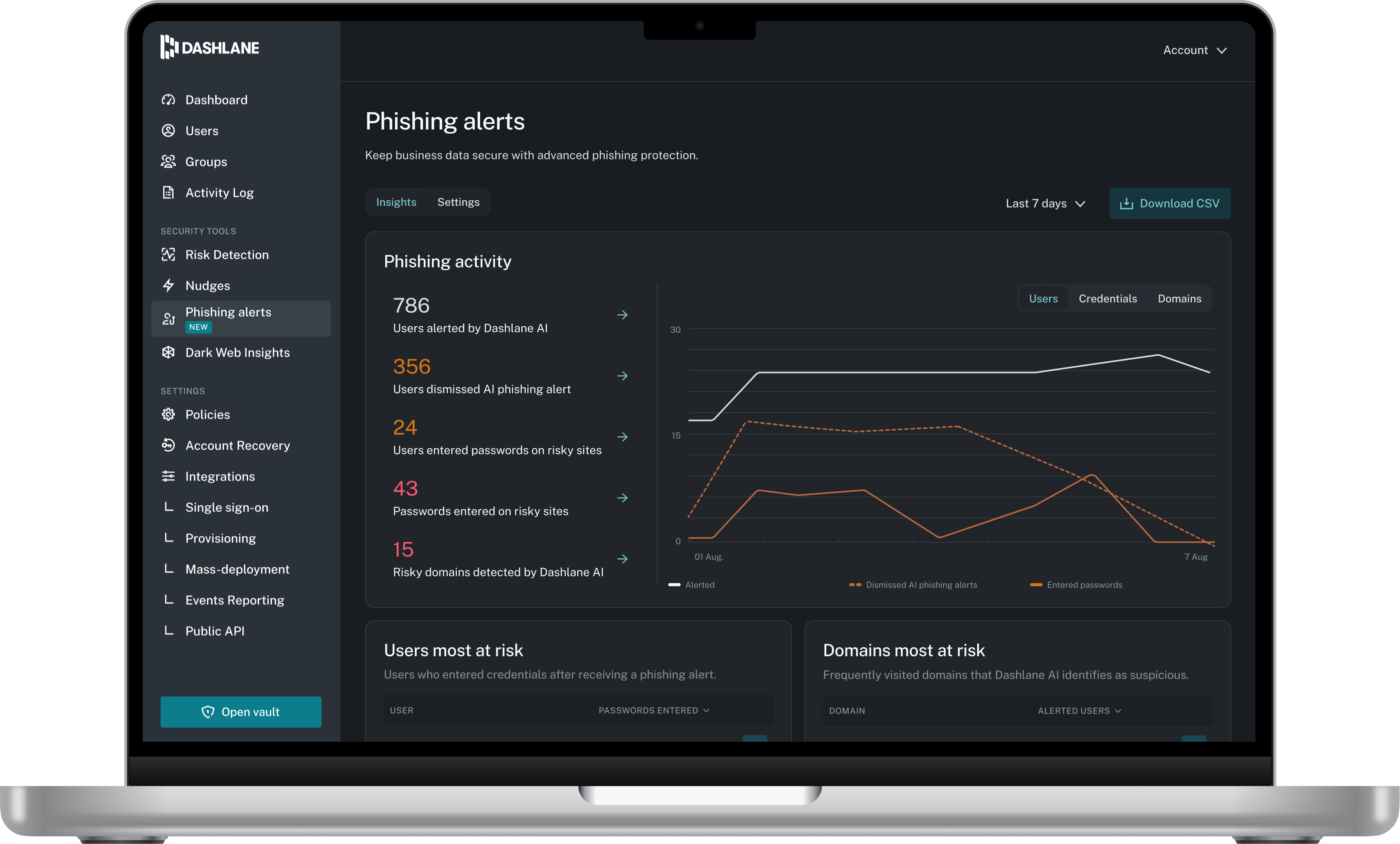
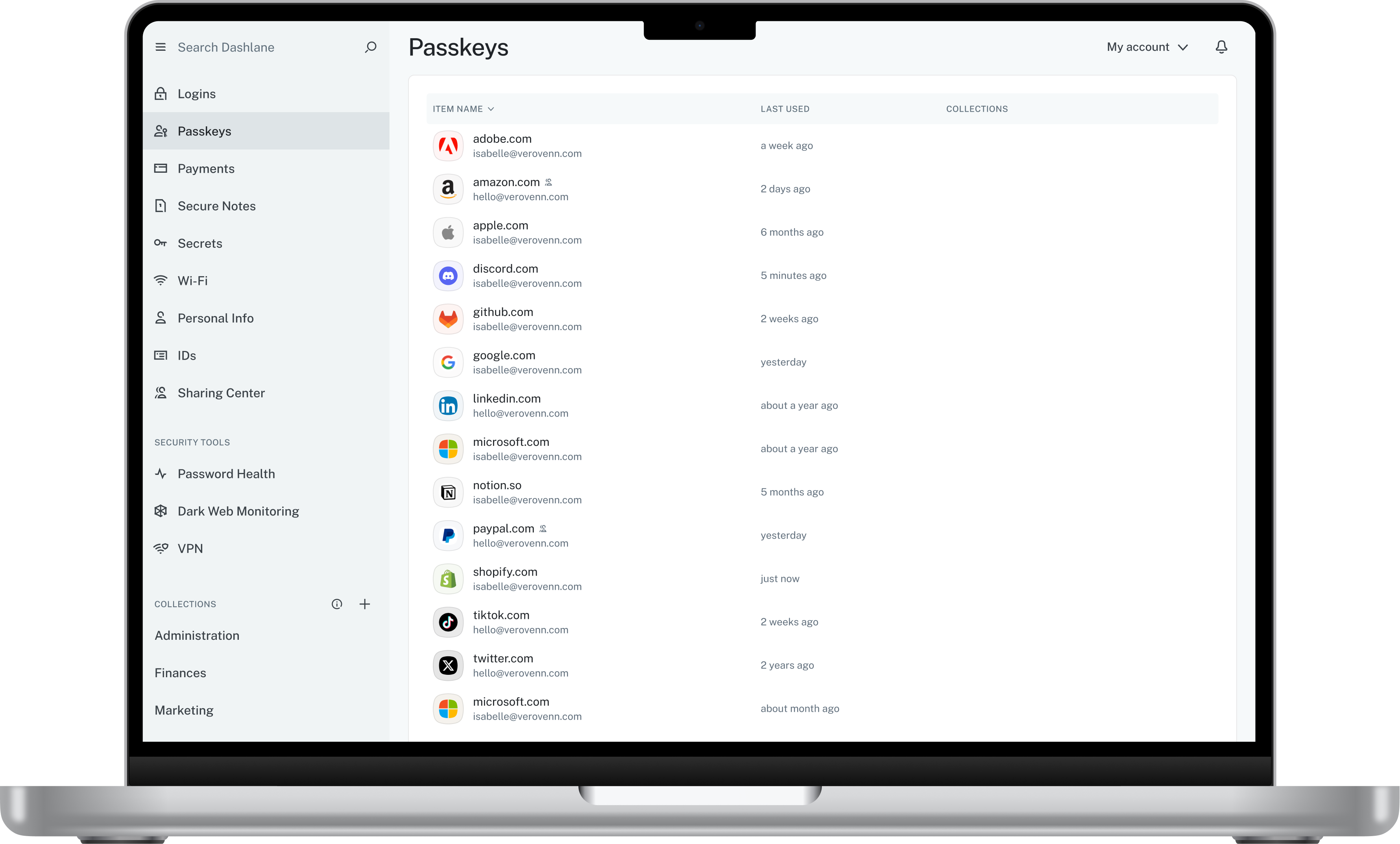
Dashlane is a credential manager that secures every credential, every user, and every employee device to proactively protect against breaches. Brands worldwide can use Dashlane to stay ahead of evolving threats.
$240
per year 10 employees
Tools4ever UMRA
Score 9.0 out of 10
N/A
New York software company Tools4ever offers a suite of identity management and access (IAM/IdM) tools, for single sign-on (SSO), password management, access control and authorization, and more, with the User Management Resource Administrator, or UMRA.
N/A
Pricing
Dashlane Password Manager
Tools4ever UMRA
Editions & Modules
Business
$8
per month (billed annually) per seat
Omnix™
Contact Sales
per year for organizations of 100+
No answers on this topic
Offerings
Pricing Offerings
Dashlane Password Manager
Tools4ever UMRA
Free Trial
Yes
No
Free/Freemium Version
Yes
No
Premium Consulting/Integration Services
No
No
Entry-level Setup Fee
No setup fee
No setup fee
Additional Details
—
—
More Pricing Information
Community Pulse
Dashlane Password Manager
Tools4ever UMRA
Features
Dashlane Password Manager
Tools4ever UMRA
Identity Management
Comparison of Identity Management features of Product A and Product B
I think Dashlane is a great service for anyone who uses the internet. We need to create accounts on almost every website, and Dashlane helps generate secure passwords and store them safely, but easily accessible through its seamless browser extension. Any business or personal lifestyle can benefit from Dashlane when you go online
It is very well suited for tying multiple systems and services together, allowing for exchanges of information and account management. I'm not sure of instances that it is not well suited since solution was recommended by folks in education. With that being the case it suited our needs quite well.
Imports students and staff into our Active Directory and email system.
It manages those same accounts, disabling accounts for folks who have left, and creating "Windows" when accounts should be enabled.
It interacts with our Microsoft AD and our student management software seamlessly. Once accounts are in our AD environment, our student management and other systems create new email accounts automatically for us.
The mobile app works fine for quick access, but autofill across different apps can be inconsistent. Sometimes it doesn’t recognize the login field, which slows people down when they’re on the go.
Occasionally the browser extension logs users out or doesn’t sync immediately with the desktop app, which causes frustration if someone just updated a password.
We have been attempting to get single sign on for students, so they have the ability to change their passwords on their own. The documentation of this process is very dated, and often support isn't even aware that their site issues/ references those older documents.
During the initial buildup of our server Tools4ever UMRA support was a bit hit and miss, but I will say our ongoing support has been very good.
Dashlane is usable, but there are 2 key issues that annoy me. 1. The mobile app and the browser extension are not synced and i cannot find passwords in the app that are clearly in the extension. 2. The system doe snot make it easy to assign a password to a specific subdomain. I get hundreds of passwords that i have to go through any time i go to any subdomain on my main site because of the nature of my business. I need the option back to assign a password to only work with a specific subdomain (and all related paged on that subdomain) note: The search features have been annoying in the past. I just went to test them to verify my issues and found that notes inside of a password are finally searchable. This helps
We've had no issues with Dashlane. I can't speak to their customer service because I have not personally needed to contact them. I guess that speaks about their product if we've not had any issues to reach out about. Great for supporting data/information on multiple platforms that are shared among team members.
Dashlane’s customer support is often rated higher, providing more responsive and helpful assistance. LastPass has a slightly steeper learning curve than Dashlane, but it offers more flexibility with user permissions, which can benefit teams. Dashlane includes unlimited passkey support and a clean breach history, while LastPass is more accommodating for smaller teams.
We save considerable work hours by a multitude of staff having the system manage and generate accounts for us on a daily basis.
We have some peace of mind knowing accounts for staff and students who leave our district can no longer gain access to our systems because it automatically disables those accounts.
Because of the way the system interacts with input that is put in, it automatically creates logical positions which dictate different levels, meaning it automatically sets up when staff gain access and lose access depending on the position they are filling.