Eclipse is a free and open source integrated development environment (IDE).
N/A
IntelliJ IDEA
Score 9.3 out of 10
N/A
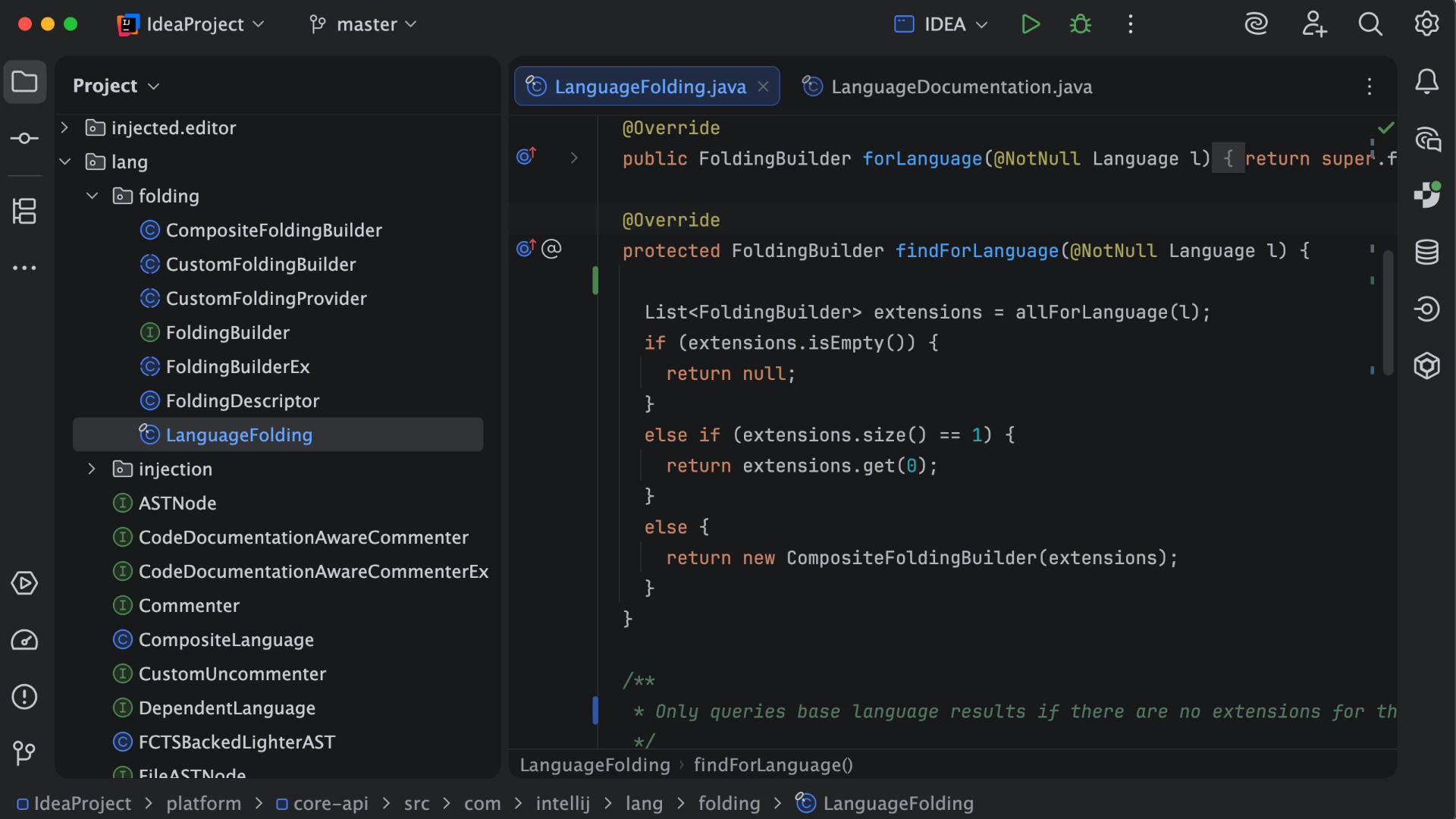
IntelliJ IDEA is an IDE that aims to give Java and Kotlin developers everything they need out of the box, including a smart code editor, built-in developer tools, framework support, database support, web development support, and much more.
$19.90
per month
WebStorm
Score 9.5 out of 10
N/A
WebStorm is an integrated development environment (IDE) by JetBrains. Designed for JavaScript and TypeScript development, WebStorm also aims to make it easy to tackle the most challenging tasks. Whether resolving Git merge conflicts or renaming a symbol across multiple files, it takes just a few clicks.
$0
per year
Pricing
Eclipse
IntelliJ IDEA
WebStorm
Editions & Modules
No answers on this topic
For Individual Use (Monthly billing)
$19.90
per month
For Organizations (Monthly billing)
$71.90
per month
For Individual Use (Yearly billing)
$199
per year
For Organizations (Yearly billing)
$719
per year
Individual Non-Commercial
$0
per year
Individual
$6.90
per month
Bussiness
$15.90
per month per user
Individual
$69
per year
Business
$159
per year per user
Offerings
Pricing Offerings
Eclipse
IntelliJ IDEA
WebStorm
Free Trial
No
Yes
Yes
Free/Freemium Version
No
Yes
Yes
Premium Consulting/Integration Services
No
No
No
Entry-level Setup Fee
No setup fee
No setup fee
No setup fee
Additional Details
—
All Products Pack (For Individual Use) – $299 /1st year, $ 239 /2nd year and $ 179 /3d year onwards
All Products Pack (For Organizations) – $979 / year
NetBeans is the closest competitor I've found to Eclipse for Java development. IntelliJ IDEA is good as well but it isn't free. NetBeans is a free competitor that has split the Java community, and a lot of it comes down to preference, like the famous vim vs. emacs wars. I would …
Compared to IntelliJ IDEA, Eclipse is free of charge and that is the main advantage for me. Over the time I got used to Eclipse, I didn't want to switch even though I could, because all I need is there and it works like a charm. Compared to NetBeans, I found the community of …
1. Eclipse is easy to use. 2. when you are new to building something you can go for Eclipse as it provides a clean UI. 3. Provide support to connect with other tools and technology.
IntelliJ is a good IDE as well. Any motivated user can't go wrong focusing on one and then deeply learning it, and it will pay off in productivity. Note of course that one is free the other is not! I find Eclipse is stronger at managing very large projects.
Eclipse is far better than NetBeans. But when compared to IntellijIdea Eclipse is a good choice when it comes to handling large projects and costs. Eclipse has room to improve on its UI and IntelliSense.
Eclipse stands out with its feature set, reliability, and being completely free of charge. I have previously used NetBeans but had reliability issues with it, at least on Windows version. IDEA has modern UI and is significantly more user friendly than Eclipse; however, the free …
They are both great IDEs and we use both. IntelliJ may have a larger community so there are more plugins available, which means it could be a better choice for some specific types of projects.
As previously said, Eclipse is one of the most complete and useful tools for Java development. And as a plus, it's open-source and free, so you won't beat that price-quality relation. When starting with Java projects, you won't fail with Eclipse. But, if you are getting into …
As compared to NetBeans, Eclipse is much faster. NetBeans needs to have JDK 1.8 which sometimes creates problems if your system already has a higher version installed, besides it has a glassfish server which is hard to configure. Integration of MySQL or other database is …
Verified User
Engineer
Chose Eclipse
First thing, Eclipse is free. So zero cost as compared to other alternatives. Eclipse has tons of tools/plugins for better development/testing, helping devs, making their lives easier.
Eclipse offers all the features in the other IDEs but without any cost. It also is memory efficient as compared to other IDEs. Various themes are available in eclipse and we can customize it according to our needs very easily. The Windows Toolkit allows us to build desktop …
As I already said, Eclipse might not have all the features supported by IntelliJ. However, the variety of plugins available in Eclipse make it much flexible to work with. Another main reason to go for this product was because of price (free). Since I worked for a startup, the …
Eclipse was used for 3-5 years until IntelliJ became the more preferred IDE because IntelliJ has better code formatting, presentation, and navigation between different types of files. IntelliJ has a shorter learning curve and setup is easier especially for less experienced …
Eclipse and NetBeans are open-sourced and does not require a license to use the software. However, Eclipse has a wide selection of plugins to choose from to integrate any tools within the workspace, making development more accessible, and reducing the developer effort.
Eclipse used to be the defacto standard for code development. But in recent years, as it has started focusing on its other products, like Orion and Che, it's core IDE (with focus on the 'I'), has seen a slowdown in its prominence. It cannot be compared to just the massive …
Eclipse is the best IDE on the market for Java development. It has great error and warning handling, and many integrations with useful tools - debugger, sonarqube (static code analysis), Maven / Gradle / Ant, Tomcat / Wildfly / JBoss (web servers). The best part of eclipse is …
I used IDEA prior to using Eclipse. I loved how easy I can debug in both, but the debugging feature in IDEA is just way more polished then Eclipse. Other than that, Eclipse was easy to setup and start with.
For no license, Eclipse is a very good start. IntelliJ has much greater support and tools for many things like connecting to all kinds of databases and SaaS platform such as Salesforce. Code refactoring is also very cool on IntelliJ compared to Eclipse. For Python and Django …
Eclipse looks better (though this is a matter of taste). All this fuss about SWT and native controls was worth it. Eclipse looks like a solid well thought-out application with pretty fonts and icons, while IDEA at first glance looks like a stunt toy with lame hack icons and …
We compared Eclipse primarily with IntelliJ, and the thing we liked about Eclipse was the support for plugins which makes it really customizable. The other features that we liked were the multitasking, filtering and debugging which are very carefully designed by keeping in mind …
They are very similar but eclipse has greater availability of plugins that allow you to achieve much more satisfactory results, in the products that are developed, the basic configurations are a bit more difficult than in NetBeans but they are much more specific and much more …
The community around Eclipse keeps the product updated and (mostly) clean of errors. There is no commercial owner of Eclipse, so innovation is top priority for the project which leads to be more open, customizable and friendly to the users. IntelliJ is a good competitor, but …
Since we are primarily a Scala shop, I only evaluated other tools based on their support for Scala. As I hinted at before, Vim and Sublime Text 3 have practically no support for Scala as all the Scala plugins that worked were never finished and abandoned and only work for Scala …
IntelliJ is a full featured IDES and has the most advanced set of features for developing web and desktop applications. It supports integration of the Spring framework which is necessary for web development. It supports web app scripting languages and web development …
I have used Eclipse also in the past. But it is slow compared to IntelliJ, it does not offer as many features as IntelliJ offers, and the integrations with third-party tools is not great. But they are open-source and they don't charge anything whereas IntelliJ charges $500 per …
Against competition I can say about IntelliJ that:
1. It is definitely faster and efficient than other IDEs. Comparing with Eclipse it emerges as a clear winner in terms or raw performance. 2. More feature Rich with great support for modern technologies. It has great support for …
UI--IntelliJ IDEA is the winner. IntelliSense--Again, IntelliJ IDEA is the winner. Performance and CPU usage - IntelliJ IDEA has a lot of room to improve on this. Eclipse handle the large projects more effectively than IntelliJ IDEA.
Microsoft Visual Studio Code (VS) requires a lot of textual configuration, where IntelliJ IDEA provides a graphical interface with configuration options displayed. This matters a lot to me as I don't want to hunt around the internet to remember how to set different parameters …
Previously we were using Eclipse but due to the ease of understanding and easy to navigate user interface with drop downs, wizards they are better in IntelliJ moreover for experienced developers migrating to IntelliJ as compared to Eclipse. It has an easy to understand UI and …
Eclipse is just so old, like a dinosaur, compared to IntelliJ. There are still formats that Eclipse supports better, especially old and/or propriety ones. Still, most of the modern software development needs can be done on IntelliJ, & in a much better way, some of them are not …
IntelliJ stacks better against Eclipse or vs code because it provides better code suggestions, out-of-the-box SonarLint integration, and built-in support for version control with git. It also has a vast collection of plugins that can increase developer productivity, reduce …
In summary, IntelliJ is more polished and feature-rich out of the box, especially for Java development. Eclipse is extensible but can be rougher around the edges. IntelliJ costs money for advanced features, while Eclipse is free. IntelliJ offers many developers a better …
Back in the day, there weren't too many PHP IDEs with proper syntax and code checks, but PHPStorm and IDEA worked great. So great that when I needed a Java IDE the next time, I gave it a go and have never looked back since (okay, I did keep checking the competition and …
IntelliJ IDEA is the most specific and oriented towards my line of work, however, after using it for years - it's also my preferred IDE that I use for personal projects as well. Jetbrains other IDE offerings are almost as good and I do use them from time to time but IntelliJ …
It is much more friendly to use and has more features in terms of leading to more efficient and productive software engineers. I prefer the interface as well as the code Completion/code refactoring and error suggestions
Compared to the other alternatives, IntelliJ is more complete, modern and robust. The other alternatives are dated and do not have features that exist by default in IntelliJ.
IntelliJ surpassed every single competitor. The only viable alternative I still use is VisualStudio Code build in a browser for demo purposes... other than that, IDEA does everything better, faster, and in a more comfy way. This is the best IDE out there. This is just as good …
IntelliJ IDEA includes FTP deployment which is ideal for legacy web applications and simple projects that don't use CI/CD. The outline view which lists methods within a class (ColdFusion component) is the easiest to use out of any other IDE and makes navigating large files a …
I think WebStorm is way ahead of open-source editors. Please don't get me wrong, I love open-source. But the other free editors have a lot of configuration which blocks my whole coding experience. Take "Atom" for example. I used it for about 3 months, but in that time I had to …
I have loved using WebStorm because it has so many features that are helpful not only to those just starting out, but also to veteran programmers. WebStorm also has free educational licensing, which has been integral in creating a professional environment in my classroom. It …
WebStorm is the best IDE for javascript over cloud9 and NetBeans which have traditionally supported a variety of languages with no specific specialty. While WebStorm has a cost associated per license, it is bar none when it comes to an integrated development environment needed …
I think that if someone asked me for an IDE for Java programming, I would definitely recommend Eclipse as is one of the most complete solutions for this language out there. If the main programming language of that person is not Java, I don't think Eclipse would suit his needs[.]
This is a superb tool if your project involves a lot of backend development, especially in Java/Spring Boot and Kotlin. The support for the front end is great as well, but some developers may prefer to use the GitHub copilot add-on. I especially love using the GitHub copilot add-on. It may be less appropriate if your project requires heavy use of HotSwaps for backend debugging, as sometimes the support for that can be limited.
Groups that use a [variety] of development environments (.net, python, web), Jebrain's products and Webstorm, in particular, are a great choice for productivity. If your developers are accustom to another IDE it might be better for all to sync on the same one. I wouldn't take the cost aspect as a consideration. A productive developer is far more important.
Unit testing: Fully integrated into IntelliJ IDEA. Your unit tests will run smoothly and efficiently, with excellent debugging tools for when things get tricky.
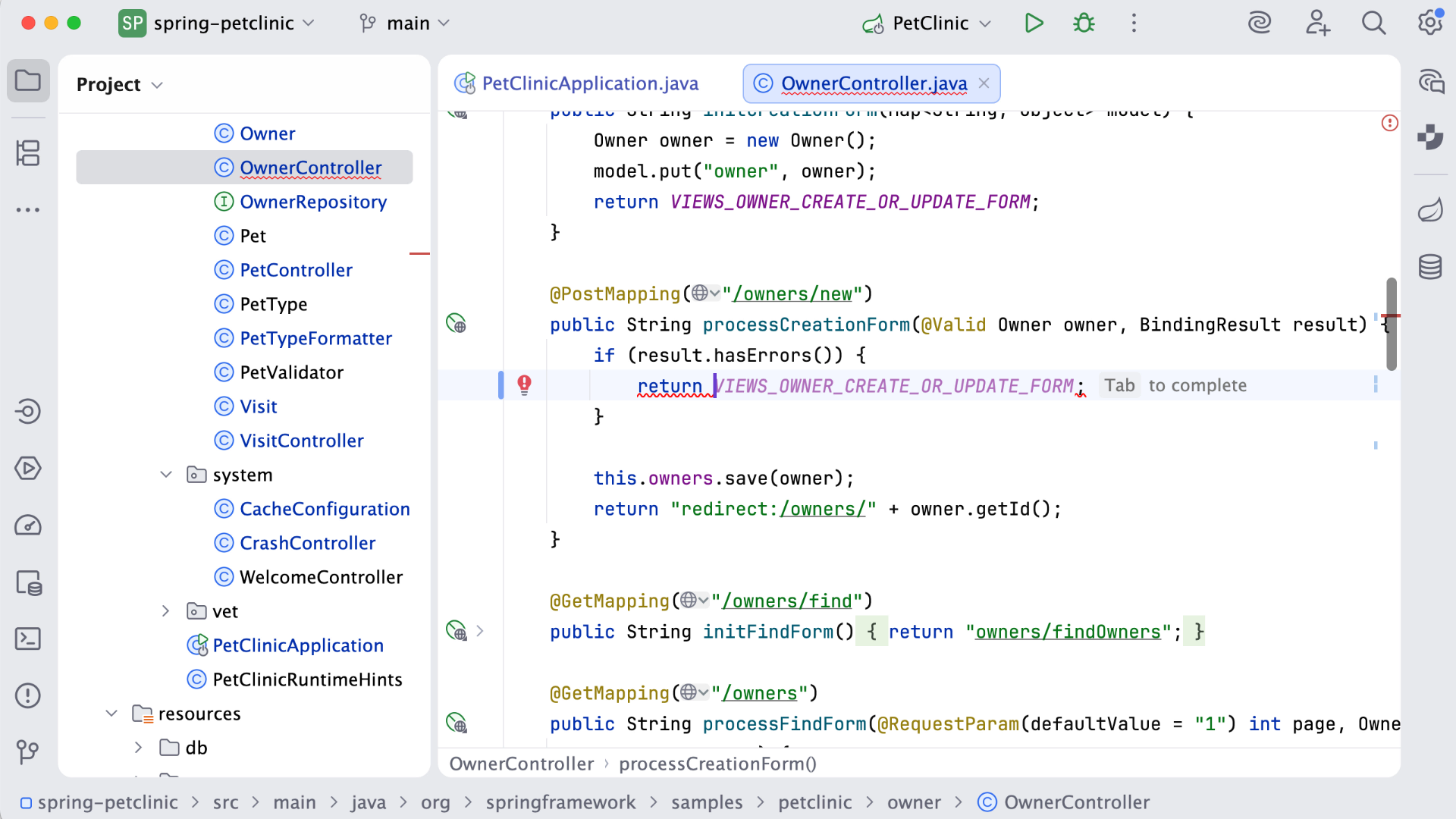
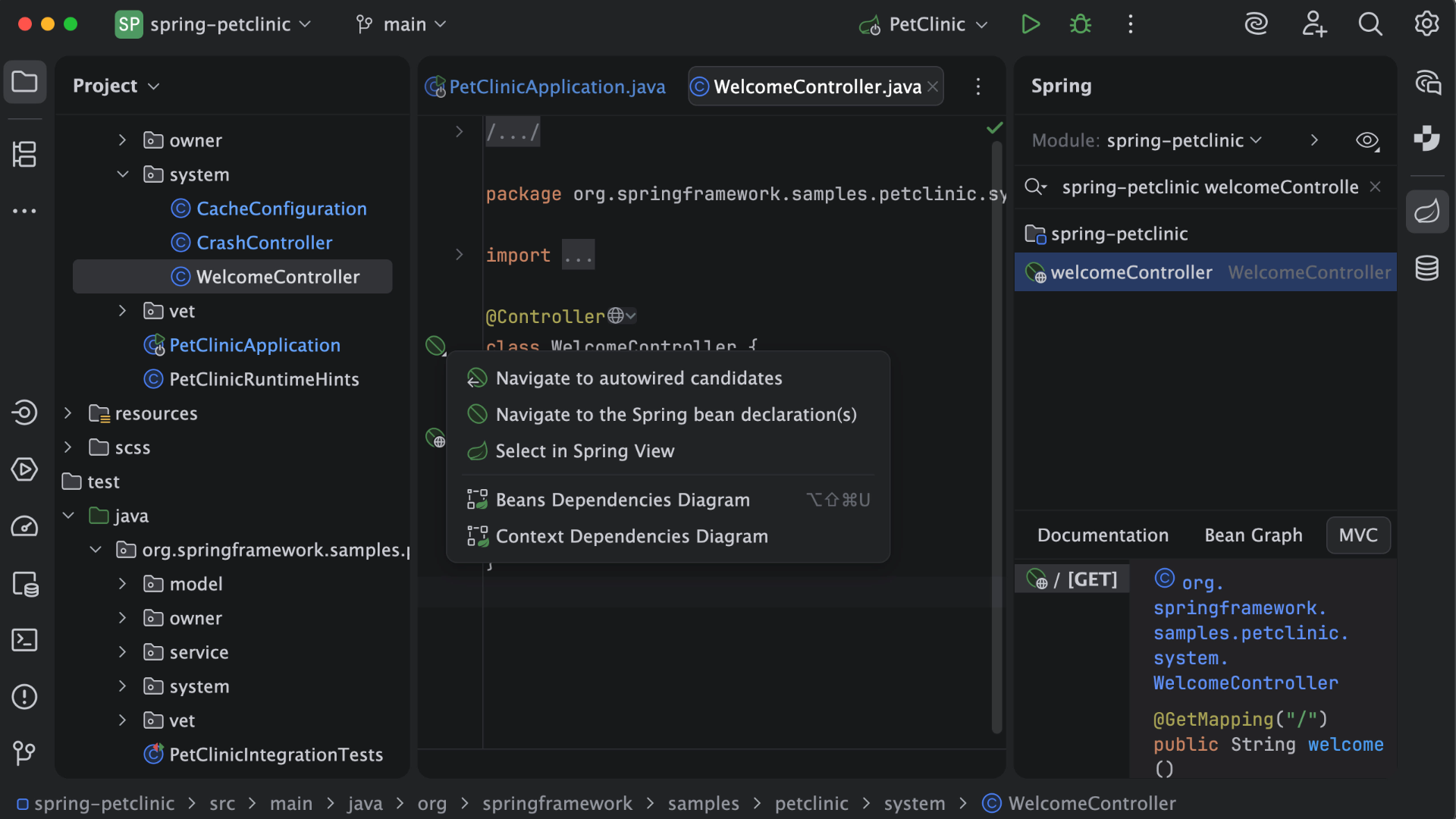
Spring integration: Our Spring project using Maven works flawlessly in IntelliJ IDEA. I know firsthand that Apache is also easily and readily supported too. The integration is seamless and very easy to set up using IntelliJ IDEA's set up wizard when importing new projects.
Customization: IntelliJ IDEA comes out of the box with a bunch of handy shortcuts, as well as text prediction, syntax error detection, and other tools to help keep your code clean. But even better is that it allows for total customization of shortcuts you can easily create to suit your needs.
While the DB integration is broad (many connectors) it isn't particularly deep. So if you need to do serious DB work on (for example) SQL Server, it is sometimes necessary to go directly to the SQL Server Studio. But for general access and manipulation, it is ok.
The syntax formatting is sometimes painful to set up and doesn't always support things well. For example, it doesn't effectively support SCSS.
Using it for remote debugging in a VM works pretty well, but it is difficult to set up and there is no documentation I could find to really explain how to do it. When remote debugging, the editor does not necessarily integrate the remote context. So, for example, things like Pylint don't always find the libraries in the VM and display spurious errors.
The debugging console is not the default, and my choice is never remembered, so every time I restart my program, it's a dialog and several clicks to get it back. The debugging console has the same contextual problems with remote debugging that the editor does.
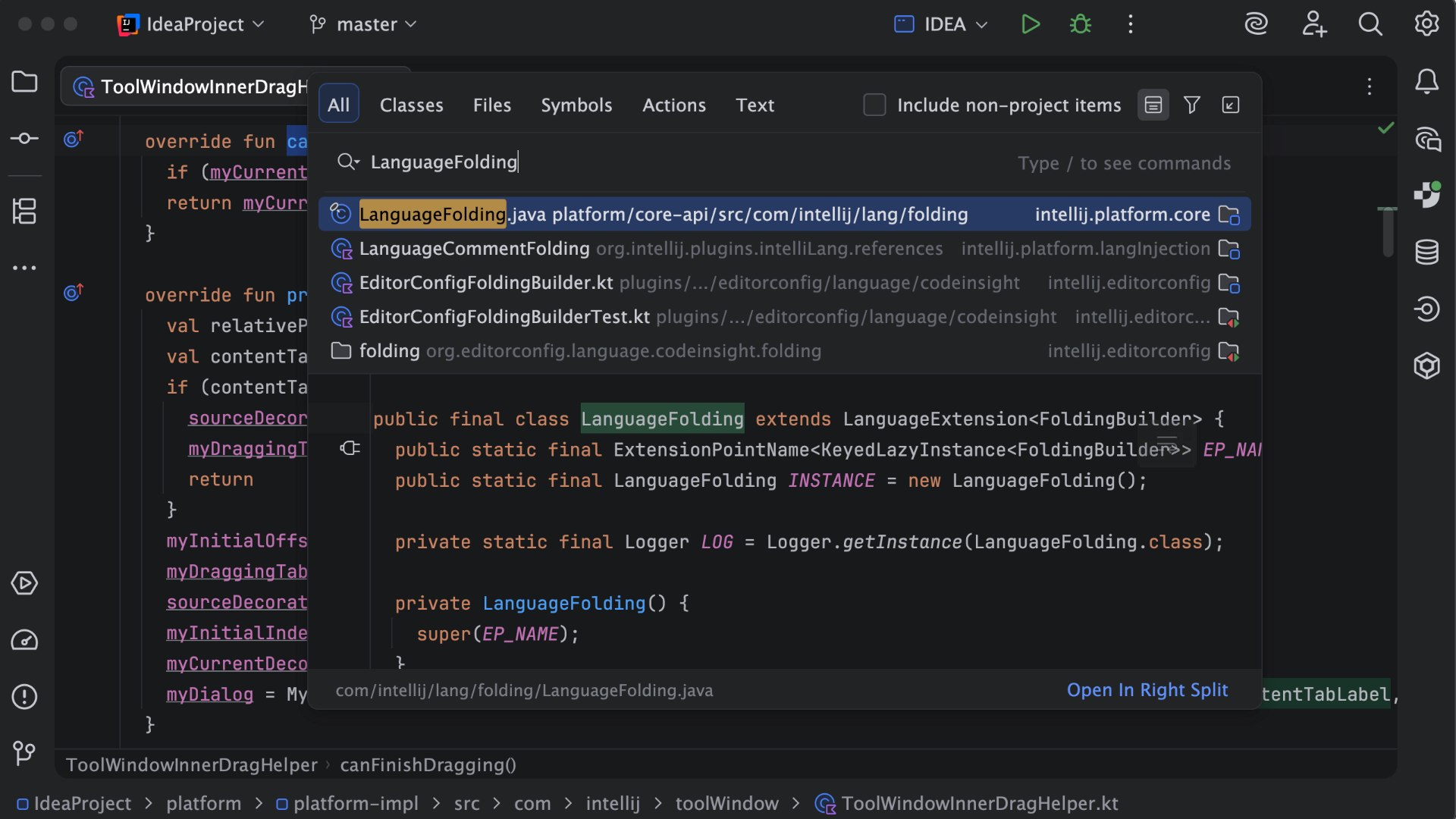
The popup file search sometimes frustrates me. It caps the number of results, and sometimes it isn't clear that it simply stopped looking. I also used to have trouble finding string occurrences that I knew were in my project, but I think they've made improvements in this area recently.
Being a AAA IDE, WebStorm can be a memory hog. If I don't kill it every few days, it can get really slow. I would love to see performance improvements.
Speaking of performance, WebStorm can take a long time to launch. I'd like to see improvements in launch times.
I love this product, what makes it one of the best tool out in the market is its ability to function with a wide range of languages. The online community support is superb, so you are never stuck on an issue. The customization is endless, you can keep adding plugins or jars for more functionalities as per your requirements. It's Free !!!
VS Code is maturing and has a Scala plugin now. The overall experience with VS Code - for web development at least - is very snappy/fast. IntelliJ feels a bit sluggish in comparison. If that Scala plugin for VS Code is deemed mature enough - we may not bother renewing and resort to the Community Edition if we need it.
It has everything that the developer needs to do the job. Few things that I have used in my day-to-day development 1. Console output. 2. Software flash functionality supporting multiple JTAG vendors like J-LINK. 3. Debugging capabilities like having a breakpoint, looking at the assembly, looking at the memory etc. this also applies to Embedded boards. 4. Plug-in like CMake, Doxygen and PlantUML are available.
There is always room for improvement, but I haven't met any IDE that I liked more so far. Even if it did not fit a use case right out of the box, there is always a way to configure how it works to do just that.
Great in debugging, testing, developing and maintaining softwares in a number of languages. Great support for many languages and their syntaxes. Great support of many third party extensions and plugins like GIT and html plugins. The RAM usage of WebStorm however could be really improved, it literally takes almost all of the RAM of my machine with 16GB RAM
I gave this rating because Eclipse is an open-source free IDE therefore no support system is available as far as I know. I have to go through other sources to solve my problem which is very tough and annoying. So if you are using Eclipse then you are on your own, as a student, it is not a big issue for me but for developers it is a need.
Customer support is really good in the case of IntelliJ. If you are paying for this product then, the company makes sure that you will get all the services adequately. Regular update patches are provided to improve the IDE. An online bug report makes it easier for the developers to find the solution as fast as possible. The large online community also helps to find the various solutions to the issues.
I gave this rating because I have never needed their customer support, which is the highest level of support I suppose. When a product works just fine out of the box and everything you may need is well documented, it's a paradise for the customer. But I've seen some questions asked on their portal, and I've seen thorough answers given to the questions and the willingness to support the customer with follow-ups and everything else.
This installs just like any other application - its pretty straight forward. Perhaps licensing could be more challenging - but if you use the cloud licensing they offer its as simple as having engineers login to the application and it just works.
The installation, adaptability, and ease of usage for Eclipse are pretty high and simple compared to some of the other products. Also, the fact that it is almost a plug and play once the connections are established and once a new user gets the hang of the system comes pretty handy.
Eclipse is just so old, like a dinosaur, compared to IntelliJ. There are still formats that Eclipse supports better, especially old and/or propriety ones. Still, most of the modern software development needs can be done on IntelliJ, & in a much better way, some of them are not even supported on Eclipse.
I think WebStorm is way ahead of open-source editors. Please don't get me wrong, I love open-source. But the other free editors have a lot of configuration which blocks my whole coding experience. Take "Atom" for example. I used it for about 3 months, but in that time I had to update the plugins hundreds of time, and for every little thing (e.g. linter) I had to download a community plugin, and with each plugin atom would get a little slow. Take "Eclipse" for another example, which is very suited for Java, but not so suited for JavaScript. Sublime was good, but WebStorm comes with many exciting features that I did not find in sublime/notepad.
This development environment offers the possibility of improving the productivity time of work teams by supporting the integration of large architectures.
It drives constant change and evolution in work teams thanks to its constant versioning.
It works well enough to develop continuous server client integrations, based on solid or any other programming principle.