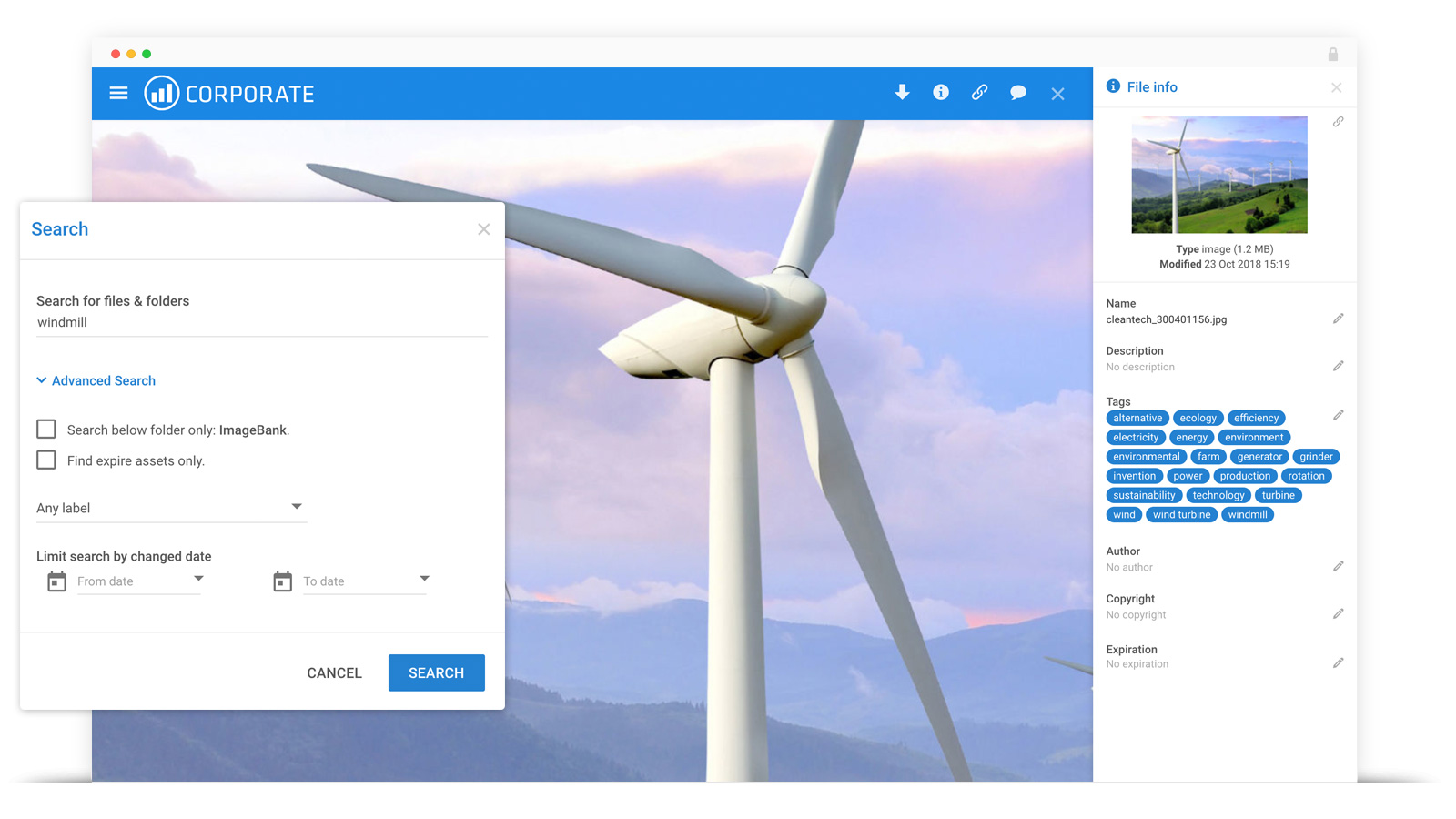
Filecamp is a cloud-based Digital Asset Management (DAM) solution with unlimited users. According to the vendor, with Filecamp users can showcase and share files with clients or with other parts of the organization. Customers can have their own custom branding and password protection if required. Using different download presets, anyone can be allowed to quickly download the right resolution of images. Filecamp is designed to make it easy to organize and search thousands of rich media…
$29
per month
Plone
Score10 out of 10
N/A
Plone is a free and open source content management system built on top of the Zope application server. Plone can be used for any kind of website, including blogs, internet sites, webshops, and internal websites.
N/A
Pricing
Filecamp
Plone
Editions & Modules
Basic
$29
per month
Advanced
$59
per month
Professional
$89
per month
No answers on this topic
Offerings
Pricing Offerings
Filecamp
Plone
Free Trial
Yes
No
Free/Freemium Version
No
No
Premium Consulting/Integration Services
No
No
Entry-level Setup Fee
No setup fee
No setup fee
Additional Details
There are 3 plans to available to meet various needs and budget. All plans come with unlimited users and free bandwidth. Plans can be upgraded, downgraded, or storage can be added to an account at any time. There are no startup costs.
—
More Pricing Information
Features
Filecamp
Plone
Security
Comparison of Security features of Filecamp and Plone
Feature
Filecamp
-
Ratings
Plone
10.0
5 Ratings
19% above category average
Role-based user permissions
00 Ratings
10.05 Ratings
Platform & Infrastructure
Comparison of Platform & Infrastructure features of Filecamp and Plone
Feature
Filecamp
-
Ratings
Plone
10.0
5 Ratings
25% above category average
API
00 Ratings
10.05 Ratings
Internationalization / multi-language
00 Ratings
10.05 Ratings
Web Content Creation
Comparison of Web Content Creation features of Filecamp and Plone
Feature
Filecamp
-
Ratings
Plone
9.4
6 Ratings
18% above category average
WYSIWYG editor
00 Ratings
10.06 Ratings
Code quality / cleanliness
00 Ratings
10.05 Ratings
Admin section
00 Ratings
10.05 Ratings
Page templates
00 Ratings
10.05 Ratings
Library of website themes
00 Ratings
5.05 Ratings
Mobile optimization / responsive design
00 Ratings
10.05 Ratings
Publishing workflow
00 Ratings
10.05 Ratings
Form generator
00 Ratings
10.05 Ratings
Web Content Management
Comparison of Web Content Management features of Filecamp and Plone
Filecamp lets you share assets with your team or external stakeholders. I was the admin (in my previous position) for a Filecamp install for +300 users. The assets can be available to all or you can share them with granular permissions. You can store images, videos, documents and other types of files. There's nothing I actually dislike... perhaps I'd like better reporting tools. But it's no biggie.
The larger your organization, the more appropriate Plone will be. This is not to say that Plone is a worse choice for small websites, only that the minimum investment for a Plone site is certainly higher than for other platforms. If you already use Plone for your site and are looking for a redesign or an overhaul, I would only advise switching to a different platform such as WordPress or Drupal if your organization is downsizing. For any other situation, Plone is the natural choice for your growth.
Plone is a folder-based system, organising content in a similar way desktop-users are doing for the last two decades. No need to teach non-tech customers some relational-database like paradigm for content management.
Plone is secure. It is the most secure CMS you can get your hands on.
Plone is flexible, and makes fast development easy.
Would be nice if you could give access to a folder but not to a subfolder or even a specific file within it. No other platform does this properly so this would really set Filecamp apart in my opinion.
Not everything is configurable or editable by Plone, and when you need to adjust or add custom pieces in, you need to deal with Zope. Zope has an ugly, confusing and difficult UI and structure as a backend.
Using 3rd party products is difficult to do - there are a few different ways to get them installed, all of which take a bit of luck to get right.
Building custom products for Plone is not fun. You've got to deal with an archaic framework to tie in that is not well documented (there is documentation about many things, but not great documentation and there are a lot of holes in the documentation).
Compared to the amount of Plone sites, users and customizations we have in our organization, the amount of support requests and training needed is really small.
The new user interface in Plone 6 is even better, it is super fast, has lots of different blocks for enhancing the page, has flexible layout system and is easy to extend with more features.
Our Plone sites are very robust. We have critical systems on Plone and we have been running sites on Plone for over 20 years with very little unexpected downtime.
Plone is very intensive in its operations, and if not configured well it can be slow. However it is designed and built with speed in mind and with proper use of coding, templates and caching can perform extremely well under high loads. It is capable of scaling to very high load availability environments with no specific coding requirements.
Unlimited users and ease of use! I like that Filecamp is our one-stop-shop for all our digital assets. It's so easy that we never have to explain our users or clients how it works. We're OS X users and everything seems really familiar which helps. Everyone who has interacted with it (team members, clients, and external press contacts) have been very happy with their experience.
Drupal: Plone is cheaper, so with Drupal is more complex to reach the required ROI. However, Drupal has a lower learning curve WordPress: For our necessities it has a more expensive learning curve than plone. Joomla, is easier to use. However, it have some issues on security and web content where Plone is much better
A de minimis incentive was given to thank the reviewer for their time. The incentive was not used to bias or drive a particular response, nor was the incentive contingent on a positive endorsement. More Info
The impact Plone has had at the University of Oshkosh is as follows: this software allows student workers to learn about IT departments and CMS's in a user-friendly way. It gives many students great jobs that look great on their resumes.
Since there are great training manuals for Plone, there is increased employee efficient in the workplace. Training doesn't take long, and if there's ever a question, the Plone manual is a great tool to refer to.
If an employee using Plone quits, its easy to find someone to replace them with quick training and great resources.