Formstack Documents (formerly WebMerge, acquired by Formstack April 2019) is an online service that automates the document creation process. It allows users to create customized PDF and Word documents for contracts, applications, government forms, and more.
N/A
Responsive
Score8.9 out of 10
N/A
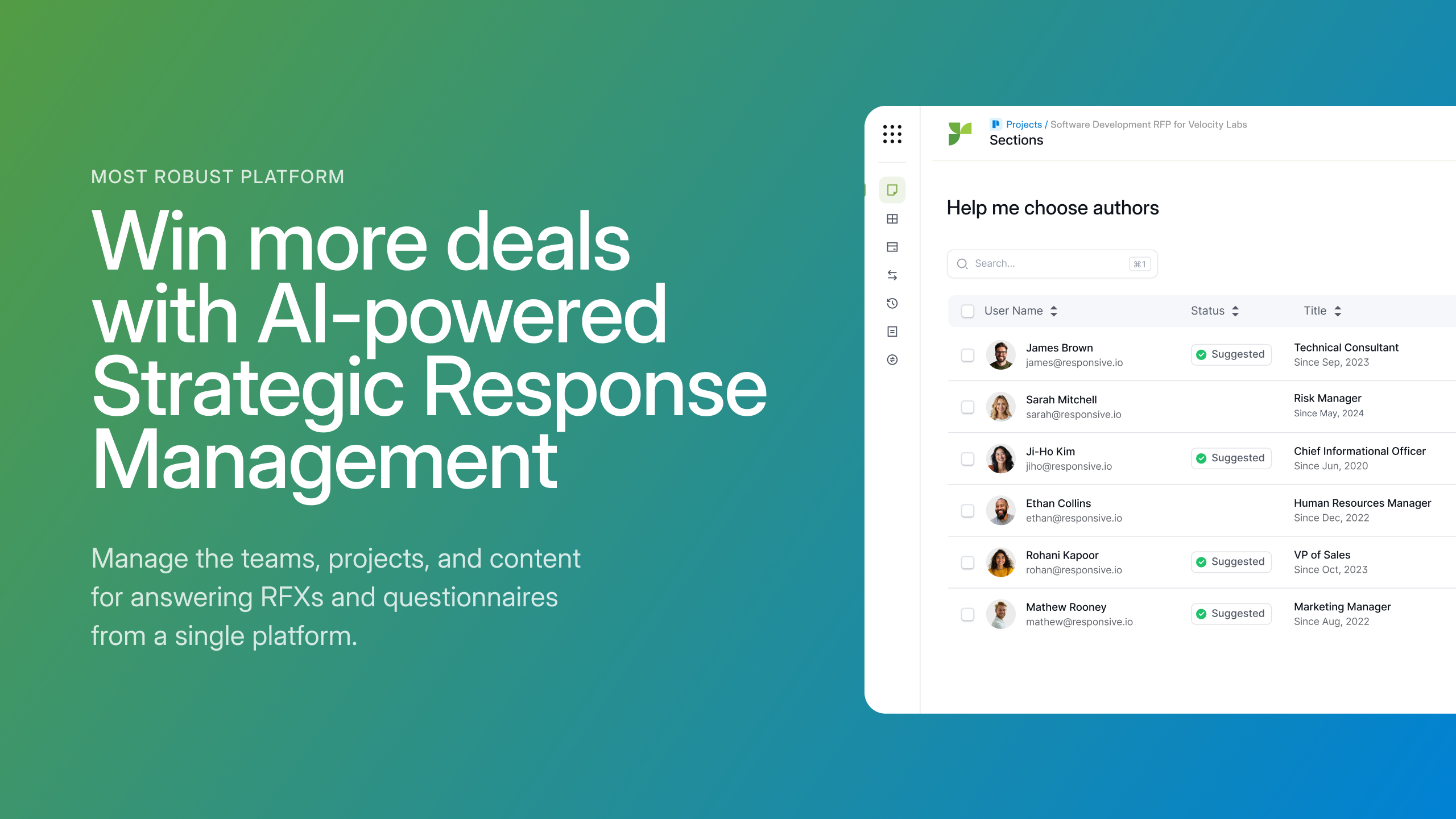
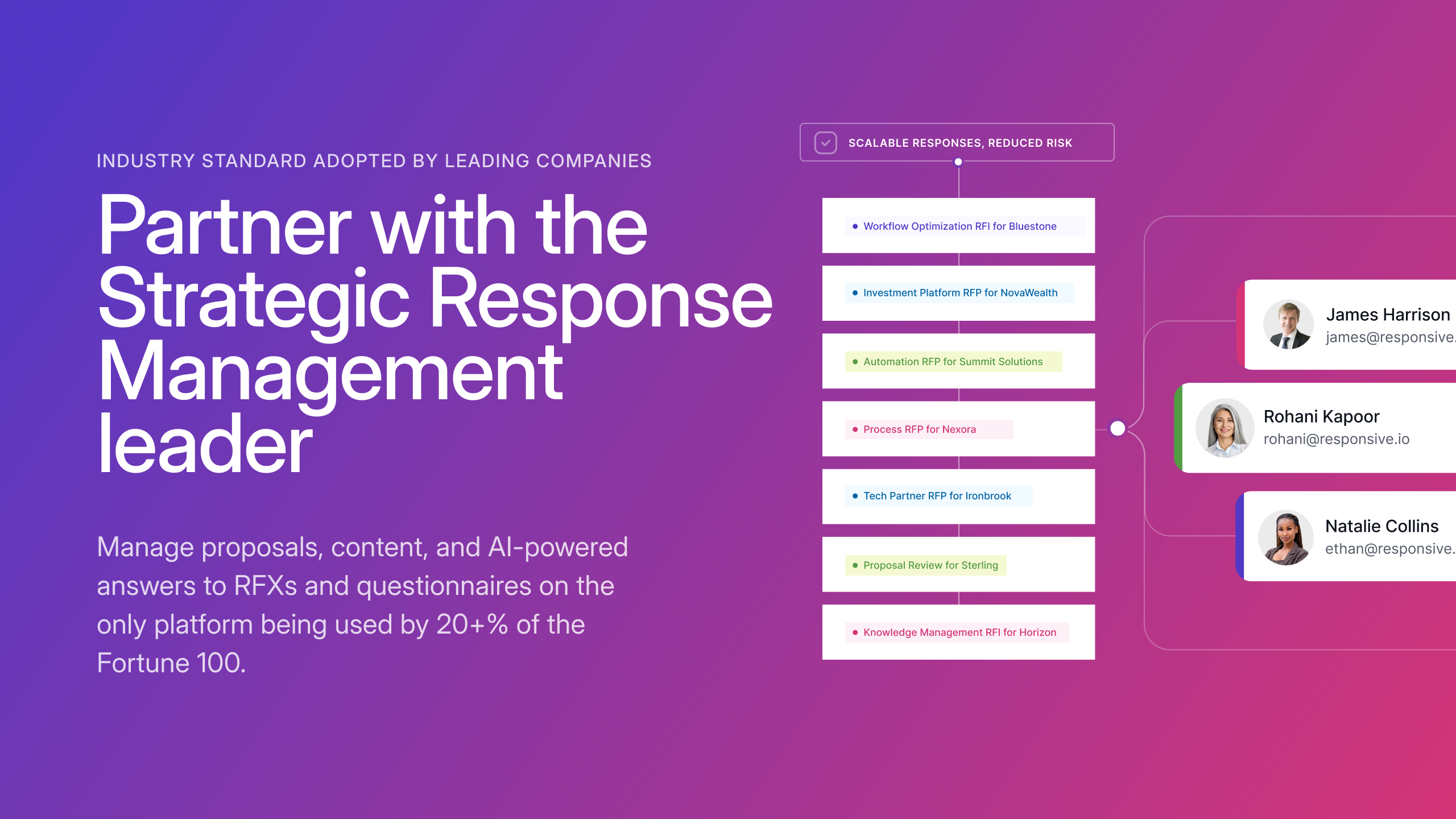
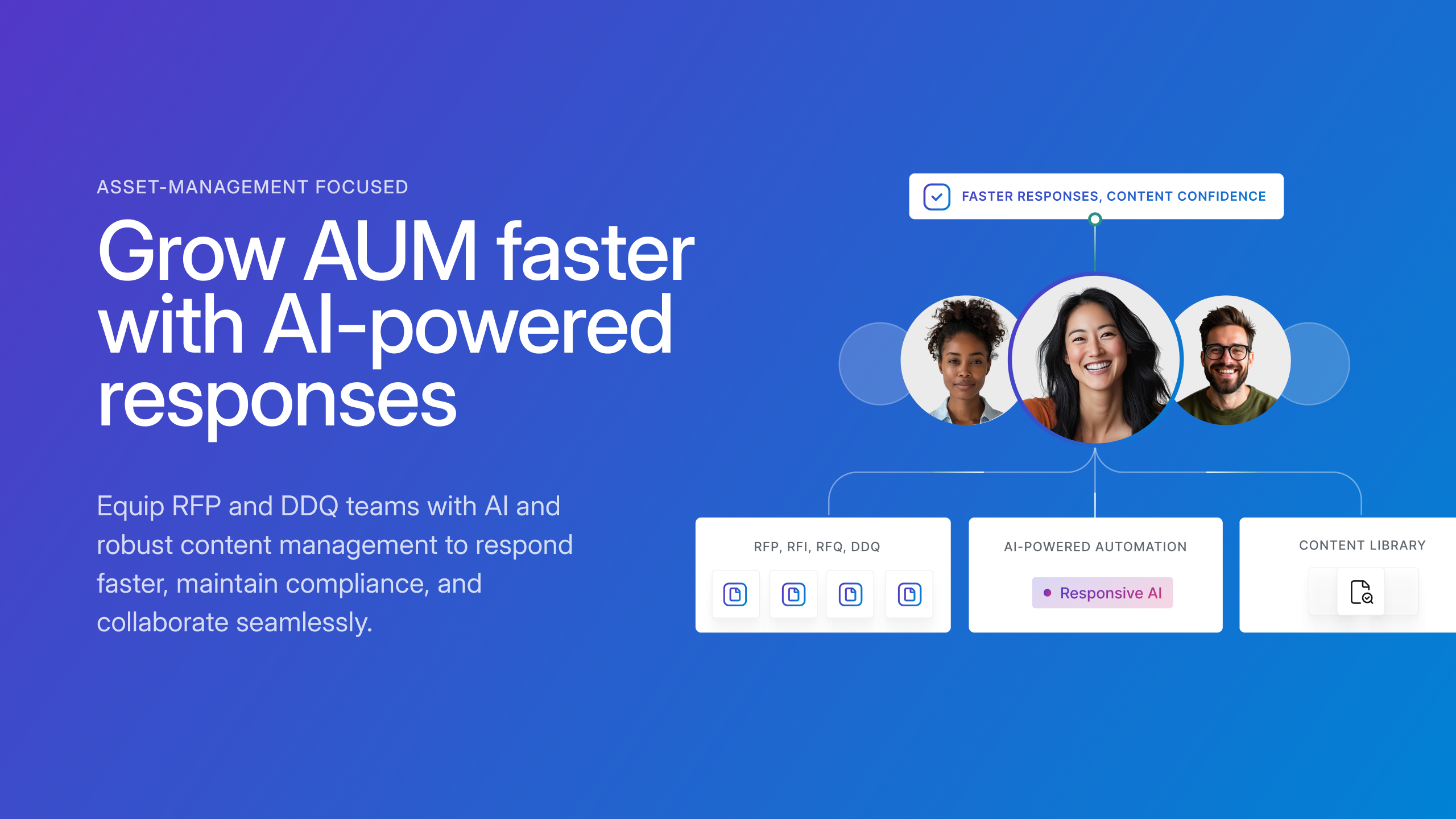
Responsive (formerly RFPIO), headquartered in Beaverton, offers their proposal management and automation software, featuring import and export, proposal knowledgebase and answer library, evaluation intake forms, and project management tools (e.g. Gantt chart) associated to proposal tracking.
[Formstack Documents (formerly WebMerge) is] well suited for a mid-size organization that has multiple data inputs and needs to provide structure and professional document generation. As helpful as it is, the cost would prevent smaller businesses from realizing the cost savings that a larger one will.
A de minimis incentive was given to thank the reviewer for their time. The incentive was not used to bias or drive a particular response, nor was the incentive contingent on a positive endorsement. More Info
Good use cases: - Responding to RFP's especially generic questions that are asked frequently (company size, product info, security posture) - Delegating approvals or questions to appropriate teams where the AI solution is not well positioned to provide a thorough or complete answer - Reviewing previous RFP documents that have been submitted by previous account teams Bad Use Cases: - Struggles compared to other AI tools with contextual deep questions about product functionality - Doesn't seamlessly integrate with tools where our clients submit RFP and require sign ons.
A de minimis incentive was given to thank the reviewer for their time. The incentive was not used to bias or drive a particular response, nor was the incentive contingent on a positive endorsement. More Info
A de minimis incentive was given to thank the reviewer for their time. The incentive was not used to bias or drive a particular response, nor was the incentive contingent on a positive endorsement. More Info
A de minimis incentive was given to thank the reviewer for their time. The incentive was not used to bias or drive a particular response, nor was the incentive contingent on a positive endorsement. More Info
We've had some issues with document formatting when the Formstack document comes through. Nothing outrageous, but it has been very inconvenient and annoying.
The Formstack website is not attractive or user friendly.
I think it could be clearer to Formstack users that it is a tool that needs another tool, not a tool all its own.
A de minimis incentive was given to thank the reviewer for their time. The incentive was not used to bias or drive a particular response, nor was the incentive contingent on a positive endorsement. More Info
Reporting and Analytics is basic, you can purchase advanced analytics though
It would have been nice to have a set structure in mind or a example/case study to structure our responses in the most appropriate way, but we are working through that with their stellar support team
A de minimis incentive was given to thank the reviewer for their time. The incentive was not used to bias or drive a particular response, nor was the incentive contingent on a positive endorsement. More Info
We'd be sunk without Responsive. The sales motion would slow way down in several places, and that's just unacceptable. AND I love the product. It helps me do my job efficiently. The Responsive team is GREAT. Support is getting better. The Product and Customer Experience Team is so knowledgeable and willing to help with new features and troubleshoot what's going on. It's an all-around great experience. Not to mention starting over - I can't even get my head around that.
A de minimis incentive was given to thank the reviewer for their time. The incentive was not used to bias or drive a particular response, nor was the incentive contingent on a positive endorsement. More Info
A de minimis incentive was given to thank the reviewer for their time. The incentive was not used to bias or drive a particular response, nor was the incentive contingent on a positive endorsement. More Info
A de minimis incentive was given to thank the reviewer for their time. The incentive was not used to bias or drive a particular response, nor was the incentive contingent on a positive endorsement. More Info
If I cannot solve a problem, then I reach out to Support and they are ON IT. They always solve the problem and get back to me immediately with an answer. Our customer support person who is assigned to us (we have had several) are responsive and helpful. We have asked them to sit in on meetings and help socialize the tool.
A de minimis incentive was given to thank the reviewer for their time. The incentive was not used to bias or drive a particular response, nor was the incentive contingent on a positive endorsement. More Info
Each of the programs above answered a specific call to action. While each addressed a small portion of our need, they never quite fit the bill for what we needed. It was actually a representative from three of the ones above which selected WebMerge. They wanted to sell their product, but knew that we would be unfulfilled if we went with them
A de minimis incentive was given to thank the reviewer for their time. The incentive was not used to bias or drive a particular response, nor was the incentive contingent on a positive endorsement. More Info
While others have had a good experience with Qvidian, we unfortunately did not. Our questions were never answered by our Qvidian rep, as we used it the platform had no AI capabilities, and we had very low usage. It didn't serve our needs. Responsive has been incredible in their communication, responses, partnership, and willingness to get our feedback in order to improve the platform
A de minimis incentive was given to thank the reviewer for their time. The incentive was not used to bias or drive a particular response, nor was the incentive contingent on a positive endorsement. More Info
The return on investment has been very good. It's very cost effective product. Our service team is on the phone and it takes away from the customer service if they are having to input the same information on applications. Web Merge eliminates additional key strokes while giving customers more time to run their business.
A de minimis incentive was given to thank the reviewer for their time. The incentive was not used to bias or drive a particular response, nor was the incentive contingent on a positive endorsement. More Info
Client Confidence: the use of RFP360 has allowed us to deliver a demonstrably robust process to our clients, providing them a very high level of confidence in the quality of our work.
Time Efficiency: RFP360's services provide a great deal of time-saving in the management of virtually the entire RFP process.
A de minimis incentive was given to thank the reviewer for their time. The incentive was not used to bias or drive a particular response, nor was the incentive contingent on a positive endorsement. More Info