Google App Engine is Google Cloud's platform-as-a-service offering. It features pay-per-use pricing and support for a broad array of programming languages.
$0.05
Per Hour Per Instance
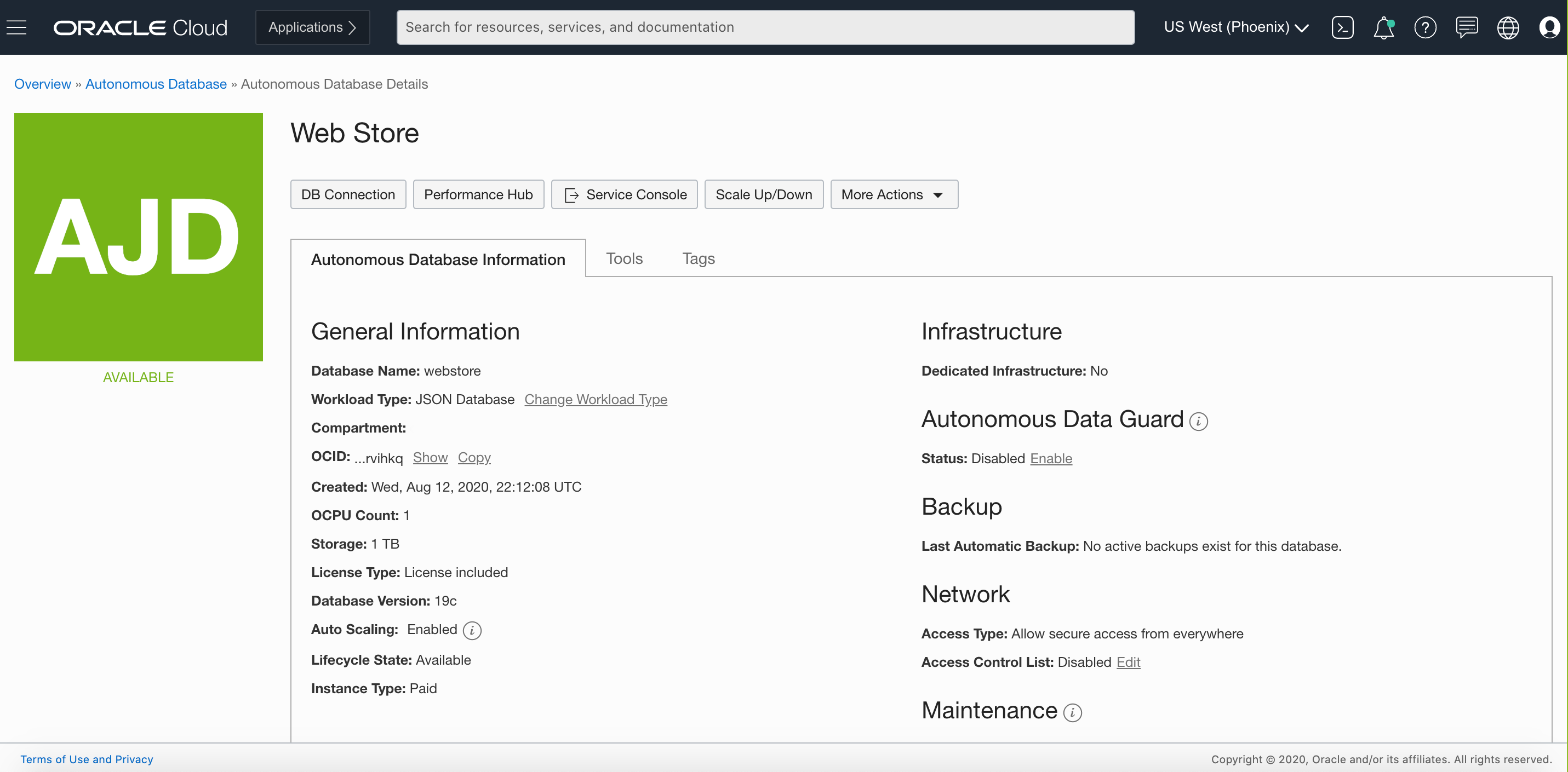
Oracle Autonomous Database
Score 9.0 out of 10
N/A
Oracle Autonomous Database provides a self-driving, self-securing, self-repairing cloud service that eliminate the overhead and human errors associated with traditional database administration. Oracle Autonomous Database takes care of configuration, tuning, backup, patching, encryption, scaling, and more.
N/A
Snowflake
Score 8.7 out of 10
N/A
The Snowflake Cloud Data Platform is the eponymous data warehouse with, from the company in San Mateo, a cloud and SQL based DW that aims to allow users to unify, integrate, analyze, and share previously siloed data in secure, governed, and compliant ways. With it, users can securely access the Data Cloud to share live data with customers and business partners, and connect with other organizations doing business as data consumers, data providers, and data service providers.
We had already experienced people in the team on Oracle as Oracle Database was already being used in the organization. Also, when we compared all other possibilities, it came out as a less costly solution.
App Engine is such a good resource for our team both internally and externally. You have complete control over your app, how it runs, when it runs, and more while Google handles the back-end, scaling, orchestration, and so on. If you are serving a tool, system, or web page, it's perfect. If you are serving something back-end, like an automation or ETL workflow, you should be a little considerate or careful with how you are structuring that job. For instance, the Standard environment in Google App Engine will present you with a resource limit for your server calls. If your operations are known to take longer than, say, 10 minutes or so, you may be better off moving to the Flexible environment (which may be a little more expensive but certainly a little more powerful and a little less limited) or even moving that workflow to something like Google Compute Engine or another managed service.
Pro - Stability. Does everything anyone could need. If it's not there it will be on the next update. There is plenty of support for it. It's been around for a long time and it's reliable. The support is well documented and has a great reputation. Cons - Errors have been found in the documentation provided by Oracle with guidelines, etc. Oracles salespeople have a reputation of being obnoxious and condescending.
Snowflake is well suited when you have to store your data and you want easy scalability and increase or decrease the storage per your requirement. You can also control the computing cost, and if your computing cost is less than or equal to 10% of your storage cost, then you don't have to pay for computing, which makes it cost-effective as well.
Snowflake scales appropriately allowing you to manage expense for peak and off peak times for pulling and data retrieval and data centric processing jobs
Snowflake offers a marketplace solution that allows you to sell and subscribe to different data sources
Snowflake manages concurrency better in our trials than other premium competitors
Snowflake has little to no setup and ramp up time
Snowflake offers online training for various employee types
There is a slight learning curve to getting used to code on Google App Engine.
Google Cloud Datastore is Google's NoSQL database in the cloud that your applications can use. NoSQL databases, by design, cannot give handle complex queries on the data. This means that sometimes you need to think carefully about your data structures - so that you can get the results you need in your code.
Setting up billing is a little annoying. It does not seem to save billing information to your account so you can re-use the same information across different Cloud projects. Each project requires you to re-enter all your billing information (if required)
There is no access to the physical host of the DB. This is expected from a managed DB. Everything must be done through the console or via API calls. This is a new learning curve for the DBAs.
Due to the lack of physical host access, certain features are not supported, such as Transportable tablespaces and Oracle LogMiner.
Certain special data types, (such as XMLType) are not allowed; be sure the app vendor certifies their product on this platform.
Do not force customers to renew for same or higher amount to avoid loosing unused credits. Already paid credits should not expire (at least within a reasonable time frame), independent of renewal deal size.
App Engine is a solid choice for deployments to Google Cloud Platform that do not want to move entirely to a Kubernetes-based container architecture using a different Google product. For rapid prototyping of new applications and fairly straightforward web application deployments, we'll continue to leverage the capabilities that App Engine affords us.
Because it does exactly what we need: it enables us to manage our development and testing database environments in a quick and simple way without requiring support from a database administrators team.
SnowFlake is very cost effective and we also like the fact we can stop, start and spin up additional processing engines as we need to. We also like the fact that it's easy to connect our SQL IDEs to Snowflake and write our queries in the environment that we are used to
I had to revisit the UI after a year of just setting up and forgetting. The UI got some improvements but the amount of navigation we have to go through to setup a new app has increased but also got easier to setup. Gemini now is integrated and make getting answers faster
The product is continuously evolving and new features are added frequently. Management options through the OCI (Oracle Cloud Infrastructure) console and through the command line and API are being enhanced frequently.
Because the fact that you can query tons of data in a few seconds is incredible, it also gives you a lot of functions to format and transform data right in your query, which is ideal when building data models in BI tools like Power BI, it is available as a connector in the most used BI tools worldwide.
Good amount of documentation available for Google App Engine and in general there is large developer community around Google App Engine and other products it interacts with. Lastly, Google support is great in general. No issues so far with them.
We have had terrific experiences with Snowflake support. They have drilled into queries and given us tremendous detail and helpful answers. In one case they even figured out how a particular product was interacting with Snowflake, via its queries, and gave us detail to go back to that product's vendor because the Snowflake support team identified a fault in its operation. We got it solved without lots of back-and-forth or finger-pointing because the Snowflake team gave such detailed information.
We were on another much smaller cloud provider and decided to make the switch for several reasons - stability, breadth of services, and security. In reviewing options, GCP provided the best mixtures of meeting our needs while also balancing the overall cost of the service as compared to the other major players in Azure and AWS.
I found Oracle Autonomous Database very secure to store data and private information.I always feel secure with Oracle Autonomous Databases disaster recovery features.It is very effective to build applications for mobile and desktop devices lesser code using a low code development framework namely Oracle Application Express (ApEx).
I have had the experience of using one more database management system at my previous workplace. What Snowflake provides is better user-friendly consoles, suggestions while writing a query, ease of access to connect to various BI platforms to analyze, [and a] more robust system to store a large amount of data. All these functionalities give the better edge to Snowflake.
Effective integration to other java based frameworks.
Time to market is very quick. Build, test, deploy and use.
The GAE Whitelist for java is an important resource to know what works and what does not. So use it. It would also be nice for Google to expand on items that are allowed on GAE platform.