Google App Engine is Google Cloud's platform-as-a-service offering. It features pay-per-use pricing and support for a broad array of programming languages.
$0.05
Per Hour Per Instance
SAP Master Data Governance
Score 8.3 out of 10
N/A
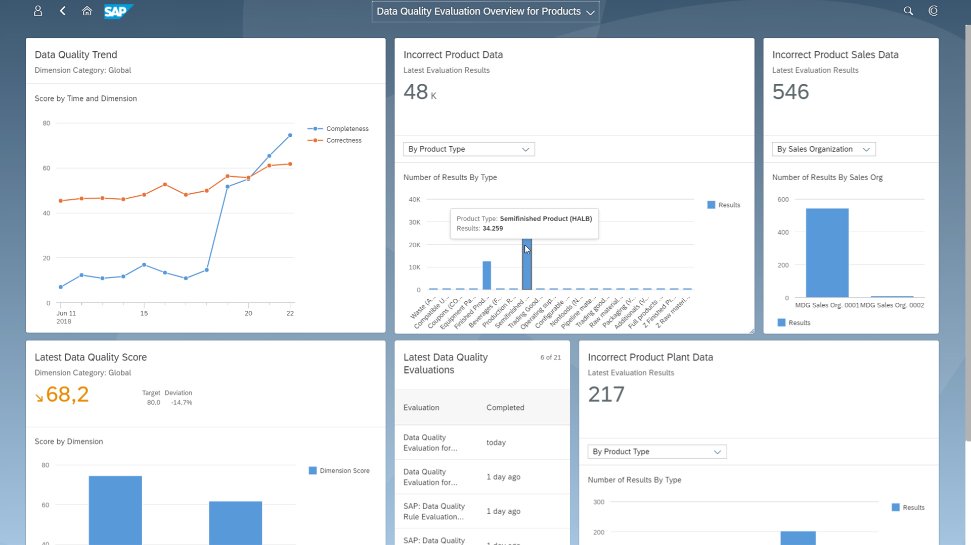
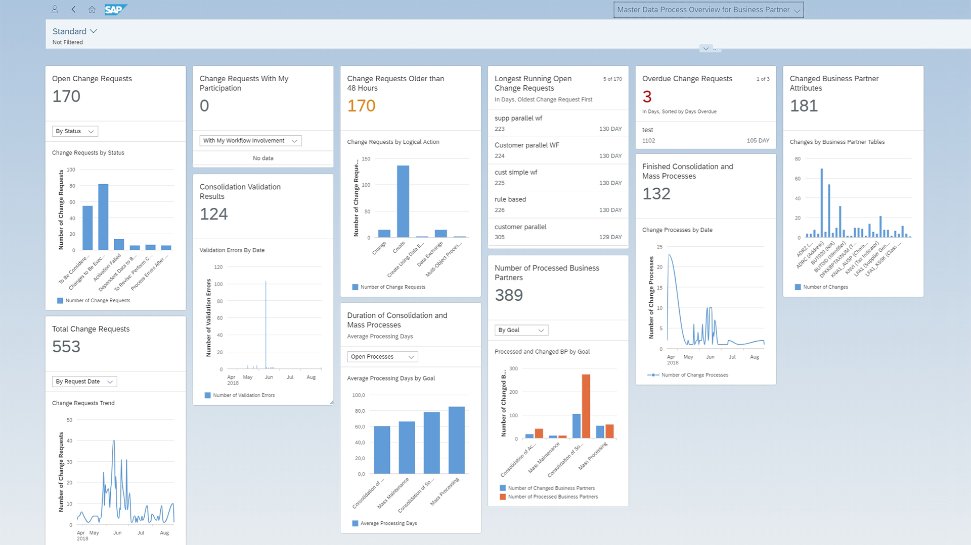
SAP Master Data Governance is a master data management solution that helps users to implement a cohesive and harmonized master data management strategy across all master data domains. It is presented as a solution that simplifies enterprise data management, increases data accuracy, and that facilitates consolidation, central governance and data quality management. The SAP Master Data Governance, cloud edition, a…
N/A
Pricing
Google App Engine
SAP Master Data Governance
Editions & Modules
Starting Price
$0.05
Per Hour Per Instance
Max Price
$0.30
Per Hour Per Instance
No answers on this topic
Offerings
Pricing Offerings
Google App Engine
SAP Master Data Governance
Free Trial
No
Yes
Free/Freemium Version
Yes
No
Premium Consulting/Integration Services
No
Yes
Entry-level Setup Fee
No setup fee
No setup fee
Additional Details
—
—
More Pricing Information
Community Pulse
Google App Engine
SAP Master Data Governance
Features
Google App Engine
SAP Master Data Governance
Platform-as-a-Service
Comparison of Platform-as-a-Service features of Product A and Product B
App Engine is such a good resource for our team both internally and externally. You have complete control over your app, how it runs, when it runs, and more while Google handles the back-end, scaling, orchestration, and so on. If you are serving a tool, system, or web page, it's perfect. If you are serving something back-end, like an automation or ETL workflow, you should be a little considerate or careful with how you are structuring that job. For instance, the Standard environment in Google App Engine will present you with a resource limit for your server calls. If your operations are known to take longer than, say, 10 minutes or so, you may be better off moving to the Flexible environment (which may be a little more expensive but certainly a little more powerful and a little less limited) or even moving that workflow to something like Google Compute Engine or another managed service.
The best use case of SAP Master Data Governance is centrally consolidating your organizational data so you can make sense of it and make business decisions using that data. We live in a world where data can be all over the place, and making sense of it is a skill of its own.
Data conversation and Data uploading into SAP S/4 HANA system using SAP Master Data Governance during SAP implementation phase.
Centrally Data governance to have visibility of data in different systems with integration to SAP Master Data Governance, including SAP S/4, SAP EWM and SAP Ariba.
Data Management and Data correction using MDM through SAP Master Data Governance for Materials, which is subjected to approval before finally using in the S/4.
There is a slight learning curve to getting used to code on Google App Engine.
Google Cloud Datastore is Google's NoSQL database in the cloud that your applications can use. NoSQL databases, by design, cannot give handle complex queries on the data. This means that sometimes you need to think carefully about your data structures - so that you can get the results you need in your code.
Setting up billing is a little annoying. It does not seem to save billing information to your account so you can re-use the same information across different Cloud projects. Each project requires you to re-enter all your billing information (if required)
We've had to design our own unique or alternative solutions to satisfy our business objectives because plugins don't always perform well with the main product.
It can be sluggish at times and lacks functionality offered by rival MDM packages, as well as limited resources and documentation for certain areas such as hierarchy.
App Engine is a solid choice for deployments to Google Cloud Platform that do not want to move entirely to a Kubernetes-based container architecture using a different Google product. For rapid prototyping of new applications and fairly straightforward web application deployments, we'll continue to leverage the capabilities that App Engine affords us.
MDG has proven to work and to bring results once implemented with the right approach, right engagement and sponsorship. Given that it is a very good tool to govern and control master data. Mainly if your company runs SAP systems which there will be a very straight forward integration, not needing any additional middleware or technologies.
I had to revisit the UI after a year of just setting up and forgetting. The UI got some improvements but the amount of navigation we have to go through to setup a new app has increased but also got easier to setup. Gemini now is integrated and make getting answers faster
Upto 8 1. Powerful Features: It offers a wide range of powerful features. 2. Complex Data Management: It helps companies to comply with large and complex regulation and audit processes. Missing 2: 1. Less interactive user interface or less modern look. 2. Limited integration with other tools
Good amount of documentation available for Google App Engine and in general there is large developer community around Google App Engine and other products it interacts with. Lastly, Google support is great in general. No issues so far with them.
SAP provides great support for Master Data Governance (MDG). They work with us when we are faced with issues in standard solutions. SAP has a great set of Fiori tools that can be used for a better user experience. The issue with SAP is their web dynpro UI screens and they need to provide better support for performance issues that customers face.
We were on another much smaller cloud provider and decided to make the switch for several reasons - stability, breadth of services, and security. In reviewing options, GCP provided the best mixtures of meeting our needs while also balancing the overall cost of the service as compared to the other major players in Azure and AWS.
An environment provided by SAP Master Data Governance seamless and integration with other SAP products is very good. Also it ensures compatibility and streamlines procedures, this integration is beneficial for businesses who have already invested in SAP products.
Effective integration to other java based frameworks.
Time to market is very quick. Build, test, deploy and use.
The GAE Whitelist for java is an important resource to know what works and what does not. So use it. It would also be nice for Google to expand on items that are allowed on GAE platform.
MDG is definitely an investment that takes a few years to recuperate. (If you are looking at pure, direct financial benefits.)
However, if you look at all the productivity gains in the business due to not having to stop the business constantly because of data issues, the payback period would be substantially shorter.
In particular, we were able to reduce master data maintenance staffing levels while increasing quality and decreasing workload for business requesters and approvers.
Not having to worry about data integrity issues has shortened the time to realize benefits for several of our major process change related projects and it has also decreased the risk of these projects running into significant delays (often at the last minute) due to master data being misjudged during the process resdesign.