Google Cloud Identity is a unified identity, access, app, and endpoint management (IAM/EMM) platform that gives users access to apps with single sign-on, provides multi-factor authentication to protect users and company data, and enforces policies for personal and corporate devices and endpoints.
N/A
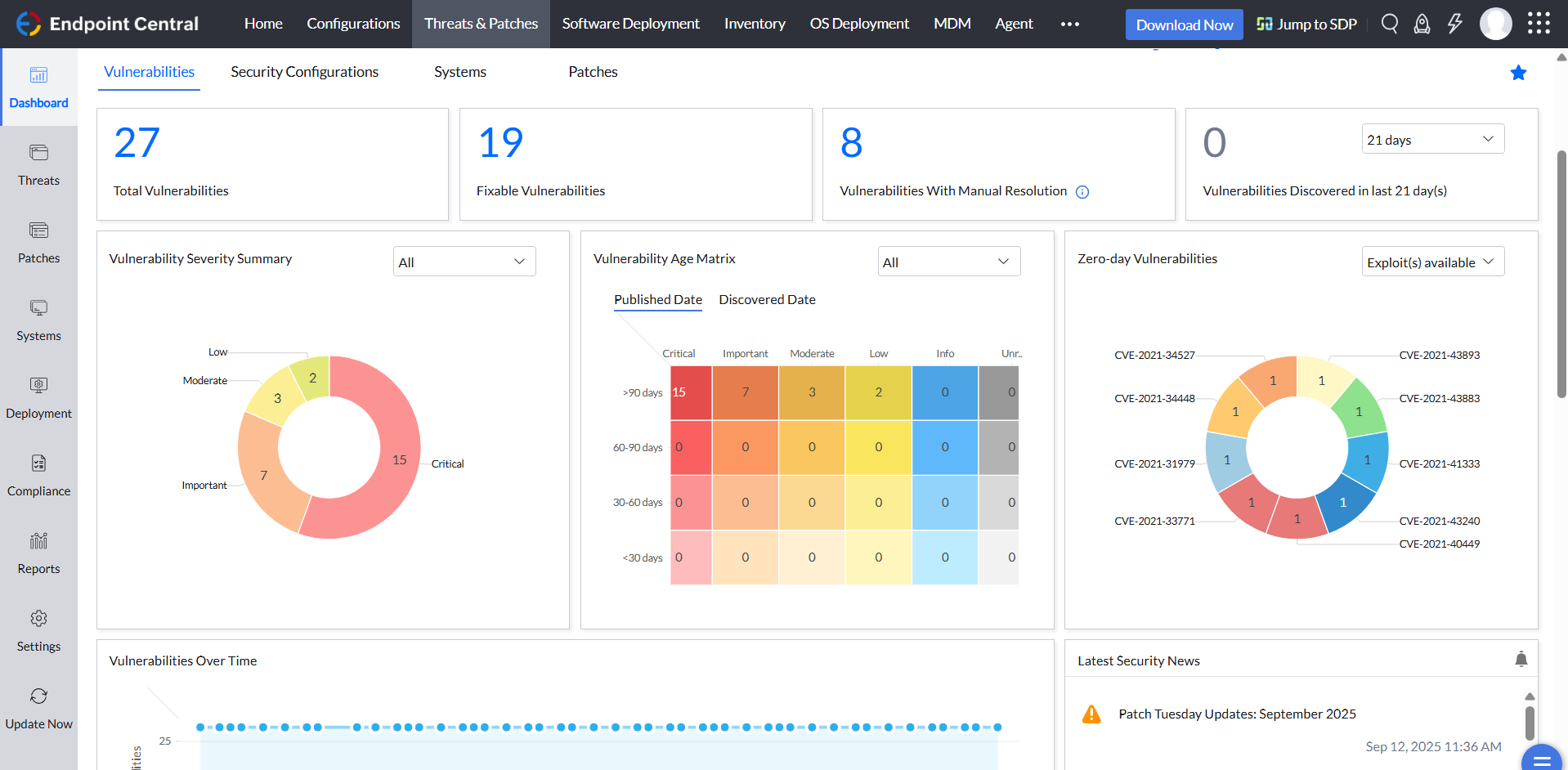
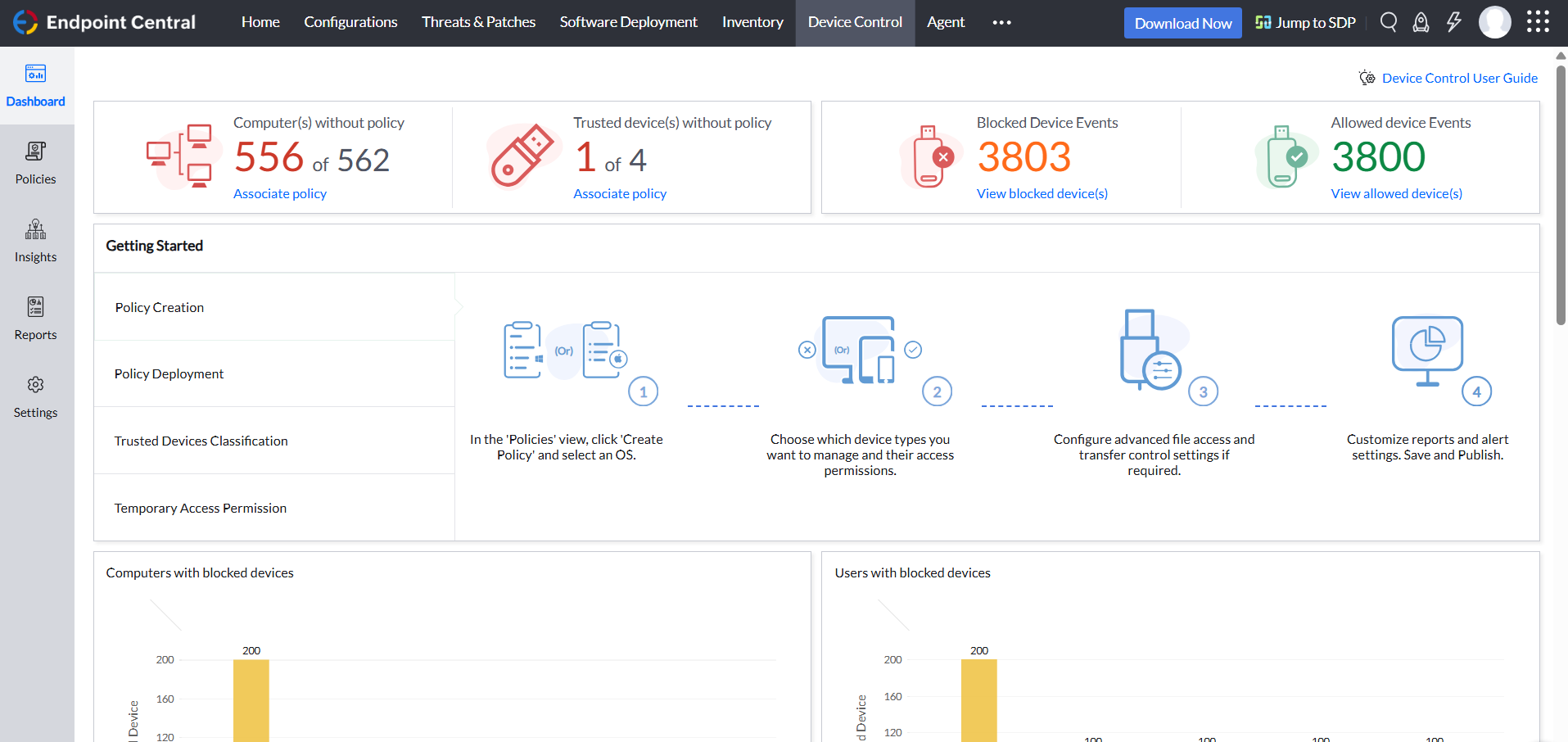
ManageEngine Endpoint Central
Score9 out of 10
N/A
Desktop Central from ManageEngine is a client desktop management with patching, remote control, and configuration.
For example, if the system you are building is a general application service that does not primarily focus on ID management, it would be wise to use a service like Google's rather than developing your own IDaaS. While there may be cases where an IDaaS other than Google's is acceptable, Google is likely one of the best solutions when considering user recognition and ease of use. On the other hand, Gmail addresses are commonly used for other purposes, and users may not pay much attention to password management, so you should avoid using them for systems that require security. To strengthen security, you should consider making multi-factor authentication mandatory, etc.
A de minimis incentive was given to thank the reviewer for their time. The incentive was not used to bias or drive a particular response, nor was the incentive contingent on a positive endorsement. More Info
For small businesses, it is also free, which, for what it offers, is really helpful. It works better than similar products, such as SCCM, both within and outside the internal network. I do not see scenarios in which it could be less appropriate.
A de minimis incentive was given to thank the reviewer for their time. The incentive was not used to bias or drive a particular response, nor was the incentive contingent on a positive endorsement. More Info
We set alerts when a devices gets low on disk space. That is automatic and creates a ticket in ME SDP. We are then able to Add space to a VM Desktop, and then go thru ManageEngine Endpoint Central to extend the drives so the entire process can be done without interruption to the end user.
Using the patch scans we can easily see what patches have been installed for all manufacturers not just Microsoft, without having to physically go to the device. It also allows us to choose which patches we want to push out and automate the process so we can be hands off, freeing up out time for other things.
Remote access to devices. This allows us to remotely make changes, not just via remote control but also make registry changes and clean up space without going to the device and without interruption to the end user.
Alerts. We have set up to get email alerts when new hardware is plugged into any computers. This lets us know if someone is bringing in un-authorized equipment (thumb drives, hubs, etc) to better manage what is/is not on our network.
A de minimis incentive was given to thank the reviewer for their time. The incentive was not used to bias or drive a particular response, nor was the incentive contingent on a positive endorsement. TR verified that a representative sample of customers was invited. More Info
This time, I investigated it in advance, and it worked as expected, so I don't have any specific ideas for improvement.
Additionally, if we were using another IDAAS, it would have been beneficial to have knowledge on how to integrate it with Google tools, along with some relevant case studies.
A de minimis incentive was given to thank the reviewer for their time. The incentive was not used to bias or drive a particular response, nor was the incentive contingent on a positive endorsement. More Info
A de minimis incentive was given to thank the reviewer for their time. The incentive was not used to bias or drive a particular response, nor was the incentive contingent on a positive endorsement. More Info
ManageEngine is considered an excellent product due to its comprehensive suite of solutions for IT management, with ManageEngine Endpoint Central specifically excelling in endpoint management. The platform stands out for its user-friendly interface, robust features, and versatility in addressing diverse IT needs. It offers organizations a centralized solution for endpoint security, patch management, software deployment, and asset management
I chose Google because I thought it would be the best fit, but I didn't fully consider other cloud platforms (Azure, AWS, etc.), so I rated it 8. We assume that current Japanese users are familiar with Google, because we feel that there are far more people with Google email addresses than those with IDs on other cloud services.
A de minimis incentive was given to thank the reviewer for their time. The incentive was not used to bias or drive a particular response, nor was the incentive contingent on a positive endorsement. More Info
Not using WNS to communicate with the endpoint console is a big plus. We now use Workspace One, and WNS can be really annoying at times. After deployment, it cleans itself, which is important for us because our current solution leaves the package on the computer and requires maintenance. The remotely script command is a lifesaver.
A de minimis incentive was given to thank the reviewer for their time. The incentive was not used to bias or drive a particular response, nor was the incentive contingent on a positive endorsement. More Info
The immediate chat support is great and very helpful. However, if you need escalated support or have a deeper need that the chat tool can't help with, you will experience significant wait times and slow responses. The time zone difference becomes painful to the point of often just giving up.
It seems that the services offered with the purchase change from what is covered to what is an additional cost. Somethings I thought we had ended up requiring an additional purchase if we wanted to continue using the feature.
A de minimis incentive was given to thank the reviewer for their time. The incentive was not used to bias or drive a particular response, nor was the incentive contingent on a positive endorsement. More Info
We adopted Google Cloud Identity as an additional feature because it allowed us to integrate with it using multi-factor authentication. The IBM Cloud platform remains valid, and we have no plans to discontinue its use for identity management. From the user's perspective, we simply added more authentication options. This also ensures we are prepared for future use when multi-factor authentication becomes available for user apps on the IBM Cloud.
A de minimis incentive was given to thank the reviewer for their time. The incentive was not used to bias or drive a particular response, nor was the incentive contingent on a positive endorsement. More Info
I was not a part of the initial selection process, but I understand the issue was related to cost per endpoint. As a user of the other solutions I would say that the other solutions do have other strengths that ManageEngine is missing. The remote access tools are superior but at the end of the day you get what you pay for.
A de minimis incentive was given to thank the reviewer for their time. The incentive was not used to bias or drive a particular response, nor was the incentive contingent on a positive endorsement. More Info
From a business perspective, there were two steps.
First, we switched from our in-house ID management system to a cloud service. This allowed us to focus our development resources on application development.
At the same time, we were able to localize the handling of personal information, which resulted in increased efficiency in management aspects, including handling external inquiries, and in the development of encryption.
The second step was adding Google Cloud Identity as an option.
This allows more users to easily use our services. It can be said that this has improved user convenience.
I expect Google to accommodate future changes in authentication requirements, such as biometric authentication.
A de minimis incentive was given to thank the reviewer for their time. The incentive was not used to bias or drive a particular response, nor was the incentive contingent on a positive endorsement. More Info
A de minimis incentive was given to thank the reviewer for their time. The incentive was not used to bias or drive a particular response, nor was the incentive contingent on a positive endorsement. TR verified that a representative sample of customers was invited. More Info