Chose HCL Notes
It helps in organizing work by just speaking to it, and you don't have to specifically type in the data and use it. It has a better UI and also is faster.

| Product | Rating | Most Used By | Product Summary | Starting Price |
|---|---|---|---|---|
 HCL Notes | N/A | Notes from HCL (formerly from IBM, acquired by HCL in late 2018) is a collaboration platform based on the Lotus platform. | N/A | |
 Microsoft Viva Engage | N/A | Microsoft Viva Engage, formerly Yammer, is used for private communication within organizations or between organizational members and pre-designated groups. | $24 per year per user | |
 Speakap | N/A | Speakap is the award-winning secure and private platform enabling organizations of all sizes to engage with their non-desk and customer-facing employees, improving customer experience and business value. Sharing campaigns, best practices and results across locations, our clients see a 10% increase in average sales since adopting Speakap. On the store floor, in the kitchen, on the ward, on the road, and on the production line… Speakap is always available, enabling communication and… | N/A |
| HCL Notes | Microsoft Viva Engage | Speakap | ||||||||||||||||||||||
|---|---|---|---|---|---|---|---|---|---|---|---|---|---|---|---|---|---|---|---|---|---|---|---|---|
| Editions & Modules | No answers on this topic |
| No answers on this topic | |||||||||||||||||||||
| Offerings |
| |||||||||||||||||||||||
| Entry-level Setup Fee | No setup fee | No setup fee | $3 per user per month | |||||||||||||||||||||
| Additional Details | — | Microsoft Viva Engage is also available in some Microsoft 365 packages. | — | |||||||||||||||||||||
| More Pricing Information | ||||||||||||||||||||||||
| HCL Notes | Microsoft Viva Engage | Speakap | |
|---|---|---|---|
| Considered Multiple Products | HCL Notes  Mogana Tashiani Research Analyst and Consulting (Technology) Chose HCL Notes n/a  Christopher Stark Division Network Support Specialist Chose HCL Notes Outlook has been considered for years as a replacement platform. Pricing and support staff made it prohibitive. Our long-time use of Microsoft Office productivity suite naturally led us to consider the adoption of Office365. A recent investigation told us that Azure Cloud …  Chris Whisonant Lead Consultant Chose HCL Notes As I stated previously, mail is mail. Notes is a fantastic option as a frontend for mail. On top of that, a business can be built from the custom applications that can be developed in it. We do have gmail as an option, but the vast majority of users are on Notes. We also choose …  Matthew J. Fitzpatrick Sr Technology Engineer Chose HCL Notes I've already answered this question in the previous questions however to sum it up IBM Notes stacks up VERY WELL! It has a LOT of really good business/enterprise features like enterprise-grade Dropbox-like storage, synced email/calendar/contacts, it supports a LOT of …  Umar Qureshi Dy Manager Enterprise Chose HCL Notes Exchange is too resource hungry and cumbersome to restore granular. It requires several other Microsoft Servers to integrate just to meet IBM Notes in terms of features. As someone once described, doing an apple to apple [comparison] is difficult. If Exchange were taken as an …  Jeremiah Benjamin Messaging and Collaboration Technology Developer Chose HCL Notes We've looked at Exchange a few times. However, for more costly licensing and about the same amount of administrative support required, Exchange only does mail, calendar and contacts. We do all that with Notes already, plus dozens of custom applications, and for less costly …  Lynn Sturgis Service Desk Engineer Chose HCL Notes We originally selected Notes for it's ease of use, and ability to be customized. As the industry has progressed we have had to move on to a more progressive path.  Tom Le Lead Application Developer/Lotus Notes Domino Developer Chose HCL Notes We are a small IT team and always had to deal with very high expectation, faster turn around time from users. Every application we've developed has very short turn around time and less resources. In the past 15 years, we can provide more application and doing it faster than …  Ficker Adrian Sales & Marketing Manager Chose HCL Notes Database development capabilities. Document management orientation. |  Microsoft Viva Engage  Asad Khan Systems Solution Architect Chose Microsoft Viva Engage My organization has both Teams & Microsoft Yammer. They use Microsoft Yammer for a larger group as a social media tool for the whole organization, more like a one-way communication from the organization towards a large group of employees. However, I think teams is more suitable …  Daniel Ryave Consultant Chose Microsoft Viva Engage I like how Yammer has functions that are fun and interactive, which can give you much more to do than using Teams or even Microsoft Forms. Yammer helps people feel included and gives people a better sense of how their friends and co-workers are feeling on certain issues. Yammer …  Samuel Gomez Recuero Technical Support Specialist Chose Microsoft Viva Engage Skype for business might be great for small meetings but yammer is way better for communication and discussion groups.  Erik Ralston Chief Architect Chose Microsoft Viva Engage Yammer's biggest competition is definitely Workplace by Facebook. Both provide a "post, like, share" social network experience adapted to an enterprise paradigm. Both provide real-time chat on top of that to drive collaboration. Both have lightweight content management to …  Gabrielle Wayman Account Executive Chose Microsoft Viva Engage N/a  Theresa Gingras Secretary / Bookkeeper Chose Microsoft Viva Engage Yammer was chosen for us. I had no hand in the decision.  Tim Ryan Senior Project Manager Chose Microsoft Viva Engage We used Share Point currently and in the past would post things there, Yammer is a little better because people are used to seeing a feed scroll and Share Point did get ignored after a while. PostS tend to get stale there quicker since the format is not as appealing.  Joshua Melder Process Optimization Analyst Chose Microsoft Viva Engage Salesforce Chatter and Yammer can often be used in very similar ways. Both offer the ability to collaborate with team-members in real-time. Furthermore, both tools offer ability to share, comment, and network across organizations. One issue with Yammer is that it feels a bit …  Ilya Popovich QA Test Lead Chose Microsoft Viva Engage Yammer created very important and reliable social network across the whole company. We used to have MS SharePoint, but since Yammer became available via Office 365 we moved to Yammer. IBM Connections is difficult to maintain + costs are higher.  FRANCO PIÑERO Ingeniero Chose Microsoft Viva Engage Yammer is a comprehensive program with enough tools to meet the responsibilities of the company, because it is easier to use and offers more creative and innovative work tools. The company decided to select Yammer over other programs because Yammer is safer and more prestigious …  Jeremiah Miller Associate Director IT Infrastructure Chose Microsoft Viva Engage IBM Connections has a more mature set of features however it is expensive and difficult to maintain. Traditionally IBM Connections require an on-premise installation which required a large capital investment and an ongoing level of expertise to maintain. Although now IBM offers …  Roy Huron Workforce Manager Chose Microsoft Viva Engage Great similarities, just FB leads the way on all fronts  Jennifer Lamas Analista Chose Microsoft Viva Engage Basically, all these applications have the same functions, to share jobs and projects in real time and have functioned very similar to social networks that are used daily such as Facebook, Instagram, and others. Yammer was chosen because it is very easy to use, fast and safe. |  Speakap No answer on this topic |
| HCL Notes | Microsoft Viva Engage | Speakap | |||||||||||||||||||||||||||||||||||
|---|---|---|---|---|---|---|---|---|---|---|---|---|---|---|---|---|---|---|---|---|---|---|---|---|---|---|---|---|---|---|---|---|---|---|---|---|---|
| Project Management |
| ||||||||||||||||||||||||||||||||||||
| Communication |
| ||||||||||||||||||||||||||||||||||||
| File Sharing & Management |
|
| HCL Notes | Microsoft Viva Engage | Speakap | |
|---|---|---|---|
| Small Businesses |  Stackby Score 8.9 out of 10 | Stackby Score 8.9 out of 10 |  Sogolytics Score 8.5 out of 10 |
| Medium-sized Companies |  Troop Messenger Score 9.8 out of 10 | Troop Messenger Score 9.8 out of 10 |  Bonusly Score 9.5 out of 10 |
| Enterprises | HCL Connections Score 9.0 out of 10 | HCL Connections Score 9.0 out of 10 |  Workvivo Score 9.2 out of 10 |
| All Alternatives | View all alternatives | View all alternatives | View all alternatives |
| HCL Notes | Microsoft Viva Engage | Speakap | |
|---|---|---|---|
| Likelihood to Recommend | 7.0 (0 ratings) | 8.9 (0 ratings) | 10.0 (0 ratings) |
| Likelihood to Renew | 1.7 (0 ratings) | 9.0 (0 ratings) | - (0 ratings) |
| Usability | 10.0 (0 ratings) | 8.8 (0 ratings) | - (0 ratings) |
| Availability | 10.0 (0 ratings) | 8.0 (0 ratings) | - (0 ratings) |
| Performance | 10.0 (0 ratings) | 9.0 (0 ratings) | - (0 ratings) |
| Support Rating | 9.0 (0 ratings) | 7.0 (0 ratings) | - (0 ratings) |
| Online Training | 10.0 (0 ratings) | 7.0 (0 ratings) | - (0 ratings) |
| Implementation Rating | 9.0 (0 ratings) | 8.0 (0 ratings) | - (0 ratings) |
| HCL Notes | Microsoft Viva Engage | Speakap | |
|---|---|---|---|
| Likelihood to Recommend |
Mogana Tashiani Research Analyst and Consulting (Technology) |
Erik Ralston Chief Architect |
 Ryan Vevon Rapaport Business Development Executive |
| Pros |
Christopher Stark Division Network Support Specialist |
 Kyle Legg Creative Marketing Manager | No answers on this topic |
| Cons |
|
| No answers on this topic |
| Likelihood to Renew |
|
 Vivian Thacker Productivity Consultant | No answers on this topic |
| Usability |
Tom Le Lead Application Developer/Lotus Notes Domino Developer |
 Stefano Tempesta Product Manager | No answers on this topic |
| Reliability and Availability | No answers on this topic |
 Danielle Brigida Manager of Social Media | No answers on this topic |
| Performance | No answers on this topic |
Danielle Brigida Manager of Social Media | No answers on this topic |
| Support Rating |
Tom Le Lead Application Developer/Lotus Notes Domino Developer |
 Nikhil George Product Manager | No answers on this topic |
| Online Training | No answers on this topic |
Vivian Thacker Productivity Consultant | No answers on this topic |
| Implementation Rating |
Tom Le Lead Application Developer/Lotus Notes Domino Developer |
Danielle Brigida Manager of Social Media | No answers on this topic |
| Alternatives Considered |
Matthew J. Fitzpatrick Sr Technology Engineer |
Daniel Ryave Consultant | No answers on this topic |
| Return on Investment |
Jeremiah Benjamin Messaging and Collaboration Technology Developer |
 Marcos Sola Packaging and Label Engineer | No answers on this topic |
| ScreenShots | Speakap Screenshots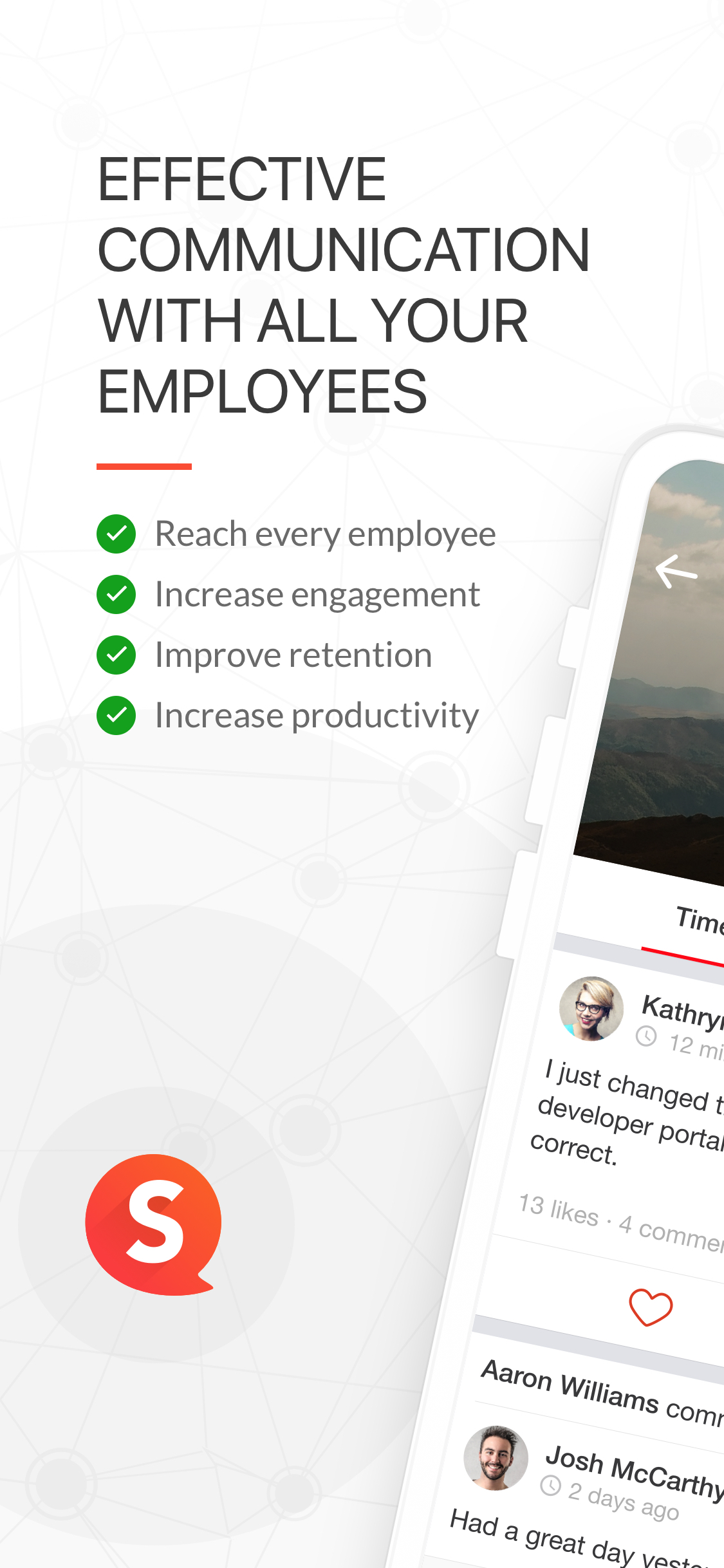    |