HCL Unica is available as a cloud or on-premise solution that provides fully integrated marketing automation software for enterprise. It includes enterprise marketing automation tools that optimize marketing activities, to ensure excellent customer experiences and data privacy.
N/A
Treasure Data
Score 9.0 out of 10
Mid-Size Companies (51-1,000 employees)
Treasure Data is an enterprise customer data platform (CDP) that reclaims customer-centricity in the age of the digital customer. It does this by connecting all data and uniting teams and systems into one customer data platform to power purposeful engagements.
I think it is wel suited for a business with a lot of one on one relations in the database. For example a supermarket that sells products to a client and gives a reduction on that product. It is nice if the selection process is not to complex and does not involve to many calculations. It is also nice if it is very clear what you want to follow up. In our environment we have lots of many-to-many relations. for example one product is held by more then one client. And that client might have more of those products with other clients. These kind of situation demands for a lot of calculations with derived fields(*), and there things go far too slow. Unica is probably not such a good solution for us, because our environment is too complex, and so is to process of creating the selection, we often have to change things in the selection flows. Because of the complexity it is difficult to see what the flow is exactly doing afterwoods, it also takes to much time to modify existing campaigns. The interface is not handy to work with, if you have long lists of variables, of tables or derived fields(*) you have to scroll through trough them, you can not really search them or reorder them. You can not drag and drop fields or other objects like derived fields in the flow, what would be easy if you have to make frequent changes to the proces flow. When you copy objects something the content of the object changes because the links with other objects or lost. (*) derived field: field to calculate something
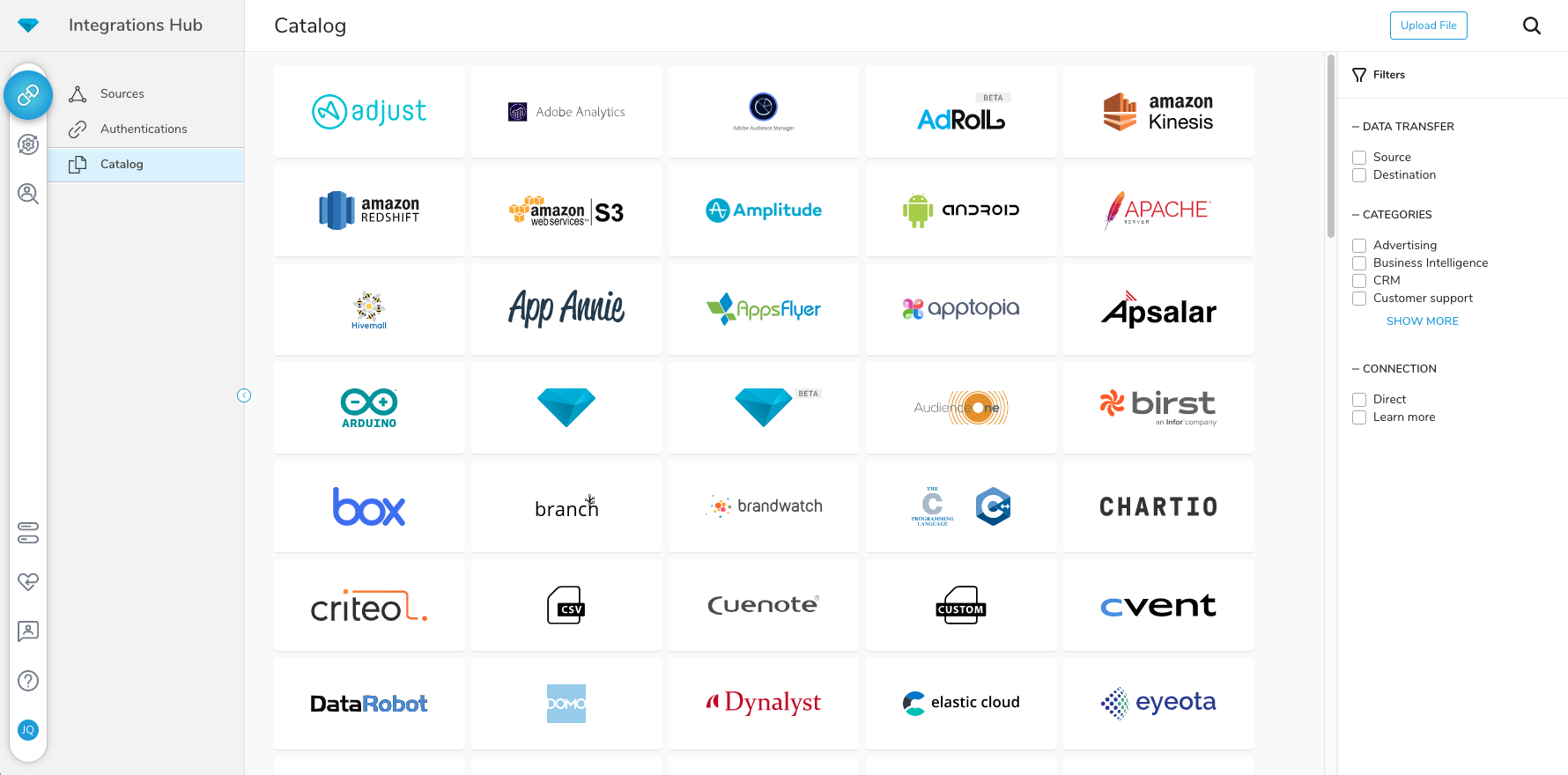
Treasure Data is well suited to integrating multiple data sources, including online and digital sources. It is also well suited to trigger audience activations to known customers based on their online activity, integrating 3rd party data, and activating target audiences to ad platforms.
Ability to translate Multiple SQL queries into a very easy to use visual GUI.
Provides the ability to pre-define segments, run them once in off hours, store them in their own system tables for quick youth and a significant reduction in CPU utilization on the database.
It’s use of Reusable objects. Including user variables to pre-define calculations one time, macros that you can create and pass values to parameterize the SQL code And the creation of templates to easily replicate work.
It’s ability to bring in external data on the fly that can very easily be mapped into any flowchart.
It’s flexibility and creating UNIX script via triggers to automate sending of files to multiple vendors with different FTP sites
It’s flexibility in the output layouts that it can create.
CDP provides a unified view of data from all touchpoints in the customer journey until a single customer uses the service. This feature is very helpful in making service decisions and direction.
It provides a variety of extensions to bring your data together in one place and helps you do this easily.
Kits provided by Treasure Box provide basic but helpful methods for further development of services.
Greater integration of real time (Interact) capabilities with outbound channels, in particular IBM eMessage Email & SMS delivery.
Additional outbound channels to be integrated into eMessage, including Facebook Fanpage & Twitter DM broadcasts. At the moment these are possible only through custom additional integration.
Support for additional marketing database technology, e.g. MySQL, Exasol, ParAccel, WX2.
Provision of database technology with software purchase, as Web technology (IBM WebSphere Express) is supplied for free, but no database is supplied - since IBM also market DB2, which is a supported technology it seems a shame.
There are three main factors to renew a licence: 1) Cost to migrate to another platform would be rather expensive and time consuming, plus the requirement of retraining employees to use a new tool 2) It has been proven time and time again that it is a market leader in the space (10 years +) 3) It can be built upon, with the addition of additional IBM EMM modules - despite theories it does have very strong digital capabilities.
I do think that we definitely will be renewing. We are putting major resources, time, and effort into Treasure Data becoming an extension of our organization, in many ways. We are working toward complete synergies with this product and leadership is very excited about the direction we are heading to be completely customer-centric.
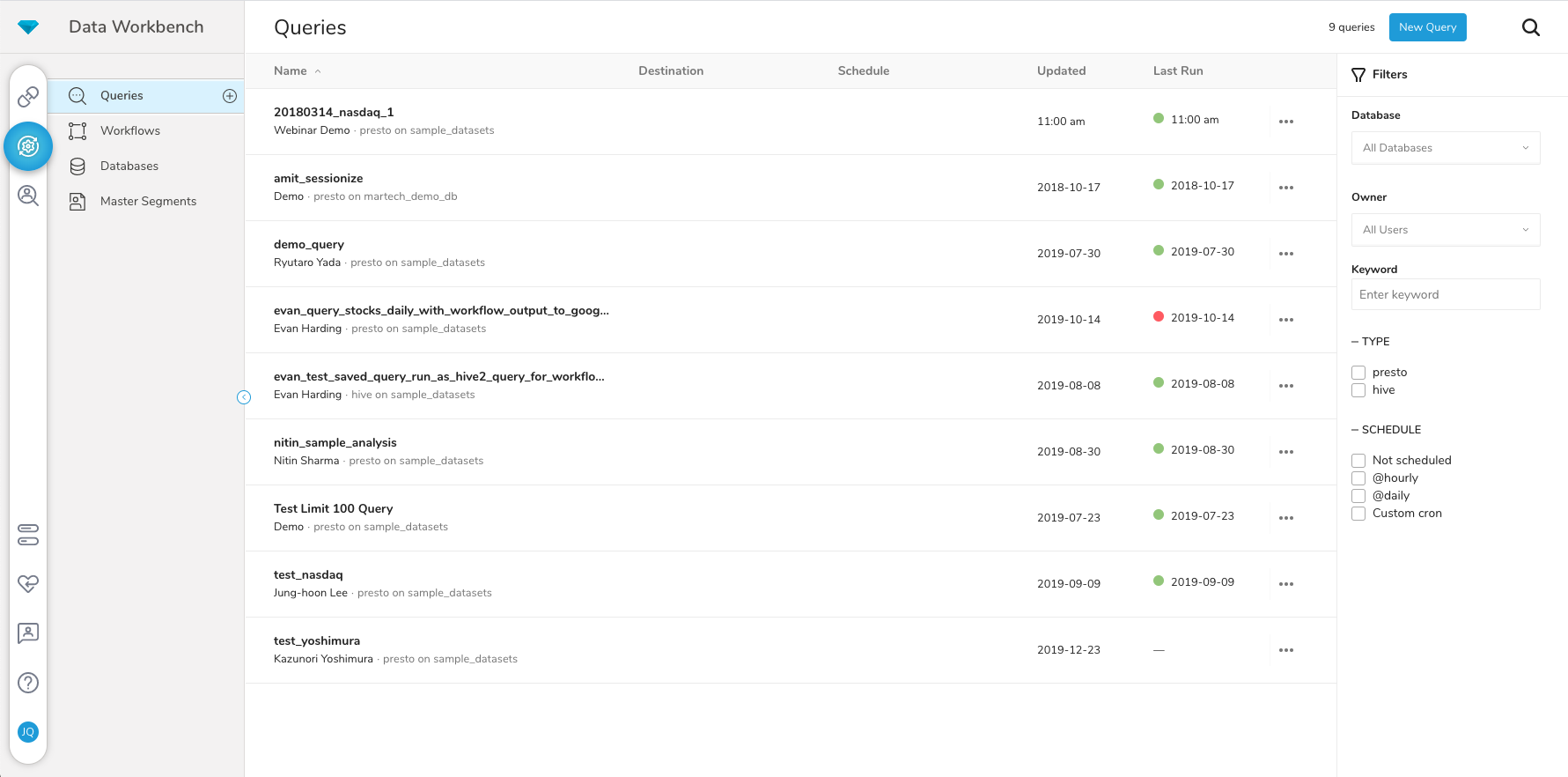
It's a easy platform to use and give the user detailed logs about what is going on in the workflows, so someone that do not have a lot of experience can start to work with it. And also the master segment usability is awesome, as we can filter a lot of data the way we want.
As treasure data has a 24 hours support, every time we has big issues that impacts the zones, we do have immediatly support from the treasure data team, so I would say that we do not have any issues with availability
Since treasure data has started having a huge amount of data, sometimes we do have problems with the workflows logs because we generate a lot of then. But with integrations I have not to complain, its really easy to integrate with other platforms.
The technical team has a good hold on the nuances of the data related to our organization. I have found the online technical support on their site quite responsive including the L1 support. In cases where the L1 team isn't able to resolve, I have found they are prompt in getting the product team's input to get a quick resolution.
I wasnt here at the training in the start, but I had a few training with treasure data for a few functionalities, and they provided me god explanations and great documentations, eve if the project were in beta.
- We had to rebuild a part of the datamart afterwards to tighten up and simplify the selection process. But as it was too time consuming to rebuild all the existing campaigns, we no run campaigns on different versions of the datamart. - The response tracking of the campaigns never worked out well, it was impossible to implement a direct response where there is a link between the lead and the response in our operational process
The contact history and the response history are so powerful. You can track whatever you want to help the call center to push relevant offers to our customer. In addition, predictive models can be built, with patience, in IBM Campaign. If you have some complaints from the call center about any campaigns, you can easily validate it into the contact or response history.
We chose Treasure Data for the supreme customer service and lack of hidden costs. We don't need to manage any infrastructure or scale anything to meet customer demand. Treasure Data handles everything and makes it easy for us to integrate and focus on the tasks at hand. There may be cheaper options but we do not regret our decision to go with Treasure Data one bit.
We have built and supported our source of truth data tables using Treasure. This forms the foundation of our decision making.
Most of our Tableau data sources are created using a Treasure Data export which is executed by workflows on a daily basis which allows us to have visibility into day to day performance and communicate them to a wide variety of roles.
We load custom data into our Salesforce instance which allows us to trigger certain workflows and build accountability - i.e. a "Sale" will only count once a certain product driven event occurs which comes from data we pipe into Treasure and then into Salesforce.