IBM Cloud Code Engine is a fully managed, serverless platform that unifies the deployment of containers and applications including web apps, microservices, event-driven functions, or batch jobs. This serverless compute service aims to remove the burden of building, deploying, and managing workloads in Kubernetes so users can focus on writing code and not on the infrastructure that is needed to host it. With IBM Cloud Code Engine users can run any workload…
N/A
Pantheon
Score 8.6 out of 10
N/A
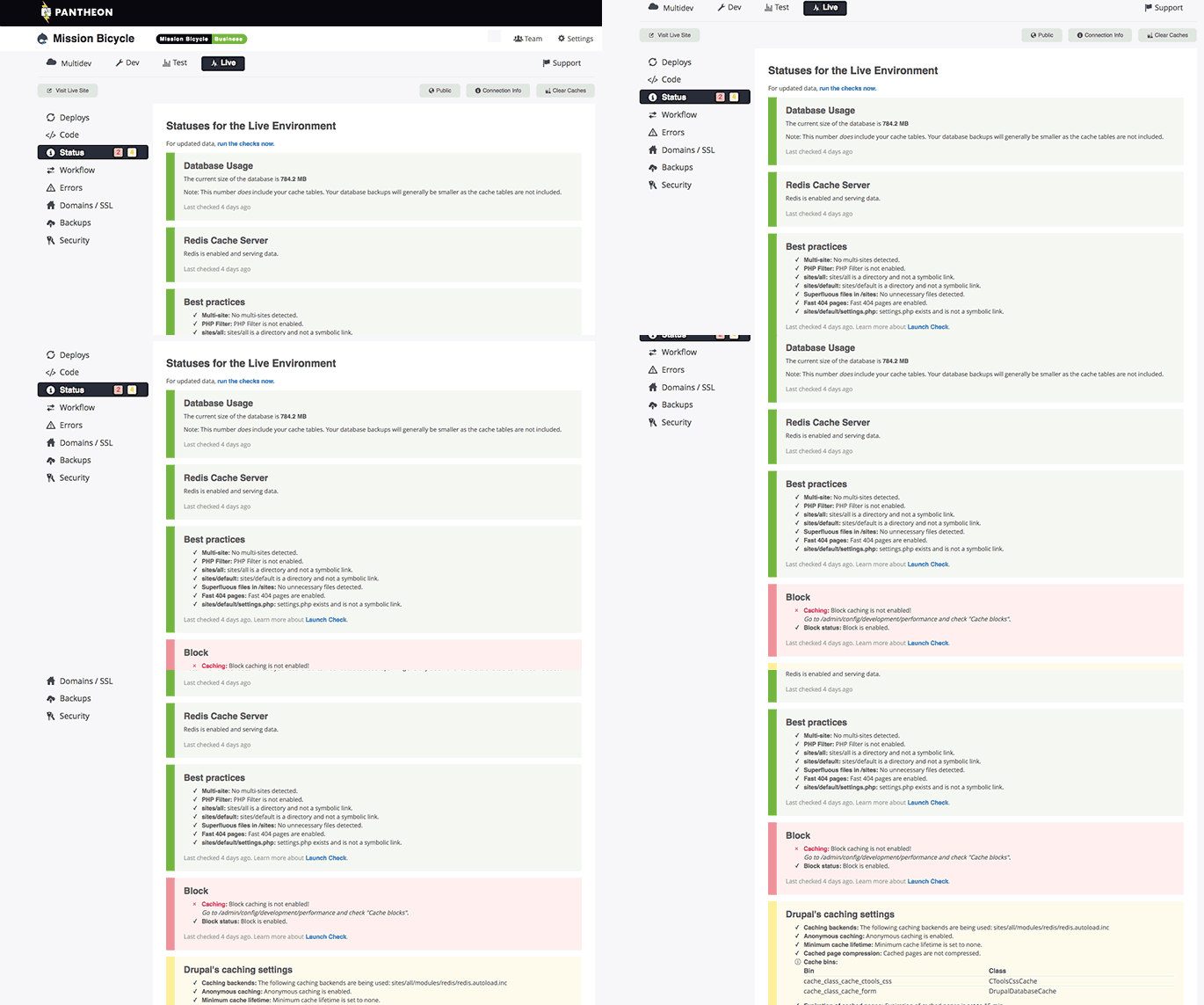
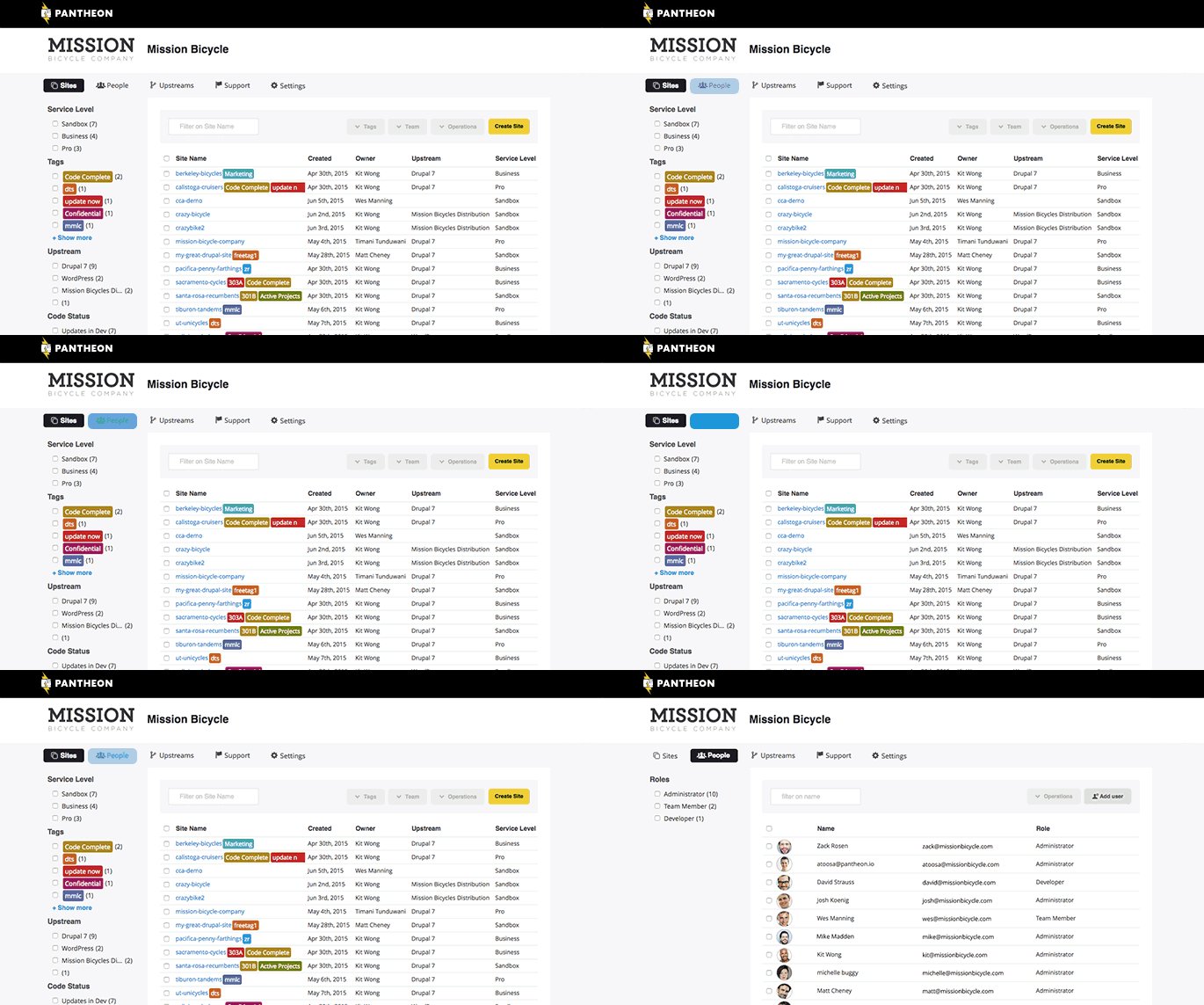
Pantheon is a WebOps platform where marketers and developers collaborate to drive results. The vendor states that with Pantheon, site owners maximize their capacity to update website design and functionality, responding to market trends, catering to consumer behavior, and adding real value to the business's bottom line. Today, companies compete on the basis of digital experiences, and the best results emerge from an agile build-test-learn process. Whether it's publishing content,…
$29
per month
Upsun
Score 9.9 out of 10
N/A
Platform.sh helps companies of all sizes, from SaaS entrepreneurs looking to build, run, and scale their websites and web applications.
Acquia was terrible. We use DigitalOcean for some all-purpose computing needs and Platform.sh for an application that does more computing and high-throughput processing where we do not want page views (API calls) to count against our usage.
We use several hosting solutions depending on the client needs or what they were already setup on. Pantheon is very similar to them and offers similar services however one of the main features we use is the Multidev service which allows us to test pieces of work separately and …
In our team we use Platform.sh mostly while sites are in developmental phase. Then we do a lift and shift to either Acquia or AWS depending on the type of sites we have. Platform.sh is really cost effective and more fluid in terms of Continuous Development hence the usage. …
It would be a good solution for running serverless applications. Because infrastructure setup and maintenance expenses can be avoided, the investment will pay for itself. The time to value is short, allowing IT to respond to business demands quickly. It aided us in customizing security as well as operating a personal project using to autoscale up and down approach. Also, because there isn't much hassle, items can be pushed into production as soon as possible. Simply push a container, create an application, and you're ready to go. But, It is less suited when you have a static machine or need to keep data in some way and do not want to utilize network storage or a database.
Pantheon is excellent for medium-large websites that require high availability and a managed workflow. It would be inappropriate for small websites because of the cost or for situations where more control of the environment is appropriate. We find it useful because we rarely do anything outside of the Drupal application.
In our organisation we are the only team that uses Platform.sh to host any site. This was a cost effective way for us as we were using Acquia Cloud earlier for these websites. We mostly use Platform.sh for those sites which are always in development as it is simpler and faster to handle these operations in Platform.sh. Then we do a lift and shift to Acquia as we move more towards the go live and post production maintenance side.
the pricing structure is complicated, and the servers are expensive. I really think they should offer better pricing options and support for more languages
sometimes the servers go down, and they take too long to respond to support tickets
uploading documents is slow since I have to do it one by one, making the process much longer than it should be
Platform.sh is not for beginners in my opinion. It has a good amount of learning curve in my opinion.
As this is a PaaS, teams habituated with cloud infrastructure may miss the server side support from their cloud teams. I believe you will have to work on server bugs more on your own.
During normal maintenance periods, integrations may fail if you are working on your sites in that time, in my experience.
Consumers can purchase individual components as well as unlocking new bundles with special features and services including the extensive data management governance capabilities of the Automation range. Kubernetes containerizing for effective service implementation and an agile, flexible multi-cloud data program help both utilization expansion and deployment to be improved by this architecture.
Pantheon is an easy system, especially to the users with previous experience with other similar platform and the interface is clear enough to easily understand how things operates. On the Cloud deployment everything also works effectively and the technical team from Pantheon community are very helpful on providing the necessary assistant to their customers.
Even tier 1 Pantheon chat and ticket support are knowledgeable, competent, and useful. They routinely understand and promptly resolve urgent, complex, and/or unusual issues that other hosts need to escalate to tier 2 or tier 3 support personnel. I honestly can't think of a truly negative or disappointing support experience in the years I've used Pantheon hosting for client websites.
What impresses me most about IBM Cloud Code Engine is the container workload management capability and the Cloud services and dataflow monitoring functionalities. Data security and network security control via IBM Cloud Code Engine is quite excellent and very responsive data integration functions and the first deployment is not very technical.
Although it may seem a good fit for a company that needs extra control over the deployment process and development process, for a firm that is mainly concentrating on SEO, it would be an overkill. Pantheon provides that sweet automation that allows us to shed some weight on development and focus on our business activities.
In our team we use Platform.sh mostly while sites are in developmental phase. Then we do a lift and shift to either Acquia or AWS depending on the type of sites we have. Platform.sh is really cost effective and more fluid in terms of Continuous Development hence the usage. After said development is done, we generally lift and shift to Acquia for more content heavy sites and to AWS for more transaction oriented sites.