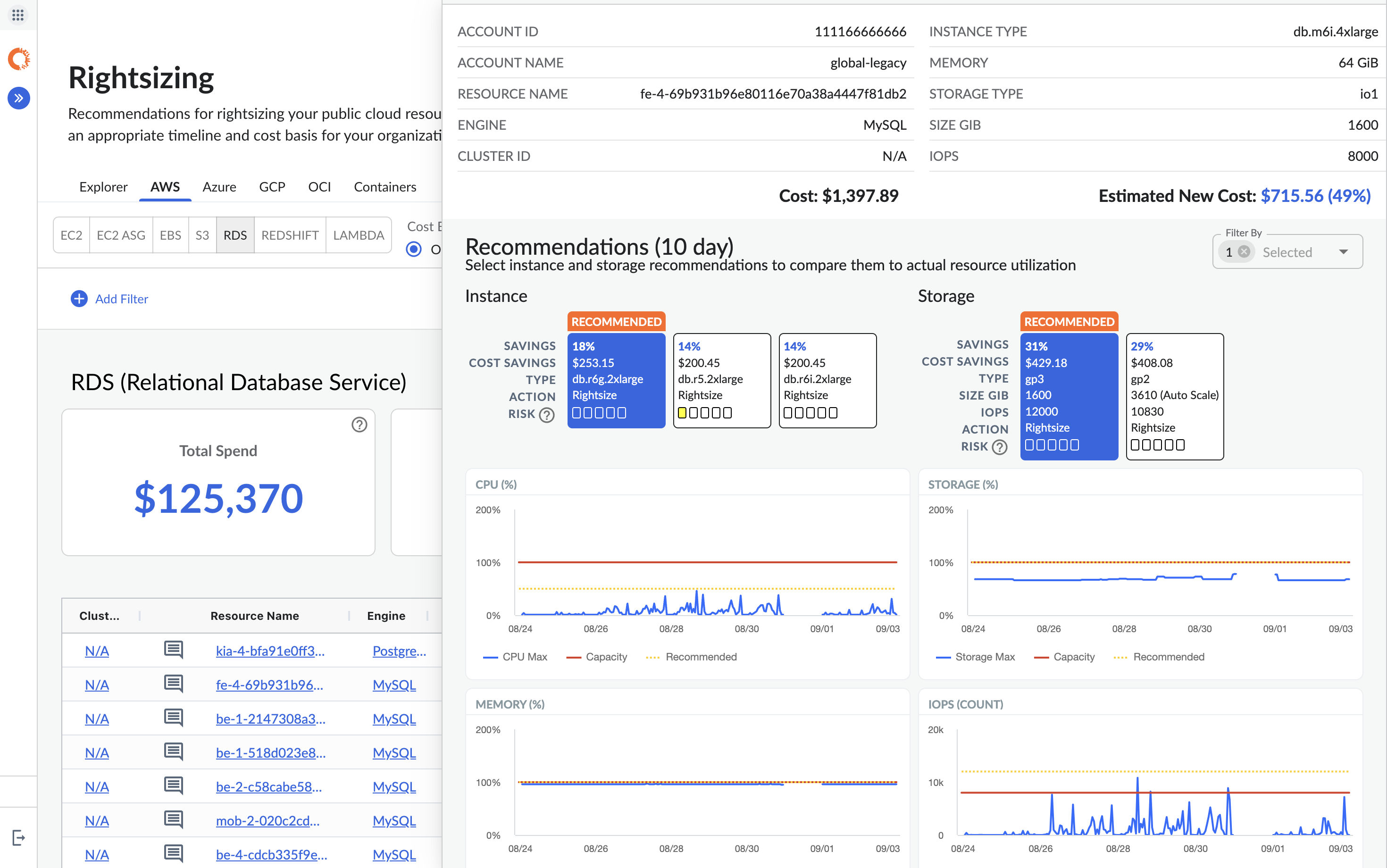
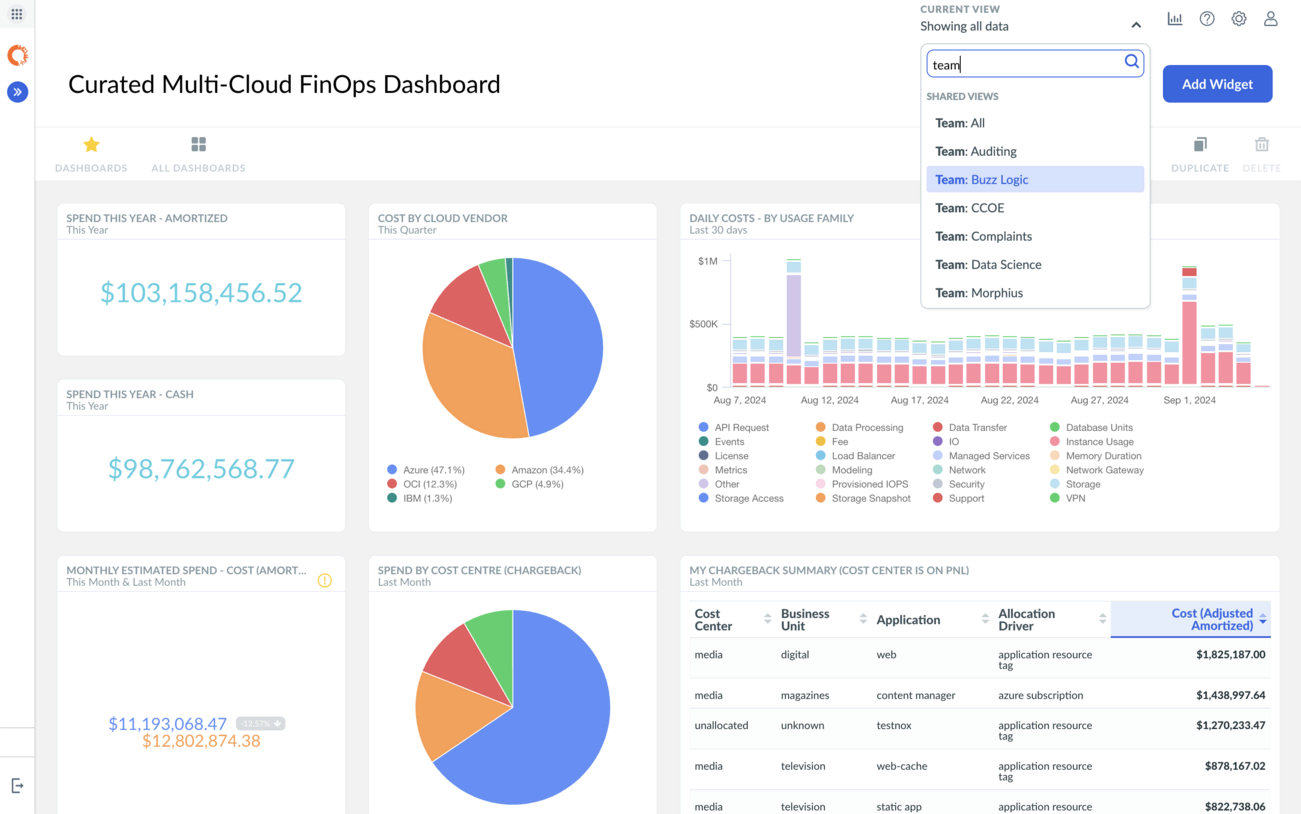
IBM Cloudability is a cloud cost management and optimization (FinOps) tool that enables IT, finance, and business teams to optimize their cloud spend across all cost sources, all maturity levels, and for all stakeholders.
A de minimis incentive was given to thank the reviewer for their time. The incentive was not used to bias or drive a particular response, nor was the incentive contingent on a positive endorsement. More Info
A de minimis incentive was given to thank the reviewer for their time. The incentive was not used to bias or drive a particular response, nor was the incentive contingent on a positive endorsement. More Info
cloud economist in Information Technology at edf (Utilities, 10,001+ employees)
Chose IBM Cloudability
I personally think Cloudability is great, but sells themselves short in some areas of functionality, or it may have the functionality but it's difficult to fully realize it as there are so many filters and ways to build a reports, also can the dashboards be shared easily into …
A de minimis incentive was given to thank the reviewer for their time. The incentive was not used to bias or drive a particular response, nor was the incentive contingent on a positive endorsement. More Info
Verified User
Chose IBM Cloudability
From the limited time that I've been there, I mean in the renewal talks it's been, I think Cloud Zero was another competitor that we were in talks with, but I'm not entirely sure what direction we're going. That's above my pay grade.
A de minimis incentive was given to thank the reviewer for their time. The incentive was not used to bias or drive a particular response, nor was the incentive contingent on a positive endorsement. More Info
Verified User
Chose IBM Cloudability
IBM Cloudability is more dense and scalable to meet other more comprehensive cloud focused business planning needs
A de minimis incentive was given to thank the reviewer for their time. The incentive was not used to bias or drive a particular response, nor was the incentive contingent on a positive endorsement. TR verified that a representative sample of customers was invited. More Info
Verified User
Chose IBM Cloudability
we only use it to upload the data. that is all we use it for at this point but would love to see what else we could use it for.
A de minimis incentive was given to thank the reviewer for their time. The incentive was not used to bias or drive a particular response, nor was the incentive contingent on a positive endorsement. More Info
Verified User
Chose IBM Cloudability
Our organization chose IBM Cloudability over other products because, in our opinion, IBM Cloudability stacks up very well.
A de minimis incentive was given to thank the reviewer for their time. The incentive was not used to bias or drive a particular response, nor was the incentive contingent on a positive endorsement. More Info
Verified User
Chose IBM Cloudability
Some of the advantages include: Better decision making: Evaluating Reserved Instance (RI) or Savings Plan Utilization Detecting unexpected cost increases by drilling down into usage patterns and pinpointing the root cause (e.g., sudden EC2 scaling or S3 storage growth).
A de minimis incentive was given to thank the reviewer for their time. The incentive was not used to bias or drive a particular response, nor was the incentive contingent on a positive endorsement. More Info
Verified User
Chose IBM Cloudability
not using any similar products, but Cloudability is able to provide all necessary features and functionality for our organization and our customer to get the right information on their cloud spend. The ability to customize the dashboard is also a very useful feature. …
A de minimis incentive was given to thank the reviewer for their time. The incentive was not used to bias or drive a particular response, nor was the incentive contingent on a positive endorsement. TR verified that a representative sample of customers was invited. More Info
A de minimis incentive was given to thank the reviewer for their time. The incentive was not used to bias or drive a particular response, nor was the incentive contingent on a positive endorsement. More Info
Verified User
Chose IBM Cloudability
Our organization chose IBM Cloudability because, in our experience, Overall, IBM Cloudability is a better product.
A de minimis incentive was given to thank the reviewer for their time. The incentive was not used to bias or drive a particular response, nor was the incentive contingent on a positive endorsement. More Info
Verified User
Chose IBM Cloudability
For a single project and quick analysis about why my costs when overboard or why forecast is showing more than my budget, it is much easier to use AWS Cost Explorer over IBM Cloudability. I think this area should definitely improve and do some smart suggestions using AI …
A de minimis incentive was given to thank the reviewer for their time. The incentive was not used to bias or drive a particular response, nor was the incentive contingent on a positive endorsement. More Info
Verified User
Chose IBM Cloudability
IBM Cloudability stands out in the cloud cost management landscape due to its comprehensive features, strong multi-cloud support, and alignment with FinOps practices. Here's how it compares to other leading tools:
A de minimis incentive was given to thank the reviewer for their time. The incentive was not used to bias or drive a particular response, nor was the incentive contingent on a positive endorsement. More Info
A de minimis incentive was given to thank the reviewer for their time. The incentive was not used to bias or drive a particular response, nor was the incentive contingent on a positive endorsement. More Info
Verified User
Chose IBM Cloudability
Apptio Cloudability (pre-IBM acquisition), CloudHealth by VMware, AWS Cost Explorer, and Azure Cost Management. Each has its strengths, but Cloudability stood out for its multi-cloud coverage, commitment discount optimization, and finance-friendly reporting capabilities.
A de minimis incentive was given to thank the reviewer for their time. The incentive was not used to bias or drive a particular response, nor was the incentive contingent on a positive endorsement. More Info
Verified User
Chose IBM Cloudability
Recently, I got an opportunity to review this tool in the India Apptio User Conference. Currently, I'm going through the use cases of this tool and checking if this helps us in any of the use cases. also, I've heard from the speaker that IBM Kubecost will be integrated in the …
A de minimis incentive was given to thank the reviewer for their time. The incentive was not used to bias or drive a particular response, nor was the incentive contingent on a positive endorsement. More Info
Verified User
Chose IBM Cloudability
We tried a few different tools as part of a POC but the fact that there is the IBM name attached to Apptio and just the complexity of our enterprise systems was something that we felt was best served by the IBM Cloudability tool. It integrated seamlessly with the multiple cloud …
A de minimis incentive was given to thank the reviewer for their time. The incentive was not used to bias or drive a particular response, nor was the incentive contingent on a positive endorsement. More Info
Verified User
Chose IBM Cloudability
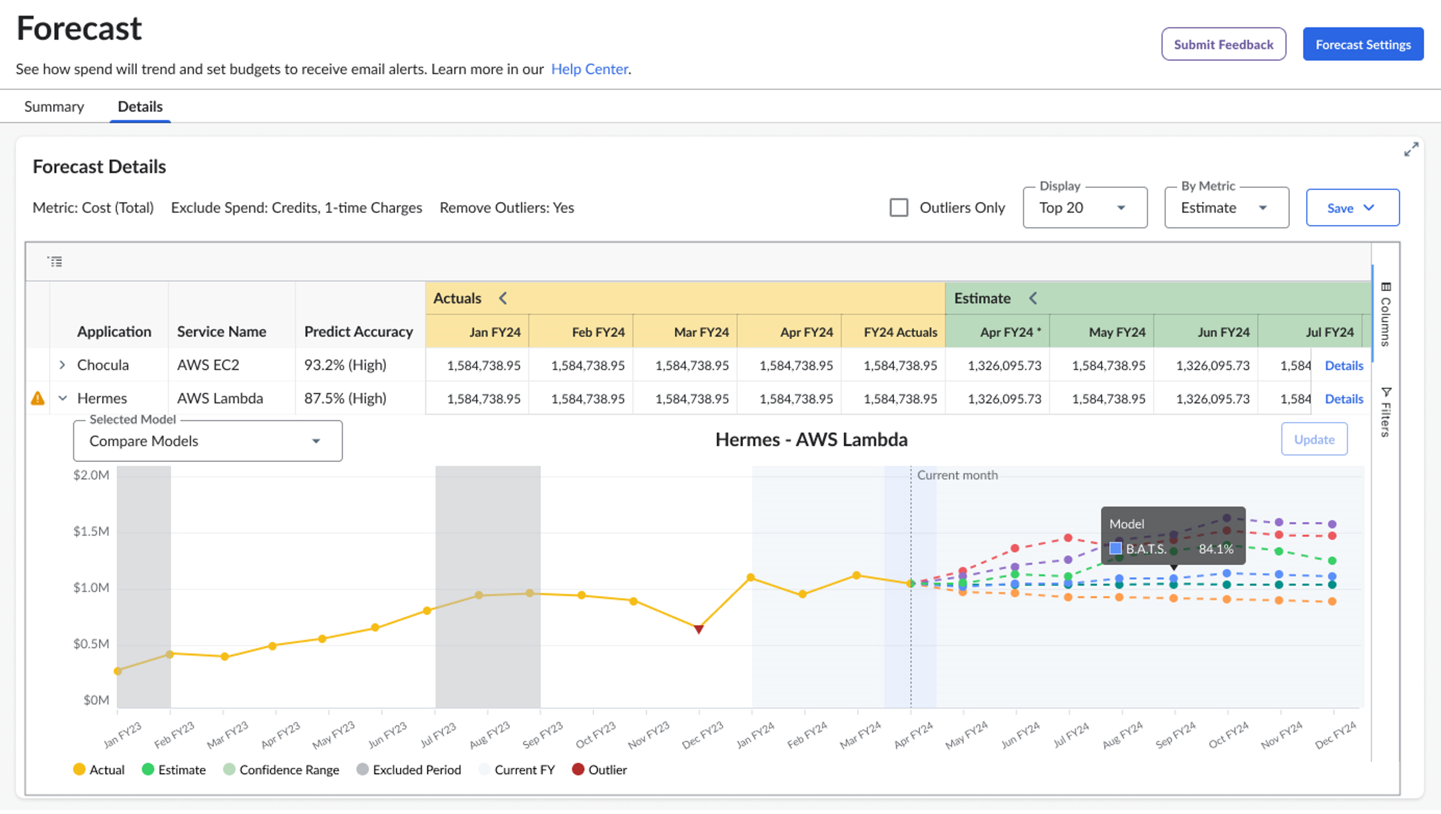
When we purchased they were close but we preferred some bits like forecasts
A de minimis incentive was given to thank the reviewer for their time. The incentive was not used to bias or drive a particular response, nor was the incentive contingent on a positive endorsement. More Info
A de minimis incentive was given to thank the reviewer for their time. The incentive was not used to bias or drive a particular response, nor was the incentive contingent on a positive endorsement. More Info
A de minimis incentive was given to thank the reviewer for their time. The incentive was not used to bias or drive a particular response, nor was the incentive contingent on a positive endorsement. More Info
I don't have much exposure to the tool. I mean, I'm relatively new to using it as a platform, but I haven't really seen the benefit, especially with the actual renewal talks at the company. I'm not seeing what AWS native solutions are, how probability improves on that as opposed to just using AWS and just, I don't know. I'm not seeing the benefit, at least in my eyes.
A de minimis incentive was given to thank the reviewer for their time. The incentive was not used to bias or drive a particular response, nor was the incentive contingent on a positive endorsement. More Info
A de minimis incentive was given to thank the reviewer for their time. The incentive was not used to bias or drive a particular response, nor was the incentive contingent on a positive endorsement. More Info
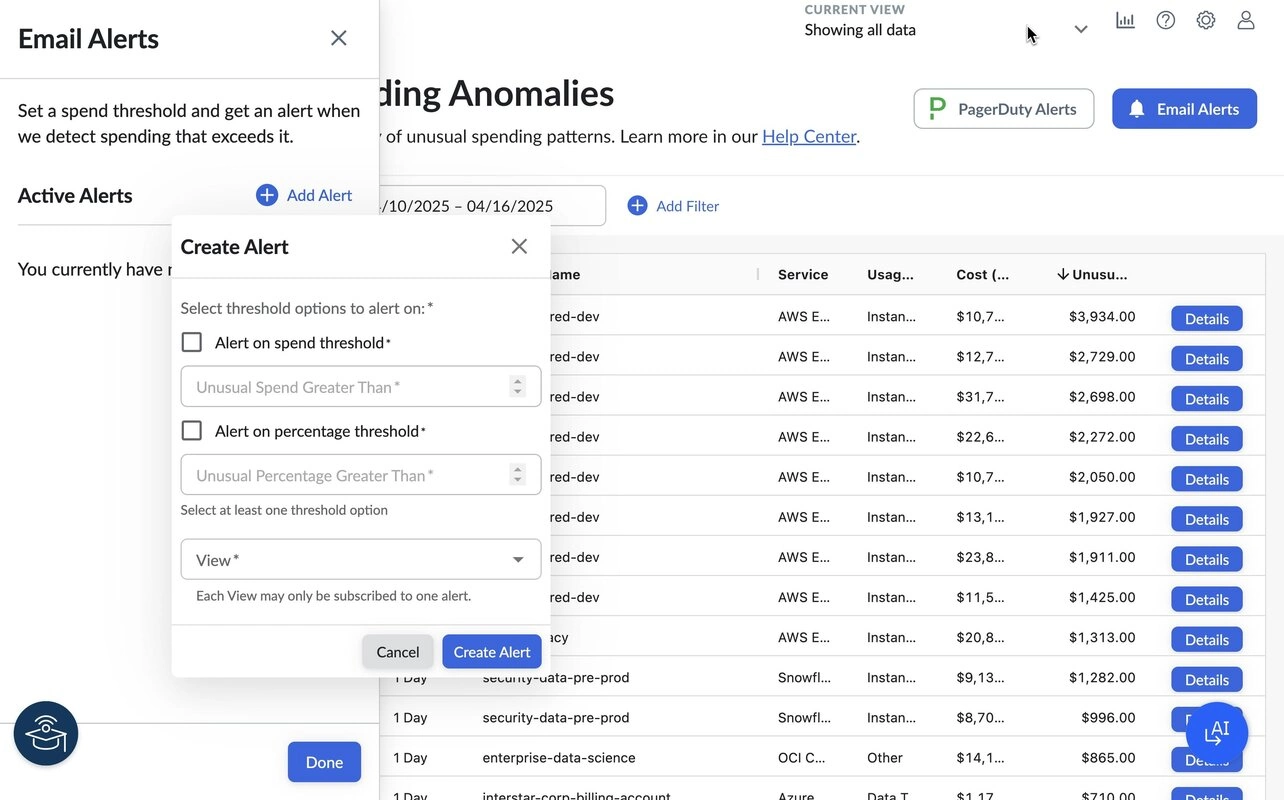
For me, it is a lot of anomaly detection and I think there's a lot of improvement that can be made to show anomalies that happen over time because if it's just day to day or week to week, you may not see the change. But if you see the trend over a period of time, show me something that has grown 40%, 50% over the past three months and maybe you can do those things and we just haven't figured them out yet. So we are very new to the product, but I think anomaly detection for me is one of the bigger things.
A de minimis incentive was given to thank the reviewer for their time. The incentive was not used to bias or drive a particular response, nor was the incentive contingent on a positive endorsement. TR verified that a representative sample of customers was invited. More Info
Cloudability has been one solution for almost all of our FinOps needs. Except for Data transfer costs, we have covered all use cases and have made significant savings across our cloud infrastructure. Reporting has provided management a deeper analysis into their spending and helped them forecast their budgets for next year
A de minimis incentive was given to thank the reviewer for their time. The incentive was not used to bias or drive a particular response, nor was the incentive contingent on a positive endorsement. More Info
I gave the IBM Cloudability a 7/10 because it is good, but it could improve in some places. It is easy to get data uploaded and ready to view, but it is only up to a certain point in time, and not live data. As for how it looks, the interface is good for viewing, however navigation could be a little better, maybe supported with a roadmap.
A de minimis incentive was given to thank the reviewer for their time. The incentive was not used to bias or drive a particular response, nor was the incentive contingent on a positive endorsement. More Info
A de minimis incentive was given to thank the reviewer for their time. The incentive was not used to bias or drive a particular response, nor was the incentive contingent on a positive endorsement. More Info
A de minimis incentive was given to thank the reviewer for their time. The incentive was not used to bias or drive a particular response, nor was the incentive contingent on a positive endorsement. More Info
While there have been few support cases where the experience was good. But in multiple support cases it's firstly delayed and even after weeks or months of time, team is not able to provide us with the RCA of the issue. All they are claiming is the issue is now fixed which I still see coming back after few days or weeks as we've never identified and addressed the root cause.
A de minimis incentive was given to thank the reviewer for their time. The incentive was not used to bias or drive a particular response, nor was the incentive contingent on a positive endorsement. More Info
Training was adequate, but the real learning begins when you start using the product, like most things. All major functions were covered so as an entry point, was a good introduction to the product. The training pace was good as well, the areas were covered in decent depth, without being too much of an information overload.
A de minimis incentive was given to thank the reviewer for their time. The incentive was not used to bias or drive a particular response, nor was the incentive contingent on a positive endorsement. More Info
Before Apptio we extensively used the cloud native and in house automated and developed cost optimization tool using python , powershell and leveraging the various cloud native services like AWS systems manager , Azure Functions and Azure automation run books.
A de minimis incentive was given to thank the reviewer for their time. The incentive was not used to bias or drive a particular response, nor was the incentive contingent on a positive endorsement. TR verified that a representative sample of customers was invited. More Info
A de minimis incentive was given to thank the reviewer for their time. The incentive was not used to bias or drive a particular response, nor was the incentive contingent on a positive endorsement. More Info
A de minimis incentive was given to thank the reviewer for their time. The incentive was not used to bias or drive a particular response, nor was the incentive contingent on a positive endorsement. More Info
A de minimis incentive was given to thank the reviewer for their time. The incentive was not used to bias or drive a particular response, nor was the incentive contingent on a positive endorsement. TR verified that a representative sample of customers was invited. More Info