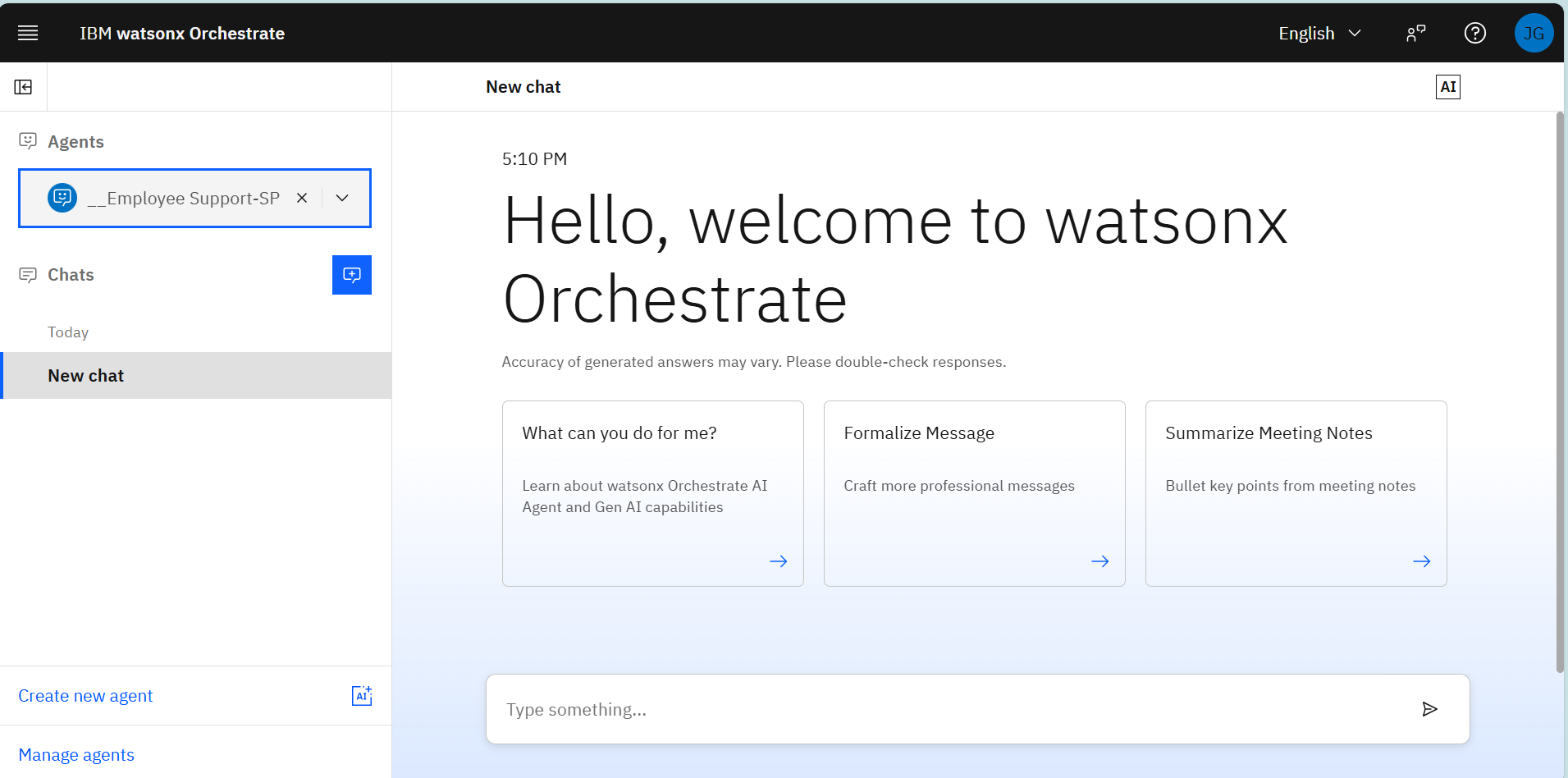
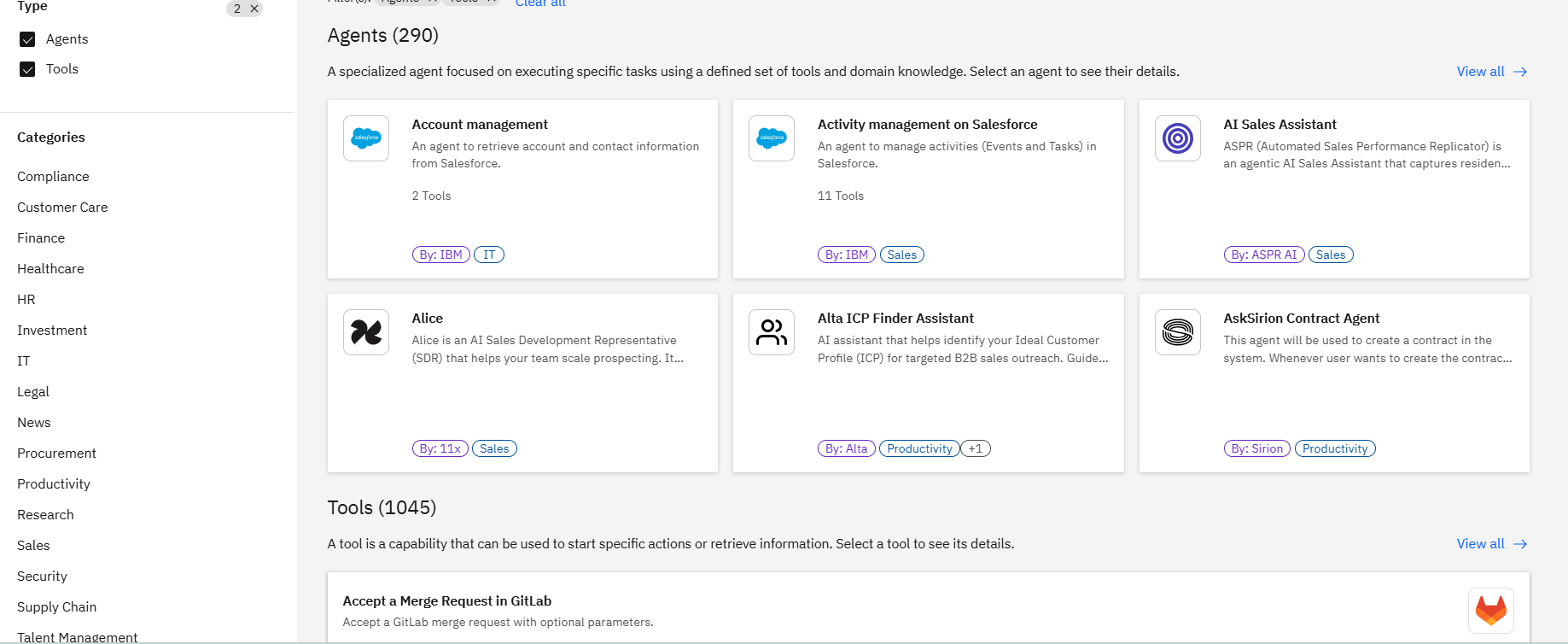
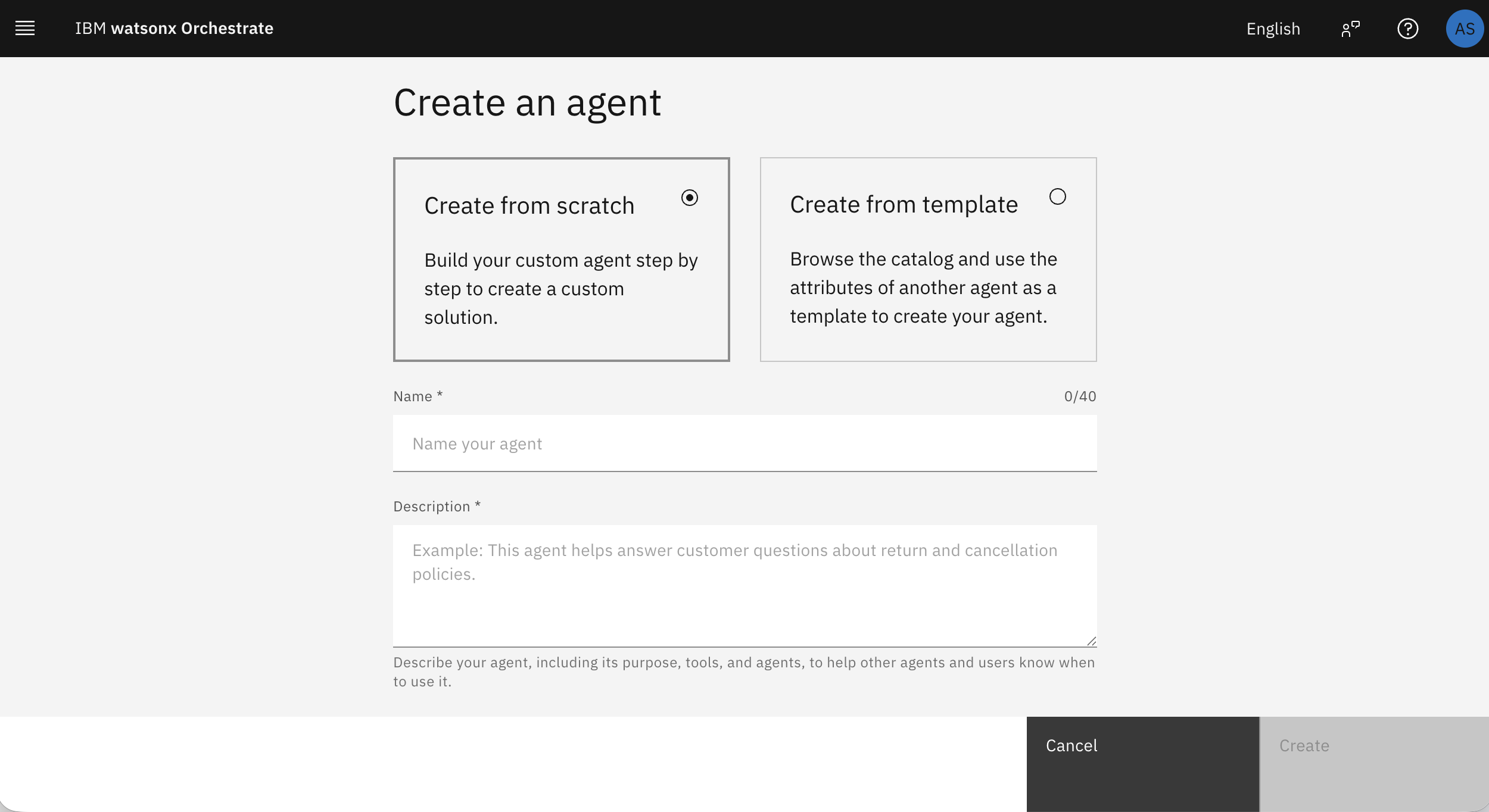
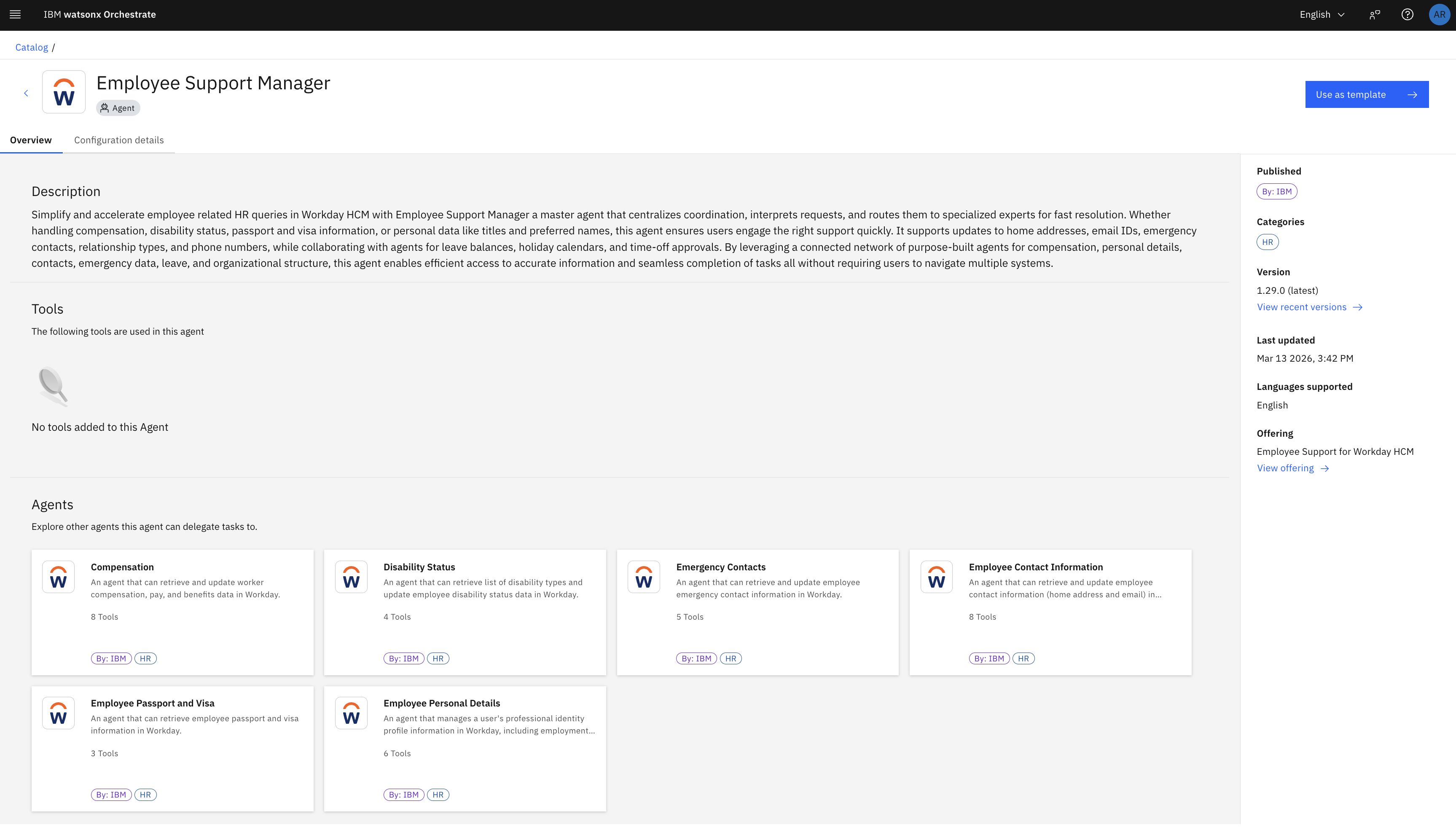
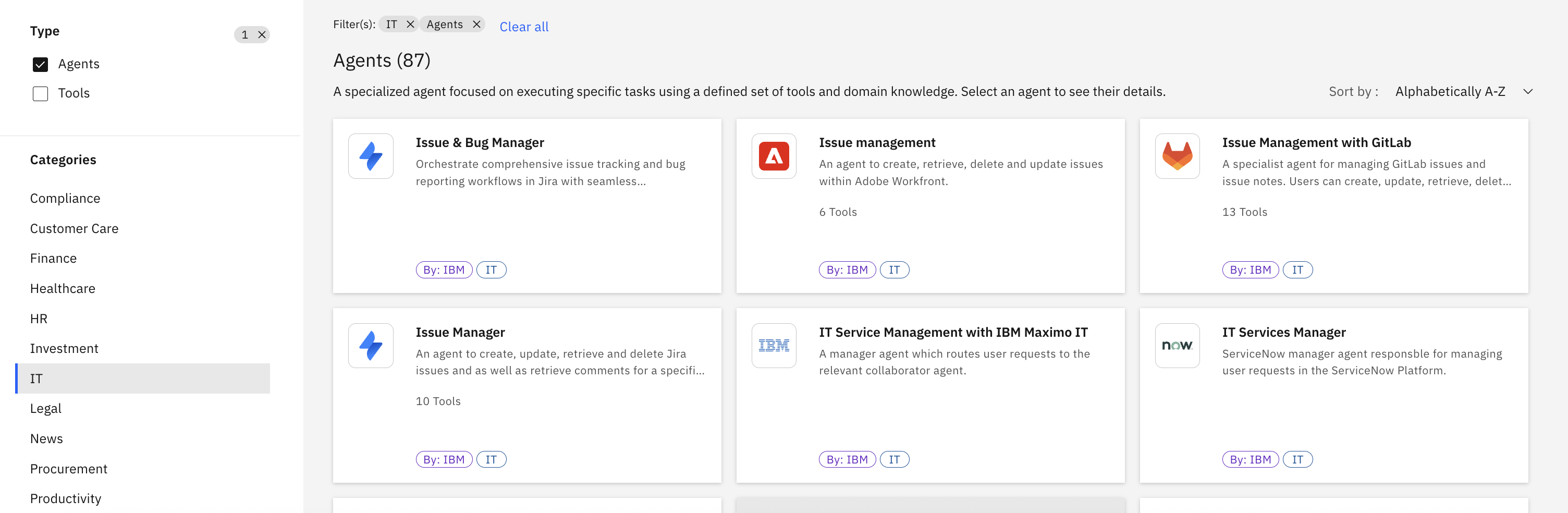
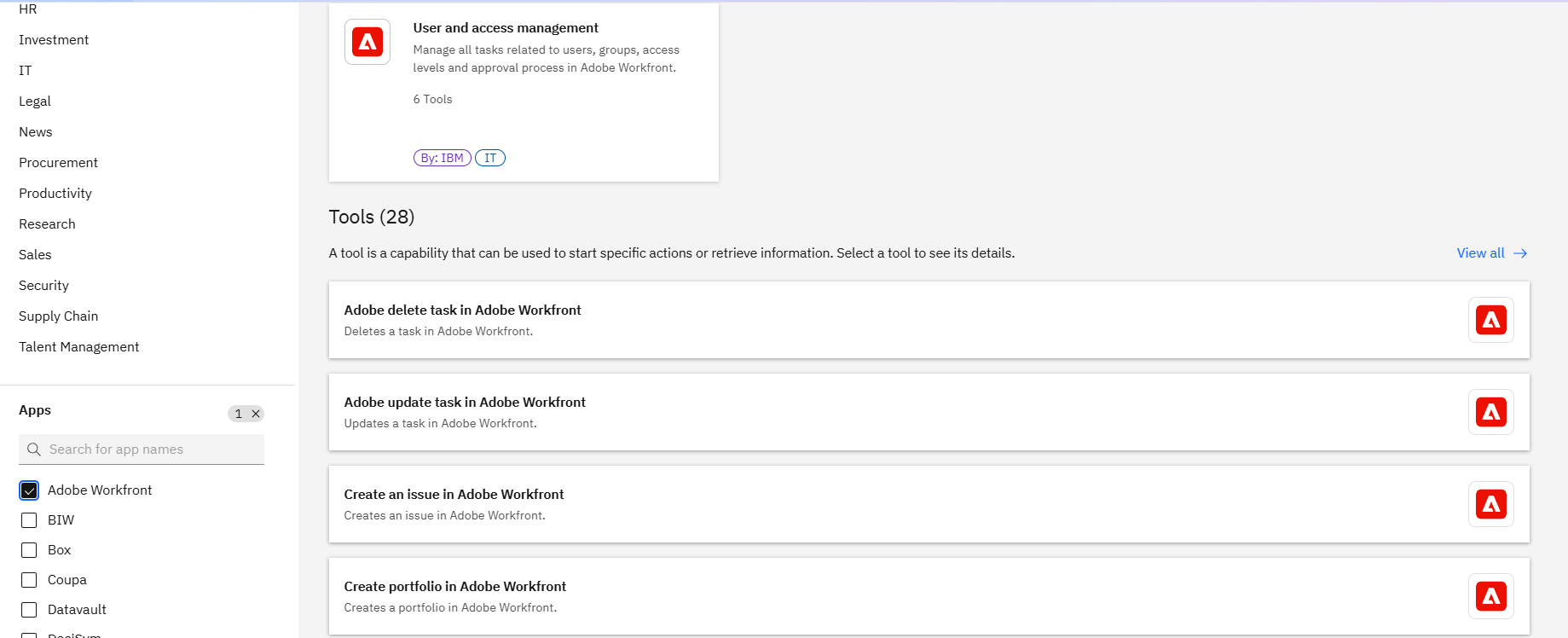
IBM® watsonx™ Orchestrate® leverages AI to automate complex workflows. The solution helps build, deploy, and manage AI assistants and agents. It offers a catalogue of pre-built agents and tools, low-code agent builder, multi-agent collaboration capabilities, and integrations with enterprise apps.
$500
per month per subscription
Perplexity
Score 8.7 out of 10
N/A
An answer engine for publicly available knowledge, Perplexity's Enterprise Pro plan helps employees get fast answers to their most complex questions without the usual need to click on different links, compare answers, or endlessly dig for information.
N/A
Pricing
IBM watsonx Orchestrate
Perplexity
Editions & Modules
Essential
$500
per month per subscription
Essentials
$500
per month Per subscription
Standard
Enterprise
Standard
Enterprise
per month Per subscription
No answers on this topic
Offerings
Pricing Offerings
IBM watsonx Orchestrate
Perplexity
Free Trial
Yes
No
Free/Freemium Version
No
Yes
Premium Consulting/Integration Services
No
No
Entry-level Setup Fee
Optional
No setup fee
Additional Details
IBM watsonx Orchestrate can be deployed and run on IBM Cloud, AWS, or on-premises. Prices shown are indicative, may vary by country, exclude any applicable taxes and duties, and are subject to product offering availability in a locale.
Well it is very much user friendly, It has AI support also, as well as there is now no need to do thorough programming every time, with simple prompts we can achieve great flows, We can integrate whole IBM ecosystem, ultimately allowing us to utilize best of all worlds. Best …
Copilot works well for Microsoft related environment, with easy user onboarding and offboarding and usage of other microsoft related applications, but IBM watsonx Orchestrate will not only suits for Microsoft it suits well for cross platform and complex workflows. SNOW will …
IBM agnostic platforms are built for controlled environments like ours which heavily relies on on-premise automation integrations. For RACF and mainframe duties, low-code but user friendly curves are needed to ensure IT works with business seamlessly.
I think this product's got a lot more use cases from a business standpoint. I find the other products are very based in end users and also the orchestrator has a lot more agnostic connections to a lot of products, whereas Microsoft is very Microsoft dominated and the other …
The other solution provides far more capabilities but at a much higher price and far more complexity. The IBM watsonx Orchestrate tool is less expensive (about 25% of the other solution) while being good enough for what we needed and being easy to use.
Strong ITSM and HR workflow automation with governance, ServiceNow excels in IT/HR but lacks flexibility for cross-departmental use cases such as demand planning, finance close, or procurement analytics. Orchestrate supports a broader set of enterprise functions beyond IT …
I use all three at present, Perplexity IS outstanding when It comes to researching, like a search engine on steroids. If you need programming skills Claude or Chatgpt seem better suited for the task. What I normally do in a project IS use all three in order to arrive at a more …
Compared to the competitors Perplexity is more advanced in terms of doing its own research and giving an output that others cannot generate. Its algorithm is well equipped to handle complex queries and asks followup questions to gererate the desired output. Its faster and the …
Perplexity offers a unique approach to generative ai tools, which is built more around a search engine, over a chat style tool. While this is novel, and some times more useful than the chat type of tool, i didn't feel it added enough value or increased power over the standard …
Perplexity is a good allrounder when it comes to different use cases that an AI could or should cover. There are other AI tools that are better for specific niches such as creation of pictures or other content. But all in all Perplexity is on eye level with ChatGPT and other …
I think they both do well. I use ChatGPT for some pre-created GPTs. So because I use them for different functions, it's hard to compare them head-to-head. I also use an Abacus, which I like a lot. Overall, they are all good, but I have different use cases for each one.
I have been using all the 3 products - ChatGPT, Gemini, and Perplexity. Perplexity helps when ChatGPT and Gemini fail. There have been several instances when Chat GPT and Gemini provided inaccurate results and in those times Perplexity became a clear winner. However, in terms …
For starters, most enterprise-grade organizations and Customers struggle to align their current IT estate and landscape with fast-moving, agile, AI-driven automation and development initiatives. All tooling, governance, structure, and frameworks available to support and facilitate the incorporation of this new but still cross-system technology layer are essential to minimize the risks of data leaks, unauthorized access, unbridled token consumption, and other issues. For some businesses and organizations with a handful of systems or a smaller footprint, the platform could be a bit too complex.
Perplexity is helpful when you want auto-code generation for day-to-day problem scenarios such as Powershell script to accomplish a task, Code to invoke a REST API, Class generation from JSON/XML data, etc. It is also helpful when you want to correct or optimize code that you have self-written. Perplexity might not be best suited for scenarios when you need 100% accuracy without your self-verification of correctness.
New and improved natural language processing yielding better results helps the assistants understand the intention behind the query.
Preserves context of communication, allowing the customers to establish inquiries on the website and continue on the mobile app without having extra informational input.
Intelligent conversations mean that complex paths that are branched based on the user's inputs allow for a much more natural flow of the conversation than fixed scripts.
IBM Watson simply works well for my organisation. We were able to design, build, and deploy a fully integrated chatbot in a matter of months. The basic building blocks (intents, skills, dialogue nodes, integration) are relatively straightforward for a technical developer to work with. The bot now supports retail customers in 3 different countries on both web and app based channels. We plan to further develop the bot to expand the way it interacts with customers through voice to text, and optical character recognition, as well as an improved UI.
With the growing use of AI and chatbots, it's very easy to use, and the conversational language makes it easier than keyword searches in a document. The contextual language processing is impressive. It's easy to integrate into our internal portal. The use of this tool would depend on each company's security and data sensitivity.
It's great, but doesn't necessarily feel like it adds enough value over using CoPilot, ChatGPT, or whichever generative AI tool your business already uses. Time will tell if this model continues to be developed, and whether it remains competitive with the other big models out in the industry, and innovating features and integrating more use cases fast.
To develop chatbots based on client provided flow what kind chatbot required for client either button or free text chatbots. we will decided accordingly flow and develop chatbot using IBM Watson. We will integrated custom components if required which is not present in library. IBM Watson library anyone can easily learn and develop chatbots.
We've rarely had to engage support, but they've always been prompt in responding and very attentive. Support experiences have been extremely positive (but we're mostly happy that we just don't have any cause to routinely need support in the first place!).
I think this product's got a lot more use cases from a business standpoint. I find the other products are very based in end users and also the orchestrator has a lot more agnostic connections to a lot of products, whereas Microsoft is very Microsoft dominated and the other products are very technical and not business focused.
I think they both do well. I use ChatGPT for some pre-created GPTs. So because I use them for different functions, it's hard to compare them head-to-head. I also use an Abacus, which I like a lot. Overall, they are all good, but I have different use cases for each one.
From past 3+ years I am using IBM Watson in our current project easily can implement and manage and monitor user how their using. Is there and update also just update dialog is just enough to change no need to touch any other templates. Multiple language will support, and action and dialog speak recognize chatbot we can create as per client requirement. Overall, as of now good experience with IBM Watson.
It enhanced cost efficiency as digital automated workflows helped us reduce manual FTEs.
It is costing us integration overheads, which have a negative impact, including increased change management effort.
Overall, it is a balanced approach, as we hope that in the long run, we will achieve significant positive ROI, which will significantly improve organizational efficiency.