IBM® webMethods offers a hybrid, enterprise-grade integration platform as a service (iPaaS) that allows users to securely control applications, APIs, B2B and files across environments and locations.
$2,500
per month
Maia by Matillion
Score 8.5 out of 10
N/A
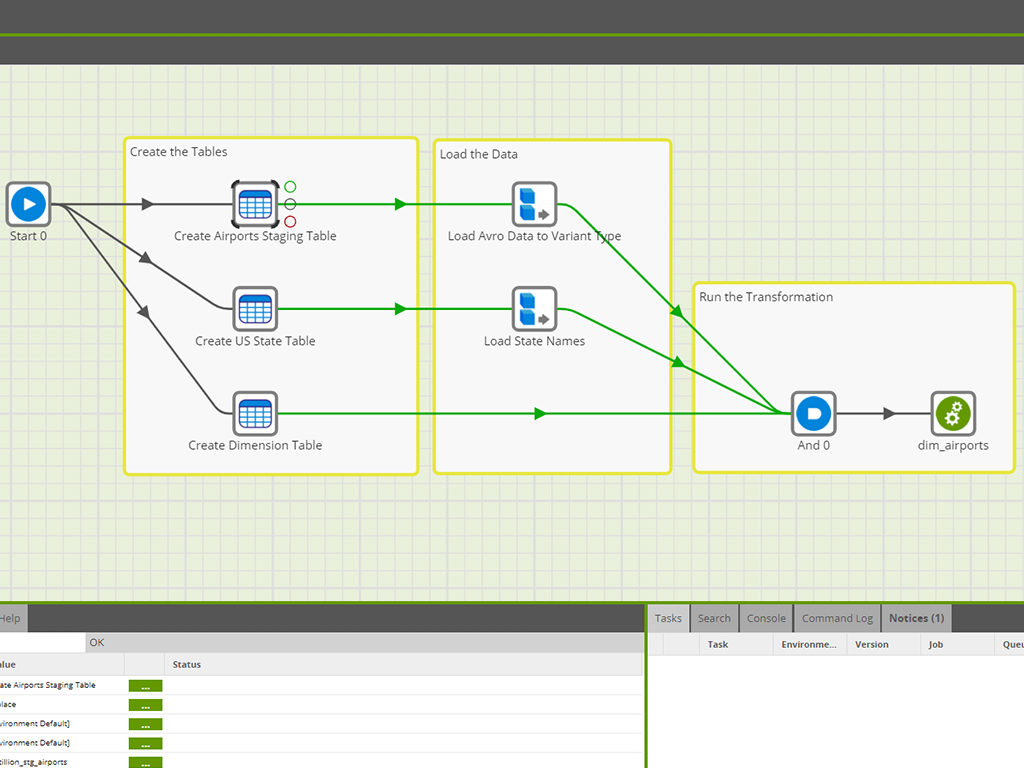
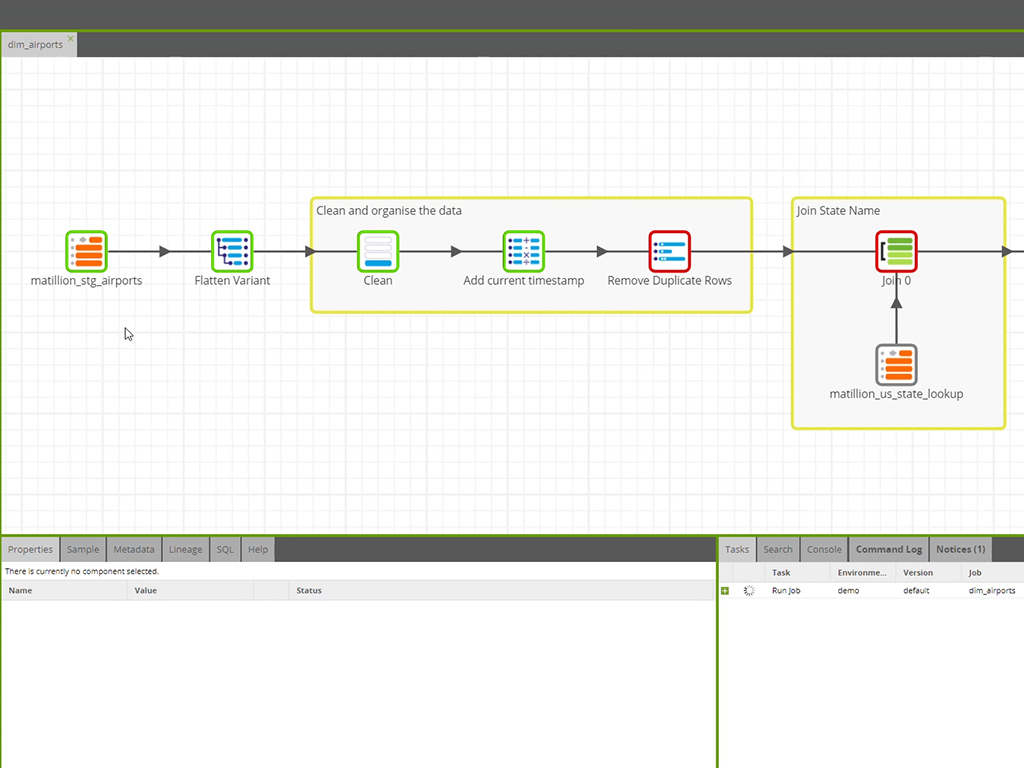
Maia by Matillion is an autonomous data engineering platform designed to automate the lifecycle of data pipelines through AI-driven orchestration. The solution functions as an enterprise "digital workforce" that translates natural language requirements into production-ready DataPipelines, leveraging a Pushdown Architecture to execute transformations natively within cloud data warehouses.
N/A
Pricing
IBM webMethods Hybrid Integration
Maia by Matillion
Editions & Modules
IBM webMethods Hybrid Integration Standard Tier
$2,500
per month
No answers on this topic
Offerings
Pricing Offerings
IBM webMethods Hybrid Integration
Maia by Matillion
Free Trial
Yes
Yes
Free/Freemium Version
No
No
Premium Consulting/Integration Services
No
Yes
Entry-level Setup Fee
No setup fee
No setup fee
Additional Details
—
Billed directly via cloud marketplace on an hourly basis, with annual subscriptions available depending on the customer's cloud data warehouse provider.
In any scenario where a distributed enterprise IT landscape needs a unified approach to solve the challenges of enabling a common information supply chain where different stakeholders as well as citizen developers can be empowered to contribute, participate and own their own parts of the integration landscape - IBM webMethods offers a capable, architecturally sound and cost efficient way of supporting a wide range of enterprise system integration needs.
Great: Need to query simpler APIs, or utilize well known services such as GSheets etc.? Matillion has got some of the best and easiest to use connectors out there. Not so great: Do you need have a competent CI/CD flow that you will be able to update / compare from Matillion as well as other sources at the same time? Good luck, you will need to be extra careful, as you might have to have a deeper dive into your servers Terminal each time you have a git conflict.
Matillion is brilliant at importing data -- it would be amazing to have more ways to export data, from emailed exports to API pushes.
Any Python that takes more than a few lines of code requires an external server to run it. It would be great to have more integration (perhaps in a connected virtual environment) to easily integrate customized code.
Troubleshooting server logs requires quite a bit of technical expertise. More human readable detailed error handling would be greatly appreciated.
The webMethods platform is a fantastic tool for modernizing information systems. It's easy to use and delivers rapid results.The platform is focused on innovation and is accelerating its improvement with the acquisition by IBM.
With the current experience of Matillion, we are likely to renew with the current feature option but will also look for improvement in various areas including scalability and dependability. 1. Connectors: It offers various connectors option but isn't full proof which we will be looking forward as we grow. 2. Scalability: As usage increase, we want Matillion system to be more stable.
The webMethods product has a very user-friendly and easy-to-use interface.A weak point is the My webMethods Server portal (administration and monitoring portal for the on-premise platform). This weakness has been addressed thanks to the control plane on the hybrid version of the product. This version should be highlighted and used to ensure a very fluid and functional interface.
We are able to bring on new resources and teach them how to use Matillion without having to invest a significant amount of time. We prefer looking for resources with any type of ETL skill-set and feel that they can learn Matillion without problem. In addition, the prebuilt objects cover more than 95% of our use cases and we do not have to build much from scratch.
The webMethods platform is very stable and does not cause incidents: if it is well configured and tailored at the base. Infrastructure incidents represent 20% of incidents (full disk, memory peaks, etc.) 80% of incidents come from the implementation of the code in the platform. If a code is not optimized and a high volume is observed in production, this can cause incidents. Similarly, if all error cases or conditions are not handled in the code, this can cause errors. Finally, there can be common errors if the applications connected to the platform do not return quality data or are unavailable.
The webMethods platform is designed to handle a high volume of small messages. It's a tool for continuous processing.The incidents I've seen involving application performance declines are caused by: - Code optimization issues - File size issues or fragmentation of the transmitted file - Misuse of the platform (batch processing) - Monitoring data was not purged, and the user was working with millions of data points
In the majority of the tickets I've created, support has been very responsive and provided the right solutions or solutions.Resolving a ticket also depends on the information provided by the creator. It's important to provide the technical context and information about the environment, as well as information to help the support team reproduce the incident.
Overall, I've found Matillion to be responsive and considerate. I feel like they value us as a customer even when I know they have customers who spend more on the product than we do. That speaks to a motive higher than money. They want to make a good product and a good experience for their customers. If I have any complaint, it's that support sometimes feels community-oriented. It isn't always immediately clear to me that my support requests are going to a support engineer and not to the community at large. Usually, though, after a bit of conversation, it's clear that Matillion is watching and responding. And responses are generally quick in coming.
We received in-person training from the webMethods team. We received standard training from the vendor and custom training on specific security topics.The training sessions went well but remained very standard and did not adapt to the client's specific business. In-person training is more suitable for rapid skill development. It is necessary to practice for a few weeks to ensure familiarity with the tool.
I found clear and easy-to-follow training with realistic use cases for quick understanding and a 360° view of the features. The lesson format allows you to progress and learn by breaking down the allocated time.The technical courses are described step by step, allowing you to quickly get to grips with the products
When implementing webMethods, it's essential to have the right support and guidance.It's important to map out the interactions, document them, prepare test cases, and implement them while making maximum use of the product's native features.Additional tools must also be planned to automate deployments, visualize logs, and monitor the platform.
webMethods.io IntegrationDescriptionWe uses webMethods.io Integration to solve some of our application to applications and business to business integration needs. It is the Integration Platform as a Service solution that we use in a mix with our continued use of webMethods Integration Server and Trading Networks on-premises. For any solutions that meet the use cases that we deem an appropriate fit for running in the cloud, we build those solutions using webMethods.io Integration. More specifically, we use webMethods.io Integration to synchronize changes in one application or system, in another application or system, by shipping data mutations via integration messaging and API calls. We also use webMethods.io Integration to integrate with external organizations. Our trading partners and supply chain partners provide APIs that we consume, and vice versa, to notify each other of business process events as they occur in the respective organizations. Please provide some detailed examples of things that webMethods.io Integration (webMethods Integration Cloud) does particularly well. Easy to usePriced competitivelySupports robust and resilient integration solutions please provide some detailed examples of areas where webMethods.io Integration (webMethods Integration Cloud) has room for improvement. These could be features that are hard to use, missing functionality, or just things that you'd like to see done differently. Complex logic is hard to understand in a simple diagrammatic user interface too simplistic for solutions that are complicated or go against the gain runtime observability could be improved please describe some specific scenarios based on your experience where webMethods.io Integration (webMethods Integration Cloud) is well suited, and/or scenarios where it is less appropriate. We don't use webMethods.io Integration for scenarios where we need to integrate to on-premises legacy applications that have limited support for modern security controls such as OAuth 2.0 and transport encryption. Likewise, we don't use it for solutions that involve any of our systems that are controlled by safe-working processes. For those scenarios, of which we have many, we maintain on-premises webMethods Integration Server and Trading Networks instances to build and execute and support and monitor those solutions. This then requires us to hook our on-premises integration platform up to the webMethods.io Integration cloud, to ship messages between the two integration platforms. This all begs the question if a cloud solution cannot be used for all use cases or scenarios that the business has, then why add the complexity of using the cloud at all if you still need to maintain an on-premises solution to support the non-cloud appropriate scenarios. What positive or negative impact (i.e. Return on Investment or ROI) has webMethods.io Integration (webMethods Integration Cloud) had on your overall business objectives?webMethods.io Integration is a cost-effective approach to integration in isolationwebMethods.io Integration as a supplement to on-premises integration is pointless and redundant and just adds complexity to the environment and additional costswebMethods.io Integration is a tough sell for organizations using Microsoft Azure integration products such as Logic AppswebMethods.io Integration has a faster time to market where the use case means standard provided adapters can be used describe how webMethods.io Integration (webMethods Integration Cloud) stacks up against them and why you selected webMethods.io Integration (webMethods Integration Cloud). For any organization which is already using Software AG products on-premises, such as webMethods Integration Server and Trading Networks, or Universal Messaging, evaluating and using webMethods.io Integration is the path of least resistance. It will be incredibly easy for your webMethods team to get up to speed on how to use webMethods.io Integration, and start developing new solutions on it. However in my opinion you should only add cloud to your integration product portfolio if you believe you can move 100% of your integration needs to the cloud. Otherwise, you will need to maintain an on-premises integration solution anyway, which means you end up with a more complex IT landscape by adding cloud to supplement on-premises integration for little benefit in terms of cost, complexity, and resourcing requirements. For organizations that are not already a Software AG shop, you should evaluate webMethods.io Integration on its merits, however, it's usually the right decision to double down on your existing products and vendors if you have no big issues with the current state. This is to say that if you are a Microsoft shop then adding Azure cloud products to your portfolio is pretty much inevitable, and avoiding the complexity of multiple clouds should also be something organizations consider.
Fivetran offers a managed service and pre-configured schemas/models for data loading, which means much less administrative work for initial setup and ongoing maintenance. But it comes at a much higher price tag. So, knowing where your sweet spot is in the build vs. buy spectrum is essential to deciding which tool fits better. For the transformation part, dbt is purely (SQL-) code-based. So, it is mainly whether your developers prefer a GUI or code-based approach.
We're using Matillion on EC2 instances, and we have about 20 projects for our clients in the same instance. Sometimes, we're struggling to manage schedules for all projects because thread management is not visible, and we can't see the process at the instance level.