Brassring, formerly from IBM and part of the Kenexa Talent Acquisition Suite, and now sold by Infinite Computer Solutions, is an enterprise grade ATS and onboarding solution. It allows companies to find the right talent, track and manage candidates, and use candidate data to spot trends within the applicant pool.
N/A
Kudos®
Score8 out of 10
Mid-Size Companies (51-1,000 employees)
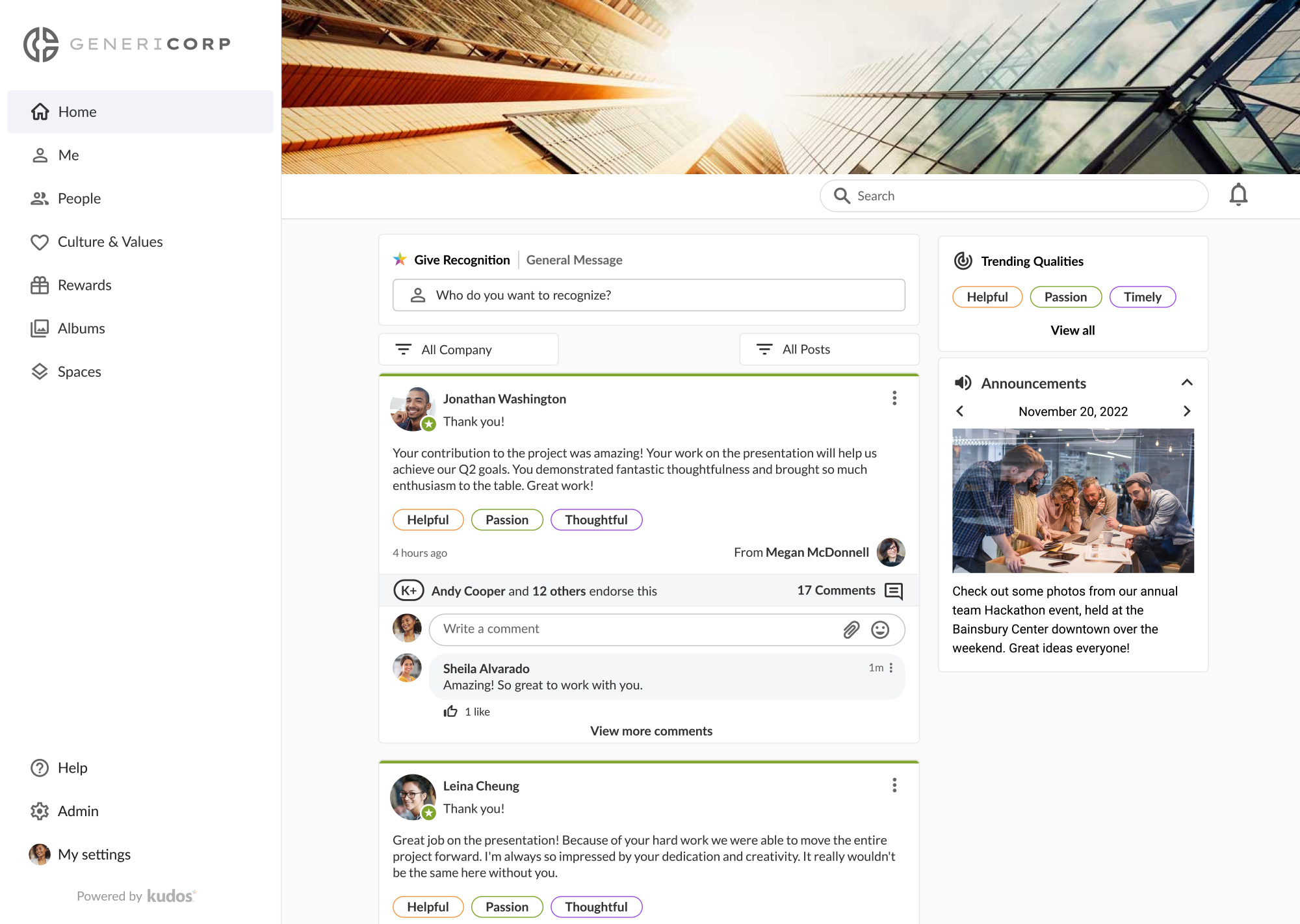
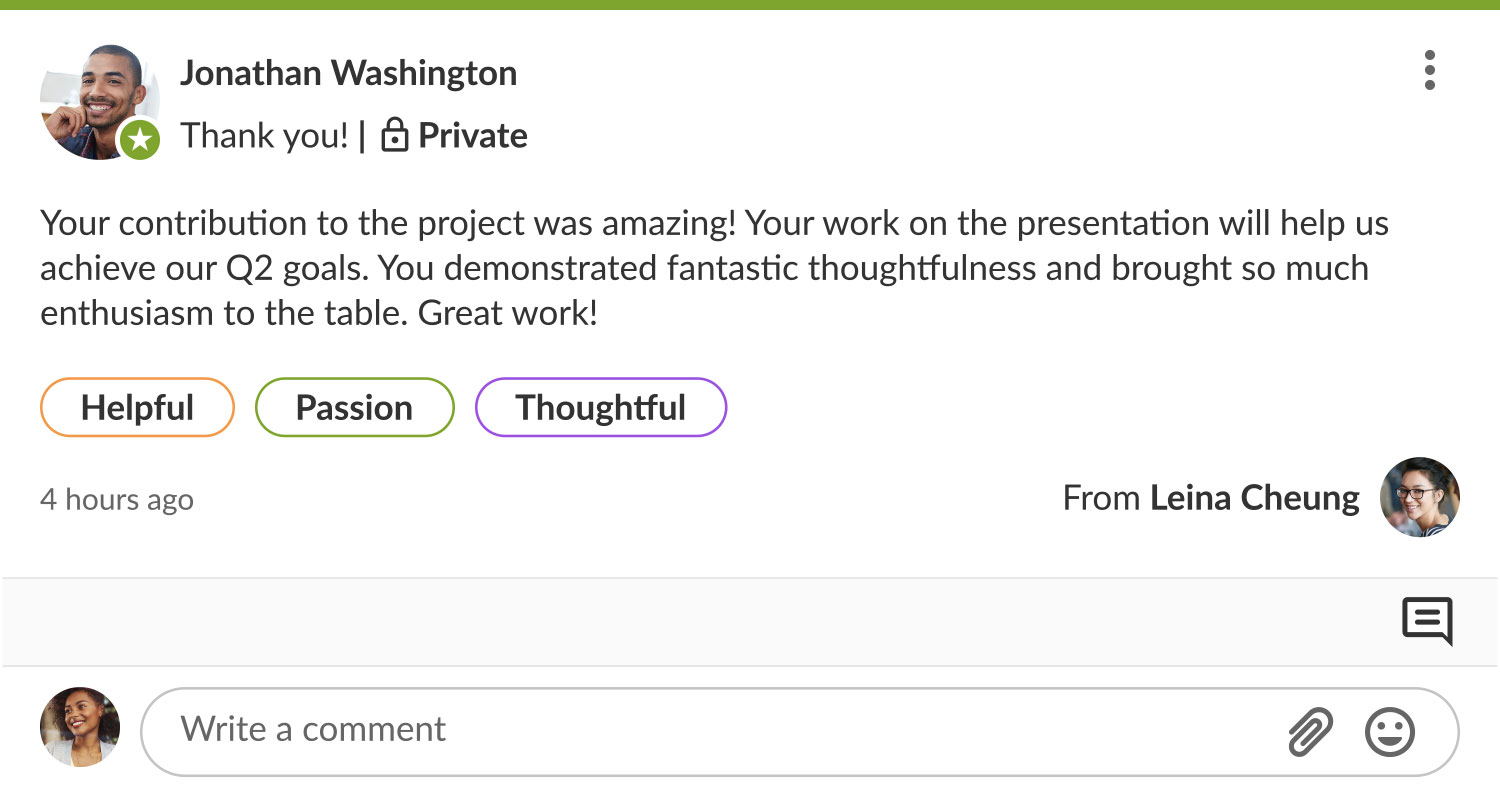
Kudos® is an employee engagement and recognition platform, that harnesses peer-to-peer recognition, casual rewards, values reinforcement, and open communication to help organizations boost employee engagement, reduce turnover, improve culture, and drive productivity and performance.
N/A
Pricing
Brassring
Kudos®
Editions & Modules
No answers on this topic
No answers on this topic
Offerings
Pricing Offerings
Brassring
Kudos®
Free Trial
Yes
No
Free/Freemium Version
No
No
Premium Consulting/Integration Services
No
No
Entry-level Setup Fee
No setup fee
No setup fee
Additional Details
—
Kudos® pricing is based on the number of users and the length of the contract.
Kenexa is is well suited for any organization that has more than 3000 employees globally. I would not recommend this to startups or a growing organization with less than 3000 employees. But once you cross this number, Kenexa becomes useful and is a brilliant tool for global operations - recruiting. I would recommend this tool to any organization that has offices in many countries/geographies as well.
A de minimis incentive was given to thank the reviewer for their time. The incentive was not used to bias or drive a particular response, nor was the incentive contingent on a positive endorsement. More Info
Kudos is especially useful and helpful during project deployment where team members can be awarded kudos and appreciation and motivation for their team efforts in meeting milestones and targets. In some instances, the reward types or gifts may seem irrelevant to some departments in certain regions or my company' operations in other parts of the African continent.
Kenexa allows Boolean key word search within a particular requisition so it makes sifting through a high number of applicants manageable and effective
Kenexa can be tailored to meet individual business needs. During the time we’ve had Kenexa here I’ve used it in support of a few different business segments and for each the way the system was used to “position” candidate statuses have varied based on the individual need of the business. One example is when interviewing a high volume of applicants internationally, we were able to send qualified applicants through to the “event manager” and it would enable the candidate to select his/her interview date/time based on previously submitted options inputted by our Kenexa users.
Kenexa allows one to customize and score questions for each open requisition that applicants complete as they apply. The system then sorts applicants according to the score of candidate answers allowing for easy sorting of top qualified candidates.
One of the most useful aspects of this tool is that it allows you to save the profile of each of the employees individually and to be able to track their activities and give them the recognition they deserve.
Another useful feature of "kudos is that the system allows you to assign badges to each profile based on their job performance.
I also really like that the platform has a dedicated portal for employees. In which they can see their badges, recognitions and awards obtained for their efforts.
A de minimis incentive was given to thank the reviewer for their time. The incentive was not used to bias or drive a particular response, nor was the incentive contingent on a positive endorsement. More Info
BrassRing's application system for candidates is prone to freezing and crashing in the middle of the application causing potential candidates to lose all progress. I filled out the application myself and witnessed these issues first hand, on top of several complaints I received via phone and email from candidates attempting to apply via the BrassRing service. Also, the Parsing system within the application is not capable of pulling any meaningful information out of text documents.
Each user must be added to each job in order for that job, and the candidates in it, to show up in relevant searches. This becomes a problem when a new team member joins the account and needs access to all of the previous openings just so that they can find candidates already in the system. The account I was working on involved literally hundreds of new openings a month, meaning that any movement of personnel on or off the account would mean having to update potentially thousands of old positions just to allow them to be able to mine the ATS for candidates. I don't see any particular reason why someone with access to the system should have to be given access to each individual job. If a particular position needs to be kept confidential for whatever reason then that individual position should be able to be set to only show to authorized recruiters. The rest of the positions should automatically be searchable by anyone with appropriate access to the ATS to allow for basic level candidate mining and movement.
A de minimis incentive was given to thank the reviewer for their time. The incentive was not used to bias or drive a particular response, nor was the incentive contingent on a positive endorsement. More Info
I am confident that the Kenexa product will continue to evolve to meet the needs of our business in an ever changing work environment. The affiliation with IBM also plays a factor as we have a long standing successful relationship with IBM products. We will be looking to integrate other Kenexa products in the near future to streamline our HR processes.
I feel like I am pretty decent with computers and systems. It was fairly easy to use it after about a week or two . But I have seen people struggle with it as well as some people not use it at all. It can be slow at times and not work at times. But Its a fine system.
It is a very basic system. It may be OK for entry level positions only. The practice of removing CVs while the recruitment process is ON is disturbing and there is no one to explain or to inform why it is being done. Even a routine mail is not sent to the client/consultant. I am surprised how this system is continuing without too many complaints.
A de minimis incentive was given to thank the reviewer for their time. The incentive was not used to bias or drive a particular response, nor was the incentive contingent on a positive endorsement. More Info
SF ATS was not available at the time and Taleo was thought to be too expensive. In retrospect, given the amount of customization and leveraging of other vendor technology for things like analytics I suspect any cost advantage we realized evaporated
A de minimis incentive was given to thank the reviewer for their time. The incentive was not used to bias or drive a particular response, nor was the incentive contingent on a positive endorsement. More Info
I used to work at a company called Sparc that developed its own in-house platform called Teamphoria. It was great software that coupled a lot of the same features as workday but also with a recognition system. Essentially it allocated certain types of recognition levels per month, 1 platinum, 5 gold, 20 silvers, where each was worth a drawing ticket. At the end of the month, someone would be drawn from that pool based on their received recognition and then receive a gift card. However, some abused this system and devalued its purpose and inflated the meaning behind it. Kudos seems to do a good job by having a direct point/monetization system which isn't up for random chance. This can help even incentivize employees to go above and beyond, getting them to work harder since they are receiving recognition for it.
A de minimis incentive was given to thank the reviewer for their time. The incentive was not used to bias or drive a particular response, nor was the incentive contingent on a positive endorsement. More Info
A de minimis incentive was given to thank the reviewer for their time. The incentive was not used to bias or drive a particular response, nor was the incentive contingent on a positive endorsement. More Info
A de minimis incentive was given to thank the reviewer for their time. The incentive was not used to bias or drive a particular response, nor was the incentive contingent on a positive endorsement. More Info