Informatica PowerCenter was data integration technology designed to form the foundation for data integration initiatives, application migration, or analytics. It is a legacy product.
N/A
Oracle Data Integrator (ODI)
Score 8.2 out of 10
N/A
Oracle Data Integrator is an ELT data integrator designed with interoperability other Oracle programs. The program focuses on a high-performance capacity to support Big Data use within Oracle.
N/A
Qlik Replicate
Score 10.0 out of 10
N/A
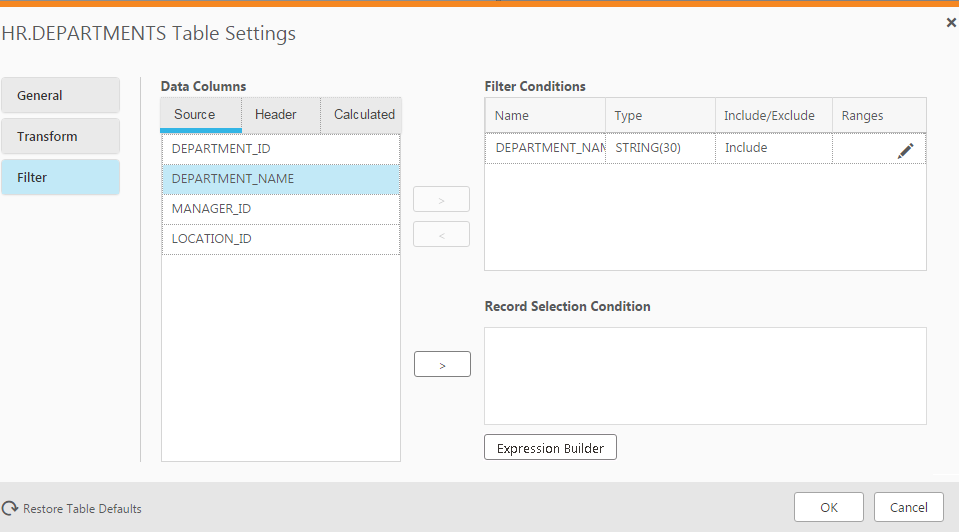
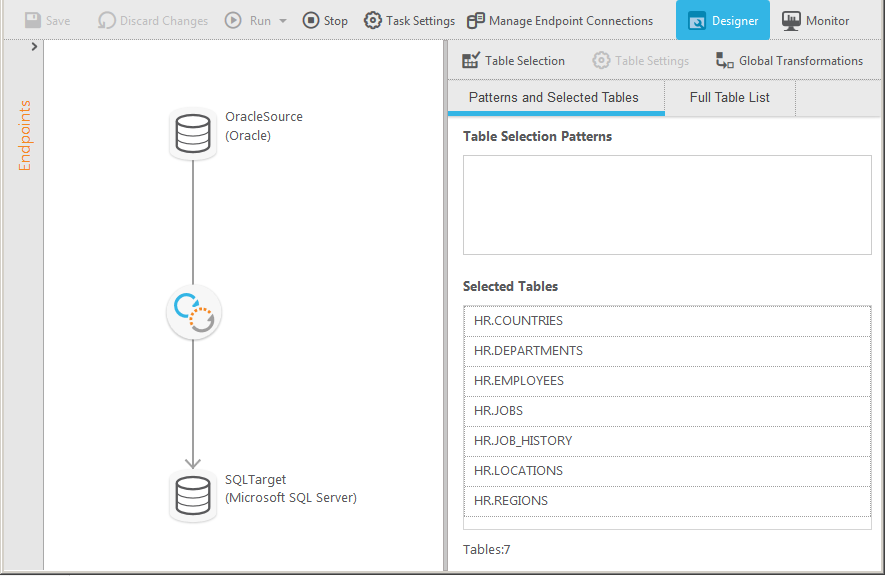
Qlik Replicate enables organizations to accelerate data real-time replication, ingestion and streaming via change data capture, across a wide range of heterogeneous databases, data warehouses and data lake platforms.
Oracle Data Integrator works very well if the rest of your systems are in the Oracle environment. There are some other good alternatives out there, but for what Oracle Data Integrator has to offer, it is good. It is also a little harder to use compared to the other ones I have …
We selected Qlik Replicate because it was the easiest to use with the least network overhead. The team was able to master the application in under an hour--significantly less than IBM or Informatica.
1.- Scenaries with poor sources of data is not recomended (Very bad ROI). The solution is for medium-big enterprises with a lot of sources of data and users. 2.- Bank and finance enviroment to integrate differente data form trading, Regulatory reports, decisions makers, fraud and financial crimes because in this kind of scenary the quality of data is the base of the business. 3.- Departments of development and test of applications in enterprises because you can design enviroments, out of the production systems, to development and test the new API's or updateds made.
Oracle Data Integrator is well suited in all the situations where you need to integrate data from and to different systems/technologies/environments or to schedule some tasks. I've used it on Oracle Database (Data Warehouses or Data Marts), with great loading and transforming performances to accomplish any kind of relational task. This is true for all Oracle applications (like Hyperion Planning, Hyperion Essbase, Hyperion Financial Management, and so on). I've also used it to manage files on different operating systems, to execute procedures in various languages and to read and write data from and to non-Oracle technologies, and I can confirm that its performances have always been very good. It can become less appropriate depending on the expenses that can be afforded by the customer since its license costs are quite high.
Qlik Replicate works very well with relational data platforms, both on premise and in the cloud, for example Oracle, SQL Server, PostgreSQL, MySQL and others, it also works very well with DB2. If the data source is MongoDB, it is more complicated and currently there is no possibility of sending data to MongoDB.
Informatica Powercenter is an innovative software that works with ETL-type data integration. Connectivity to almost all the database systems.
Great documentation and customer support.
It has a various solution to address data quality issues. data masking, data virtualization. It has various supporting tools or MDM, IDQ, Analyst, BigData which can be used to analyze data and correct it.
Oracle Data Integrator nearly addresses every data issue that one can expect. Oracle Data Integrator is tightly integrated to the Oracle Suite of products. This is one of the major strengths of Oracle Data Integrator. Oracle Data Integrator is part of the Oracle Business Intelligence Applications Suite - which is highly used by various industries. This tool replaced Informatica ETL in Oracle Business Intelligence Applications Suite.
Oracle Data Integrator comes with many pre-written data packages. If one has to load data from Excel to Oracle Database, there is a package that is ready available for them - cutting down lot of effort on writing the code. Similarly, there are packages for Oracle to SQL, SQL to Oracle and all other possible combinations. Developers love this feature.
Oracle Data Integrator relies highly on the database for processing. This is actually an ELT tool rather than an ETL tool. It first loads all the data into target instance and then transforms it at the expense of database resources. This light footprint makes this tool very special.
The other major advantage of Oracle Data Integrator, like any other Oracle products, is a readily available developer pool. As all Oracle products are free to download for demo environments, many organizations prefer to play around with a product before purchasing it. Also, Oracle support and community is a big advantage compared to other vendors.
Replicate is extremely stable and does not generate a lot of alerts/failures/issues that take up time to troubleshoot.
It is very easy to add new source tables to a Replicate task so that we're always in sync with new data available from the CRM.
It's nice that Qlik Replicate also allows you to create a job to stop and then restart your tasks during maintenance windows that occur on both the source and target systems.
There are too many ways to perform the same or similar functions which in turn makes it challenging to trace what a workflow is doing and at which point (ex. sessions can be designed as static or re-usable and the override can occur at the session or workflow, or both which can be counter productive and confusing when troubleshooting).
The power in structured design is a double edged sword. Simple tasks for a POC can become cumbersome. Ex. if you want to move some data to test a process, you first have to create your sources by importing them which means an ODBC connection or similar will need to be configured, you in turn have to develop your targets and all of the essential building blocks before being able to begin actual development. While I am on sources and targets, I think of a table definition as just that and find it counter intuitive to have to design a table as both a source and target and manage them as different objects. It would be more intuitive to have a table definition and its source/target properties defined by where you drag and drop it in the mapping.
There are no checkpoints or data viewer type functions without designing an entire mapping and workflow. If you would like to simply run a job up to a point and check the throughput, an entire mapping needs to be completed and you would workaround this by creating a flat file target.
ODI does not have an intuitive user interface. It is powerful, but difficult to figure out at first. There is a significant learning curve between usability, proficiency, and mastery of the tool.
ODI contains some frustrating bugs. It is Java based and has some caching issues, often requiring you to restart the program before you see your code changes stick.
ODI does not have a strong versioning process. It is not intuitive to keep an up to date repository of versioned code packages. This can create versioning issues between environments if you do not have a strong external code versioning process.
The base Replicate web GUI is lacking. If you have dozens or more tasks, it's hard to get a sense of how they're performing. Enterprise Manager solves all of these problems but is a separate install.
The support portal is extremely difficult to navigate. It's hard to track down exactly what you're looking for.
It would be helpful to have better documentation and example queries for the tables in the Enterprise Manager analytics database.
Destination databases that don't support common DDL commands behave unpredictably. And the replication of schema changes isn't consistent.
It is maturing and over time will have a good pool of resources. Each new version has addressed the issues of the previous ones. Its getting better and bigger.
The availability of the replicated data in disparate environments has is now crucial. Replacing a product like Qlik Replicate would require significant time, investments, and work. In addition, Qlik Replicate is reasonably reliable with few failures.
Positives; - Multi User Development Environment - Speed of transformation - Seamless integration between other Informatica products. Negatives; - There should be less windows to maintain developers' focus while using. You probably need 2 big monitors when you start development with Informatica Power Center. - Oracle Analytical functions should be natively used. - E-LT support as well as ETL support.
We now have greater business flexibility and scalability, and our big data integration projects have a quick rate of growth, which has been profitable for us. Independent of the sources involved, maintaining data consistency between sources is easy. One of my favorite features is the way it lets owners of the source system start and stop processes from updating their system windows.
PowerCenter is robust and fast, and it does a great job meeting all the needs, not just the most commercially vocal needs. In the hands of an expert power user, you can accomplish almost anything with your data. It is not for new users or intermittent users-- for that the Cloud version is a better fit. Be prepared for costly connectors (priced differently for each source or destination you are working with), and just be planful of your projects so you are not paying for connectors you no longer need or want
Informatica power center is a leader of the pack of ETL tools and has some great abilities that make it stand out from other ETL tools. It has been a great partner to its clients over a long time so it's definitely dependable. With all the great things about Informatica, it has a bit of tech burden that should be addressed to make it more nimble, reduce the learning curve for new developers, provide better connectivity with visualization tools.
The issue I've had is that Qlik does an awful job of keeping their customers informed when new versions of the software are available. We found that we were using a version that was no longer supported and could never get help. When it came time to get us upgraded so that we were on a current version, no one knew how to help get us to where we needed to be. We had to purchased professional services time and even then I was basically on my own to get everything built out and set up. Qlik needs to be more proactive with communicating about new releases and how to get your version upgraded in the most secure, safe way possible.
Follow the directions from the Qlik documentation. They are pretty straight forward and easy enough to follow. If you follow these, then you are not likely to have issues on implementation.
While Talend offers a much more comfortable interface to work with, Informatica's forte is performance. And on that front, Informatica Enterprise Data Integration certainly leaves Talend in the dust. For a more back-end-centric use case, Informatica is certainly the ETL tool of choice. On the other hand, if business users would be using the tool, then Talend would be the preferred tool.
I have used Trifacta Google Data Prep quite a bit. We use Google Cloud Platform across our organization. The tools are very comparable in what they offer. I would say Data Prep has a slight edge in usability and a cleaner UI, but both of the tools have comparable toolsets.
Great tool for data replication solution for Oracle/SQLServers/etc. Real easy to get it set up and start realizing business value. Getting the PoC accomplished in a short window. Product costing and easy to start small and scale as needed. It helped cover most of our ask compared to other solutions.
The data pipeline automation capability of Informatica means that few resources are needed to pre-process the data that ultimately resides in a Data Warehouse. Once a workflow is implemented, manual intervention is not needed.
PowerCenter did require more resources and time for installation and configuration than was expected/planned for.
The lack of or minimal support of unstructured data means that newer sources of dynamic/changing data cannot be easily processed/transformed through PowerCenter workflows.
Prior to using Qlik Replicate, we used an ETL solution to copy data from the Oracle ERP system to the Microsoft SQL Server BI system at a 15-minute interval. It was very tedious to maintain. Qlik Replicate is much easier to use and we replicate data near real-time now.