Informatica PowerCenter was data integration technology designed to form the foundation for data integration initiatives, application migration, or analytics. It is a legacy product.
N/A
QlikView
Score 8.2 out of 10
N/A
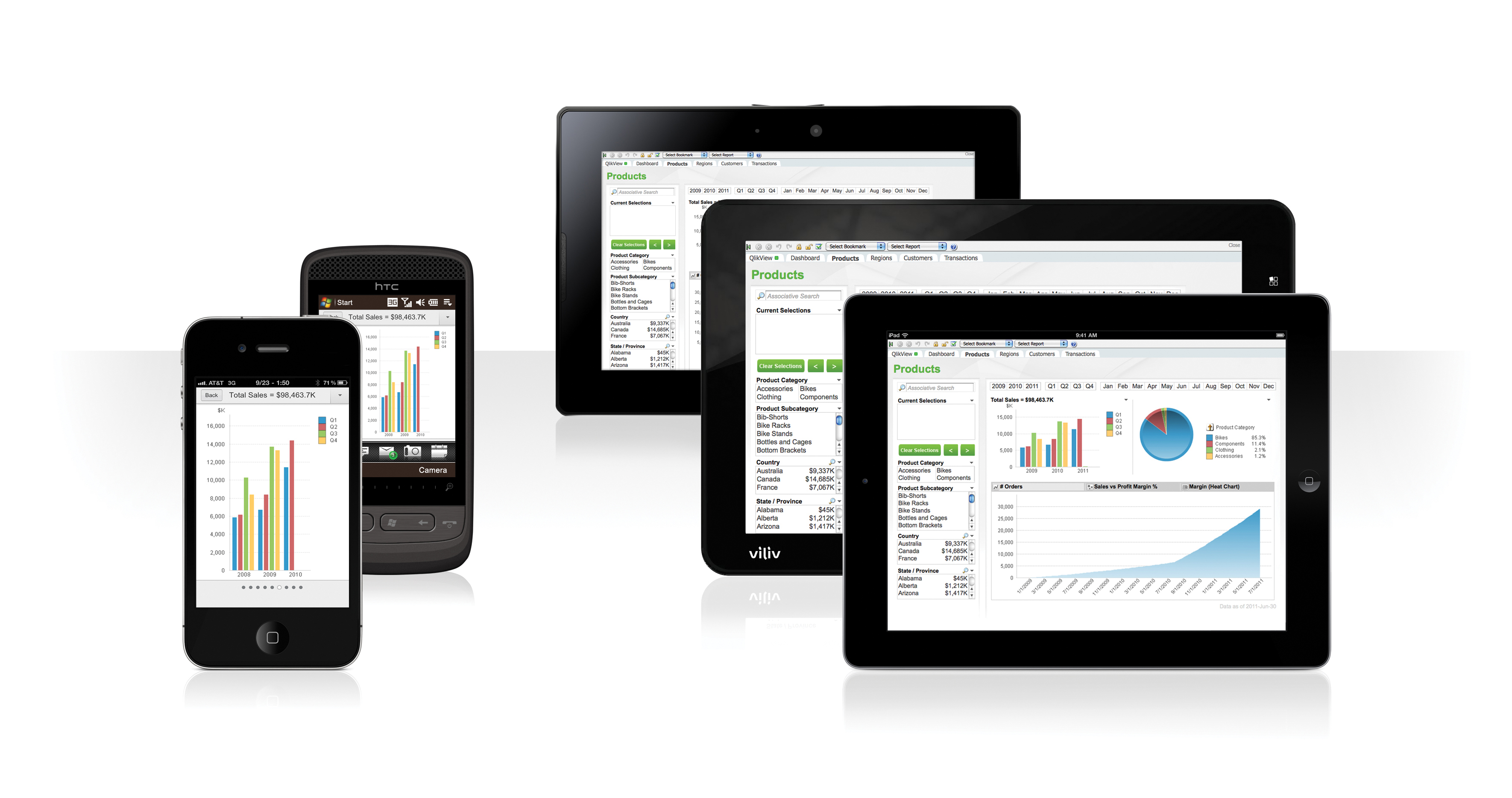
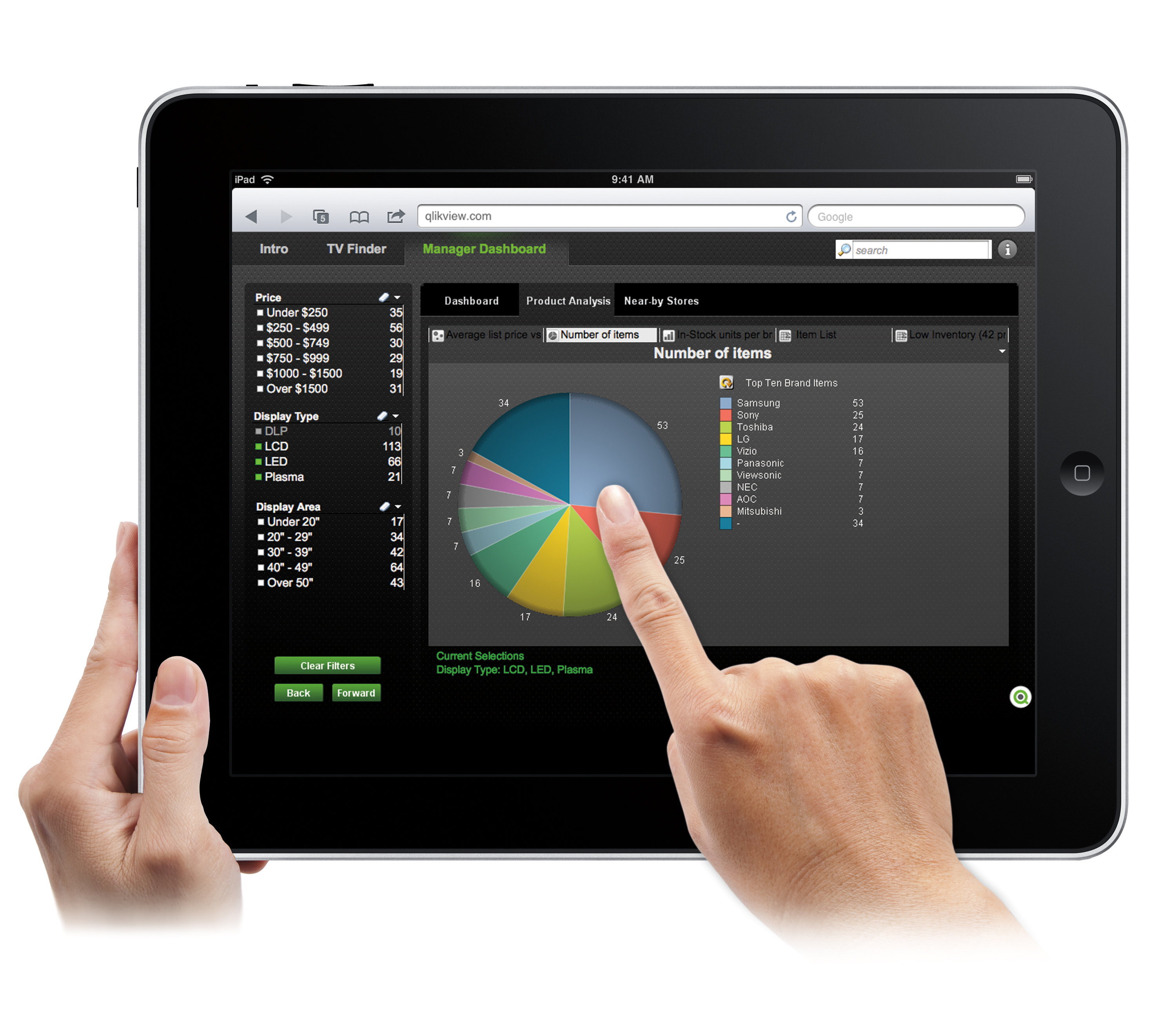
QlikView® is Qlik®’s original BI offering designed primarily for shared business intelligence reports and data visualizations. It offers guided exploration and discovery, collaborative analytics for sharing insight, and agile development and deployment.
N/A
SAS Visual Analytics
Score 7.6 out of 10
Enterprise companies (1,001+ employees)
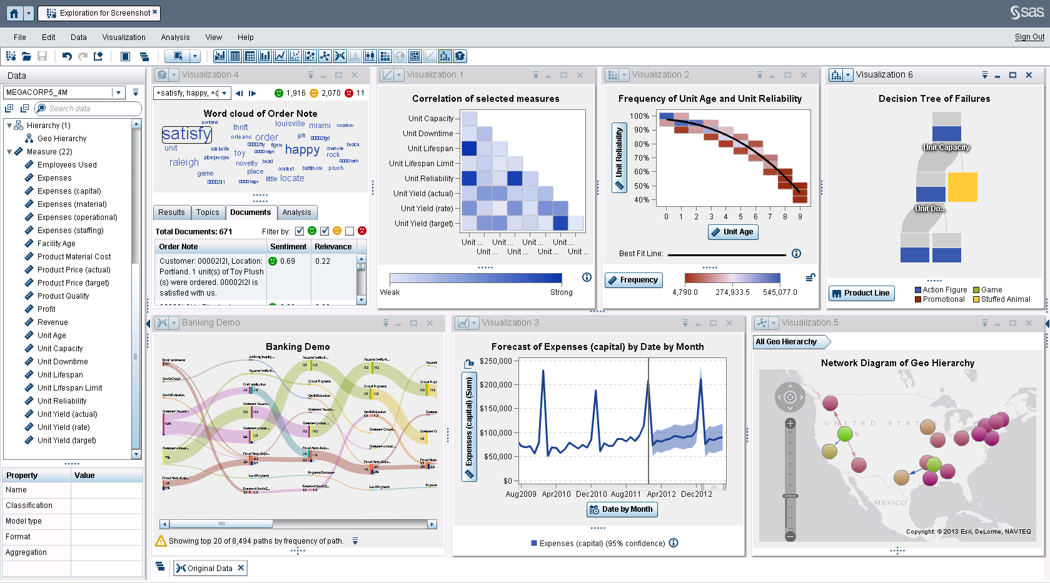
SAS Visual Analytics provides a complete platform for analytics visualization, enabling users to identify patterns and relationships in data that weren't initially evident. Interactive, self-service BI and reporting capabilities are combined with out-of-the-box advanced analytics so everyone can discover insights from any size and type of data, including text.
$0
Annual By Users: 5, 10, 20
Pricing
Informatica PowerCenter (legacy)
QlikView
SAS Visual Analytics
Editions & Modules
No answers on this topic
QlikView
Custom
per user
SAS Visual Analytics for SAS Cloud
Annual By Users: 5, 10, 20
Offerings
Pricing Offerings
Informatica PowerCenter (legacy)
QlikView
SAS Visual Analytics
Free Trial
No
Yes
Yes
Free/Freemium Version
No
No
No
Premium Consulting/Integration Services
No
Yes
Yes
Entry-level Setup Fee
No setup fee
Optional
No setup fee
Additional Details
—
On an perpetual license basis, based on server plus number of users.
Contact vendor for pricing.
SAS Visual Statistics and SAS Office Analytics are also available as add-ons.
More Pricing Information
Community Pulse
Informatica PowerCenter (legacy)
QlikView
SAS Visual Analytics
Considered Multiple Products
Informatica PowerCenter (legacy)
Verified User
Employee
Chose Informatica PowerCenter (legacy)
This is great tool to handle large data in multiple data sources.
QlikView
No answer on this topic
SAS Visual Analytics
Verified User
Engineer
Chose SAS Visual Analytics
We already have lot of SAS products in our organisation like Base SAS, SAS Grid, SAS EG, SAS Studio and Office Add-in. SAS VA works best for our situation.
1.- Scenaries with poor sources of data is not recomended (Very bad ROI). The solution is for medium-big enterprises with a lot of sources of data and users. 2.- Bank and finance enviroment to integrate differente data form trading, Regulatory reports, decisions makers, fraud and financial crimes because in this kind of scenary the quality of data is the base of the business. 3.- Departments of development and test of applications in enterprises because you can design enviroments, out of the production systems, to development and test the new API's or updateds made.
Sales data validations have helped manage our justifications in the past, especially with regard to new product development and new business introduction. It has also been helpful in identifying trends with business impact and direction specific to quarter and monthly sales from ERP data as well as decisions to purchase equipment of staffing based on run rates and product demand.
One thing that can get out of hand is data output - if you aren't careful in your query, you may be overloaded with data dumps and drown in the amount of info you have to filter through. This is a user caution, not a comment on the software itself.
I was in a meeting with the client and there I have to show them some analytic data to them. But I was confused about how I will manage to show big data to clients with accuracy. But then the SAS Visual Analytics software helps me in presenting accurate data at the moment and it was very presentable and through that, I got the deal for that business.
Informatica Powercenter is an innovative software that works with ETL-type data integration. Connectivity to almost all the database systems.
Great documentation and customer support.
It has a various solution to address data quality issues. data masking, data virtualization. It has various supporting tools or MDM, IDQ, Analyst, BigData which can be used to analyze data and correct it.
Provides the flexibility to the end user to slice and dice the data.
Anyone can make predictive models with the help of in-built algorithms without the need to write a single line of code or knowledge of what's under the hood of algorithms.
The feature to simply ask a question related to data and getting a response in form of text, chart or graph is amazing.
There are too many ways to perform the same or similar functions which in turn makes it challenging to trace what a workflow is doing and at which point (ex. sessions can be designed as static or re-usable and the override can occur at the session or workflow, or both which can be counter productive and confusing when troubleshooting).
The power in structured design is a double edged sword. Simple tasks for a POC can become cumbersome. Ex. if you want to move some data to test a process, you first have to create your sources by importing them which means an ODBC connection or similar will need to be configured, you in turn have to develop your targets and all of the essential building blocks before being able to begin actual development. While I am on sources and targets, I think of a table definition as just that and find it counter intuitive to have to design a table as both a source and target and manage them as different objects. It would be more intuitive to have a table definition and its source/target properties defined by where you drag and drop it in the mapping.
There are no checkpoints or data viewer type functions without designing an entire mapping and workflow. If you would like to simply run a job up to a point and check the throughput, an entire mapping needs to be completed and you would workaround this by creating a flat file target.
We found that QlikView can be a bit slow in supporting some forms of encryption. It is web-based and we needed to upgrade all of our server to not support the older SSL and TLS 1 protocols, only support TLS 1.2 and TLS 1.3. However, QlikView could not run with TLS 1.2 and TLS 1.3. We had to wait over six months to get a version that would handle the newer TLS versions.
There are so many options with QlikView that you can get lost when developing a visualization. There are still items I have not yet figured out, such as labeling a graph with the name of a selected detail item.
QlikView works by pulling the data it is going to use for visualization into its database. I am a security reviewer and I need to make certain that PII and PHI is not pulled by QlikView for a visualization, otherwise this could become a reportable indecent.
SAS is relatively expensive when compared to other BI tools and requires a large amount of upfront fee which becomes an issue for smaller organizations.
UI for the dashboards looks a little date in comparison to competitors like Tableau and Microstrategy.
Integration with other open source software like Python needs to be built in.
Ease of use, ability to load from pretty much any data source. today I created an application that loaded time sheets from excel that are not in a table format. With Qlik's "enable transformation steps" I was able to automate loads of multiple spreadsheets and multiple tabs easily. Could not do that with any other tool.
SAS really is the cutting edge in Business Intelligence. That is all they do! They are constantly coming out with new products, product upgrades, and their tech support is second to none. In addition, their support of Education has made our ability to acquire their product possible.
Positives; - Multi User Development Environment - Speed of transformation - Seamless integration between other Informatica products. Negatives; - There should be less windows to maintain developers' focus while using. You probably need 2 big monitors when you start development with Informatica Power Center. - Oracle Analytical functions should be natively used. - E-LT support as well as ETL support.
QlikView is very easy to implement. The installation is very straight forward. QlikView has several different data connectors that can connect to different data sources very smoothly. The user interface to build the reports is very easy to understand. This helps to have a smaller learning curve. Something very helpful is that QlikView is a browser application for the end users. So, you don't need to install any applications on the user's computer.
SAS BI is good for creating reports and dashboards and then sharing it with the users. It also has ability to manage access to the reports and dashboards but somehow with most of the world moving to open source languages R, Python and Julia, SAS BI feels to be archaic in terms of feature set and integrations it allow[s]. Also, comparing it with other Business Intelligence tools like Tableau and Microsoft BI, the functionality of SAS BI is very limited and doesn't justify the pricing.
PowerCenter is robust and fast, and it does a great job meeting all the needs, not just the most commercially vocal needs. In the hands of an expert power user, you can accomplish almost anything with your data. It is not for new users or intermittent users-- for that the Cloud version is a better fit. Be prepared for costly connectors (priced differently for each source or destination you are working with), and just be planful of your projects so you are not paying for connectors you no longer need or want
Informatica power center is a leader of the pack of ETL tools and has some great abilities that make it stand out from other ETL tools. It has been a great partner to its clients over a long time so it's definitely dependable. With all the great things about Informatica, it has a bit of tech burden that should be addressed to make it more nimble, reduce the learning curve for new developers, provide better connectivity with visualization tools.
My experience with the Qlik support team has been somewhat limited, but every interaction I have had with them has been very professional and I received a response quickly. Typically if there is a technical issue, our IT team will follow up. My inquiries are specific to product functionality, and Qlik has been very helpful in clarifying any questions I might have.
When you call tech support, you are immediately routed to a person who can answer your question. Often they can answer on the spot. However, if they cannot, you are given a track number and then followed up with. There have been times when I have had multiple track numbers open and they will actually TRACK YOU DOWN to ensure that your problem has been resolved. Issues do not fall into black holes with SAS. They are also willing to do a WebEx with you to diagnose the problem by seeing your environment, which is always helpful.
My team attended, but I cannot myself rate, but I think it was good as they've successfully launched a training program at our company themselves for users. It was 3-4 day training.
Training was as expected. The demo environments tend to be more fully featured that our own environment, but the training was clear and well delivered.
"Implementation" can mean a few things... so I'm not sure that this is the answer you want.... but here it goes: To me, implementation means: "Is the user interface intuitive and can I produce meaningful reports with ease?" On that score, I'd say YES. The amount of training required was minimal and the results were powerful. The desktop implementation is a simple, "blank" interface just waiting for your creativity. The pre-populated templates give you a reasonable start to any project -- and a good set of objects to "play around with" if you're just getting started. Finally, note that the "implementation" I used was baked into QuickBooks 2016 Enterprise -- called "Advanced Reporting"..... That integration makes it ultra useful and simple.
While Talend offers a much more comfortable interface to work with, Informatica's forte is performance. And on that front, Informatica Enterprise Data Integration certainly leaves Talend in the dust. For a more back-end-centric use case, Informatica is certainly the ETL tool of choice. On the other hand, if business users would be using the tool, then Talend would be the preferred tool.
The only other vendor product that I have worked with that provides a similar experience to Qlikview is Tableau. I would recommend Tableau if your use case is to build a fixed dashboard. You can share reports for free without needing to buy additional licenses. I would recommend Qlikview if your users are looking for a more interactive experience. They can create new objects to represent the data which can't be accomplished as easily in Tableau
I have used Crystal Reports, Jaspersoft and SQL Server Reporting Services (SSRS). I would recommended Business Intelligence over SSRS and Crystal Reports. SSRS is very SQL-centric and Crystal Reports is more of an end-user tool. I would recommend Jaspersoft over Business Intelligence for developing a seamless web-based reporting interface but I highly recommend Business Intelligence for end-user ad-hoc reporting.
The data pipeline automation capability of Informatica means that few resources are needed to pre-process the data that ultimately resides in a Data Warehouse. Once a workflow is implemented, manual intervention is not needed.
PowerCenter did require more resources and time for installation and configuration than was expected/planned for.
The lack of or minimal support of unstructured data means that newer sources of dynamic/changing data cannot be easily processed/transformed through PowerCenter workflows.
You can use the free desktop version to do a lot of reporting and analysis work more quickly so the ROI is huge
QlikView is great at finding outliers such as data entry errors
QlikView is great at helping you quickly discover new insights about your business that can prompt you to take action that can immediately affect your cash flow.