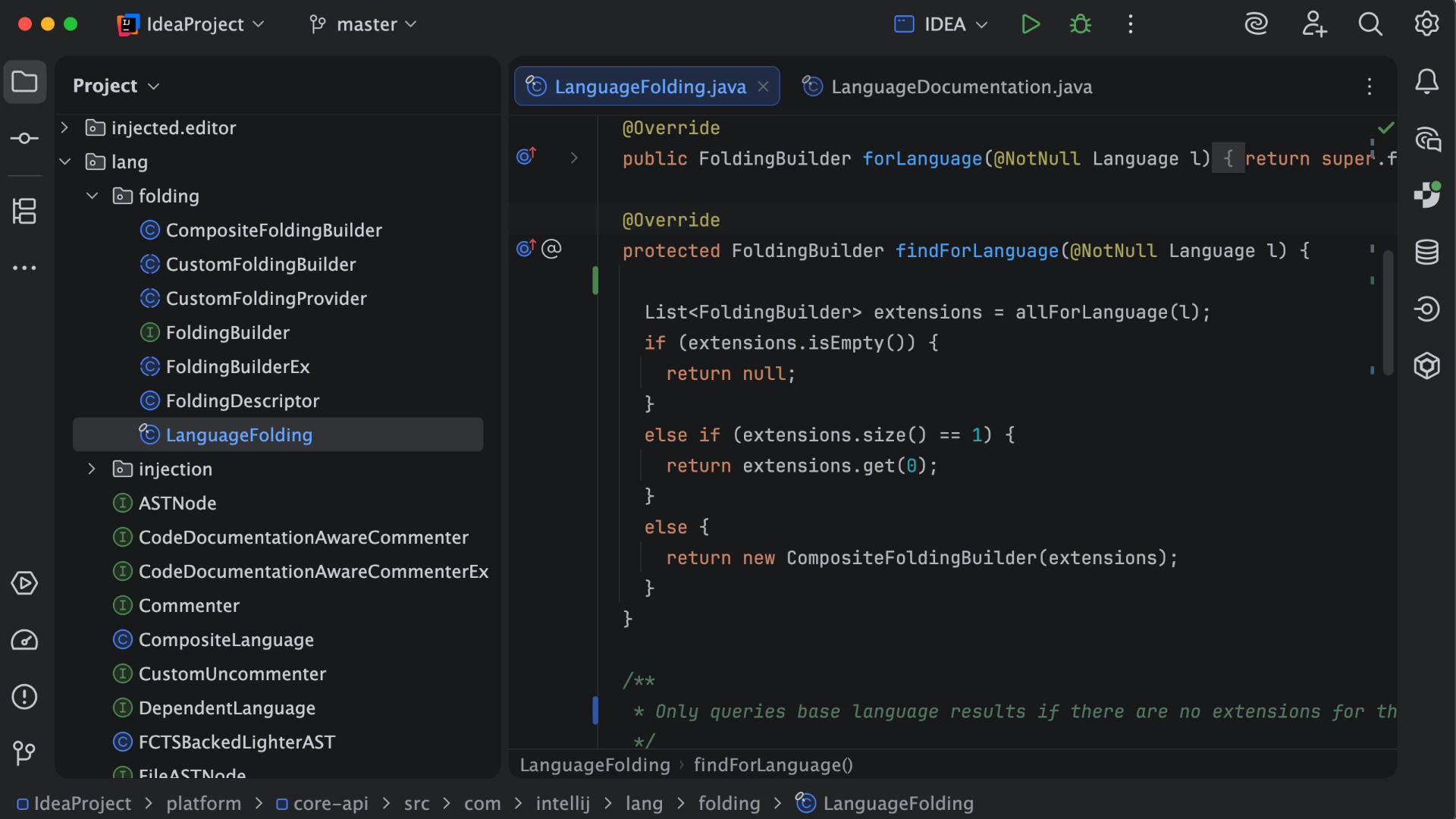
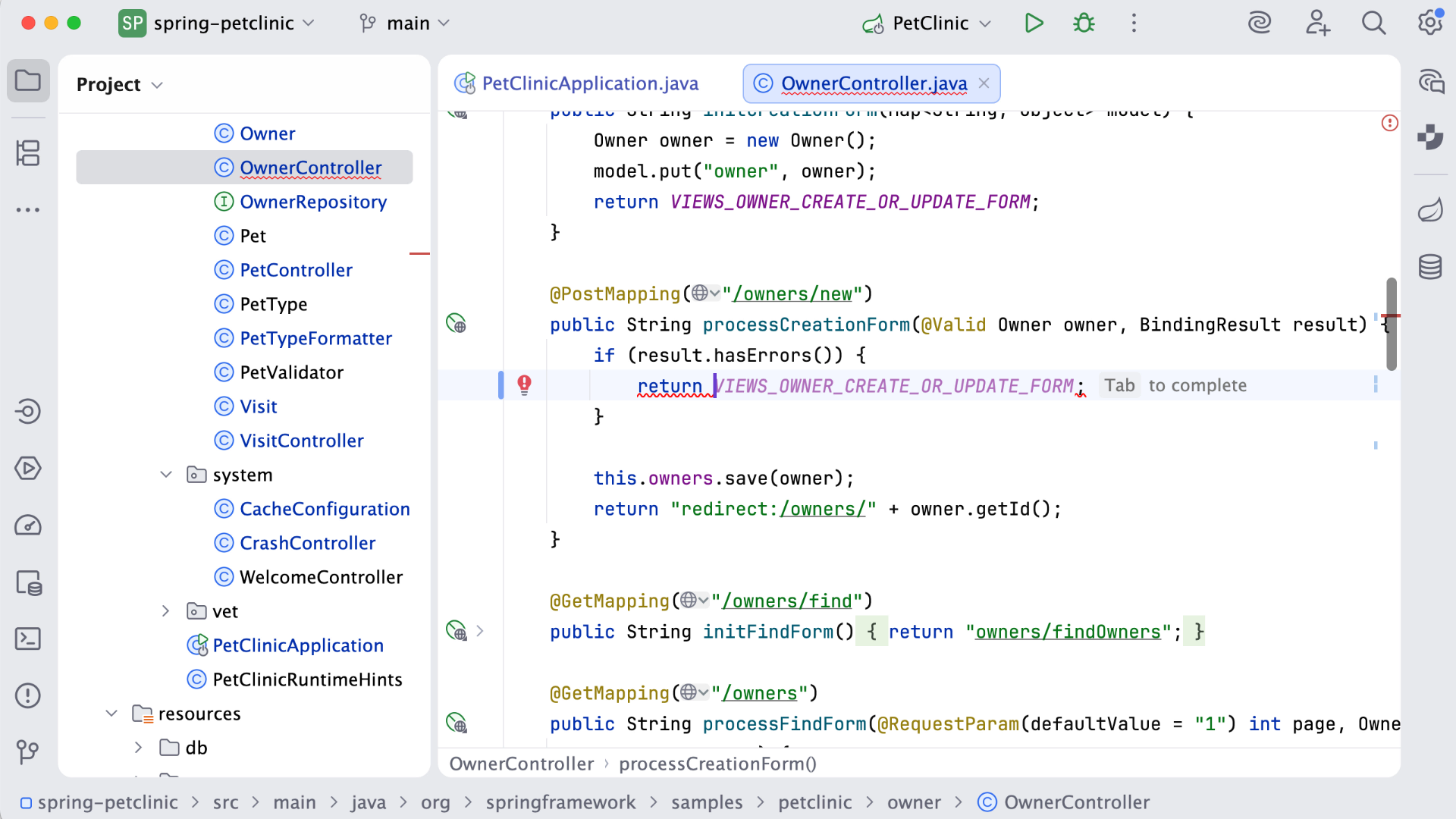
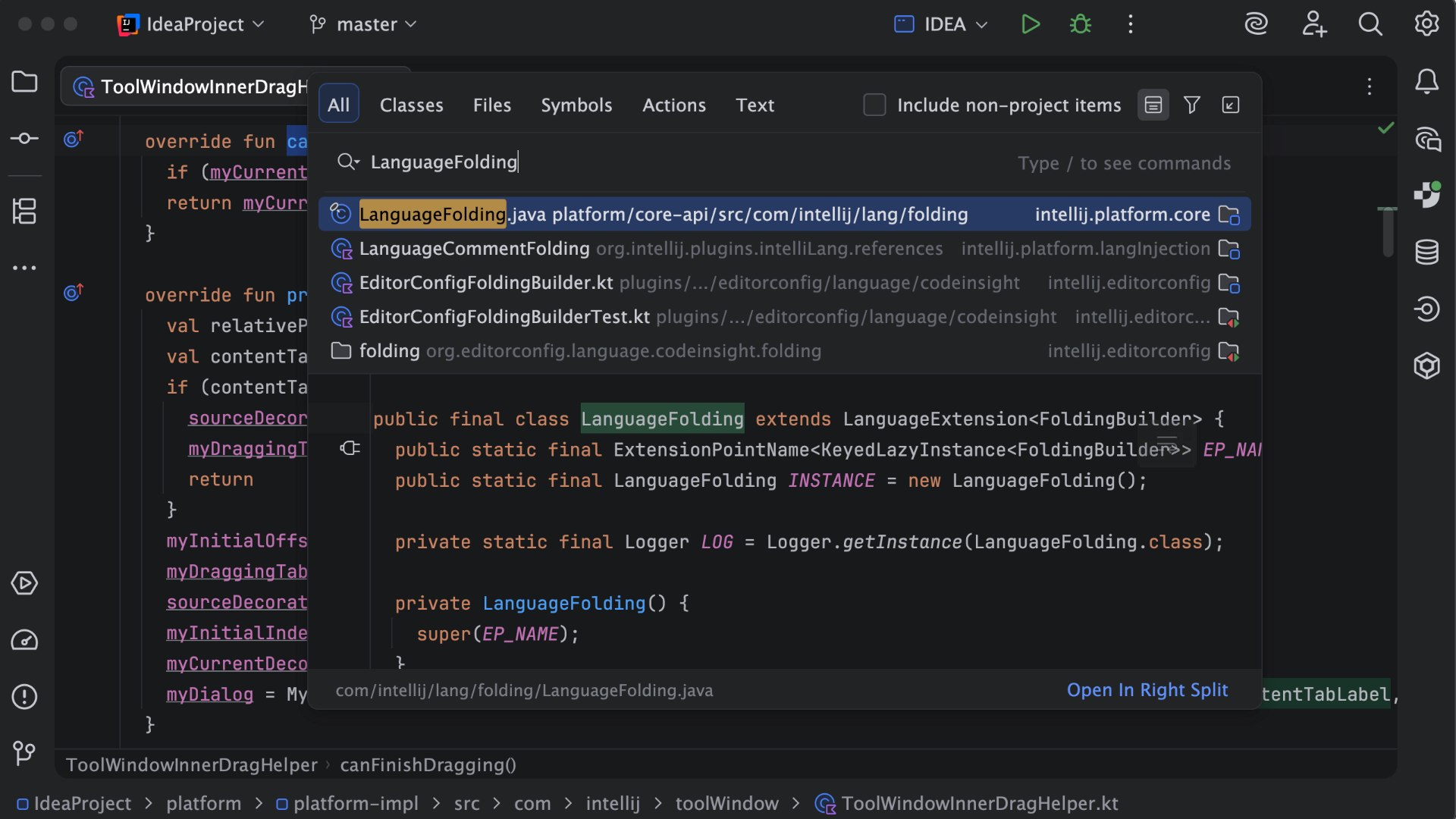
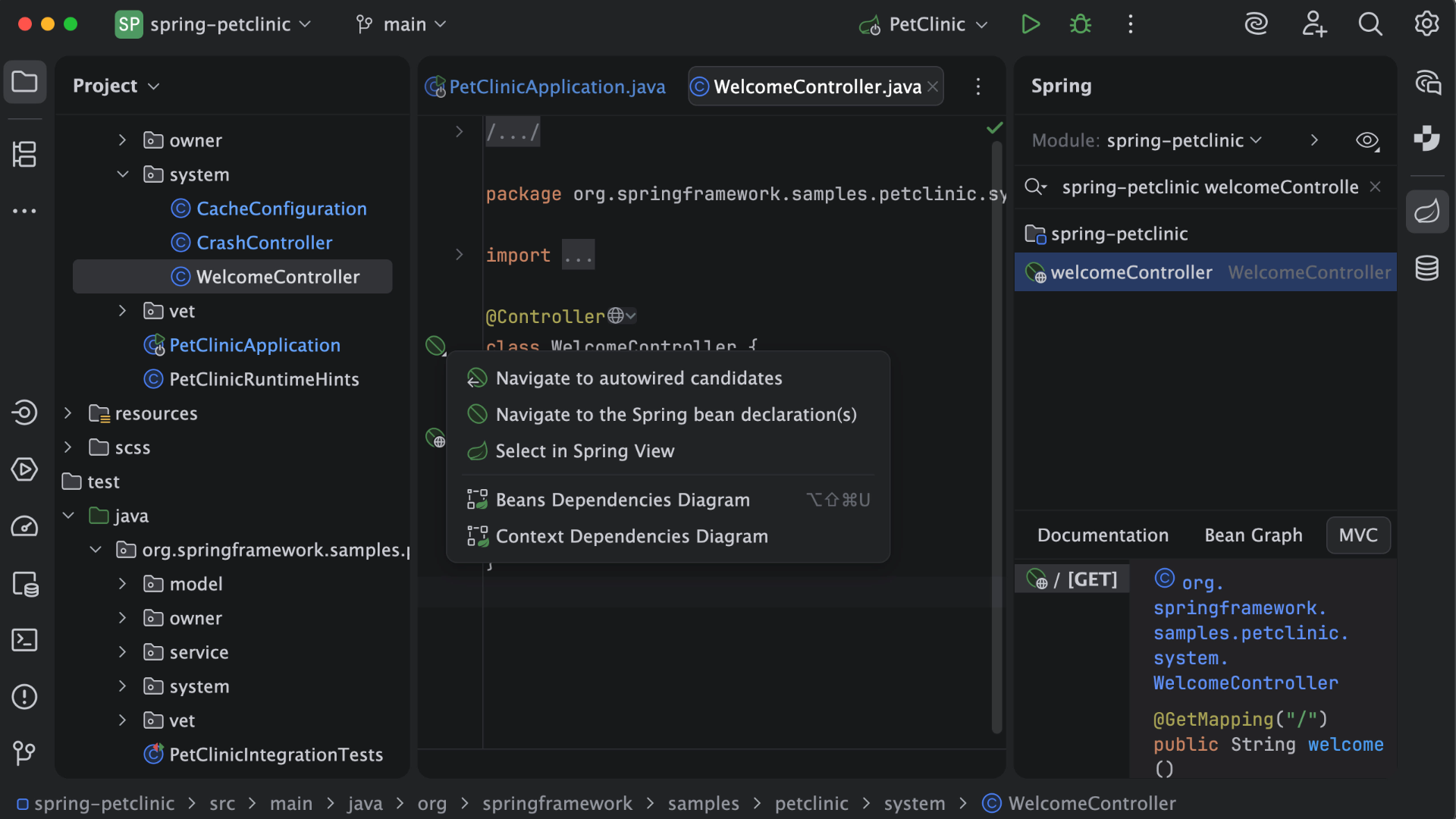
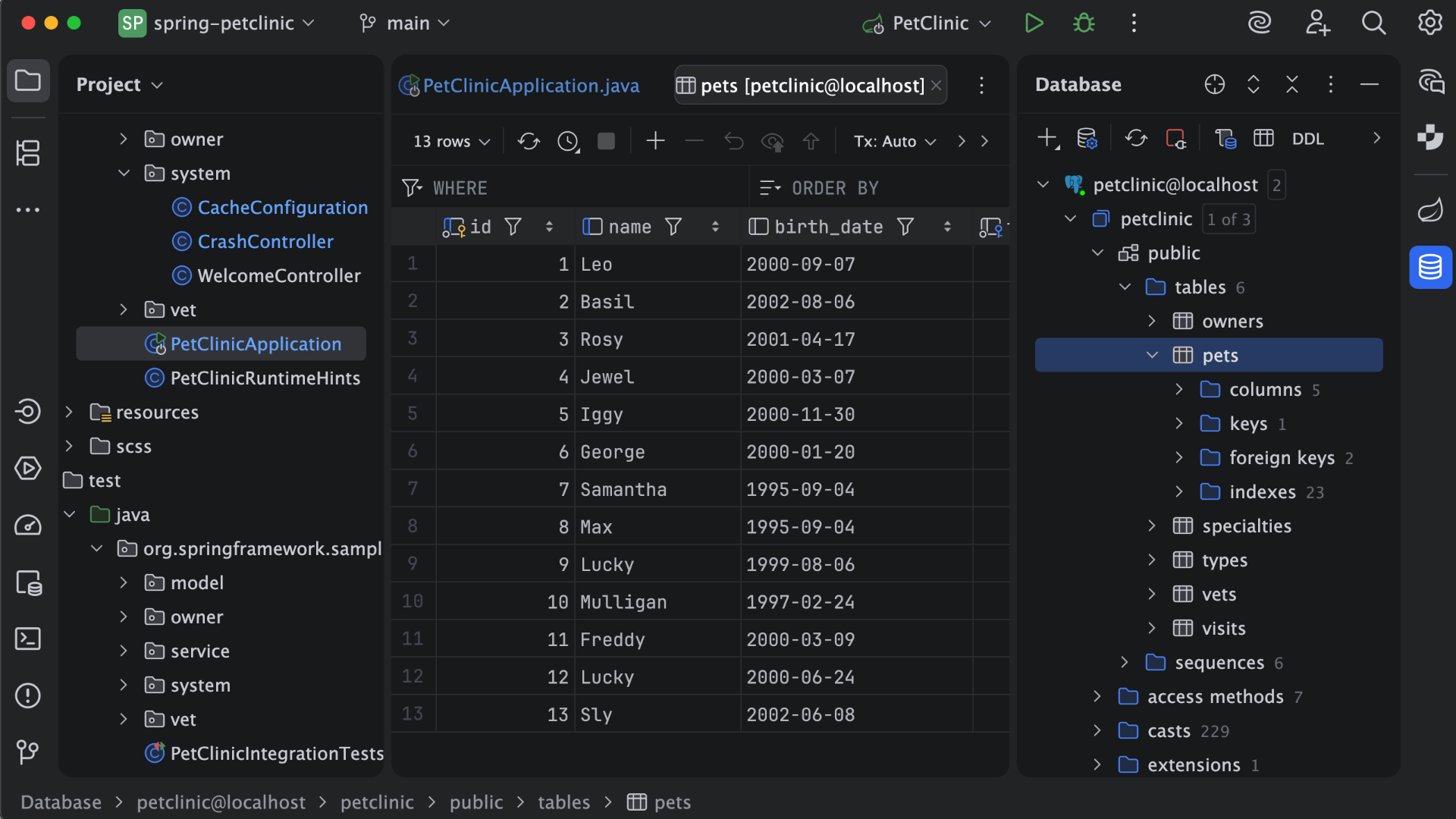
IntelliJ IDEA is an IDE that aims to give Java and Kotlin developers everything they need out of the box, including a smart code editor, built-in developer tools, framework support, database support, web development support, and much more.
$19.90
per month
SharePoint Designer (discontinued)
Score3 out of 10
N/A
Microsoft's SharePoint Designer was a tool for developing SharePoint applications that has been discontinued.
N/A
Pricing
IntelliJ IDEA
SharePoint Designer (discontinued)
Editions & Modules
For Individual Use (Monthly billing)
$19.90
per month
For Organizations (Monthly billing)
$71.90
per month
For Individual Use (Yearly billing)
$199
per year
For Organizations (Yearly billing)
$719
per year
No answers on this topic
Offerings
Pricing Offerings
IntelliJ IDEA
SharePoint Designer (discontinued)
Free Trial
Yes
No
Free/Freemium Version
Yes
No
Premium Consulting/Integration Services
No
No
Entry-level Setup Fee
No setup fee
No setup fee
Additional Details
All Products Pack (For Individual Use) – $299 /1st year, $ 239 /2nd year and $ 179 /3d year onwards
All Products Pack (For Organizations) – $979 / year
This is a superb tool if your project involves a lot of backend development, especially in Java/Spring Boot and Kotlin. The support for the front end is great as well, but some developers may prefer to use the GitHub copilot add-on. I especially love using the GitHub copilot add-on. It may be less appropriate if your project requires heavy use of HotSwaps for backend debugging, as sometimes the support for that can be limited.
A de minimis incentive was given to thank the reviewer for their time. The incentive was not used to bias or drive a particular response, nor was the incentive contingent on a positive endorsement. More Info
SharePoint does not provide, out of the box, a tool to create / update workflows from web. You have to use SharePoint Designer in order to create them. If you need to implement custom workflows for specific business processes, then SharePoint Designer is well suited. SharePoint Designer allows you to create workflows with task approval, email notifications, assign variables and update SharePoint Lists / Documents properties. In our company, we have created specific workflows for : - Purchase order - RH forms validation like annual employee review - Dematerialized existing forms and validation
A de minimis incentive was given to thank the reviewer for their time. The incentive was not used to bias or drive a particular response, nor was the incentive contingent on a positive endorsement. More Info
Unit testing: Fully integrated into IntelliJ IDEA. Your unit tests will run smoothly and efficiently, with excellent debugging tools for when things get tricky.
Spring integration: Our Spring project using Maven works flawlessly in IntelliJ IDEA. I know firsthand that Apache is also easily and readily supported too. The integration is seamless and very easy to set up using IntelliJ IDEA's set up wizard when importing new projects.
Customization: IntelliJ IDEA comes out of the box with a bunch of handy shortcuts, as well as text prediction, syntax error detection, and other tools to help keep your code clean. But even better is that it allows for total customization of shortcuts you can easily create to suit your needs.
A de minimis incentive was given to thank the reviewer for their time. The incentive was not used to bias or drive a particular response, nor was the incentive contingent on a positive endorsement. More Info
2013 Workflows - Loops: You can build loops to work while a value (not) equals something, or N number of times. You can insert Parallel Blocks to do multiple things at once, or to watch for multiple things, and when 1 thing finishes, cancels the others and moves to the next step or stage.
2013 Workflows - Stages: Previously all we had were steps, which worked sequentially. With the Concept of Stages, we can create blocks of steps and based on the data collected during those functions, we can tell the workflow to go to a different Stage in the workflow based on a set of 1, or multiple, Conditionals in a transition area after each Stage. Giving you the power to develop multiple entire processes and skipping to the correct part of the workflow, rather than going through 20 conditionals to find out you needed to do action 31.
2013 Workflows - REST API: the "Call HTTP Web Service" is a very powerful tool, but hard to understand if you have never seen it done, or have a guideline. It works very similar to the requirements in PowerShell to connect and get and post data to SharePoint using the Rest API. You can also use this to manage permissions on List Items, Lists, Sites, and Site Collections. Best part is when developed correctly, it is SUPER FAST!
Intentionally Building Infinite Loops: I have built multiple review process from Managing Certifications to Updating Published Documentation, that monitors when an Item, based on provided approved metadata, when the "Author" needs to review the document within the given amount of time. They will get e-mails with links asking if changes are needed. If not, it is routed to the Approving Executive, and the Workflow Automatically updates the Metadata to push out the review dates to the next date, based on metadata provided on how how often the document should be reviews. By using conditionals in the transition of stages, it basically starts over, and goes into a parallel block to allow the monitoring of multiple values of metadata to move to the next stage. Very Powerful when you want to automate these types of process. It truly is a "Set It and Forget It" process.
A de minimis incentive was given to thank the reviewer for their time. The incentive was not used to bias or drive a particular response, nor was the incentive contingent on a positive endorsement. More Info
A de minimis incentive was given to thank the reviewer for their time. The incentive was not used to bias or drive a particular response, nor was the incentive contingent on a positive endorsement. More Info
In the newest version of SharePoint Designer, they have gotten rid of the Design view which makes what used to be quick and easy changes much more code-intensive. This makes it harder for non-IT users and is more risker for all SharePoint Designer users.
SharePoint Designer workflows have a lot of functionality, but there are also some crucial limitations, such as not being able to put lookup fields in email subjects or using parenthesis to separate/group logical conditions.
Although this goes along with the Design view, there really isn't a good user interface anymore for adding conditional formatting and styles in views/pages.
A de minimis incentive was given to thank the reviewer for their time. The incentive was not used to bias or drive a particular response, nor was the incentive contingent on a positive endorsement. More Info
VS Code is maturing and has a Scala plugin now. The overall experience with VS Code - for web development at least - is very snappy/fast. IntelliJ feels a bit sluggish in comparison. If that Scala plugin for VS Code is deemed mature enough - we may not bother renewing and resort to the Community Edition if we need it.
A de minimis incentive was given to thank the reviewer for their time. The incentive was not used to bias or drive a particular response, nor was the incentive contingent on a positive endorsement. More Info
A de minimis incentive was given to thank the reviewer for their time. The incentive was not used to bias or drive a particular response, nor was the incentive contingent on a positive endorsement. More Info
There is always room for improvement, but I haven't met any IDE that I liked more so far. Even if it did not fit a use case right out of the box, there is always a way to configure how it works to do just that.
A de minimis incentive was given to thank the reviewer for their time. The incentive was not used to bias or drive a particular response, nor was the incentive contingent on a positive endorsement. More Info
Customer support is really good in the case of IntelliJ. If you are paying for this product then, the company makes sure that you will get all the services adequately. Regular update patches are provided to improve the IDE. An online bug report makes it easier for the developers to find the solution as fast as possible. The large online community also helps to find the various solutions to the issues.
A de minimis incentive was given to thank the reviewer for their time. The incentive was not used to bias or drive a particular response, nor was the incentive contingent on a positive endorsement. More Info
Support is good from Microsoft. They are quite responsive when we raise a ticket but SP Designer support will be ended by Microsoft in the near future as they have got new techs like PowerApps and Flow to achieve the same functionality SP Designer does and even more than that.
A de minimis incentive was given to thank the reviewer for their time. The incentive was not used to bias or drive a particular response, nor was the incentive contingent on a positive endorsement. More Info
This installs just like any other application - its pretty straight forward. Perhaps licensing could be more challenging - but if you use the cloud licensing they offer its as simple as having engineers login to the application and it just works.
A de minimis incentive was given to thank the reviewer for their time. The incentive was not used to bias or drive a particular response, nor was the incentive contingent on a positive endorsement. More Info
Eclipse is just so old, like a dinosaur, compared to IntelliJ. There are still formats that Eclipse supports better, especially old and/or propriety ones. Still, most of the modern software development needs can be done on IntelliJ, & in a much better way, some of them are not even supported on Eclipse.
A de minimis incentive was given to thank the reviewer for their time. The incentive was not used to bias or drive a particular response, nor was the incentive contingent on a positive endorsement. More Info
I haven't used anything else like this. I use different products for workflows and forms, but they aren't listed in the listings for this page. Instead of using it for workflows or forms (deprecated 2 years ago), I use Nintex. For everything else, I have what I need in the Modern version of SharePoint online
A de minimis incentive was given to thank the reviewer for their time. The incentive was not used to bias or drive a particular response, nor was the incentive contingent on a positive endorsement. More Info
A de minimis incentive was given to thank the reviewer for their time. The incentive was not used to bias or drive a particular response, nor was the incentive contingent on a positive endorsement. More Info
For my needs, I have not found SharePoint Designer useful for my day to day maintenance of SharePoint. It is useful for viewing all the objects that make up the SharePoint site.
It is not as intuitive in regard to setting up Workflows. I have yet to use it to set up workflows in SharePoint. Maybe if I needed more complex workflows, it would be beneficial.
I like to use SharePoint Designer for moving around files within SharePoint sites.
A de minimis incentive was given to thank the reviewer for their time. The incentive was not used to bias or drive a particular response, nor was the incentive contingent on a positive endorsement. More Info