Jenkins is an open source automation server. Jenkins provides hundreds of plugins to support building, deploying and automating any project. As an extensible automation server, Jenkins can be used as a simple CI server or turned into a continuous delivery hub for any project.
N/A
Octopus Deploy
Score 9.1 out of 10
Mid-Size Companies (51-1,000 employees)
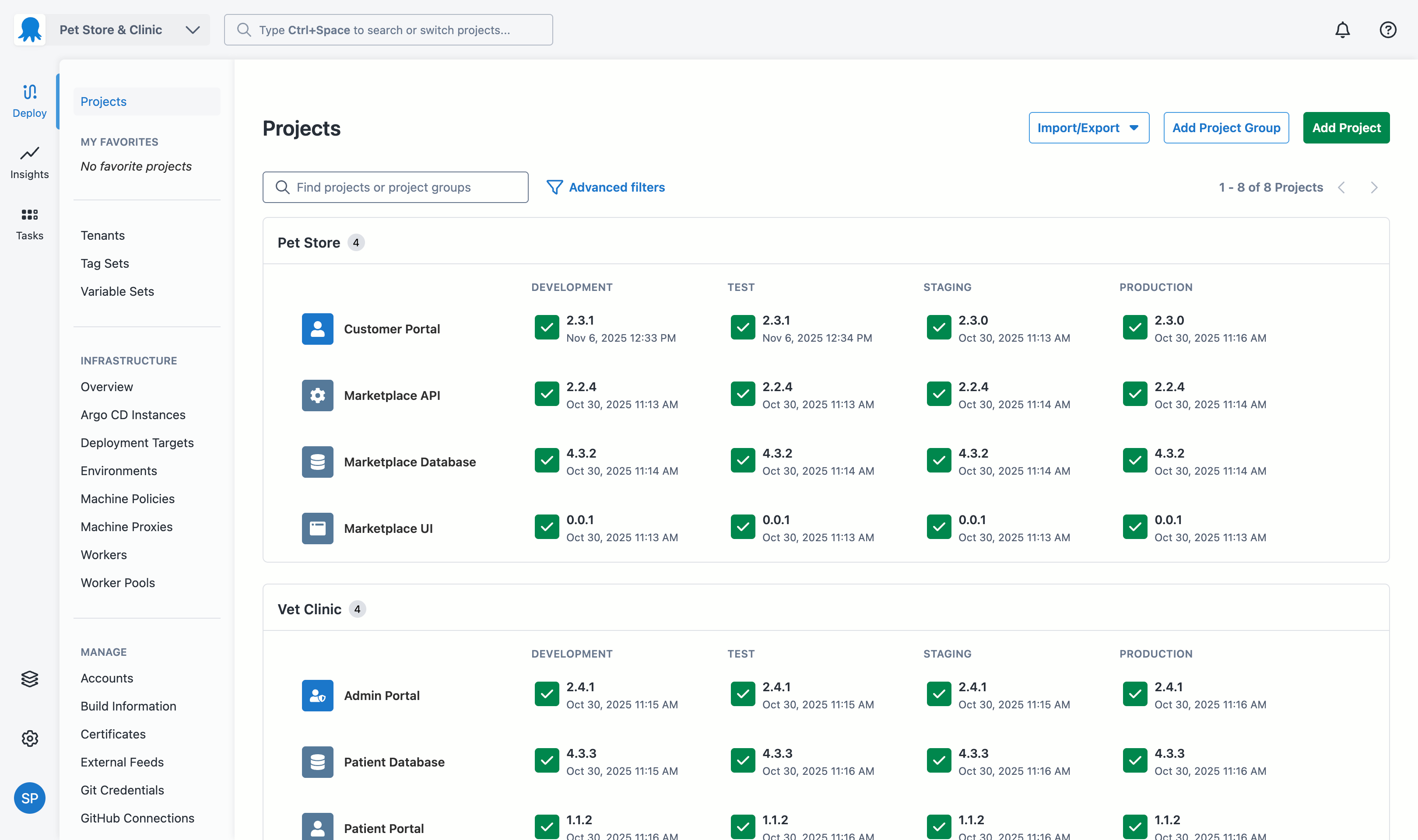
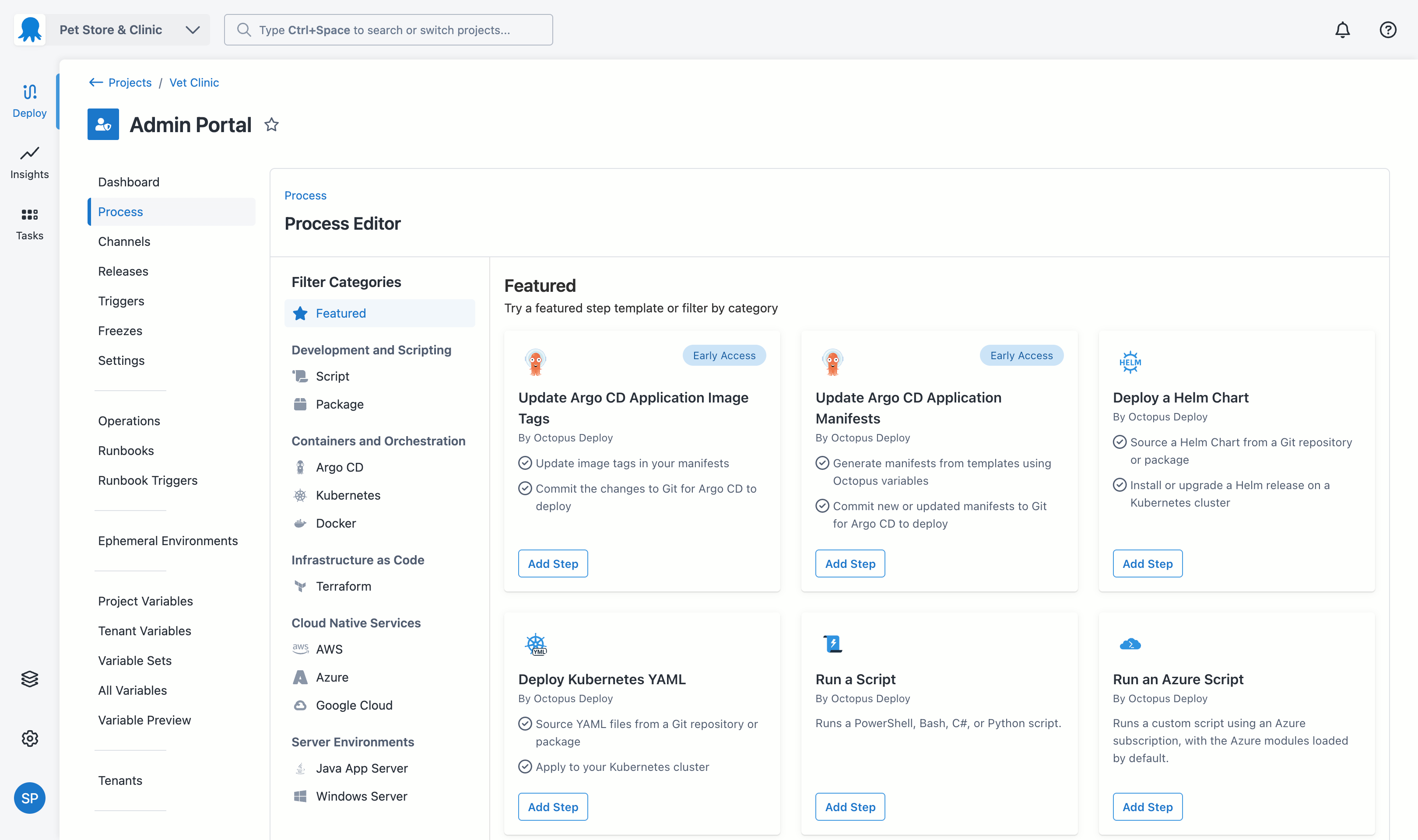
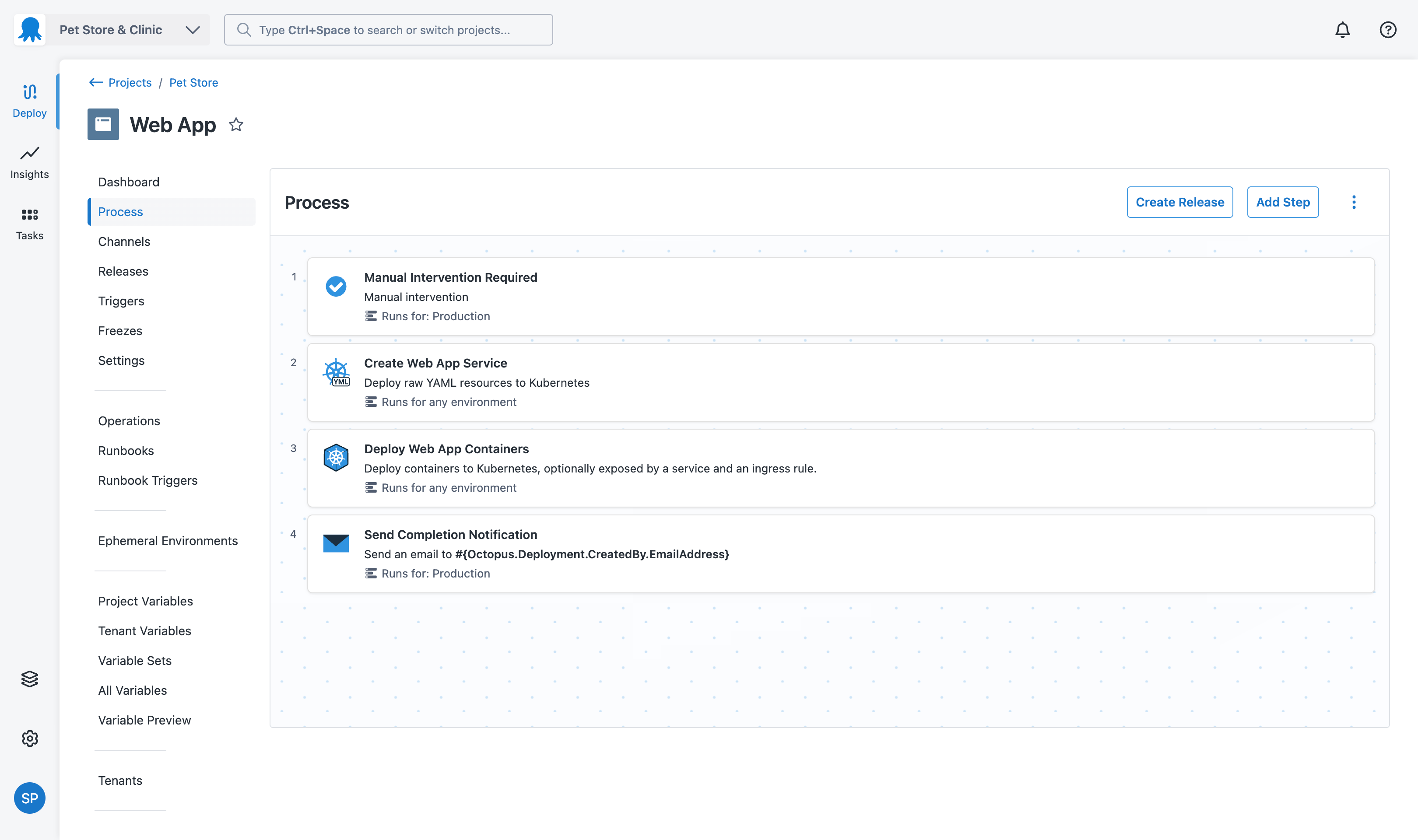
Australian company Octopus Deploy offers their eponymous automated deployment and release management software that integrates with the user's preferred CI server and adds deployment & ops automation capabilities. Octopus Deploy enables developers, release managers, and operations folks to bring all automation into a single place. The vendor states that by reusing configuration variables, environment definition, API keys, connection strings, permissions, service principals, and automation logic,…
$0
per month
Perforce Puppet
Score 8.5 out of 10
N/A
Puppet Enteprise is an IT automation and configuration management solution that enables users to manage and automate infrastructure and complex workflows. The vendor states Puppet Enterprise combines both model‑based and task-based capabilities in a way that enables organizations to scale their multi-cloud infrastructure as their automation footprint grows, with more flexibility from both agent-based and agentless capabilities.
N/A
Pricing
Jenkins
Octopus Deploy
Perforce Puppet
Editions & Modules
No answers on this topic
Octopus Server - Professional
$1920
per year starting with 20 projects
Octopus Cloud - Professional
$4170
per year starting with 20 projects
Octopus Server - Enterprise
$14400
per year starting with 100 projects
Octopus Cloud - Enterprise
$23400
per year starting with 100 projects
Cloud
Free
10 users/10 projects/10 tenants/10 machines
Server
Free
10 users/10 projects/10 tenants/10 machines
No answers on this topic
Offerings
Pricing Offerings
Jenkins
Octopus Deploy
Perforce Puppet
Free Trial
No
Yes
No
Free/Freemium Version
Yes
Yes
No
Premium Consulting/Integration Services
No
Yes
No
Entry-level Setup Fee
No setup fee
Optional
No setup fee
Additional Details
—
Octopus Deploy offers a Free tier (Cloud and Server) and a 30-day free trial of the Enterprise tier. No credit card needed.
Octopus also offers a Professional tier with 8/5 support (9 am–5 pm on weekdays). The Enterprise tier provides advanced features for teams to scale, including high availability, DevOps Insights, ServiceNow & Jira Service Management integration, unlimited instances, 24/7 support & service credits, and a dedicated Customer Success Manager.
One of the most important factors for selecting Jenkins would be the cost. Since Jenkins is opensource, there is a good amount saved from licensing and software procurement costs. Apart from cost, Jenkins is easy to understand and there is wide range of documentation and …
It is free, of course that's the best advantage. Great number of plugins. Largest active developer community among peer competitors. Very few competitors have got the pipelines features right as good as Jenkins.
This software, unlike Chef, is much easier to configure or manage, since its platform provides documentation or tutorials on how to use it, besides its interface is much more modern and easy to use, it allows you to choose where you want carry out the implementations of the …
We looked at IBM UrbanCode Deploy and Release and Microsoft VSTS while looking for Application Release Automation tools. While VSTS doesn't work with cross-platform technologies IBM UrbanCode Deploy commands a premium price for the features it offers. Also, it needs UrbanCode …
Jenkins is a highly customizable CI/CD tool with excellent community support. One can use Jenkins to build and deploy monolith services to microservices with ease. It can handle multiple "builds" per agent simultaneously, but the process can be resource hungry, and you need some impressive specs server for that. With Jenkins, you can automate almost any task. Also, as it is an open source, we can save a load of money by not spending on enterprise CI/CD tools.
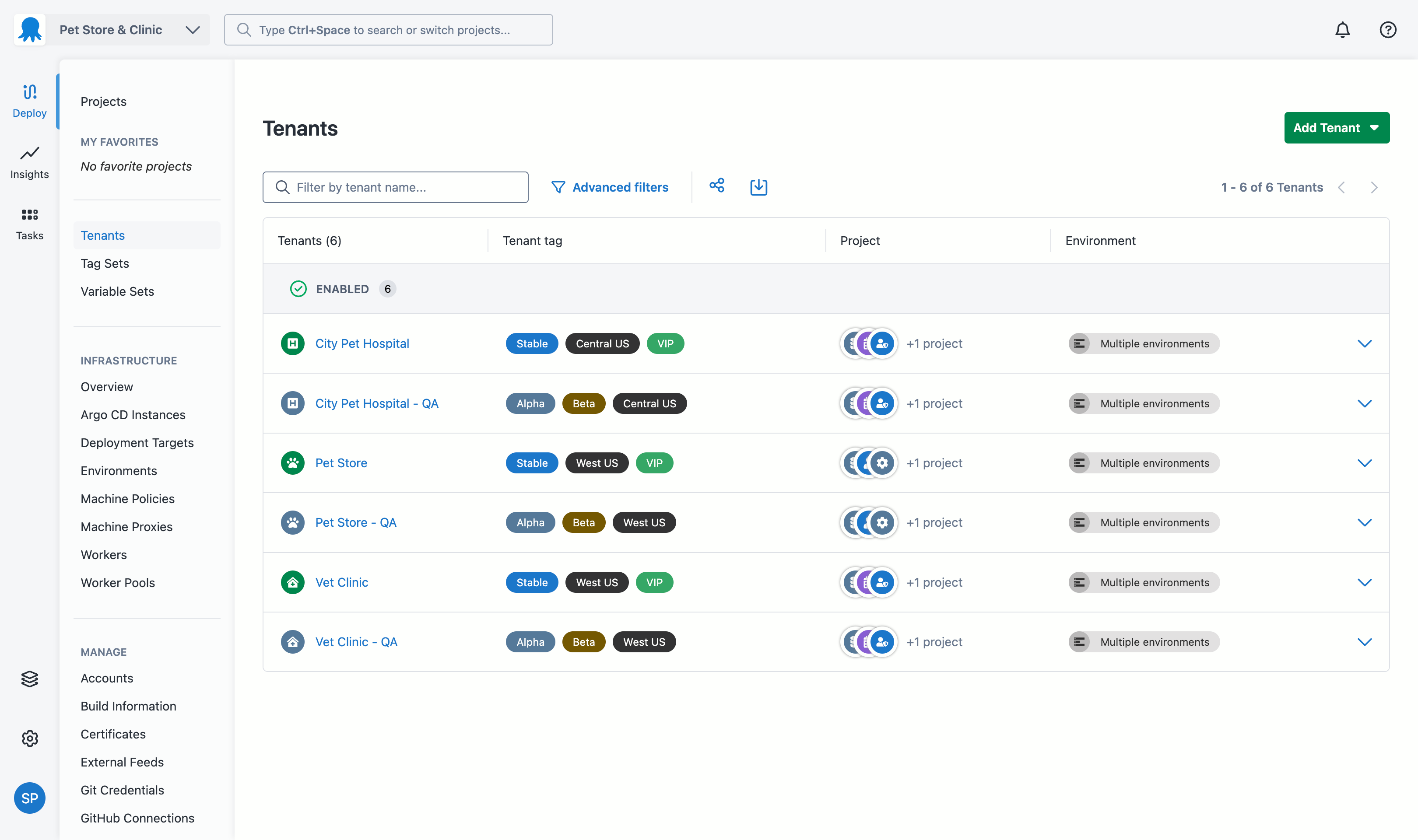
Octopus Deploy is well suited for our requirements of deploying across multiple environments with one consistent release. We are saving a lot of time by not having to package and move release files around. Our release process is more efficient and consistent with automation. There are some parts that we could probably perform with existing tools such as DevOps and there are one or two features we have to workaround to fit for our setup such as the step templates to install websites. These are minor in our opinion.
Puppet is good enough to get the job done, you can use it to automate deployments and maintain files and configurations, if this is all you're looking for it's great. If you're looking for more control over your systems as a whole without having to write your own scripts or install multiple configuration management systems then Puppet is not what you're looking for.
Automated Builds: Jenkins is configured to monitor the version control system for new pull requests. Once a pull request is created, Jenkins automatically triggers a build process. It checks out the code, compiles it, and performs any necessary build steps specified in the configuration.
Unit Testing: Jenkins runs the suite of unit tests defined for the project. These tests verify the functionality of individual components and catch any regressions or errors. If any unit tests fail, Jenkins marks the build as unsuccessful, and the developer is notified to fix the issues.
Code Analysis: Jenkins integrates with code analysis tools like SonarQube or Checkstyle. It analyzes the code for quality, adherence to coding standards, and potential bugs or vulnerabilities. The results are reported back to the developer and the product review team for further inspection.
In the past has been somewhat .net focused but that has been changing in recent times
Would be great if community licenses for NFP organizations were perpetual - but in saying that I appreciate that Octopus does provide my organization with a community [license]. Not all organisations do
The setup of Puppet is a nightmare compared to ansible. Anyone watching a youtube video can easily set up ansible with minimal IT knowledge. All one needs is the source IP addresses and we are good to go. Setting up Puppet is a more hands-on task and pushing the puppet agents to all the boxes is another issue. If the installation and setup were simplified like ansible that would attract a lot of people to this platform
The syntax of the code for Puppet is not as easy as ansible. Ansible simply follows a YAML format and it's like typing in normal English. Even complicated tasks can be written by just understanding YAML syntax. Perhaps Puppet needs to revisit the lanugage used and try to come up with a much simpler lanugage for writing code. This will make day-to-day usage easier.
We have a certain buy-in as we have made a lot of integrations and useful tools around jenkins, so it would cost us quite some time to change to another tool. Besides that, it is very versatile, and once you have things set up, it feels unnecessary to change tool. It is also a plus that it is open source.
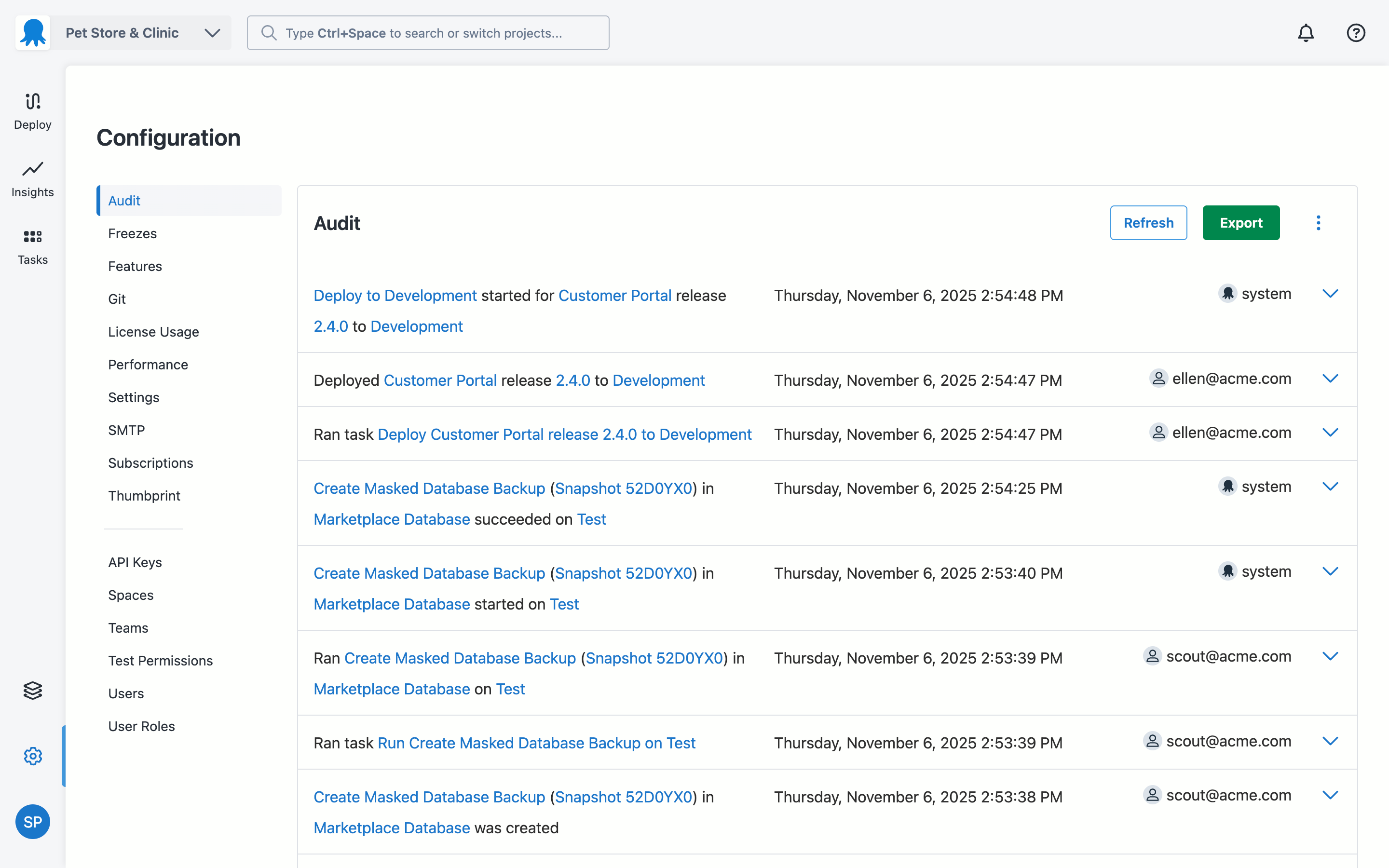
Jenkins streamlines development and provides end to end automated integration and deployment. It even supports Docker and Kubernetes using which container instances can be managed effectively. It is easy to add documentation and apply role based access to files and services using Jenkins giving full control to the users. Any deviation can be easily tracked using the audit logs.
Octopus Deploy has greatly helped us to improve our reliability and frequency of our deployments and given us the confidence to deploy much more often, with a direct benefit to customers. Cross-platform support and release to Cloud require more focus on the product side.
No, when we integrated this with GitHub, it becomes more easy and smart to manage and control our workforce. Our distributed workforce is now streamlined to a single bucket. All of our codes and production outputs are now automatically synced with all the workers. There are many cases when our in-house team makes changes in the release, our remote workers make another release with other environment variables. So it is better to get all of the work in control.
Octopus Deploy is a software that runs very effectively, is easy to use, does not require such a high learning curve, provides the necessary tools to carry out the functions it offers, making it a very flexible software, it also allows that can be configured according to the needs of the user and provides integrations with other very advantageous tools since they are carried out in a very favorable way.
As with all open source solutions, the support can be minimal and the information that you can find online can at times be misleading. Support may be one of the only real downsides to the overall software package. The user community can be helpful and is needed as the product is not the most user-friendly thing we have used.
Octopus Deploy support has always been there for us, even when using the free tier, we get responsive hands-on help. We haven't needed to use that level of support since the documentation is clearly written, and help is readily available within the interface itself. Using Octopus Deploy is a truly joyful experience.
Puppet has top class support. You can simply mail them with their query and they will respond to your query in a timely manner. We do have enterprise license for puppet. Also there is a vibrant community for puppet out there. So even if you dont purchase a premium support option you can simply google your queries and get answers
It is worth well the time to setup Jenkins in a docker container. It is also well worth to take the time to move any "Jenkins configuration" into Jenkinsfiles and not take shortcuts.
Overall, Jenkins is the easiest platform for someone who has no experience to come in and use effectively. We can get a junior engineer into Jenkins, give them access, and point them in the right direction with minimal hand-holding. The competing products I have used (TravisCI/GitLab/Azure) provide other options but can obfuscate the process due to the lack of straightforward simplicity. In other areas (capability, power, customization), Jenkins keeps up with the competition and, in some areas, like customization, exceeds others.
There aren't really any competitors in the land of ASP.NET. Deployment is too ad-hoc. Other tools exist that have massive downsides, like Web Deploy. Most aren't even supported anymore. You could argue that containers (Docker) are a competitor, but containers cannot be used for everything and solve a somewhat different problem. Octopus Deploy is even able to help with containers. To us, Octopus Deploy was really the only really polished solution.
HPSA is a licensed product and incurs significant upfront investment costs due to COTS licensing. Puppet Data Center Automation has a significantly lower upfront investment and product documentation is more readily available. Chef is a very similar offering, however, at the time our decision was considered, the adoption of Chef vs. Puppet was significantly less in the community.