Jirav, headquartered in San Francisco, aims to deliver smarter financials and faster insights, helping to understand where a business has been and predict where it will go. The system joins cloud-based Accounting, HR, CRM and billing data to automatically surface an interconnected model that is unique to a business. The solution helps eradicate spreadsheet errors, produce monthly reports that occur in real-time, and connected data enables teams to collaborate on multiple scenarios – bookings,…
$10,000
per year
Vena
Score 8.1 out of 10
Mid-Size Companies (51-1,000 employees)
Vena Solutions provides a financial process automation solution to automate Corporate Performance Management, accounting and budgeting, Regulatory & Compliance, and other finance-related processes. It is scaled for medium to large-sized organizations.
N/A
Pricing
Jirav
Vena
Editions & Modules
Starter
$10,000
per year
Pro
$15,000
per year
Enterprise
Contact Sales
Professional
N/A
Complete
N/A
Offerings
Pricing Offerings
Jirav
Vena
Free Trial
Yes
No
Free/Freemium Version
No
No
Premium Consulting/Integration Services
No
Yes
Entry-level Setup Fee
No setup fee
Optional
Additional Details
—
The Professional Plan is the most flexible way to get started quickly and can be added onto as a company grows. The plan includes: Vena Platform, Customer Success Manager, Standard Support and Customer Portal.
Complete Plan includes everything in Professional, plus: Vena Insights, Premium Support, Sandbox Environment, and Expert Managed Services.
For a limited time, new customers who use Microsoft Dynamics 365 Business Central (Online) as their primary ERP can get a free year of Vena and 40% off implementation costs.
Vena also offers special pricing for not for profit organizations. To learn more, speak to an expert.
Fathom was the cheapest and most basic as an add-on directly to QuickBooks Online Plus, but you lose functionality with Fathom if you use QuickBooks Online Advanced (QBOA). The main loss of functionality for me was the lack of multiple department reporting, which was absolutely …
Vena
Verified User
Contributor
Chose Vena
Vena was the most complete software package with collaboration in mind.
I feel that Jirav would be best suited for companies with less than 75 employees that need a more robust software than Fathom (Quickbooks Onlne integrated FP&A tool based in Australia) that is very customizable, with simple revenue modeling, few personnel changes every month, few departments, no multi currency, and need collaboration only with top-level personnel. I think Jirav is a product that is being highly recommended in the accounting industry for outsourced accounting firms, but accounting only looks at historical information and there needs to more finance industry influence, approval, and input so they can improve their product.
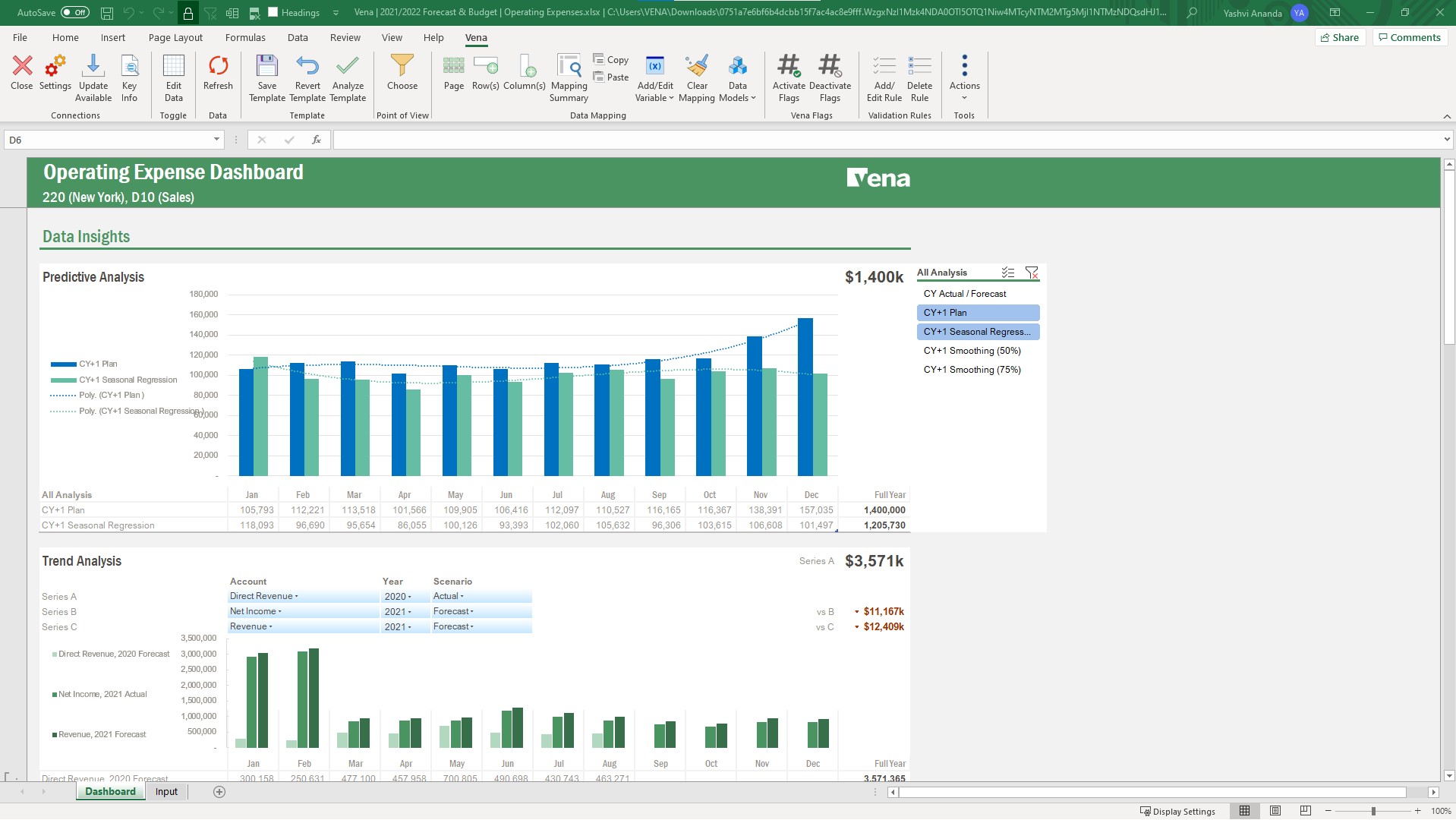
It is well suited for planning, budgeting, and forecasting. Using its capabilities also allows you to use it for reporting, whether it's month-end reporting or other reporting where you want to rely on data from a source that can be nicely presented and adjusted in Excel.
Jirav integrates well with Quickbooks Online (QBO), and I like how you can easily customize the reporting presentation by combining GL accounts and showing more or less details as needed for managerial reporting
I like that Jirav is browser-based and that I can easily share reports with internal and external parties for comments
I feel more confident using Jirav than I do with Excel because there is more data validation, and some notifications will appear if there are errors in the model
The sales capacity model and ramping employees schedule that their implementation / professional services team built for us works well overall (with some limitations)
Ideally, having a direct integration into Jirav would be great for all our data. However, some of our software didn't have a direct integration, so I was glad that Jirav offered the ability to use a connected Google Sheet that lets me input data that can be imported directly into the system
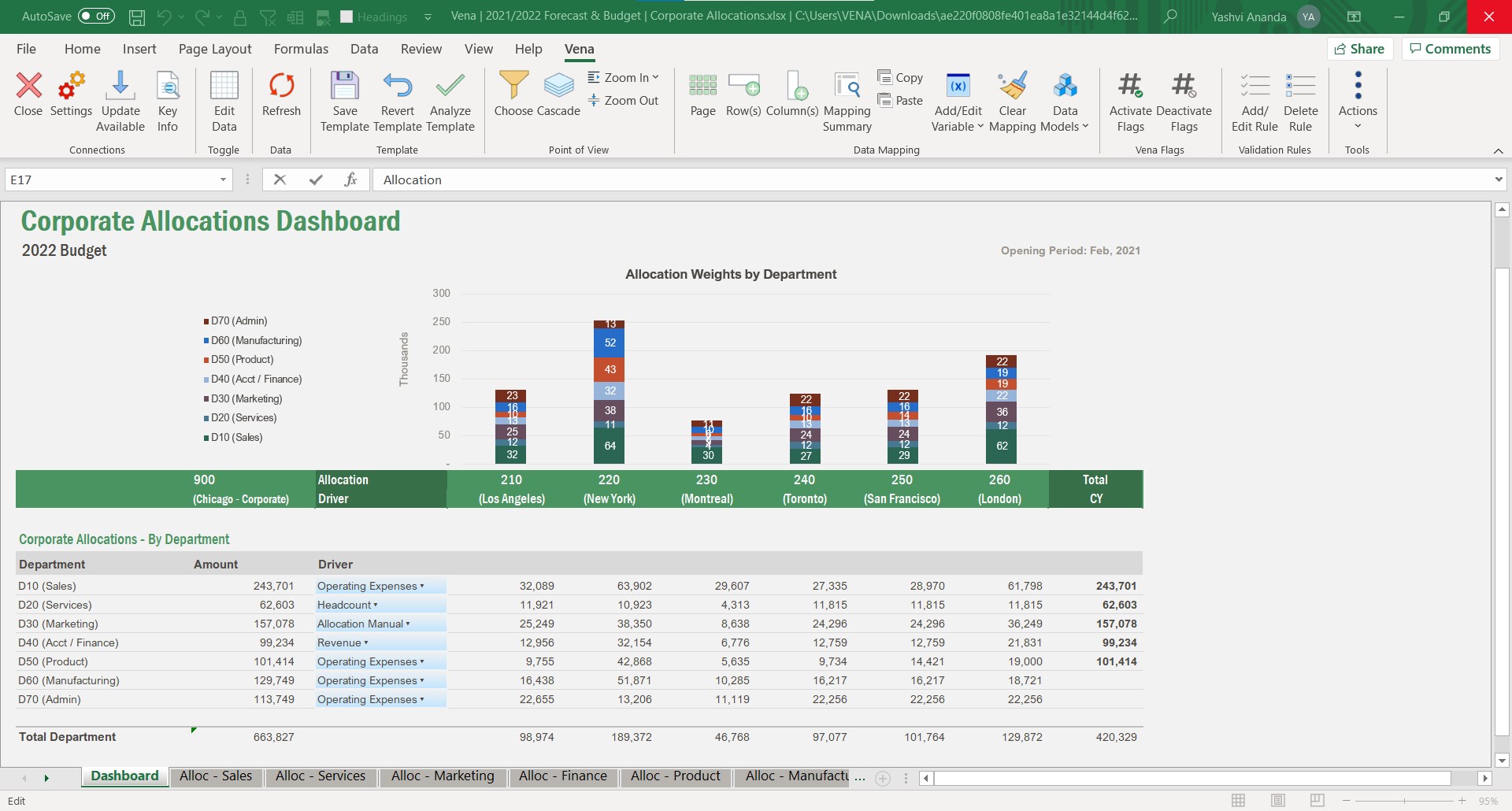
The Admin function of Vena, being able to set up the users in the user categories and the different groups and assigning the groups and the task bindings, is particularly easy and very helpful because as we have so many different departments and disciplines in our organization, we do need to establish pretty specific user access so this process works really well for us.
Running reports in Vena is fairly easy, and we do enjoy being able to just push a button and get some budget versus actuals.
At times, I feel that Jirav is too customizable. It would be great if they could tailor the system to be more industry-specific. For example, if the system could provide standard formulas for SaaS industry metrics already within the system, then that would have saved me a ton of time with having to create the metrics myself. The formula creation for metrics is quite tedious as well because you can only do simple calculations, such as A + B or A x C. You cannot do A + B + C or A x B x C.
I struggle with the way they have their staff planning set up because I have to reimport an Excel every month with all the changes (new hires, terminations, pay changes), and the changes appear to be retroactive on reports, which doesn't make sense if someone receives a raise or pay change during the year. It would be much easier for planning for bookings if they could add a column for quota by salesperson.
If there are notifications of errors in the model, then the notifications will continue to present themselves after I resolve the issue. It would be nice if I could clear out notifications I know are not relevant anymore. I also still find errors in the system that I would have expected the system to notify me about, such as Assumptions that are set up but they are not included in any formulas, so I should delete that assumption to prevent anyone from thinking changing that assumption will impact the model.
There is some functionality for sharing reports and information, but there is not enough granularity in security settings to allow me to share certain information easily. For example, if I want to share information with managers to manage their departments' budget, but also not see their boss' compensation, then it takes some work to set that up. Or, if I want to share a report with a recruiter of planned headcount and salary, then I need to export it to Excel first and delete Actual headcount and salary, so they don't see current employees' compensation (including the person's boss' salary).
Customer and vendor names do not import, only the totals, so if you look at Actuals vs Plan, the actuals will show a total figure and the plan will show detail, creating the need for an external and manual reconciliation
There is no multi-currency available
Scenario analysis can be difficult to do quickly. For example, if I want to see the plan with planned hires and without planned hires, then I would need to create two separate plans, individually select and delete the planned hires in one plan and keep then in another plan, which is time-consuming
Using Google Sign-In causes the system to time-out frequently for me, so I get kicked out of the system and have to log back in. If I have multiple tabs of Jirav open, then re-logging in sometimes doesn't bring me back to where I was originally at.
You can export reports to Excel, but there are no formulas of the calculations, which makes it more difficult to understand how calculations are being performed unless you look in the browser and dig into the calculations. This also might make it more difficult if you decide to go to another software in the future since you may need to start from scratch in the next software
Seasonality has been difficult to model. For example, the way our model is set up, I can use an assumption for Q1, Q2, Q3 and Q4. However, if I update Q3 for this year, then it also updates Q3 of all subsequent years, which I don't want. A more complex model and additional maintenance would be needed to accomplish more accurate seasonality planning
Have another license between power user and contributor that allows building reports that aren't ad hoc, but don't have all the admin rights of a power user.
Have a session on best in class Workforce Planning prior to implementation.
Vena has become an integral part of finance and our daily process. Without it we would take longer to prepare results and decisions will be delayed. Vena has given the whole organization more visibility of results and budgets so that all departments participate more actively in managing their budgets rather than it being the sole responsibility of finance.
I love this product. We integrate all of our financial needs between finance and the operations team so that we have real time data being looked at all of the time. Our operations can reach out and be able to discuss possible issues or variances at any time of the month and leads us to be able to have smoother month end closes.
Vena is seemingly always available. They plan maintenance windows well in advance and always off hours (typically over a weekend) and communicate clearly throughout maintenance about what will be affected. Over 5 years of using the product, I can only remember one time when the platform was unavailable (I believe due to an underlying server hosting issue from their provider), and they resolved the issue and had everything up and running again within 8 hours.
The performance is dependent on how much data and calculations are involved and how complex the security settings are. A simple template or report loads in seconds. A complex template or report can take a while. If there are many users with complex security settings, that will be a factor in the load time.
If I had to rate the overall support for Vena based on my experiences, I would give it a 9 out of 10. The support team is very responsive, providing best assistance during both the implementation phase and ongoing use of the Vena. They have been proactive in offering training resources and addressing me very well, which significantly enhances the user experience and overall satisfaction with the Vena.
This is the best way to learn and buy-in. The in person effect gives students both a hands on approach but an instruction to be there to customize assistance and understanding. In person also builds greater buy in with your future team on creators. However if your audience is better at on line learning this is another good option.
The training was structured as a group training to learn the basics of creating a data model and mapping a template. While we had nearly 10 participants, I was the only actual implementer so we probably didn't actually need the training and could have just learned the initial skills from the implementation consultant. Two years later, when we hired a new team member, they completed several modules in Vena Academy (a self paced learning course) which allowed them to get up to speed on the basics with just a bit of supplemental guidance from me as our existing admin.
The Vena consultant had great knowledge of both the Vena solution and Excel and Excel functions. He was able to help suggest ways to build our templates that met our requirements using Excel functions we had not previously considered using. And we have been able to use the Excel information he provided in other ways outside of Vena. He was very patient and flexible as we learned the Vena tool and created templates
Fathom was the cheapest and most basic as an add-on directly to QuickBooks Online Plus, but you lose functionality with Fathom if you use QuickBooks Online Advanced (QBOA). The main loss of functionality for me was the lack of multiple department reporting, which was absolutely necessary for my analysis. Jirav was half the price of Moscaic.tech, but I've heard Mosaic has standard metrics for the SaaS-industry, which is appealing after going through the tedious process of setting up metrics in Jirav. QBOA has additional reporting than QBO Plus, but not enough robust features for planning and modeling. PlaceCPM is Salesforce-based and a I felt having a strong Salesforce admin that can great reports made their unnecessary, and I feel like most of the time you need a Salesforce admin just to run Salesforce. Cube, Vena and OnPlan are spreadsheet-based, but I don't want to use spreadsheets. Prophix, Board and Anaplan seem outdated. Workday was more than what I needed
Previously used Synario for long-term forecasting. Ultimately moved to Vena for this to keep budgeting and forecasting together in a single solution. Vena's system is much easier to learn on the admin side since it is Excel-based so the transition was pretty simple. Previously used Jenzabar with JICS for budgeting. Vena's budget system is more user-friendly for end users and more flexible so it works better for our specific needs. Vena's reporting system is easier to use and customize.
Vena solutios is a software that provides robust tools that help different departments in their statistics and we can visualize a lot of promising and visually attractive data. Vena Solutions' level of scalability is high and sustainable over time thanks to the fabulous technical support that is ready to help us at all times
Vena has helped save time by reducing the manual work involved with budgeting, reporting, and variance analysis. Instead of spending as much time organizing data and reconciling spreadsheets, I can focus more on reviewing results and making informed decisions. It has improved collaboration between teams and provided better visibility into financial performance, creating more efficient processes overall.