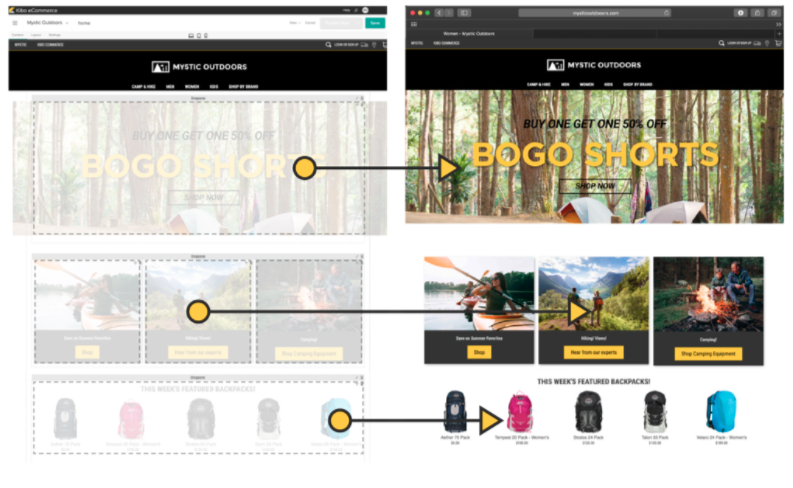
Kibo Software offers Kibo eCommerce (formerly Mozu), designed to support retailers with online offer creation and deployment, content publishing and landing pages, and many tools and widgets out of the box with a retail-oriented ecommerce solution.
Mozu was acquired by Kibo Software from Volusion in October 2016.
N/A
Spryker Cloud Commerce OS
Score6.4 out of 10
N/A
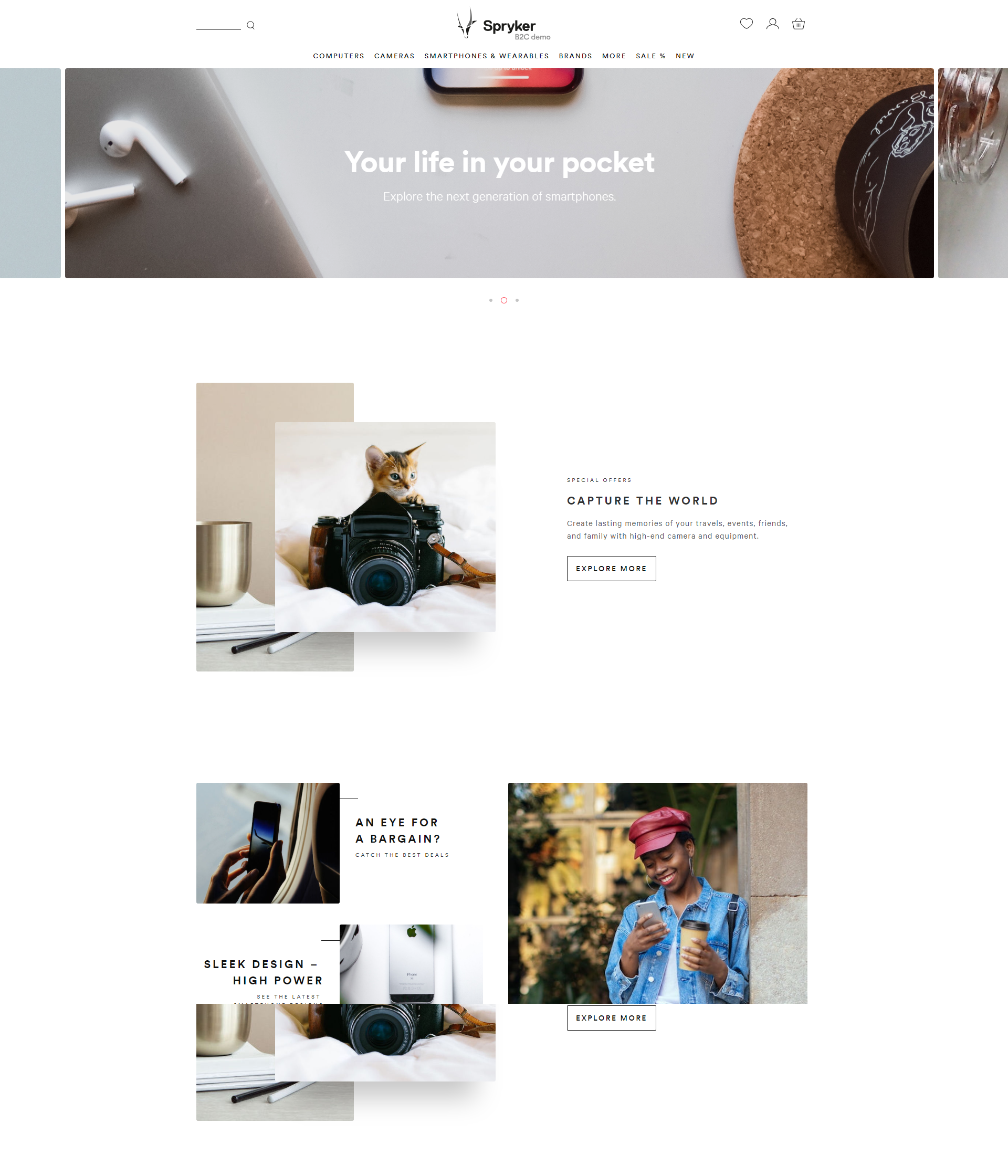
Spryker Cloud Commerce OS is a modular Commerce System that enables B2B, B2C, and Marketplace business models through any customer interface, touchpoint, and device. Boasting extensibility, best-in-class performance, and fast time-to-market, the vendor states Spryker is trusted by brands such as TOYOTA, HILTI, and TomTailor. The Spryker Cloud Commerce OS NOW version has been specifically developed for manufacturers and brands who want to reach customers directly online.
Pricing is based on the duration and terms of your contract with the vendor. This entitles you to a specified quantity of use for the contract duration. If you choose not to renew or replace your contract before it ends, access to these entitlements will expire.
The platform has flexibility at its core and we have made full use of that capability. Even if Kibo [eCommerce] hasn't been ready to provide features and functions we need, we have the opportunity to build them ourselves. The platform started as Mozu and while it was relatively well-developed for DTC, it lacked a lot of basic B2B functionality. As a result, when we were ready to move into that arena, we built a lot for ourselves (including a multi-level account system and a tool to manage it). Keep in mind, too, that Kibo eCommerce is part of a larger suite of tools. The company has purchased a mobile Point-of-Sale system, Baynote, Certona, Monetate, and an OMS. If you need a full-scale solution, they can offer a lot. As I mentioned previously, their support and documentation need shoring up. They're not terrible, but they hinder (rather than help) when it comes to fulfilling the platform's promise of letting the customers be self-service in building out their capabilities.
A de minimis incentive was given to thank the reviewer for their time. The incentive was not used to bias or drive a particular response, nor was the incentive contingent on a positive endorsement. More Info
Spryker is very well suited (B2C and/or B2B) for big companies with complex and individual business models or also if your company needs a certain level of customization. Very good fit, if you need a scalable system. It is rather not the perfect fit for small companies or companies with very basic E-Commerce needs.
A de minimis incentive was given to thank the reviewer for their time. The incentive was not used to bias or drive a particular response, nor was the incentive contingent on a positive endorsement. More Info
Prebuilt Integration - There is not currently a large number of preexisting integrations, but custom integrations are fairly quick
Time to Deploy - Don't get me wrong, We have deployed in the timeline we expected, but if you are trying to get something off the ground fast, Kibo might not be right for you. It is a robust platform that take some time to get up and running.
Complicated Shipping - if you have a complicated shipped process, you might want to look for a tool to help, Kibo does not have very robust out of the box shipping capabilities.
Content - content administration is not a strong part of Spryker, although it improved over the years. I still see room for improvement in the world of bigger CMS systems being able to also do "commerce".
Backoffice-usability - for non-technical users the first few days, weeks and month[s] can be full of surprises. An extended documentation, or more intuitive handling on the backoffice could serve every party on Spryker.
Off-the-shelf internationalization - Spryker right now comes with an initial data set in English and German, which is for a German based company already a pretty stable starting point. Extension on the base data for Europe-wide used countries would be very helpful - French, Italian, Polish, Russian, etc.
A de minimis incentive was given to thank the reviewer for their time. The incentive was not used to bias or drive a particular response, nor was the incentive contingent on a positive endorsement. More Info
Spryker's usability depends a lot on custom development. Therefore, I would like not to consider usability as something that comes with Spryker Cloud Commerce OS. Spryker Cloud Commerce OS; however, brings all the tools needed to design a solution with great usability.
One positive note is that I have always been able to get someone on the phone in support whenever I have called, even at 1 AM. Getting someone on the phone is only half the battle though. In the first few months of using Mozu it often seemed that support didn’t know anymore about Mozu than we did. This has slowly started to change, but as a daily user you are likely to be on par with support in terms of knowing what to do when you encounter a problem. The support phone number is really most useful for having them put in a support ticket for you rather than typing it all out yourself and emailing it. It is very rare that the support reps are actually empowered to solve the problem at hand. Unless the issue you are having is user error, they will just take your information and pass it on the proper department. Your request or problem will then be ignored for months on end. Some day, it might actually get fixed but you are unlikely to be notified that this has happened. Most of these issues are assigned an internal ID that they use for tracking. Support is more than happy to pass this ID along, but it is useless. There is no way to actually see where the issue lies in the endless queue of similar issues.
Support suffered from Spryker Cloud Commerce OS's rapid growth. Contacts, department heads, and support systems changed frequently. Support processes as well as documentation are rather poor. One notices that they are putting more effort into the customers recently, but in the course of growth, there is still a lack of focus here. As a customer, I would like to see growth at a slower pace and a phase of stabilization.
A de minimis incentive was given to thank the reviewer for their time. The incentive was not used to bias or drive a particular response, nor was the incentive contingent on a positive endorsement. More Info
At the time of our implementation Mozu did not have any processes or procedures set up around going live. We basically were forced to just wing it and hope for the best
We had a custom, in-house ecommerce website before moving to Kibo. It was brittle, slow, and wasn't going to scale nearly well enough or fast enough to keep up with our requirements
A de minimis incentive was given to thank the reviewer for their time. The incentive was not used to bias or drive a particular response, nor was the incentive contingent on a positive endorsement. More Info
If you compare Spryker with commerce solutions on the market, you will notice that the focus is not on the front end. Spryker assumes that the store is only one of many possible channels through which customers order today and in the future. To understand the differences, one must therefore take a look at Spryker's architecture. This is divided into the Spryker [Cloud] Commerce OS (the backend with all process-related components), the front-end modules for B2C and B2B, as well as the integration modules (middleware) and interfaces (Glue API).
Extending the reach and visibility of the brand through content and commerce.
Increased customer satisfaction through better accessibility (self-service) and easy access to important product information (CAD data, technical documentation, etc.).
Rapid deployment thanks to packaged business capabilities and clear development leads to fast ROI and low TCO.
A de minimis incentive was given to thank the reviewer for their time. The incentive was not used to bias or drive a particular response, nor was the incentive contingent on a positive endorsement. More Info