Microsoft's .Net is an open source, freeware application infrastructure.
N/A
SAP Integration Suite
Score8.5 out of 10
N/A
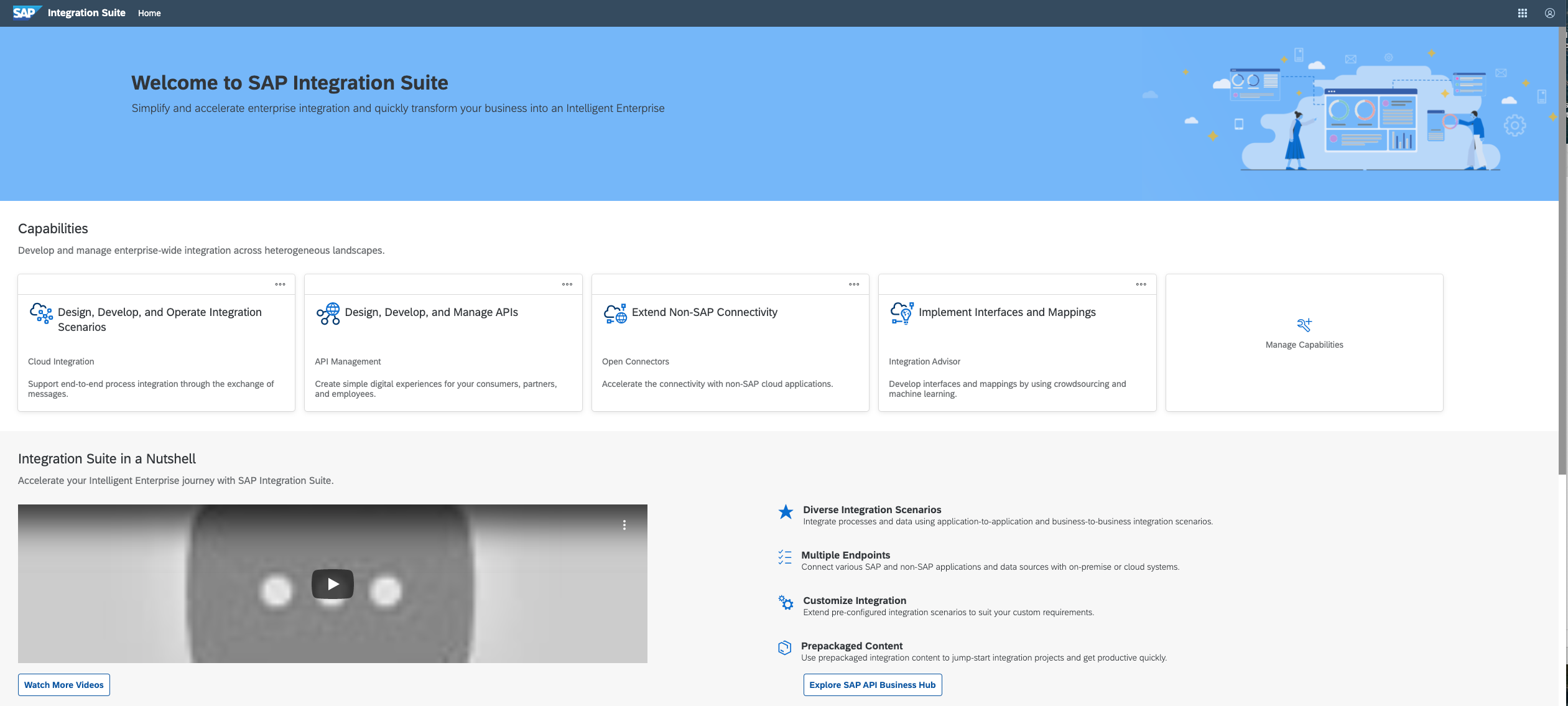
SAP Integration Suite is a modern, secure integration platform as a service (iPaaS) that connects applications, data, processes, and AI agents across SAP and non‑SAP environments.
$11,199
per year
Pricing
.NET
SAP Integration Suite
Editions & Modules
No answers on this topic
No answers on this topic
Offerings
Pricing Offerings
.NET
SAP Integration Suite
Free Trial
No
Yes
Free/Freemium Version
No
No
Premium Consulting/Integration Services
No
No
Entry-level Setup Fee
No setup fee
No setup fee
Additional Details
—
Access to free tier services does not expire while there is an active Pay-As-You-Go or CPEA account with SAP. Once a free tier service limit has been reached users have the option to update from a free to a paid service plan in the same account.
Eliminates customizations. Easy to maintain and secured. For a true digital transformation, I always recommend a low-code/no-code mechanism. Upgrades should reduce traditional IT and infrastructure models, and true SaaS software should be able to do all this for a customer with …
A de minimis incentive was given to thank the reviewer for their time. The incentive was not used to bias or drive a particular response, nor was the incentive contingent on a positive endorsement. TR verified that a representative sample of customers was invited. More Info
.NET is well suited for any general purpose solution to a business problem, though if we are talking strictly the framework version - you have to be more or less tied to Microsoft Windows to run it. If this isn't a problem, then it will be able to address and solve any programming project you have.
A de minimis incentive was given to thank the reviewer for their time. The incentive was not used to bias or drive a particular response, nor was the incentive contingent on a positive endorsement. More Info
Good at: 1. Integrations with in SAP applications, especially with event based triggers 2. Can be integrated very well with other BTP services to attain Batch processing and store credentials 3. Supports many authentication models Improvements: 1. No version history available compared to as it is available in S4HANA 2. Need a lot of improvement in git hub connections
A de minimis incentive was given to thank the reviewer for their time. The incentive was not used to bias or drive a particular response, nor was the incentive contingent on a positive endorsement. More Info
A de minimis incentive was given to thank the reviewer for their time. The incentive was not used to bias or drive a particular response, nor was the incentive contingent on a positive endorsement. More Info
A de minimis incentive was given to thank the reviewer for their time. The incentive was not used to bias or drive a particular response, nor was the incentive contingent on a positive endorsement. More Info
.NET is heavily Microsoft Windows oriented, and while .NET core tried to resolve that with MacOS and Linux support, .NET Core is still waiting for wider adoption.
While free for small projects, additional features for big projects can be a little expensive.
Can be resource-heavy upon deployment. We continuously have our more senior staff optimize the code of our junior developers for performance. Other languages are a little bit more forgiving in comparison.
A de minimis incentive was given to thank the reviewer for their time. The incentive was not used to bias or drive a particular response, nor was the incentive contingent on a positive endorsement. More Info
Provide more pre-built integrations to use within SuccessFactors or other modules instead of everything having to be custom built
Support is unable to provide advice on custom builds so you often have to engage a 3rd party partner
Works best when you have the functional and technical teams working together. Otherwise, the system is too technical for a functional user to create integration and a technical user not always understand the functional perspective
A de minimis incentive was given to thank the reviewer for their time. The incentive was not used to bias or drive a particular response, nor was the incentive contingent on a positive endorsement. TR verified that a representative sample of customers was invited. More Info
It is in place, our system integrators are familiar with it, and it fits into the ecosystem. A better user interface, flow build and debugging experience would see it grow, many technical staff do not enjoy using it for this reason, however it is quite capable and powerful behind this one shortcoming.
A de minimis incentive was given to thank the reviewer for their time. The incentive was not used to bias or drive a particular response, nor was the incentive contingent on a positive endorsement. TR verified that a representative sample of customers was invited. More Info
The full .NET Framework is an amazing thing and is very robust. We have used it to create console apps, Windows apps, and online apps. When coupled with Visual Studio, development, testing, building, and deploying our applications has become 100 times easier as compared to doing those things manually before. The automation of this process has helped us push out changes to our applications faster to adapt to the ever-changing business requirements.
A de minimis incentive was given to thank the reviewer for their time. The incentive was not used to bias or drive a particular response, nor was the incentive contingent on a positive endorsement. More Info
The user interface is messy and not intuitive. It has a steep learning curve, and flows developed around are easy to make a mess with layout and can be difficult to follow. The debugging is also quite difficult, it takes some time to figure out how to follow the flow and examine data. Error handling is also difficult and not intuitive, it is better to let some errors leak and monitor through ALM.
A de minimis incentive was given to thank the reviewer for their time. The incentive was not used to bias or drive a particular response, nor was the incentive contingent on a positive endorsement. TR verified that a representative sample of customers was invited. More Info
You don't often need to reach out to Microsoft for .NET support. If you do, there are forums and websites that have active Microsoft support folks where you can provide feedback or get help. Microsoft support in general is quite good as well, but not cheap. The best support is from the community like StackOverflow.
A de minimis incentive was given to thank the reviewer for their time. The incentive was not used to bias or drive a particular response, nor was the incentive contingent on a positive endorsement. More Info
The support for SAP Integration Suite is satisfactory. We leverage SAP support through our manage services partner. So far, we have not had many major issues. One concern, to make our rating a ten, would be turnaround time on high priority incidents. SAP Integration Suite drives our key business functions forward. Without a reasonable service level agreement on turnaround, we sometimes find us running into issues running pay, etc.
A de minimis incentive was given to thank the reviewer for their time. The incentive was not used to bias or drive a particular response, nor was the incentive contingent on a positive endorsement. More Info
A de minimis incentive was given to thank the reviewer for their time. The incentive was not used to bias or drive a particular response, nor was the incentive contingent on a positive endorsement. More Info
The .NET platform has a much longer and broader history than Laravel, so we chose to go with it as the support will be far superior. Additionally, Laravel is tied to PHP, while you can use multiple different languages in .NET. The additional flexibility that .NET provides in the range of types of applications you can build with it sealed the deal.
A de minimis incentive was given to thank the reviewer for their time. The incentive was not used to bias or drive a particular response, nor was the incentive contingent on a positive endorsement. More Info
Before deploying SAP Integration Suite, we assessed Oracle Financial Services Analytics and IBM Risk Analytics. While Oracle had proved its mettle in the exceptional database support and IBM in presenting risk model tools, SAP Integration Suite overwhelmed others by being effortlessly integrated with our existing banking framework.
There are few factors we needed for our custom development. Below are each of them. We were able to get a satisfactory outcome for each of these factors which made .NET platform a very good choice in developing enterprise applications.
Reusability of codes- Microsoft has given many re-usable codes and components in the framework to help developers do their job effortlessly. With the help of default features, developers can create end-to-end solutions and make the business operations more efficient. As codes and components are reusable, .NET reduces development time and if applications take less time to develop, they cost cheaper and you get faster return on investment.
Easy to maintain- Development cost is one time, but maintenance cost is incurring. .NET apps are easily maintainable, thanks to the configuration settings that can be modified without any need to rewrite the code.
Deployment is hassle free- Deploying software is always challenging and the most common problem developers face in this process is the existence of multiple DLLs. It’s hard to make sure that all DLLs will co-exist in the same machine. .NET framework solves this problem by allowing different versions of the same DLL to exist side-by-side on the same machine.
Security- .NET is one of the most secure web and application development frameworks available in the market. As it’s made by Microsoft, you can be absolutely sure about the security measurements. Hackers can never steal valuable data from your website or apps.
Cross platform friendly- What if you had developed an app for desktop and laptop computers and now after seeing the growth of mobile apps in the market, you want it in mobile version as well? You can easily develop an app that runs on the desktop and PDA without any issue. As you can re-use the codes and utilize the same development environment, your job becomes a lot simpler.
A de minimis incentive was given to thank the reviewer for their time. The incentive was not used to bias or drive a particular response, nor was the incentive contingent on a positive endorsement. More Info
A de minimis incentive was given to thank the reviewer for their time. The incentive was not used to bias or drive a particular response, nor was the incentive contingent on a positive endorsement. TR verified that a representative sample of customers was invited. More Info