OpenShift is Red Hat's Cloud Computing Platform as a Service (PaaS) offering. OpenShift is an application platform in the cloud where application developers and teams can build, test, deploy, and run their applications.
$0.08
per hour
SolarWinds Virtualization Manager (VMAN)
Score 10.0 out of 10
N/A
SolarWinds® Virtualization Manager (VMAN) is a tool for monitoring, performance management, capacity planning and optimization for on-premises or cloud-based virtual environments. It also integrates with other SolarWinds products.
N/A
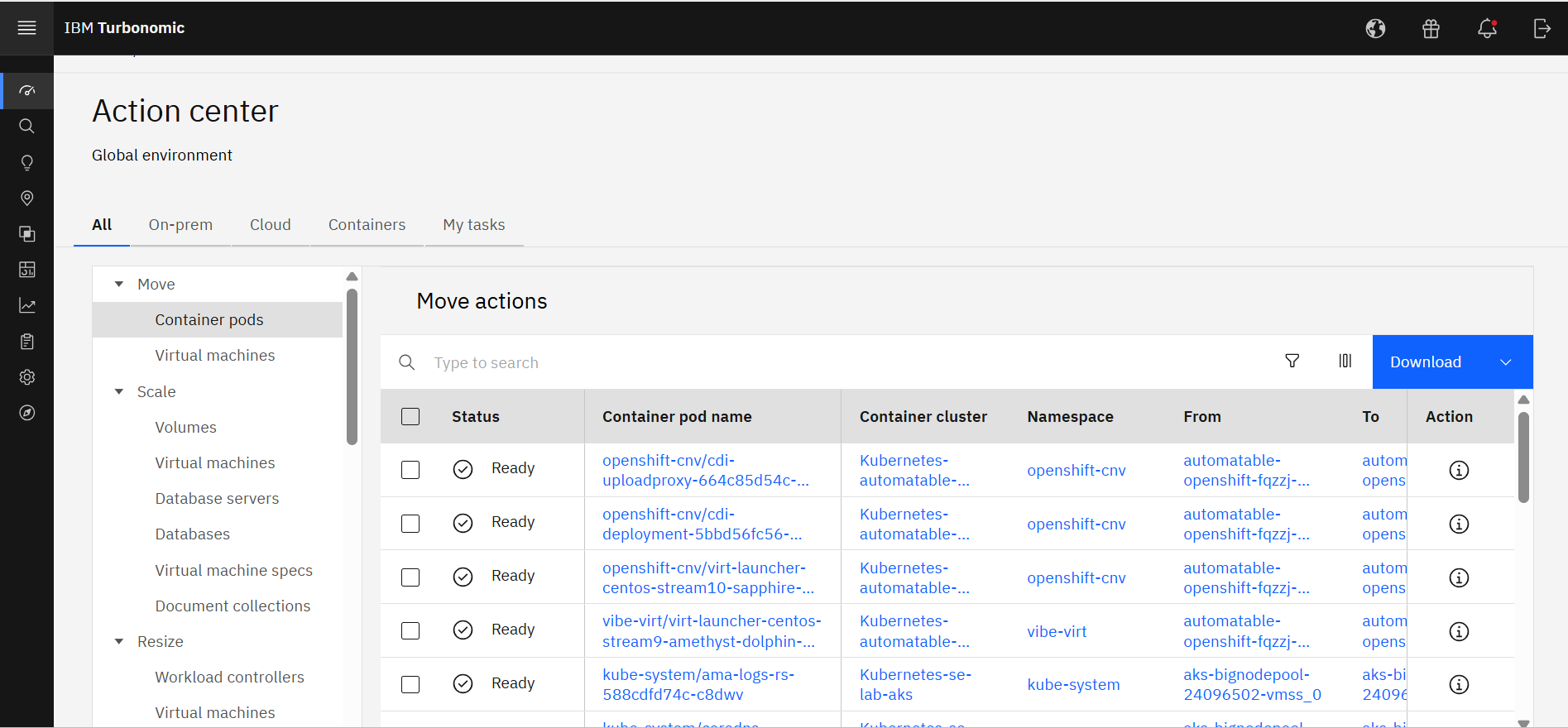
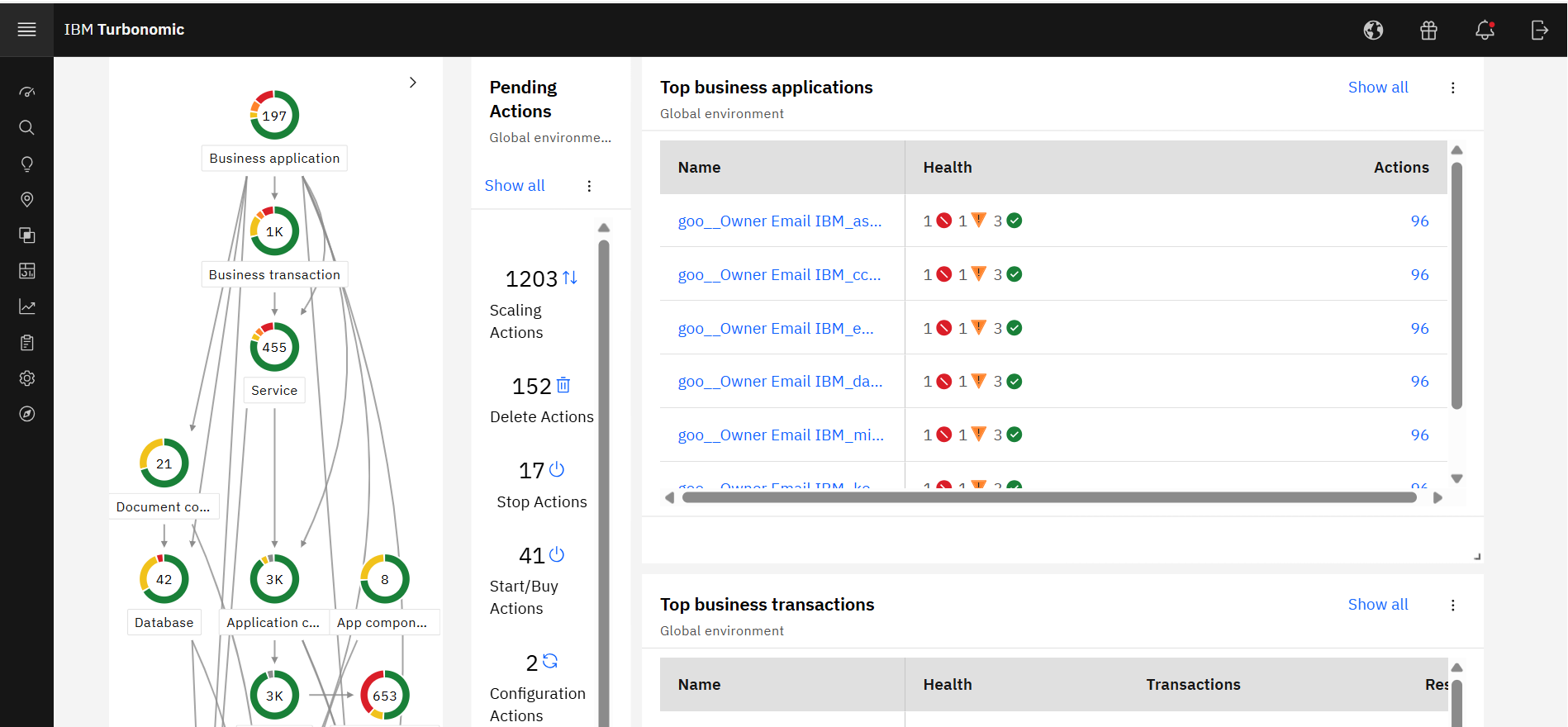
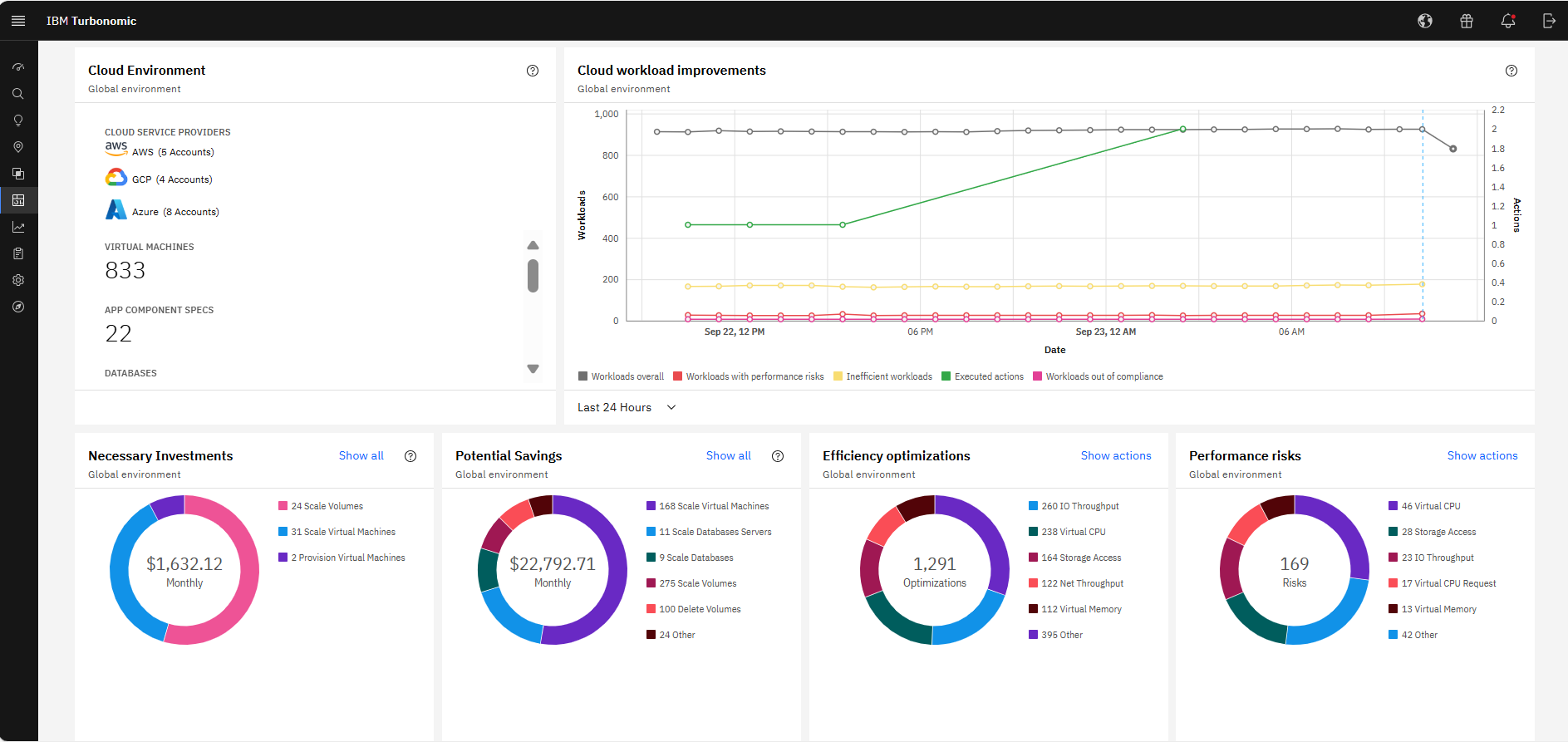
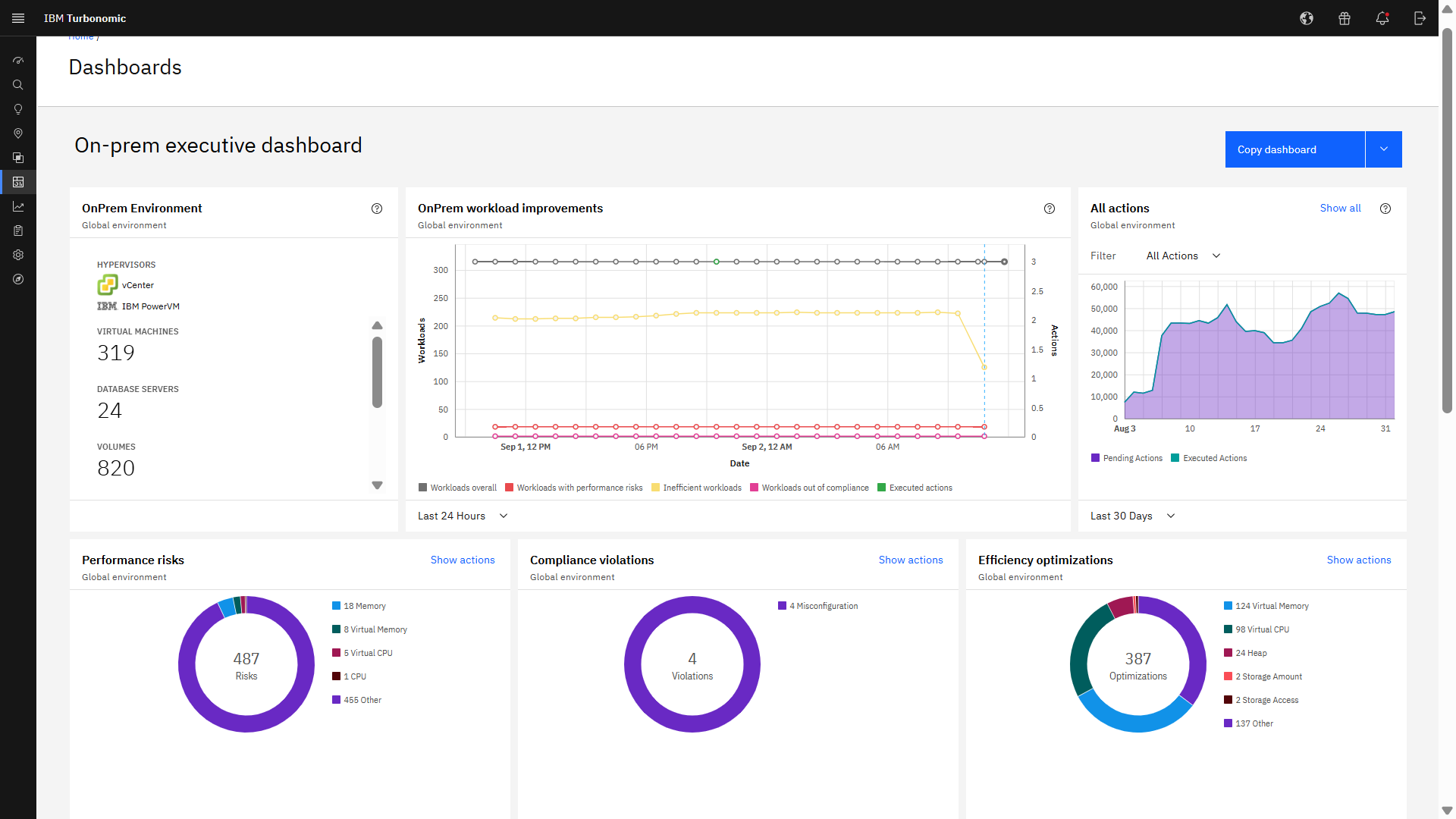
Turbonomic, now part of the Concert platform
Score 8.8 out of 10
Enterprise companies (1,001+ employees)
IBM Turbonomic is a performance and cost optimization platform for public, private, and hybrid clouds used by cloud, infrastructure operations, and architecture to assure application performance while eliminating inefficiencies by dynamically resourcing applications through automated actions. One of the key features of IBM Turbonomic is its ability to continuously adjust application resources in real time. By monitoring resource utilization and application performance,…
N/A
Pricing
Red Hat OpenShift
SolarWinds Virtualization Manager (VMAN)
Turbonomic, now part of the Concert platform
Editions & Modules
No answers on this topic
No answers on this topic
IBM® Turbonomic On-Prem
Varies - Request a Quote
per month IBM Turbonomic On-prem optimizes data center resources in real time, ensuring app performance at the lowest cost by aligning infrastructure supply with dynamic application demand.
IBM® Turbonomic Cloud Standard
Varies - Request a Quote
per month For customers with more than USD 1.6 million in annual cloud spend or 50 Managed Virtual Servers (MVS) or greater
IBM® Turbonomic Hybrid Standard
Varies - Request a Quote
per month Advanced hybrid cloud optimization capabilities for customers with 200 managed virtual servers (MVS) or more
We looked at Foglight, VMturbo, and vCenter Operations Manager, all great products. We knew we needed a tool but we had a habit of purchasing tools and not using them so we wanted to keep the price tag within reason. The SolarWinds product fit the bill.
Chose Turbonomic, now part of the Concert platform
I selected IBM Turbonomic because it is a comprehensive tool that can help me monitor and optimize the entire IT environment. The choice of IBM Turbonomic is often driven by its extensive feature set, scalability, and delivering tangible results. IBM Turbonomic stands out in …
Chose Turbonomic, now part of the Concert platform
Turbonomic blew the doors off the competition. When we did a comparison to our current application that was monitoring our environment, Turbonomic surpassed them with flying colors at the start during the POC. Then during the POC white we were kicking the tires around the …
Chose Turbonomic, now part of the Concert platform
VMTurbo has a smaller computing and storage footprint than the other tools tested. It was very easy to set up and within 2 hours it was already highlighting areas of interest. There was no requirement to get any professional services involved, and no other products are required …
Red Hat OpenShift, despite its complexity and overhead, remains the most complete and enterprise-ready Kubernetes platform available. It excels in research projects like ours, where we need robust CI/CD, GPU scheduling, and tight integration with tools like Jupyter, OpenDataHub, and Quiskit. Its security, scalability, and operator ecosystem make it ideal for experimental and production-grade AI workloads. However, for simpler general hosting tasks—such as serving static websites or lightweight backend services—we find traditional VMs, Docker, or LXD more practical and resource-efficient. Red Hat OpenShift shines in complex, container-native workflows, but can be overkill for basic infrastructure needs.
On the whole, Solarwinds Virtualization Manager (VMAN) is an excellent product which gives us a single point to monitor our virtual environment. After our initial trial I was sold on the product and what it had to offer. Immediately after implementing VMAN, we were able to spot virtual machines with old snapshots which were never deleted and no longer needed, we could spot virtual machines which either had over allocated resources or under allocated resources meaning we could make changes and fine tune them for best performance. We could also monitor virtual machine latency, IOPS, and show us where our bottlenecks were.
Datacenter Consolidation and Hardware Optimization: This scenario is relevant to you as a hardware manager. It applies when you have physical servers (like Power or System z) and want to maximize virtual machine density. Why it works: IBM Turbonomic analyzes the peak usage times of each VM. If VM "A" is active during the day and VM "B" at night, it places them on the same physical host. Ideal scenario: Data migration projects or when you're told, "[...], there's no budget for more servers this year, make everything fit on what we have." Consolidación de Datacenters y Optimización de Hardware,Este escenario te toca de cerca como encargado de Hardware. Cuando tienes servidores físicos (como los Power o System z) y quieres maximizar la densidad de máquinas virtuales.Por qué funciona: IBM Turbonomic analiza las horas pico de cada VM. Si la VM "A" es activa de día y la VM "B" de noche, las coloca en el mismo host físico.Escenario ideal: Proyectos de migración de datos o cuando te dicen: "[...], no hay presupuesto para más servidores este año, haz que quepa todo en lo que tenemos". This review was originally written in Spanish and has been translated into English using a third-party translation tool. While we strive for accuracy, some nuances or meanings may not be perfectly captured.
We had a few microservices that dealt with notifications and alerts. We used OpenShift to deploy these microservices, which handle and deliver notifications using publish-subscribe models.
We had to expose an API to consumers via MTLS, which was implemented using Server secret integration in OpenShift. We were then able to deploy the APIs on OpenShift with API security.
We integrated Splunk with OpenShift to view the logs of our applications and gain real-time insights into usage, as well as provide high availability.
I created custom dashboards, to view the different elements of the virtual environment. For example, you can view the number of online VMs and those off, or disconnected. You can also choose to see the status of every virtual cluster, the storage disk usage on every VM, the RAM usage, CPU usage.
I used this application to see the growth of virtual memory in each cluster and accordingly do forecasting for future growth. A capacity planner included in this application would help in doing accurate estimations and setting a future upgrade budget.
Another powerful tool was the customized reports, where i could generate reports on any element of the VM or cluster. Reports can be exported to Excel or PDF and are very useful for sharing information with colleagues and management.
Alerts can be customized. For example, you can set a rule to get an email alert if any virtual server RAM usage exceeds 85% and send a text message if RAM usage exceeds 90% for more than 10 minutes.
I wouldn't necessarily say there is look everyday technology transform. I can see a trend wherein Red Hat OpenShift is adopting all the new technology trends and helping their customers align with their priorities and the emerging technology trends. I wouldn't call out various scope for development every day. There is scope for development. It is all how the organizations adopt it and how they deliver it to their customers. I don't want to call out there is scope for development. It's happening. It is a never ending process.
At the moment, I don't have anything to call out. We are experiencing Red Hat OpenShift and we can see every day they're coming up with new features as and when they come up with new features, we want to experience it more and more. We are looking for opportunities wherein this can be leveraged to help our users and partners.
We did have issues during the setup, with successfully connecting to some of our hosts and vCenters and we found support were just sending us back to articles we had already read, it was also taking long periods before getting a response. The issue is still ongoing, in fact.
It would be nice if the UI included a break-down of features that are both licensed as well as un-licensed. That way, you could not only see what you have, but what you don't.
The right-sizing recommendations are great, but very little info is given about why the recommendation is being made. More info would not only increase understanding, but would also help drive decision-making.
This is the current strategy for the company, most of the products in the organisation are aligning to Openshift and various use cases it support. Also lot of applications are being developed for AI use case, openshift.AI provides opportunity to host and leverage the AI capabilities for these applications
Currently, there is no other tool that gives us what we need to monitor a geographically disperse environment with multiple non-related instances of VM clusters. In addition, the level of reporting, historical data trending, and alerting that VMAN provides is essential for our business process. Lastly, the effort to customize and set up any monitoring system is not trivial. This makes switching to any other product very difficult without being able to clearly demonstrate a ROI.
We are certainly happy with Turbonomic as a whole and have invested quite a bit of time and effort into learning the ins and outs of the product. We have our reporting setup the way we want it and have gained definite value from these features. I will say though that many products nowadays are offering more native monitoring, reporting, and alerting features which may eventually steer us away from this product
As I said before, the obserability is one of the weakest point of OpenShift and that has a lot to do with usability. The Kibana console is not fully integrated with OpenShift console and you have to switch from tab to tab to use it. Same with Prometheus, Jaeger and Grafan, it's a "simple" integration but if you want to do complex queries or dashboards you have to go to the specific console
SolarWinds VMAN is easy to use for everyone. When I say everyone which literally means anyone e.g. Virtualization Environment SME, Consultant, Support Team, Management Officers etc. Anyone who have worked on IT technologies could easily deploy SolarWinds by reading videos, Thwack posts or Virtual Classrooms (Custom Success Centers) - this makes this application easy to operation and for maintenance support is always there.
Excellent approach to larger VM organizational management. They have an very clean integrated dashboard that allows us to see everything in our environment and what that is doing in real-time. It works on multiple hyper-visors really well and integrates capacity planning on my local site as well as my cloud locations.
Redhat openshift is generally reliable and available platform, it ensures high availability for most the situations. in fact the product where we put openshift in a box, we ensure that the availability is also happening at node and network level and also at storage level, so some of the factors that are outside of Openshift realm are also working in HA manner.
Overall, this platform is beneficial. The only downsides we have encountered have been with pods that occasionally hang. This results in resources being dedicated to dead or zombie pods. Over time, these wasted resources occasionally cause us issues, and we have had difficulty monitoring these pods. However, this issue does not overshadow the benefits we get from Openshift.
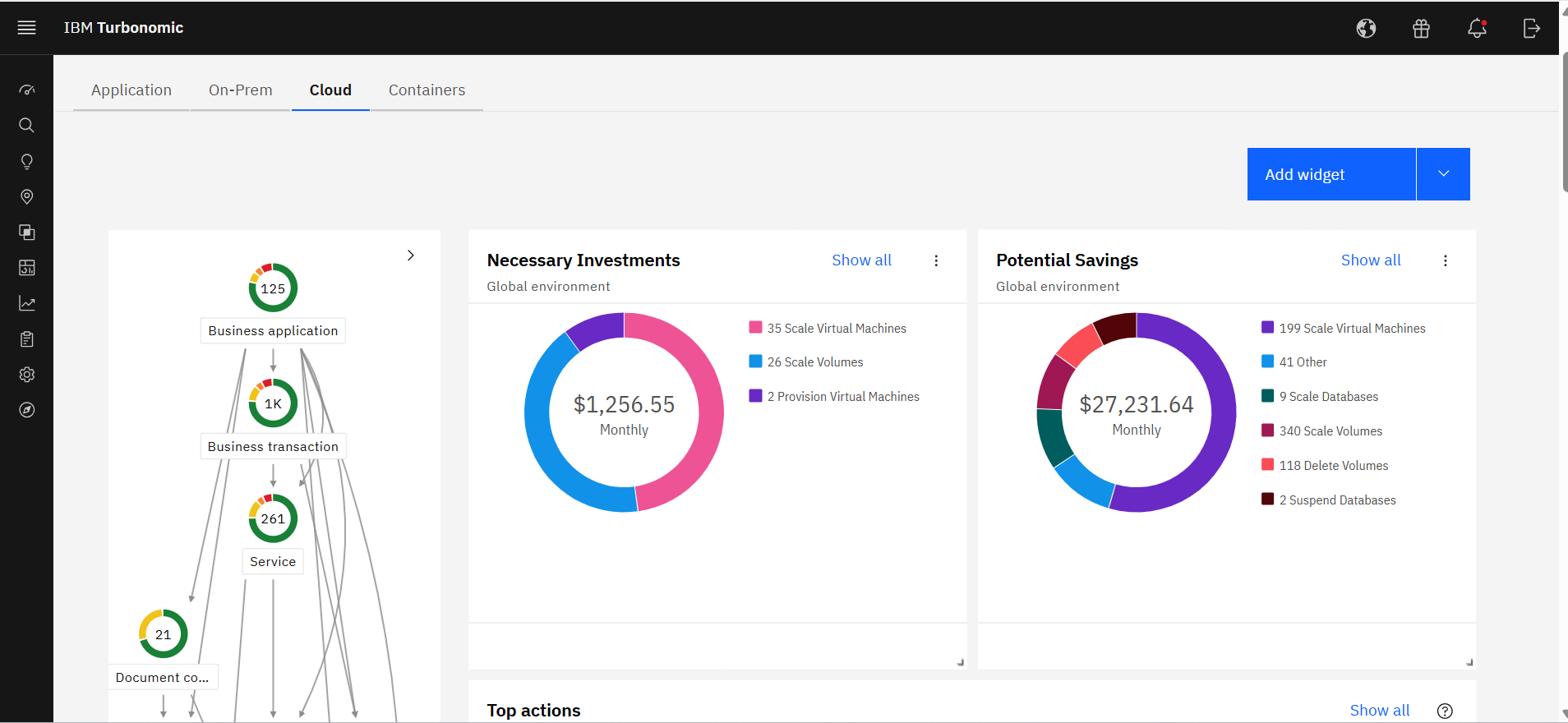
It allocates resources among applications by showing more on the cost breakdown by cloud service, with metrics on cloud provider information like Azure Management, Identity, Networking, Storage with costs per day, and total services costs. This then could facilitate and show the corresponding actions thereafter upon scaling.
Their customer support team is good and quick to respond. On a couple of occassions, they have helped us in solving some issues which we were finding a tad difficult to comprehend. On a rare occasion, the response was a bit slow but maybe it was because of the festival season. Overall a good experience on this front.
SolarWinds gives good support. I have never had a time when i was working through a support case where I did not get the support I needed for the required issues to be resolved. I have always had resolutions from SolarWinds support. They are top notch. Issues once had are no more.
When I contact support I get a quick response and they are able to solve my problem quickly. I also get a sense that they want to make sure that we are getting value from the product and walk me through whatever steps are needed to accomplish my goals.
I was not involved in the in person training, so i can not answer this question, but the team in my org worked directly with Openshift and able to get the in person training done easily, i did not hear problem or complain in this space, so i hope things happen seamlessly without any issue.
Alex (from VMTurbo) has worked with the product for years and helped develop the product. He was very knowledgeable and was able to provide our support team with details knowledge on how to get our deployment configured correctly as well as help with another VMTurbo POC within another customers environment.
We went thru the training material on RH webesite, i think its very descriptive and the handson lab sesssions are very useful. It would be good to create more short duration videos covering one single aspect of openshift, this wll keep the interest and also it breaks down the complexity to reasonable chunks.
After buying VMTurbo Operations Manager, I was invited to an online user training event. I felt this training was effective and dug just deep enough to be informative yet still keep my attention. Additionally, the webinar was free.
Its really the best product on the market for someone looking to have total control over their VM environment. anyone interested should download a demo and try it, I know you will buy it after you do. It changing the way you have to manage on a daily basis
The implementation was very simple. Just upload an OVA file and power on the VM. Once it comes up enter some networking information and you can then access the web interface. From there, just begin configuring the system for your environment by adding you license and the various virtual environments and storage through the inventory tab
The Tanzu Platform seemed overly complicated, and the frequent changes to the portfolio as well as the messaging made us uneasy. We also decided it would not be wise to tie our application platform to a specific infrastructure provider, as Tanzu cannot be deployed on anything other than vSphere. SUSE Rancher seemed good overall, but ultimately felt closer to a DIY approach versus the comprehensive package that Red Hat OpenShift provides.
The operation began using Nagios XI, after a year of use, and based on the results obtained, we realized that what our client wanted was not fully met. Our client asked us to use WhatsUp, however, SolarWinds covered in a more efficient way what was required by our client (IT) and even more.
As the organization had experience of years in using IBM products, we had the confidence that they will provide us with great support. And we needed a reliable solution as a financial institute to ensure continuous operations. Even though the price was very high, we made the correct decision to go ahead with IBM Turbonomic as the feedback from existing users in the region was very positive. We needed a solution which was capable of handling our automation requirements. All these were green in IBM Turbonomic.
It's easy to understand what are being billed and what's included in each type of subscription. Same with the support (Std or Premium) you know exactly what to expect when you need to use it. The "core" unit approach on the subscription made really simple to scale and carry the workloads from one site to another.
This is a great platform to deployment container applications designed for multiple use cases. Its reasonably scalable platform, that can host multiple instances of applications, which can seamlessly handle the node and pod failure, if they are configured properly. There should be some scalability best practices guide would be very useful
Professional services were always there to guide us in our transformation to the cloud. They understood our business model and then were able to provide guidance on what we needed from the tool.
That is a complicated question and one that's not easy for me to answer. There's a lot of factors that go into all of the stuff that we just don't have an easy way of measuring. And we realize that while we're implementing Red Hat OpenShift, we've tried to start measuring some of that stuff, but we don't have a baseline to go on. So it's hard to say. What I can tell you is general experience with the platform has been extremely positive from the development aspect. Teams have been very, very happy with the speed at which they're able to do stuff. They've been happy with that. The way it works in one environment is exactly the way it works in the next environment because we don't have configuration drift, that type of thing, and has had very positive impacts. But we didn't have a baseline to start with. So I can't talk about getting there faster or anything like that.
VMAN has been used for reports provided to executive-level meetings. These reports showed our growth patterns, allowing for easier decisions on purchasing additional hardware.
VMAN has provided a positive impact on allowing for near real-time monitoring of resources, able to pinpoint when services are using more memory than expected, not running at all, or other options as defined.
VMAN was purchased to help monitor our VMware platform, the added abilities for AWS allowed us to migrate clients from on-prem to cloud-based with the same views.
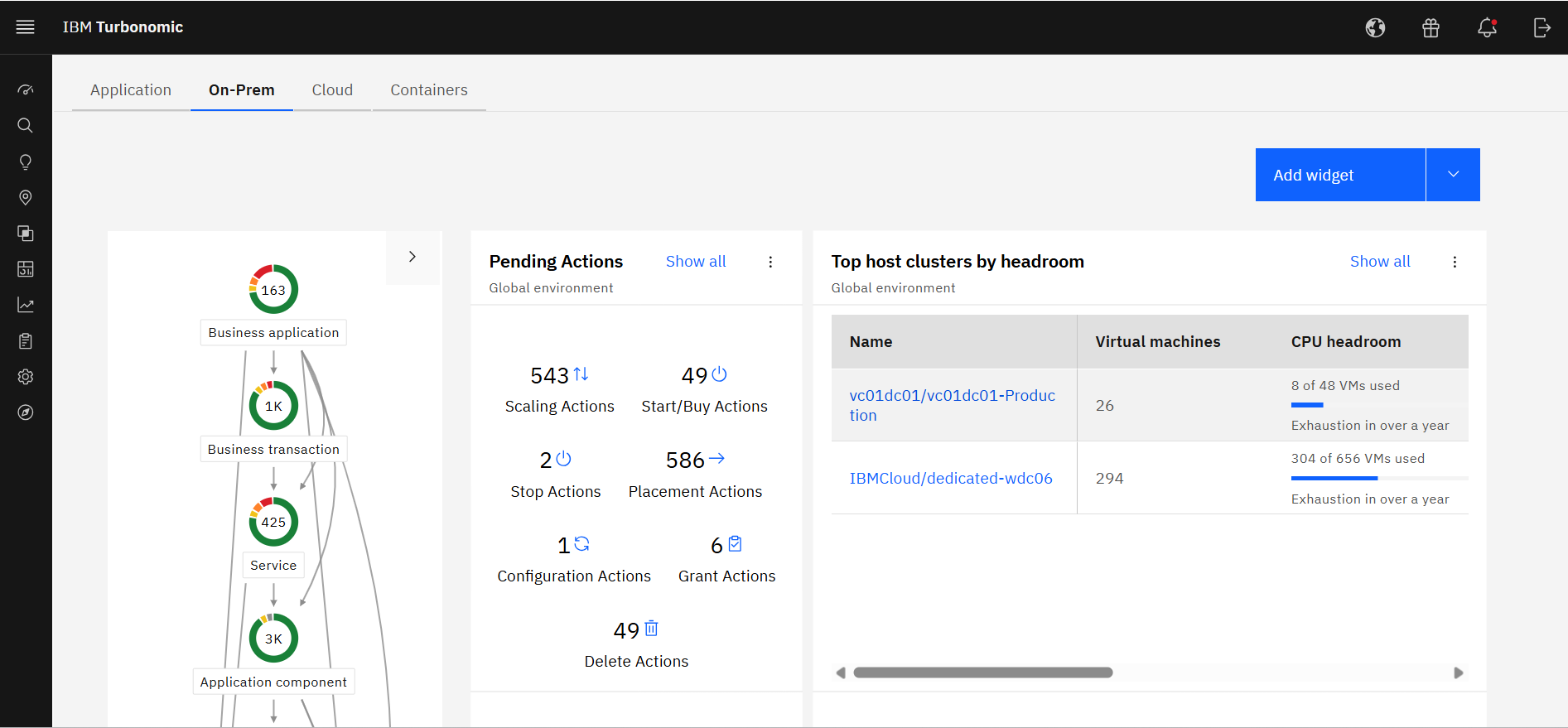
Application performance has been a big one. With Turbonomic keeping everything running at top performance, it can make changes when extra resources are need, quicker than somebody being notified and then making the necessary changes.
Turbonomic has been a great cost savings for us on multiple occasions. We use it every time we are improving servers.
With the planning feature we get the best performance form new hardware purchases