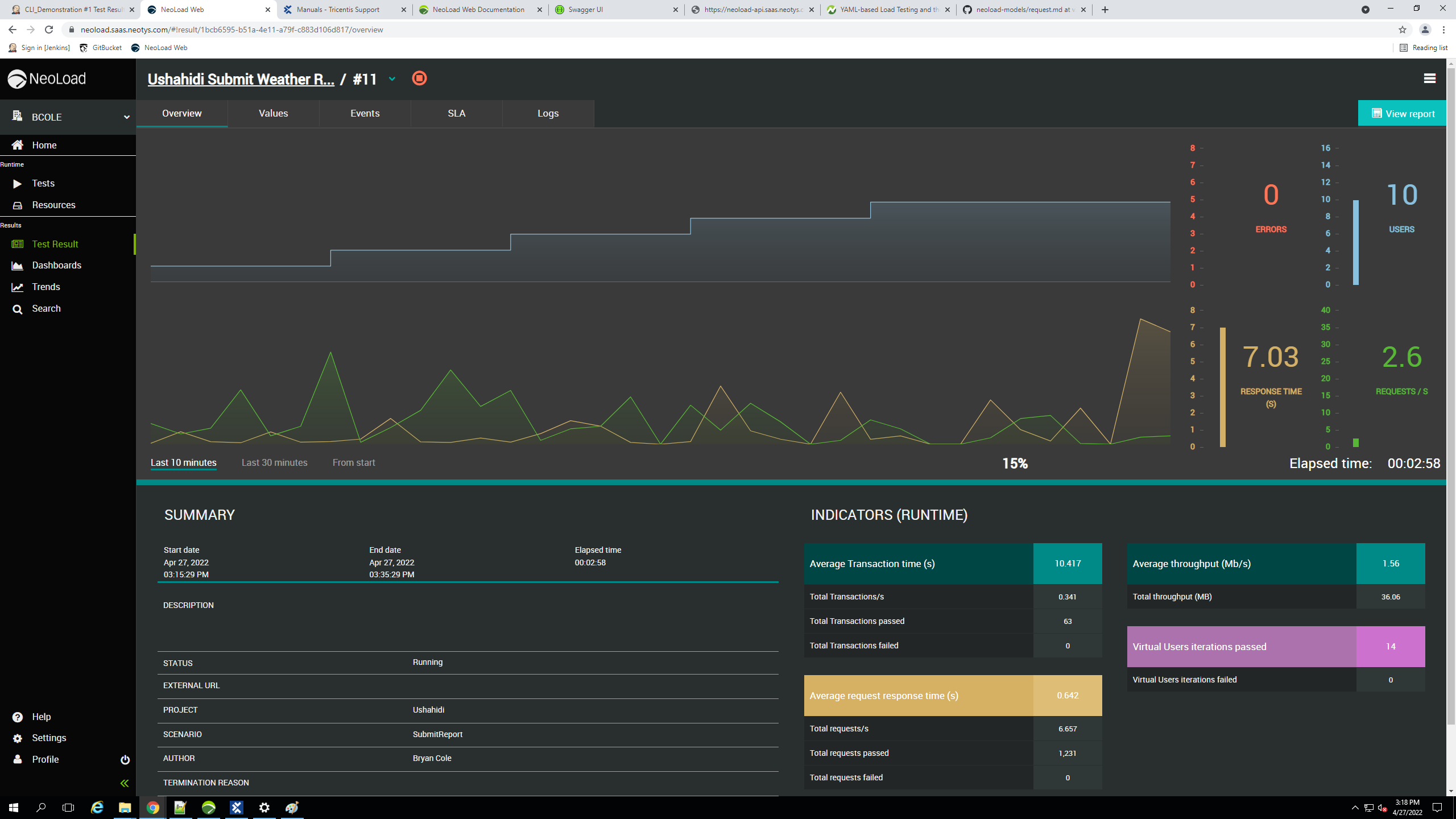
A solution simplifies performance load testing for colocated teams. With project-based capabilities, so teams can quickly identify abnormal application behavior.
N/A
Tricentis NeoLoad
Score8.2 out of 10
N/A
Tricentis NeoLoad is a solution for continuous performance testing software to automate API and application load testing. It was developed by the French company Neotys and acquired by Tricentis, along with the company, in March 2021.
Research Assistant in Engineering at University of San Francisco (Higher Education, 1001-5000 employees)
Chose LoadRunner Professional
The biggest point of using HP LoadRunner is the response time numbers captured after executing the tests were more accurate when we generated the same by using tools like JMeter or NeoLoad though it involves a certain licensing cost but what [we] needed was trust and accuracy …
A de minimis incentive was given to thank the reviewer for their time. The incentive was not used to bias or drive a particular response, nor was the incentive contingent on a positive endorsement. More Info
Associate QA Manager/Performance Testing Practice in Quality Assurance at Virtusa (Computer Software, 10,001+ employees)
Chose LoadRunner Professional
Most of the above tools are pretty popular in the industry. These are tools that are way cheaper compared to the industry giant LoadRunner. Yet these tools have their own limitations and drawbacks. In BlazeMeter the user load cannot be modified during the test run. JMeter and Bl…
A de minimis incentive was given to thank the reviewer for their time. The incentive was not used to bias or drive a particular response, nor was the incentive contingent on a positive endorsement. More Info
Performance Test Manager in Information Technology at Conduent (Information Technology & Services, 10,001+ employees)
Chose Tricentis NeoLoad
1. Tricentis NeoLoad is Cheaper Cost... significantly 2. Tricentis NeoLoad Script Development Learning Curve 3. Tricentis NeoLoad is more comprehensive with all Communication Protocols included in base Tool and no need to Purchase Additional Protocol Specific Add-Ons.
A de minimis incentive was given to thank the reviewer for their time. The incentive was not used to bias or drive a particular response, nor was the incentive contingent on a positive endorsement. More Info
Software Engineer - Tech Lead in Information Technology at UPMC (Hospital & Health Care, 10,001+ employees)
Chose Tricentis NeoLoad
Because of noted as below points we leaning towards Tricentis NeoLoad over other tools: Easy to use, faster test design, script customization, real time test monitoring, IP spoofing, mobile testing, scalability, easy to setup and maintain, record and playback capability, …
A de minimis incentive was given to thank the reviewer for their time. The incentive was not used to bias or drive a particular response, nor was the incentive contingent on a positive endorsement. More Info
A de minimis incentive was given to thank the reviewer for their time. The incentive was not used to bias or drive a particular response, nor was the incentive contingent on a positive endorsement. More Info
Verified User
Chose Tricentis NeoLoad
Tricentis NeoLoad is easier to use, with simpler steps to follow to record/write test scripts and to design scenarios. It is scalable and comparatively provides overall benefits in a fair cost. Neoload also provides APIs for anyone to leverage and build on top of the existing …
A de minimis incentive was given to thank the reviewer for their time. The incentive was not used to bias or drive a particular response, nor was the incentive contingent on a positive endorsement. More Info
A de minimis incentive was given to thank the reviewer for their time. The incentive was not used to bias or drive a particular response, nor was the incentive contingent on a positive endorsement. More Info
Presales Executive in Information Technology at Corporate Infotech Pvt Ltd (Information Technology & Services, 1001-5000 employees)
Chose Tricentis NeoLoad
Tricentis NeoLoad stacks up against them as it is generally used where there are many websites or applications with large number of users. It is less expensive and provides some additional functionlities than the other tools available in the market. It ensures if any website …
A de minimis incentive was given to thank the reviewer for their time. The incentive was not used to bias or drive a particular response, nor was the incentive contingent on a positive endorsement. More Info
Verified User
Chose Tricentis NeoLoad
NeoLoad is more SAP-centric and offers use cases a lot closer to what we experiment on a daily basis. The main competition in the space would be loadrunner but it lacks the flexibility of NeoLoad, and also comes at a much higher price in a way that would have hurt our …
A de minimis incentive was given to thank the reviewer for their time. The incentive was not used to bias or drive a particular response, nor was the incentive contingent on a positive endorsement. More Info
Test Automation and Performance Test Engineer in Quality Assurance at G. Muth Partners GmbH (Computer Software, 11-50 employees)
Chose Tricentis NeoLoad
In small projects open source tools like JMeter are the hardest competitors because money is a reliable metric. But NeoLoad offers a value in case of reporting and scalability. The standard reports are very comprehensive and easy to understand for stakeholders. It takes much …
A de minimis incentive was given to thank the reviewer for their time. The incentive was not used to bias or drive a particular response, nor was the incentive contingent on a positive endorsement. More Info
Software Performance Architect in Information Technology at Genworth (Insurance, 5001-10,000 employees)
Chose Tricentis NeoLoad
NeolLoad is a less expensive alternative to HP LoadRunner that is also easier to learn and use. NeoLoad supports the same web-based protocols as HP LoadRunner, and, in addition, provides better support for testing mobile applications. In my organization, NeoLoad's main …
A de minimis incentive was given to thank the reviewer for their time. The incentive was not used to bias or drive a particular response, nor was the incentive contingent on a positive endorsement. More Info
Micro Focus LoadRunner and its suite of tools, specifically VuGen works wonderfully for us for all web, http/https and web service calls. We've been able to build tests for near any scenario we need with relative ease. As long as we have crafted up requirements for our scenarios / scripts to managed scope, we've had high success working with scripting and data driving. Our main tests are web service calls - typically chained together to form a full scenario with transactions measuring the journey or a similar (measure along the way) journey through a browser. For web services we will use VuGen and browser we've shifted to Tru Client I have had little-to-no experience scripting against a thick client where a ui-driven test would be required. I know its possible but quite costly due to the need to run the actual desktop client to drive tests. We've been fortunate enough to leverage http calls to represent client traffic.
A de minimis incentive was given to thank the reviewer for their time. The incentive was not used to bias or drive a particular response, nor was the incentive contingent on a positive endorsement. More Info
While Tricentis NeoLoad supports SAP GUI protocols, recording and maintaining test scripts for complex SAP transactions (like those in the OTC module) can be cumbersome.
For instance, we had challenges recording a VA01 (Sales Order Creation) transaction because of the dynamic nature of SAP screen fields and session handling. NeoLoad sometimes struggles to properly correlate or handle SAP’s SAPGUI Dynpro fields automatically.
A de minimis incentive was given to thank the reviewer for their time. The incentive was not used to bias or drive a particular response, nor was the incentive contingent on a positive endorsement. More Info
A de minimis incentive was given to thank the reviewer for their time. The incentive was not used to bias or drive a particular response, nor was the incentive contingent on a positive endorsement. More Info
With Tricentis NeoLoad, we have control on the test dynamically. One can alter user count/volume even when test is in progress. This makes it a very cool tool as you can avoid running multiple tests eventually saves a lot of time.
Tricentis NeoLoad user paths are very well structured. End points can be identified and tweaked easily especially when a large list of endpoints are part of the neoload project.
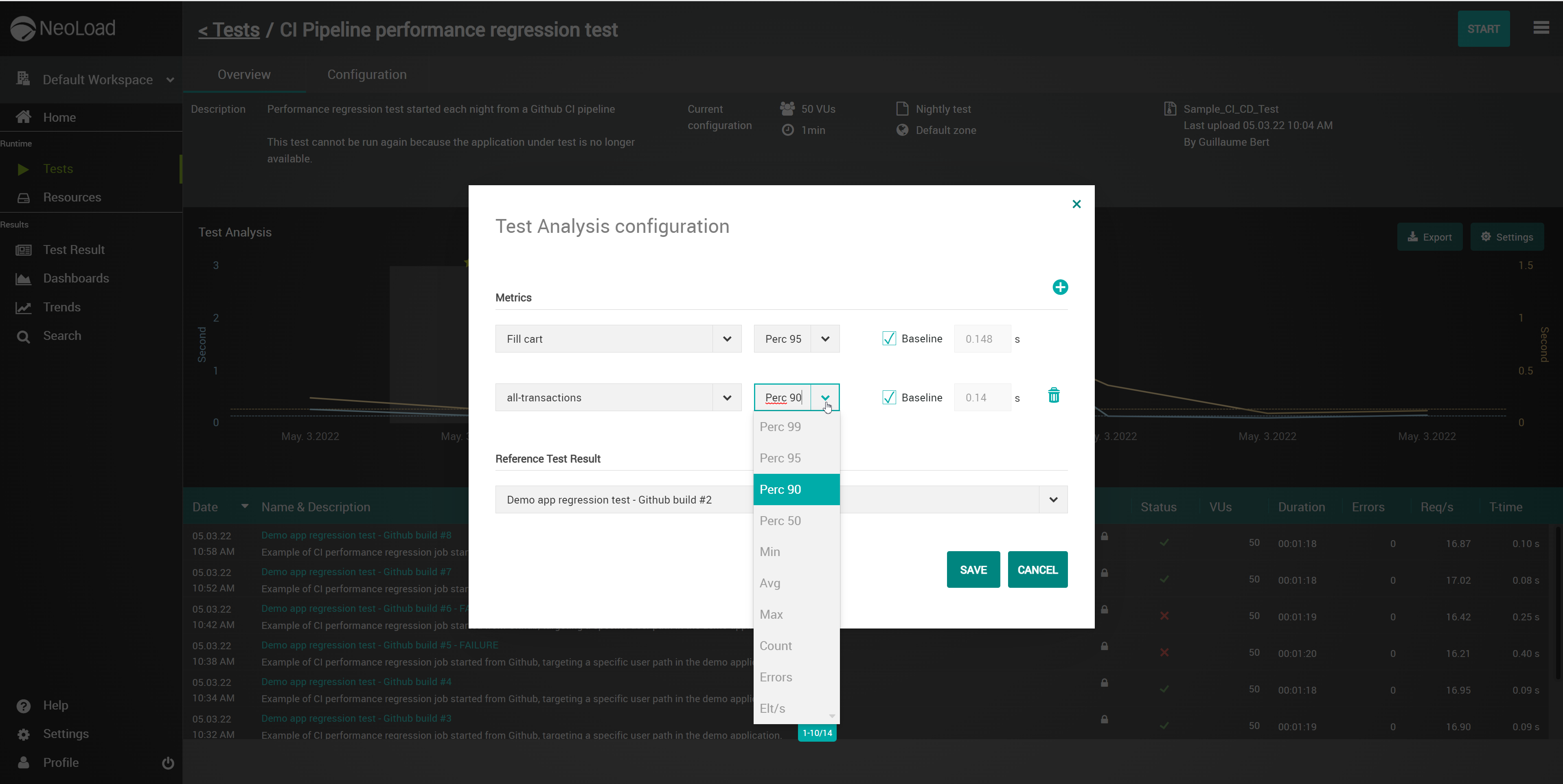
Tricentis NeoLoad results comparison is one of the cool options. We can compare previous tests against the current one to see the exact delta between transaction metrics. This helps in gauging the application behaviour with changes deployed
A de minimis incentive was given to thank the reviewer for their time. The incentive was not used to bias or drive a particular response, nor was the incentive contingent on a positive endorsement. More Info
HP LoadRunner with new patches and releases sometimes makes no longer support older version of various protocols like Citrix, which makes the task time-consuming when using older versions of LoadRunner for some of the cases. So it should support older version as well while upgrading.
Configuring HP LoadRunner over the firewall involves lots of configuration and may be troublesome. So, there should be a script (power shell script for Windows or shell script for Linux users) to make it easy to use and with less pain.
I would like to see the RunTime Viewer of Vugen in HPLoadRunner based on the browser I selected in the run-time configuration to make it feel more realistic as a real user.
Licensing cost is very high when we need to perform a test on application for a specific group of users.
A de minimis incentive was given to thank the reviewer for their time. The incentive was not used to bias or drive a particular response, nor was the incentive contingent on a positive endorsement. More Info
Ease of use: Some users find certain features or aspects of the interface to be confusing or hard to use. Improving the overall usability of the tool could make it more accessible and easier for users to get up and running with it.
Integration with other tools: Tricentis NeoLoad does not have many integrations with other tools. Adding more integrations with popular tools and platforms could make it easier for users to work with Tricentis NeoLoad as part of their overall workflow.
Mobile testing: Some users wish that Tricentis NeoLoad had more robust support for testing the performance of mobile applications. This could include the ability to simulate different mobile devices and networks, as well as the ability to test the performance of native mobile apps.
Cloud support: Tricentis NeoLoad does not have as much support for cloud-based applications and infrastructure. Adding more support for testing the performance of applications hosted in the cloud could be a useful feature for some users.
Advanced scripting capabilities: While Tricentis NeoLoad does offer some scripting capabilities, it would be nice to have more advanced options for customizing and automating load testing scenarios. Adding more advanced scripting capabilities could make it easier for users to create complex load testing scenarios.
A de minimis incentive was given to thank the reviewer for their time. The incentive was not used to bias or drive a particular response, nor was the incentive contingent on a positive endorsement. More Info
We find NeoLoad easy to use compared to their competitors. It requires minimal coding knowledge, also it is easy to train newcomers with NeoLoad. It also offers good integration and automation capability where with less code you can automate your testing process
A de minimis incentive was given to thank the reviewer for their time. The incentive was not used to bias or drive a particular response, nor was the incentive contingent on a positive endorsement. More Info
Customer service is not that great. It's difficult to get hold of someone if an issue is supposed to be addressed on an urgent basis. No online chat service readily available.
A de minimis incentive was given to thank the reviewer for their time. The incentive was not used to bias or drive a particular response, nor was the incentive contingent on a positive endorsement. More Info
This is the only area where we strongly feel Tricentis needs to improve. Their support process is inadequate, representatives are not so capable of providing solutions at one shot without consulting their internal engineering teams. Most importantly, the time they take to resolve simple issues is huge and at many times hampered our work.
A de minimis incentive was given to thank the reviewer for their time. The incentive was not used to bias or drive a particular response, nor was the incentive contingent on a positive endorsement. More Info
A de minimis incentive was given to thank the reviewer for their time. The incentive was not used to bias or drive a particular response, nor was the incentive contingent on a positive endorsement. More Info
A de minimis incentive was given to thank the reviewer for their time. The incentive was not used to bias or drive a particular response, nor was the incentive contingent on a positive endorsement. More Info
When we used Apache JMeter we faced some problems like less documentation is available for integrating tools, and some integrations have not yet been deployed. Very few plugin updates are made. Since customer support is an open source tool, it is a major problem. While Tricentis Neoload provides better documentations and customer services.
A de minimis incentive was given to thank the reviewer for their time. The incentive was not used to bias or drive a particular response, nor was the incentive contingent on a positive endorsement. More Info
The scripts created with traditional web/http protocol are not robust thus re-scripting is required after most every code drop. Troubleshooting and fixing the issue takes more time therefore in most cases we do re-scripting to keep it simple and save time.
In ideal world you would rather spend more time doing testing than scripting in that case mostly you could use an Ajax TruClient protocol. This type of script will only fail when an object in the application is removed or changed completely. This way of scripting will save you more time and helps you maintain the scripts with less re-work effort on a release basis. On the long run you will have a better ROI when you use Ajax TruClient protocol for scripting.
A de minimis incentive was given to thank the reviewer for their time. The incentive was not used to bias or drive a particular response, nor was the incentive contingent on a positive endorsement. More Info
Performance testing is like an insurance. An online store which is not available causes a loss of sales. Without a performance test you do not know if it might happen. The invest into performance tests reduces the risk of loosing sales. The flexible license model of NeoLoad allows or customers to choose reasonable and suiteable rate.
A de minimis incentive was given to thank the reviewer for their time. The incentive was not used to bias or drive a particular response, nor was the incentive contingent on a positive endorsement. More Info