osTicket is an open-source help desk / ticketing platform that can create inquiries online, through email, and through phone calls.
$12
per month
Stackby
Score8.8 out of 10
N/A
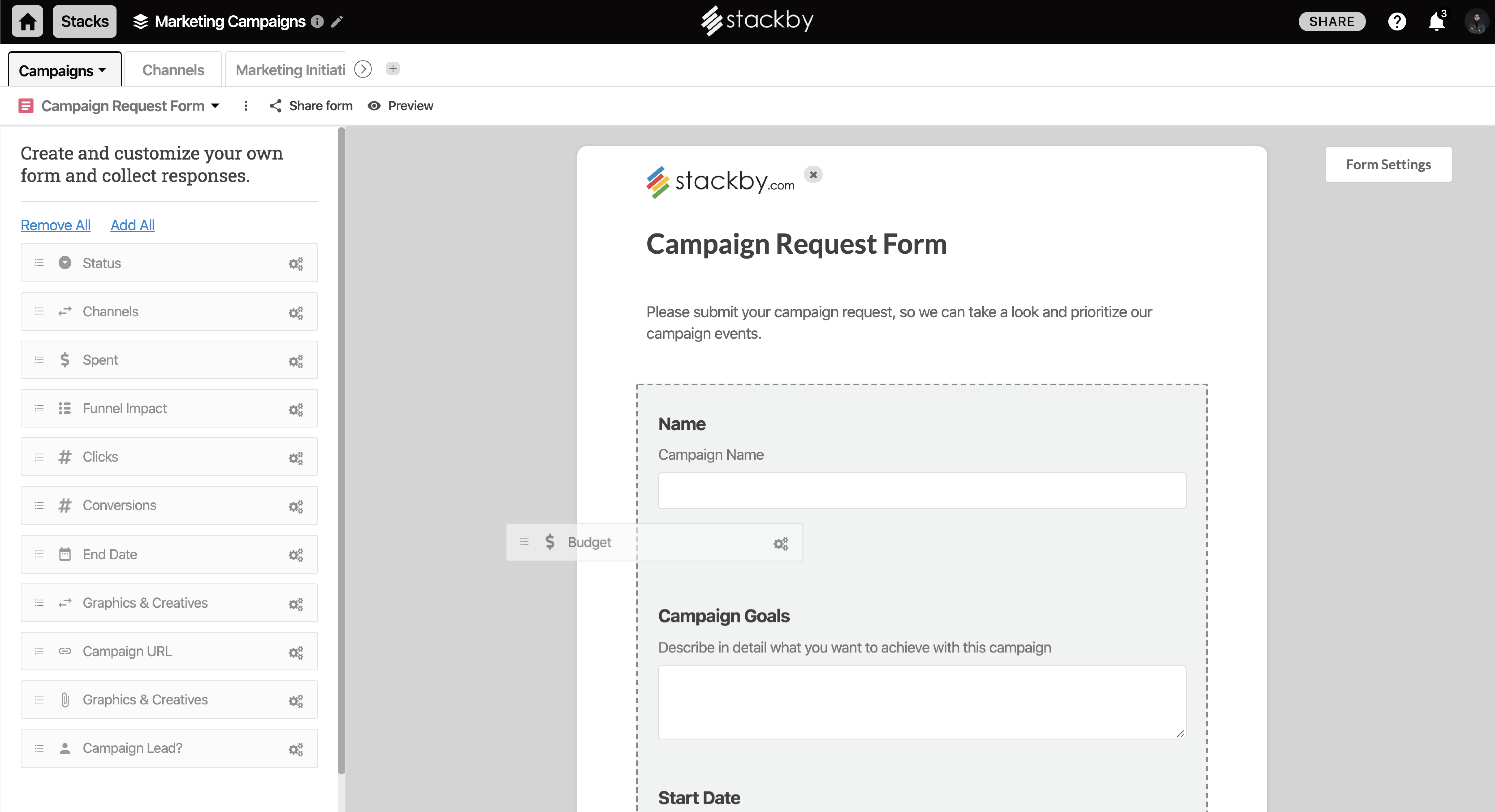
Stackby is designed to bring together the simplicity of spreadsheets, the functionality of databases and integrations with best business APIs to let anyone build their own tools, the way they want. No coding needed. Users can build a database from scratch, import data from pre-existing sources like spreadsheets or Google Sheets, or choose from over 100 pre-built templates across multiple categories. Stackby offers over 25 unique column types like text,…
For beginning smaller companies that are in need of partially automating their incoming requests this product is easy to set up and will assist in structuring these request[s]. These requests can come in via email/phone or web portal. For companies that are beginning to streamline their support procedures, this tool can be a first step into automating part of these processes. This is also how user[s] should see it. It is merely a tool that can assist in structuring the incoming request flow the rest still has to be fit into business processes.
A de minimis incentive was given to thank the reviewer for their time. The incentive was not used to bias or drive a particular response, nor was the incentive contingent on a positive endorsement. More Info
Based on my experience, I can provide specific scenarios where Stackby is well suited and others where it may be less appropriate: Project Management: Stackby is an excellent choice for project management scenarios. Its ability to create custom databases, track tasks, assign responsibilities, and collaborate in real-time makes it highly effective for managing and monitoring project progress. CRM and Sales: Stackby is well suited for managing customer relationships and sales processes. Its customizable database structure allows for organizing customer information, tracking leads, managing deals, and generating reports. The ability to integrate with other tools further enhances its usefulness in CRM and sales workflows. Content Planning: Stackby is a great fit for content planning scenarios. Users can create databases to manage editorial calendars, track content ideas, assign tasks to team members, and monitor content performance. Collaboration features facilitate seamless content collaboration and ensure timely publishing.
osTicket is extremely user friendly for end users and support agents. It's very easy for new end users to put in a service request. This aspect of simplicity is important because we don't have to train new users on how to put in service requests.
Feature wise osTicket has everything you need without being overly complicated or cluttered. This is important for us because it allows for faster support times and happier end users.
Lightweight and very reliable, osTicket uses PHP and MySQL. Setup is easy and it can be hosted internally or externally web hosed. Also, since it relies on PHP it gives you flexibility to use Apache, Nginx , Lighttpd , IIS, etc.
Thriving community: the community behind osTicket is feature-wise. Which is very helpful if you have any questions.
Best of all, osTicket is completely free and open source. While they do offer pair tier cloud-hosting and enterprise support. The free version offers all the features of the paid tiers (minus hosing and support).
A de minimis incentive was given to thank the reviewer for their time. The incentive was not used to bias or drive a particular response, nor was the incentive contingent on a positive endorsement. More Info
Implement the same views available on desktop into the mobile app
Internal automations (like Airtable)
Ability to implement and display info as a dashboard (like Airtable)
Polish up the formatting of formulas, inputting them causes user frustration due to the formula input cursor jumping around
Better intelligence and ease of inputting data in bulk i.e have the fields automatically identify what data is being input and format appropriately (like Airtable does)
I am familiar with osTicket and this allow me to teach all the staff and support them whenever they have any concern regarding the usability and following processes.
Stackby is overall pretty easy to use, especially if you're used to something like Airtable or SmartSuite. Some of the pages seem like near exact clones (though they put their own creative spin on things). I'd prefer a slighty fresher interface (like SmartSuite), but I'm willing to sacrifice that for the better price and great customer service.
A de minimis incentive was given to thank the reviewer for their time. The incentive was not used to bias or drive a particular response, nor was the incentive contingent on a positive endorsement. More Info
osTicket has proven to be a very useful tool for the team to help support the business. Open-source was the right price point and self-hosting as mentioned was quite important (however I believe that osTicket does have a hosting solution available if needed). Jitbit was a close contender but didn't like how it doesn't separate people submitting tickets from users acting as agents. So all in quite happy with the choice.
A de minimis incentive was given to thank the reviewer for their time. The incentive was not used to bias or drive a particular response, nor was the incentive contingent on a positive endorsement. More Info
I have also tried Ora.Pm. Infinity has better graphical interface, but nowhere near as many features and the UI isn't as effective (i.e, moving around with keys). Grist has a much more technical interface and it comes from being more of a database/interactive spreadsheet vs Stackby. Grist has much more functionality in terms of formulas, but is much harder to learn to use and less other functionalities. Ora.PM is more of a test at a task management app, and doesn't compare - Stackby is much better.
When we had a hosted version of osTicket, we were saving some time by having them work on our setup, but we were spending a lot. Switching to our own osTicket build from their open sourcing not only saved us money upfront but we actually spent LESS time developing because we knew our ideas and didn't have to explain them to another (unrelated) party.
Creating our own ticketing infrastructure for institutional data requests has been a game changer for us. We have been able to interface with our enterprise email client and create a level of customization that meets our existing informational technology culture.
A de minimis incentive was given to thank the reviewer for their time. The incentive was not used to bias or drive a particular response, nor was the incentive contingent on a positive endorsement. More Info