Pushpay delivers digital solutions to help churches achieve their missions. Their ChurchStaq, ParishStaq, and Resi Media suites aim to simplify engagement, giving, administration, and video streaming—enabling their 14,500+ customers to increase generosity, drive participation, and build stronger community relationships.
N/A
Agentforce 360 for Nonprofits
Score8.5 out of 10
N/A
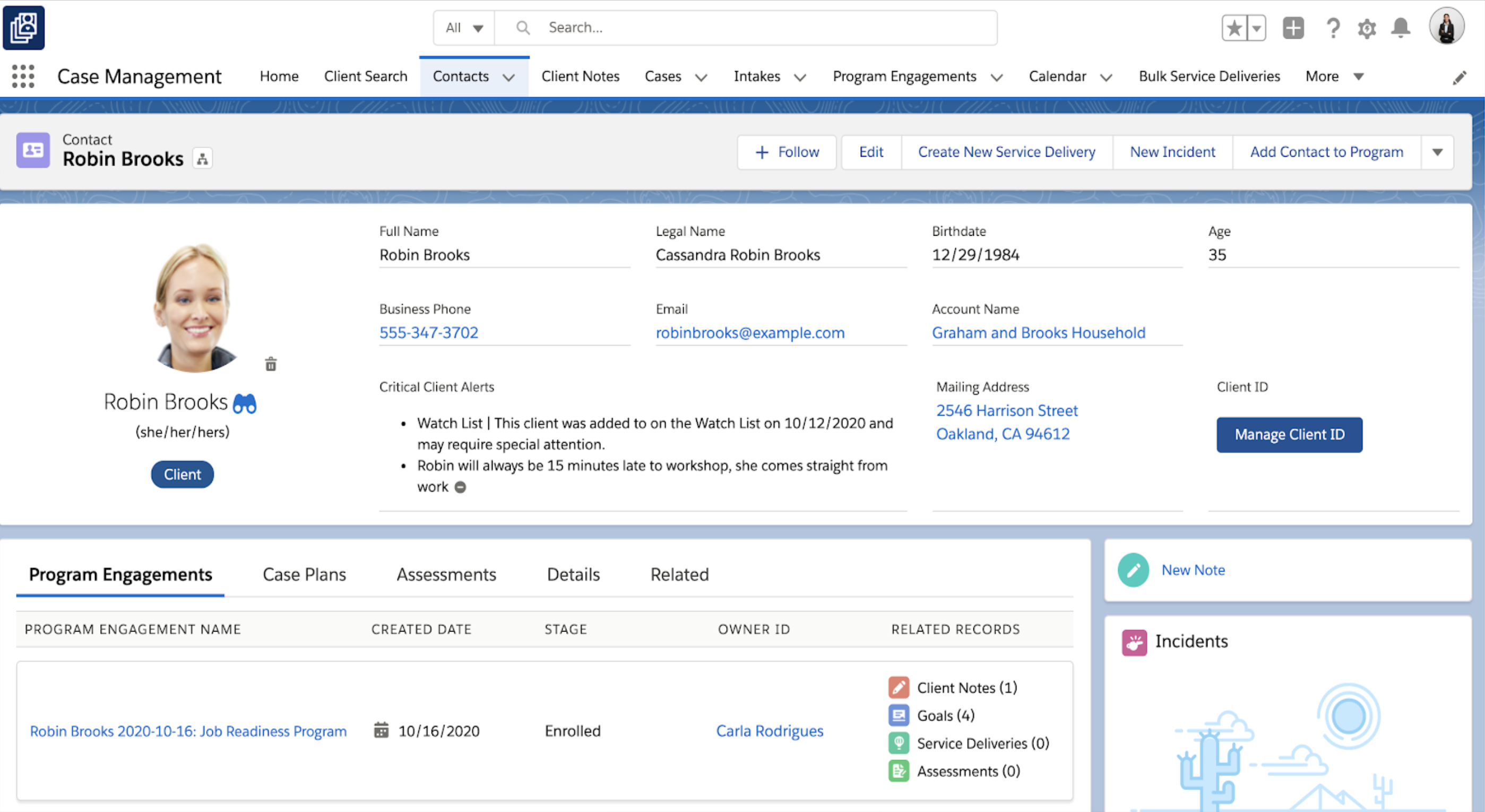
Salesforce for Nonprofits, the Salesforce.org Nonprofit Cloud, is a nonprofit constituent relationship management platform from Salesforce, which supports constituent engagement, fundraising, and grants. Nonprofit editions contain Salesforce Lightning Edition along with the former Nonprofit Success Pack (NPSP) combined.
Pushpay has been fantastic for us in the implementation of events, especially in the processing of registration forms and collecting fees. Pushpay has also been great in helping us receive donations and contributions to the church. Additionally, I have also used Pushpay (specifically, the CRM database) to help in our process of Church Membership (receiving applications, registering attendance at our membership classes, etc).
I’d say it’s very well suited for organizations looking to move toward AI integrations and make more data-driven decisions. As I mentioned, I’ve also used the competing product from Blackbaud, which is a very closed system — you can’t really pull out the data. Salesforce, on the other hand, has a big advantage with its APIs, allowing you to extract data, store it in Data Cloud, and do much more with it. However, if your requirements aren’t clearly defined or if there’s heavy customization involved, the implementation can get messy. So I wouldn’t recommend using Salesforce Nonprofit Cloud in cases where the requirements and structure aren’t clearly laid out.
A de minimis incentive was given to thank the reviewer for their time. The incentive was not used to bias or drive a particular response, nor was the incentive contingent on a positive endorsement. More Info
A de minimis incentive was given to thank the reviewer for their time. The incentive was not used to bias or drive a particular response, nor was the incentive contingent on a positive endorsement. More Info
A de minimis incentive was given to thank the reviewer for their time. The incentive was not used to bias or drive a particular response, nor was the incentive contingent on a positive endorsement. TR verified that a representative sample of customers was invited. More Info
Organizations that are new to Salesforce need to be prepared for report building and other configurations. Customization is a great feature, but it can be overwhelming if not impossible for a brand new user.
Salesforce Trailhead is robust but can be confusing and overwhelming.
I'm currently comfortable with only using Salesforce CMS or any iteration on a desktop.
A de minimis incentive was given to thank the reviewer for their time. The incentive was not used to bias or drive a particular response, nor was the incentive contingent on a positive endorsement. More Info
A de minimis incentive was given to thank the reviewer for their time. The incentive was not used to bias or drive a particular response, nor was the incentive contingent on a positive endorsement. More Info
Salesforce CMS is very intuitive and easy to use. I have not found where it glitches or crashes out. You can tell where data is "supposed to live" and it you aren't sure, there is an easy search function. Support is made readily available.
A de minimis incentive was given to thank the reviewer for their time. The incentive was not used to bias or drive a particular response, nor was the incentive contingent on a positive endorsement. More Info
The access to support is excellent; however, the turnover with assigned account managers has been high over the years, which makes it challenging to build a lasting rapport. There have been some technical and functionality issues communicated over the years which have been received by the account manager. At the time, with responses such as "yes, we know it's an issue, and we're working on that, but we don't have a timeframe." These problems are never resolved, nor are progress reports or follow up ever addressed, then the account manager changes and the cycle starts again.
A de minimis incentive was given to thank the reviewer for their time. The incentive was not used to bias or drive a particular response, nor was the incentive contingent on a positive endorsement. More Info
I have never had bad conversations with any support people with Salesforce but we also have not used them very much. I put it a little less because we are struggling to switch to lightning (some of our custom features do not migrate well) and it feels like the help and support for a little organization is not incredibly helpful unless we want to spend a lot of money.
A de minimis incentive was given to thank the reviewer for their time. The incentive was not used to bias or drive a particular response, nor was the incentive contingent on a positive endorsement. More Info
We had previously used a program called eGiving to receive online payments and contributions, and we have previously used PowerChurch as our CRM, and Pushpay (including its Church Community Builder program) far excels both of these other programs. Pushpay is more user-friendly, and its financial program and its CRM program work much more effectively with one another.
As a cloud native organization with no previous Microsoft infrastructure, Salesforce was a more logical and effective option for us. The suite of products was also far more comprehensive and required less customization. We were able to adopt a "configure not code" approach to our development of systems to support our mission that lowered the cost of upgrades.
A de minimis incentive was given to thank the reviewer for their time. The incentive was not used to bias or drive a particular response, nor was the incentive contingent on a positive endorsement. More Info
Pushpay served as a fine giving platform and allowed for our church to move digitally well.
However, the inordinate fees and costs of their platform ate away at much too large of our donations. With the other platforms out there, it doesn't make sense for us to lock into contracts with excessively high fees.
A de minimis incentive was given to thank the reviewer for their time. The incentive was not used to bias or drive a particular response, nor was the incentive contingent on a positive endorsement. More Info