The Red Hat Ansible Automation Platform (acquired by Red Hat in 2015) is a foundation for building and operating automation across an organization. The platform includes tools needed to implement enterprise-wide automation, and can automate resource provisioning, and IT environments and configuration of systems and devices. It can be used in a CI/CD process to provision the target environment and to then deploy the application on it.
$5,000
per year
Zoho Projects
Score8 out of 10
N/A
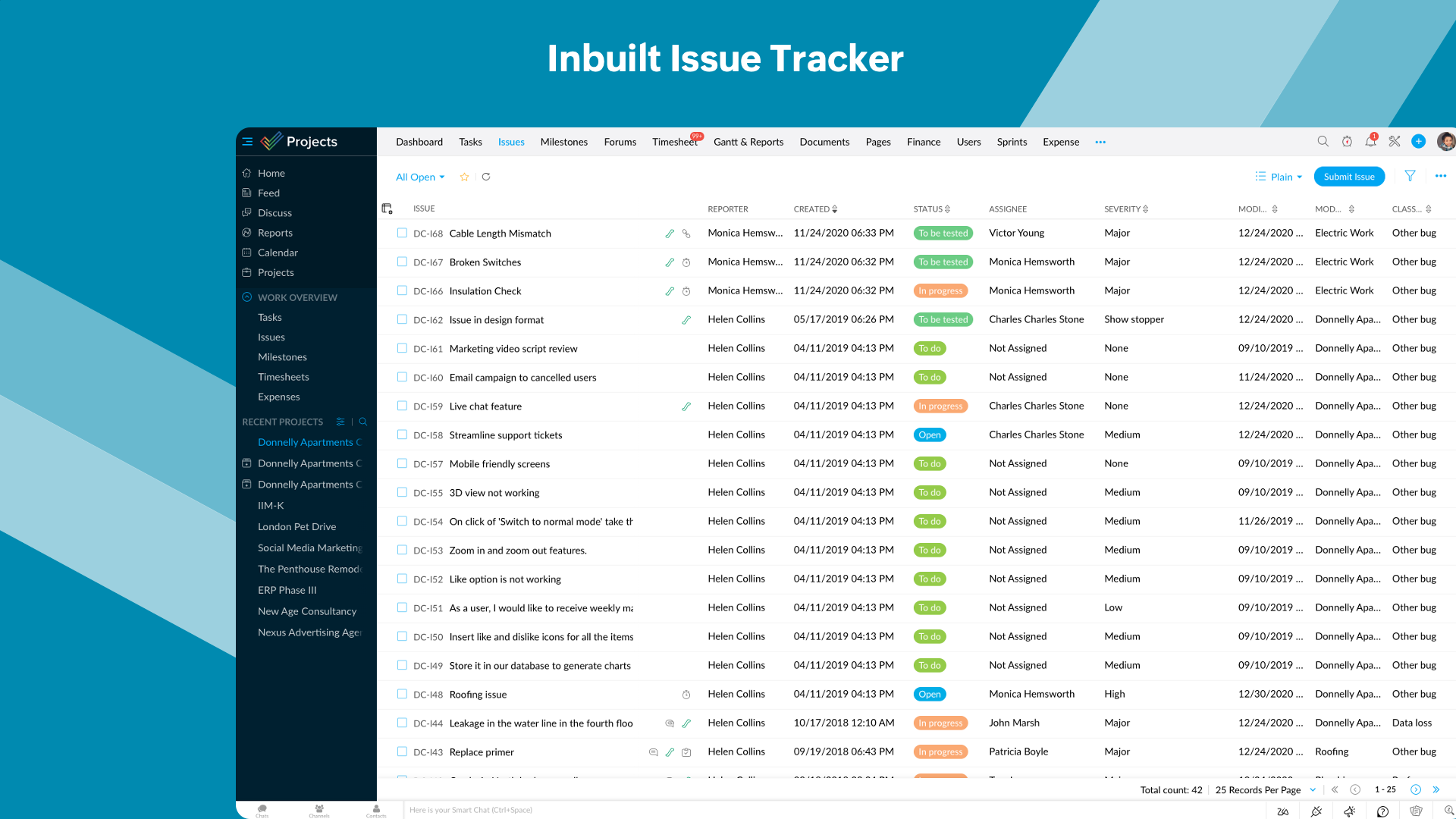
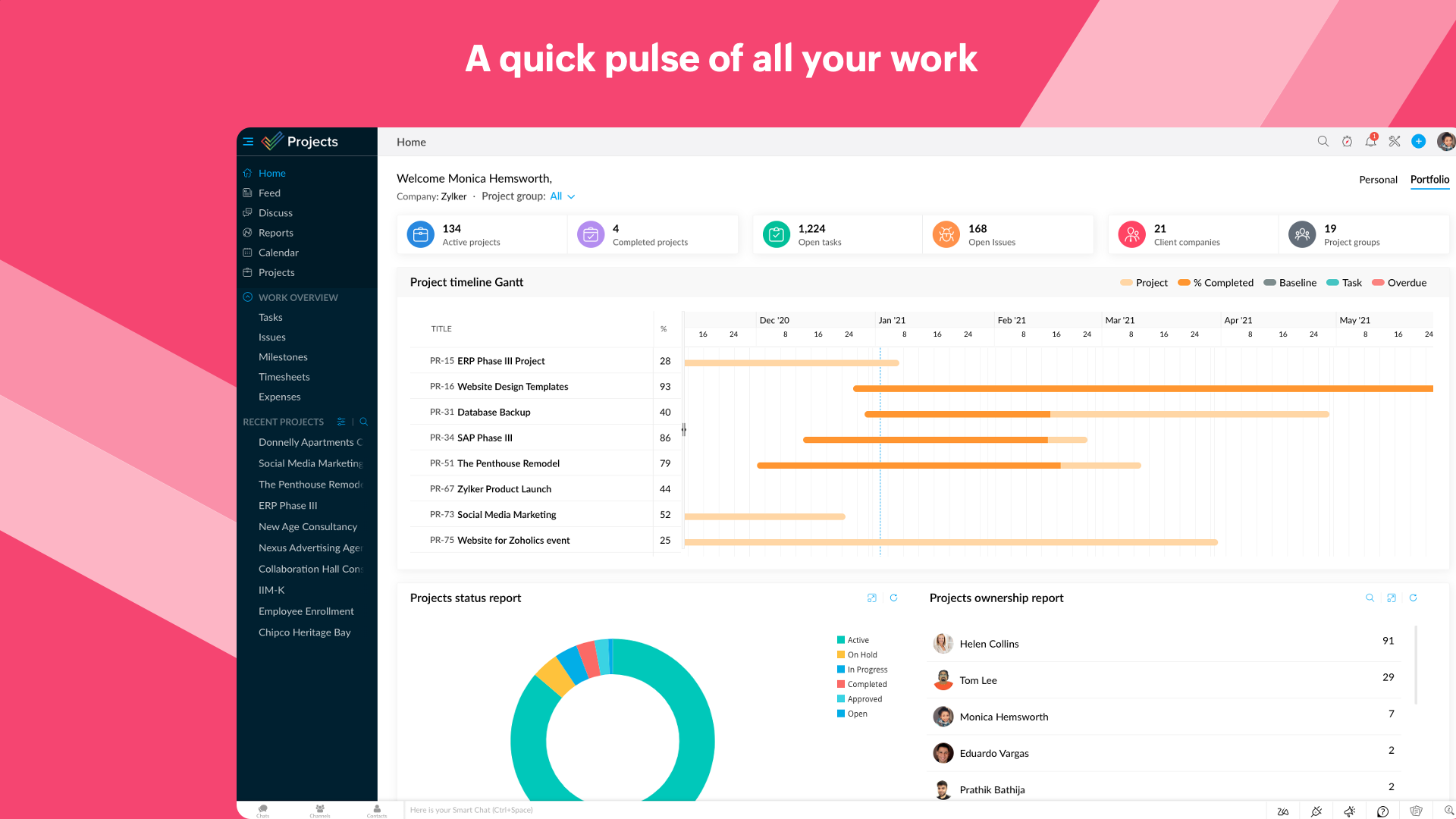
Zoho Project is online project management and planning software that provides project teams with a web-based collaborative environment. Zoho Projects can also include a bug tracking module specifically design to support software development project. It is integrated with other Zoho products including Zoho CRM.
I think it's the best defacto orchestrator for automation because it's so easy to integrate in other tools to it (dynatrace, cyberark, terraform, etc). It is a lot for a new or smaller team to use so I wouldn't recommend it to a new team using Ansible, in that case using Ansible navigator is a better start to understanding playbooks/inventories before diving into the complexity of Red Hat Ansible Automation Platform. EDA also takes a lot of connectivity between Red Hat Ansible Automation Platform and target systems to get working which can be difficult in very locked down envs unless you have approval from many other teams like networking and security.
A de minimis incentive was given to thank the reviewer for their time. The incentive was not used to bias or drive a particular response, nor was the incentive contingent on a positive endorsement. TR verified that a representative sample of customers was invited. More Info
My work involves projects of 5-15 people with numerous projects running simultaneously. Prior to Zoho, I did not have a central location from which to view all project statuses at once. Zoho looks to provide this and also looks like it will deliver. I am anxious to see how our organization's use of it develops. At this time, I feel I am likely to recommend Zoho Projects because my organization has made great software decisions in the past so I have a level of trust already that the research has been done that Zoho is the best solution for our line of work.
A de minimis incentive was given to thank the reviewer for their time. The incentive was not used to bias or drive a particular response, nor was the incentive contingent on a positive endorsement. More Info
A de minimis incentive was given to thank the reviewer for their time. The incentive was not used to bias or drive a particular response, nor was the incentive contingent on a positive endorsement. TR verified that a representative sample of customers was invited. More Info
We use it to manage our sales orders as there are lots of moving parts which are necessary to get client orders done properly.
I use it anytime I have a new idea I want to put into motion. As I can create a list for brainstorming, feedback, specific actions necessary in order to test and or implement the idea.
Unrelated to business, it's a great way to plan travel in order to make sure you don't forget those important things like passport, flight arrangement, client meeting confirmation, and meeting prep as far as what specific documents or things do you need to bring with you.
And since everyone is on the go and expected to keep up with work, the mobile/tablet app makes it a breeze to keep up, work on, and create new projects.
A de minimis incentive was given to thank the reviewer for their time. The incentive was not used to bias or drive a particular response, nor was the incentive contingent on a positive endorsement. More Info
A de minimis incentive was given to thank the reviewer for their time. The incentive was not used to bias or drive a particular response, nor was the incentive contingent on a positive endorsement. TR verified that a representative sample of customers was invited. More Info
We are extremely happy with the use of AAP. It's better than expected, There is almost no limit when thinking of automation. The only problem is that the day to day is consuming a big part of our time. Patching and checking vulnerabilities are virtually killing us. But we can only improve with AAP.
A de minimis incentive was given to thank the reviewer for their time. The incentive was not used to bias or drive a particular response, nor was the incentive contingent on a positive endorsement. TR verified that a representative sample of customers was invited. More Info
I've reviewed about 8 other project management solutions and Zoho Projects is the best I've seen without being overly complicated. Zoho Projects keeps getting better! Recent new enhancements makes it even easier to navigate. There are new keyboard shortcuts that cut my time way down. The tools are very easy to use.
Everything has room for improvement, but Ansible is the best tool out there for what it does and what it can do. There are plenty of features and capabilities that can be added, but it's just a matter of time before it happens.
A de minimis incentive was given to thank the reviewer for their time. The incentive was not used to bias or drive a particular response, nor was the incentive contingent on a positive endorsement. More Info
Zoho Projects is an easy project management tool to use. It provides all the functionality that we required for handling projects. We can easily create personal forms for projects and tasks, allowing us to add and report on our own desire. Apart from this we can create and edit documents in real time which saves our time. This allows us to share text docs, presentations, tables with the whole team and we can work on them together
A de minimis incentive was given to thank the reviewer for their time. The incentive was not used to bias or drive a particular response, nor was the incentive contingent on a positive endorsement. More Info
Great in almost every way compared to any other configuration management software. The only thing I wish for is python3 support. Other than that, YAML is much improved compared to the Ruby of Chef. The agentless nature is incredibly convenient for managing systems quickly, and if a member of your term has no terminal experience whatsoever they can still use the UI.
A de minimis incentive was given to thank the reviewer for their time. The incentive was not used to bias or drive a particular response, nor was the incentive contingent on a positive endorsement. More Info
There is a lot of good documentation that Ansible and Red Hat provide which should help get someone started with making Ansible useful. But once you get to more complicated scenarios, you will benefit from learning from others. I have not used Red Hat support for work with Ansible, but many of the online resources are helpful.
A de minimis incentive was given to thank the reviewer for their time. The incentive was not used to bias or drive a particular response, nor was the incentive contingent on a positive endorsement. More Info
Although it might lack intuitiveness, once you get a hang of how Zoho Projects works, you can do a LOT. The impact good project management has on profitability is huge, and it has helped not only improve communication and coordination when working on a project, but more importantly have adequate tracking of time, due dates and potential bottle necks
A de minimis incentive was given to thank the reviewer for their time. The incentive was not used to bias or drive a particular response, nor was the incentive contingent on a positive endorsement. More Info
A de minimis incentive was given to thank the reviewer for their time. The incentive was not used to bias or drive a particular response, nor was the incentive contingent on a positive endorsement. More Info
AAP compares favorably with Terraform and Power Automate. I don't have much experience with Terraform, but I find AAP and Ansible easier to use as well as having more capabilities. Power Platform is also an excellent automation tool that is user friendly but I feel that Ansible has more compatibility with a variety of technologies.
A de minimis incentive was given to thank the reviewer for their time. The incentive was not used to bias or drive a particular response, nor was the incentive contingent on a positive endorsement. More Info
Zoho Projects provides a more limited set of functionality and customization options than other task/bug trackers on the market, but what it lacks in functionality it makes up for in ease of use. It probably has 80-90% of the features of its competitors but takes about a third of the time to get up and running and realizing value.
A de minimis incentive was given to thank the reviewer for their time. The incentive was not used to bias or drive a particular response, nor was the incentive contingent on a positive endorsement. More Info
First, it keeps our entire server infrastructure aligned with our standards and reduces the time and effort needed to maintain our systems.
Automate routine IT tasks to save time, reduce errors, and ensure every server is configured and updated consistently.
Tasks that used to take our teams weeks to complete manually now run automatically and reliably, with full visibility, making our infrastructure management more effective and our compliance tracking much easier.
A de minimis incentive was given to thank the reviewer for their time. The incentive was not used to bias or drive a particular response, nor was the incentive contingent on a positive endorsement. TR verified that a representative sample of customers was invited. More Info
We needed a system to organize our growing business, so anything was better than what we had, which was nothing.
Recording time spend is a huge reason for using project software. It has made me aware of the tasks that are taking too long and where we are not being profitable as a company.
It has kept our team accountable for what needs to get completed and when projects are not in motion or completed timely. It's helpful to know in order to get billing out faster.
A de minimis incentive was given to thank the reviewer for their time. The incentive was not used to bias or drive a particular response, nor was the incentive contingent on a positive endorsement. More Info