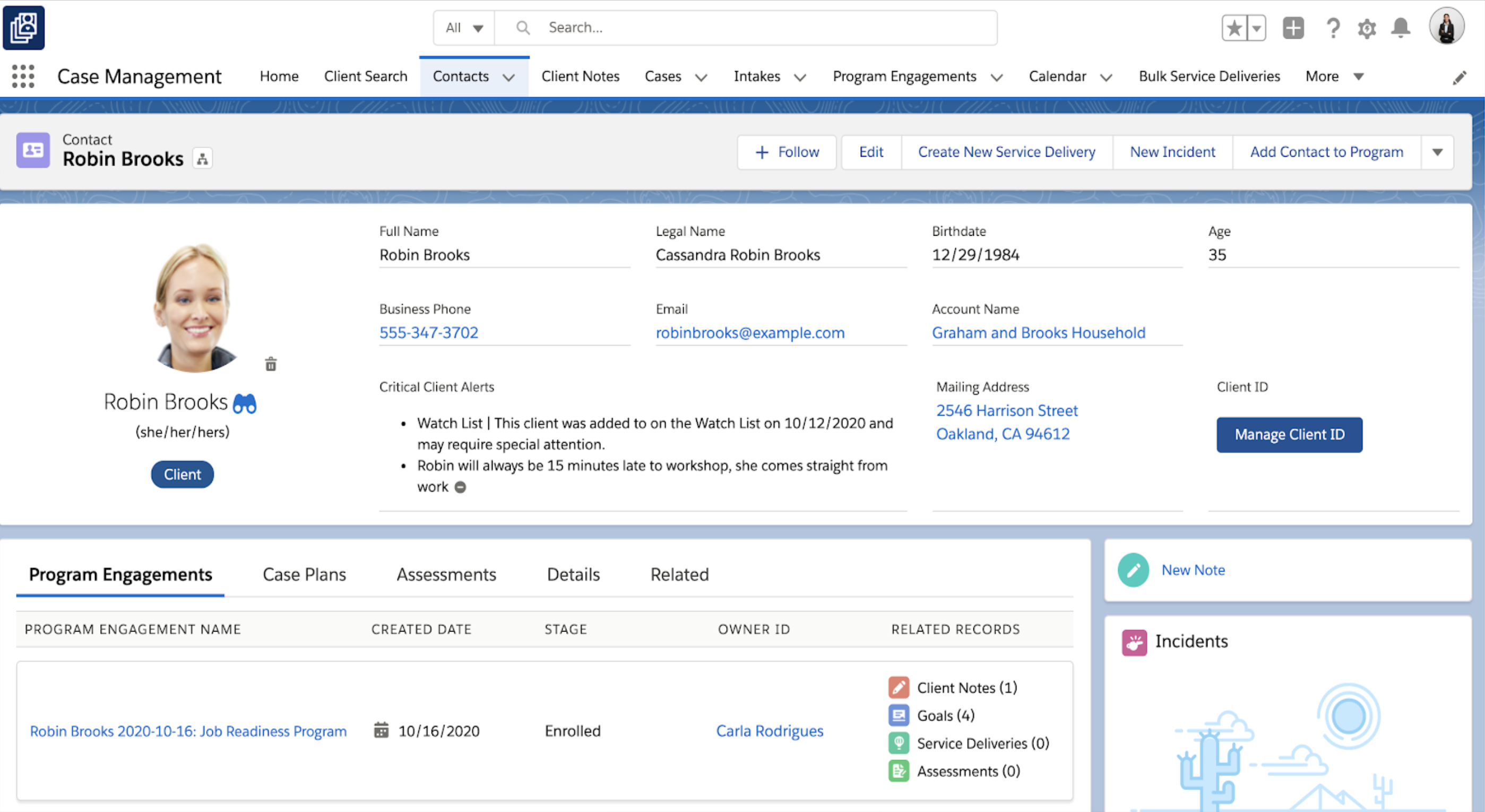
Salesforce for Nonprofits, the Salesforce.org Nonprofit Cloud, is a nonprofit constituent relationship management platform from Salesforce, which supports constituent engagement, fundraising, and grants. Nonprofit editions contain Salesforce Lightning Edition along with the former Nonprofit Success Pack (NPSP) combined.
$36
per month per user
Slate for Advancement
Score 8.4 out of 10
N/A
Slate for Advancement is a CRM built exclusively for higher ed advancement and alumni offices. A license to Slate for Advancement is unlimited -- no additional add-ons or costs. Slate enables users to create a personalized constituent experience at scale with custom giving forms, donor portals, video messages, phone calling, and directories. Users can automate processes at scale while having control and access at every level of the system. And the platform includes inbuilt reporting.
I’d say it’s very well suited for organizations looking to move toward AI integrations and make more data-driven decisions. As I mentioned, I’ve also used the competing product from Blackbaud, which is a very closed system — you can’t really pull out the data. Salesforce, on the other hand, has a big advantage with its APIs, allowing you to extract data, store it in Data Cloud, and do much more with it. However, if your requirements aren’t clearly defined or if there’s heavy customization involved, the implementation can get messy. So I wouldn’t recommend using Salesforce Nonprofit Cloud in cases where the requirements and structure aren’t clearly laid out.
What features/functionality pushed your team to select Slate for Advancement? The main winning aspect from our perspective was that all touch points of the donors record would be managed, maintained, updated in one location. We would not be reliant on a third-party vendor for main aspect like e-mail or texting or calling or payment processing. Slate for Advancement has an approach to technology that is embracing of our modern world of technology that I have not seen in other vendors. What lessons learned can you share? Any migration for your CRM is a huge change management project. If you don't have a strong project manager onsite then consider bringing one in as a consultant. If you could make the decision again, would it be the same one? Absolutely What peripherals were you able to replace with the Slate solution (giving portal, events mgmt, etc)? Our institution was a little bit different where we had already built out custom solutions for our alumni portal our event management and our honor roll of giving. Being able to replace those with a platform that's supported by a vendor and has a large community of knowledge base that can be leaned on was huge and another main consideration in moving to slate. For us one of the main selling factors was the depth and willingness of the community to support the rest of us in the effort of making slate for advancement successful in our institutions. And this continues to be the case to this day.
Not an easy lift right out of the box unless you completely rule out customization
Not "free to own" even if the grant is free because you'll need about 0.25 FTE to maintain it
Constantly being updated which is cool but many items are "forced" and you must respond
Lots and lots of customization are required to equal many canned solutions available for any one particular feature set (but none of them can cover the breadth and flexibility of SF)
I think Salesforce has so much functionality that it makes it difficult in terms of overall usability. Once you can figure it out, it's a 10/10, it's just getting there. If you're willing to do the work to figure it out then you're golden. For what it's worth, I don't know if you're going to find something with this level of functionality that's easier to figure out
I have never had bad conversations with any support people with Salesforce but we also have not used them very much. I put it a little less because we are struggling to switch to lightning (some of our custom features do not migrate well) and it feels like the help and support for a little organization is not incredibly helpful unless we want to spend a lot of money.
Slate's business model does not assign a person to service your instance of the application. To receive effective support, you MUST engage in the online forums involving the greater Slate community. Once you embrace that model, the support team meets or exceeds any service standards I've experienced over the last 20 years.
As a cloud native organization with no previous Microsoft infrastructure, Salesforce was a more logical and effective option for us. The suite of products was also far more comprehensive and required less customization. We were able to adopt a "configure not code" approach to our development of systems to support our mission that lowered the cost of upgrades.
Slate for Advancement was more customizable, there is more community support, less expensive both overall and they don't overcharge you for phone calls and texts (if I remember correctly, they charge the customer what they are charged for each phone call or text). Overall, Slate for Advancement was the more innovative option. We switched from Banner to Slate for Advancement, with Banner we constantly had to create workarounds for what we wanted to do with the software, we no longer have to do that. If we dream it, Slate for Advancement can most likely do it.