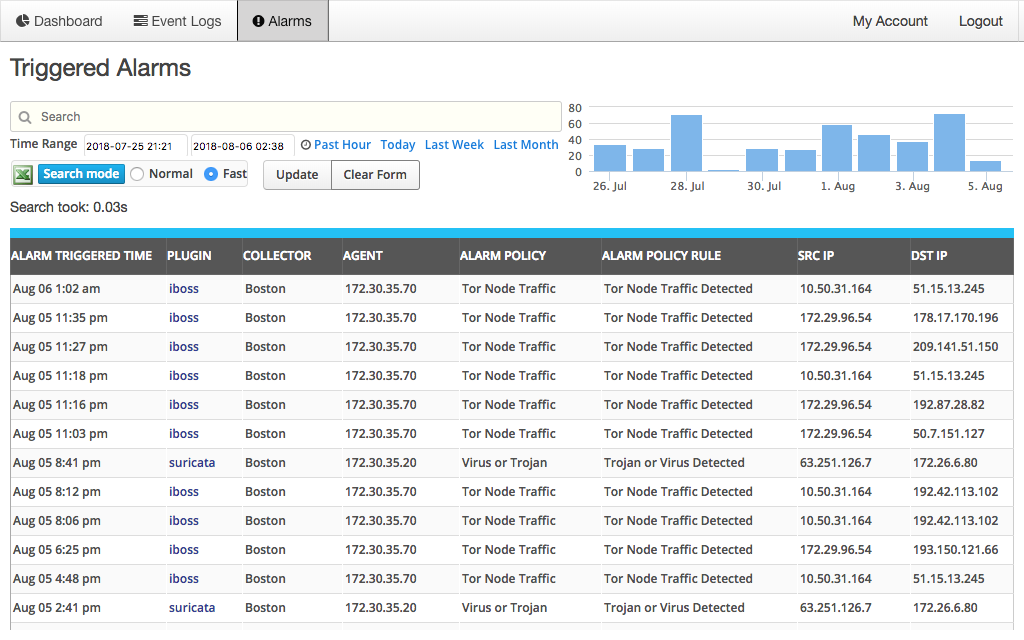
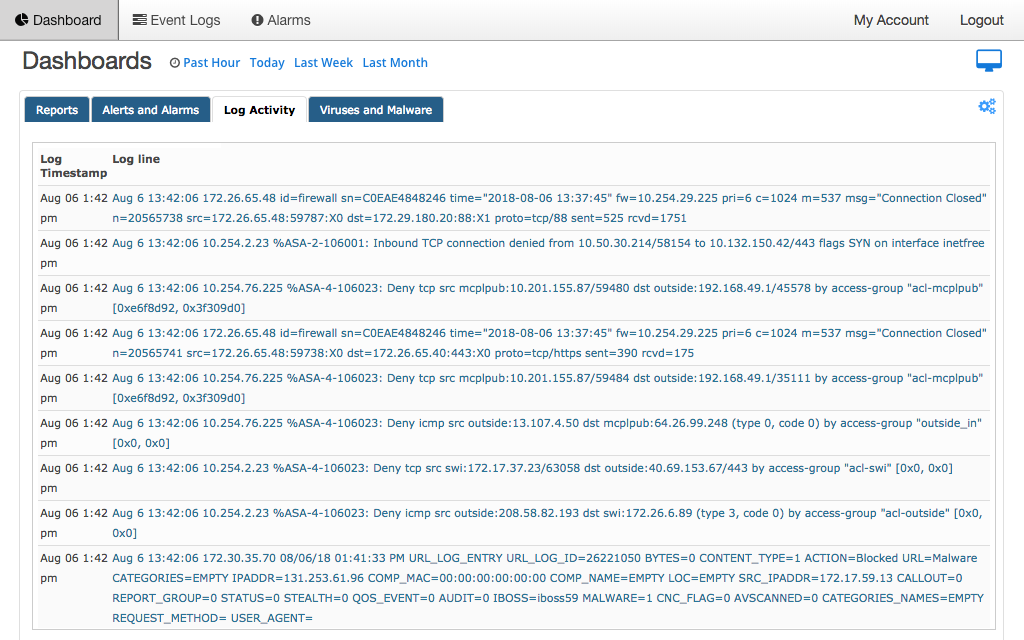
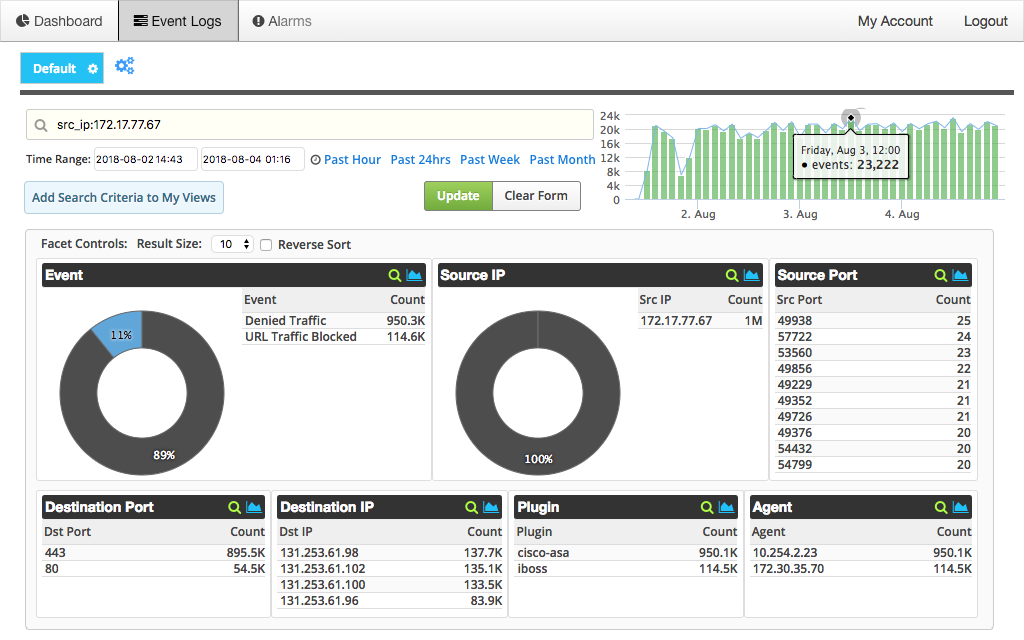
SolarWinds Threat Monitor empowers MSSPs of all sizes by reducing the complexity and cost of threat detection, response, and reporting. You get an all-in-one security operations center (SOC) that is unified, scalable, and affordable.
N/A
Zscaler Private Access
Score 8.9 out of 10
N/A
Zscaler Private Access™ (ZPA) gives users secure access to private apps and OT devices while enabling zero trust connectivity for workloads.
Due to the high price that SolarWinds has, I do not recommend it for small companies. And if I recommend SolarWinds in large companies with complex infrastructures where constant monitoring and review of the network is required, this system is very complete and helps everyone in the technology team, both network administrators, database administrators, Security Administrators, and Server Administrators are all very happy with this system.
Zscaler Private Access works really well in environments setup for FQDNs and where you know what users should/shouldn't be accessing on what ports. You can use Zscaler Private Access to figure out these kinds of features but that doesn't always mean you'll be correct. It also provides a consistent experience for users as they can access their materials anywhere. It also makes the user the last line of defense. If a user's account is compromised then the attacker has access to everything they already did. It doesn't work great in OT environments or Server based environments. Flows have to be initiated from the client and not the server for stuff to behave properly.
Application Segmentation and Listener Configuration - The way applications are defined and listened for is fundamental to ZPA, but can be a source of frustration, especially when dealing with legacy or non-HTTP protocols
The ZCC is the user's primary gateway, but its control over local system network behavior can sometimes clash with enterprise requirements.
The environment feels more secure, and we are seeing that users are adapting to it fast. The fact that we have tools to assist the users with their day-to-day access helps, as we can hand it off to the helpdesk without any escalations to the Network team. It is a work in progress for our agency, but we are seeing the benefits from the solution.
SolarWinds offers live chat support for all its products built-in. So if you are working on something you can just reach out to someone at that time, and usually get an answer pretty quick. If you are trying to get something done it's a lot better than submitting a ticket and waiting for the email response.
Threat Monitor is very new on the scene. Its obviously not at the same level as some of the established vendors yet. We also deploy Alienvault for example and its nowhere near the same level as this, however the cost model between these two products reflects that. Alienvault however does have a physical footprint on the environment, whereas Threat Monitor doesnt. If you have the paitence to wait, Threat Monitor will surely only improve over time.
Well ZPA is a good solution, however everyone has their own advantage and disadvantages, with ZPA you can deploy ZTNA model, which will help you better control on access, however Palo Alto, Fortinet they are also market leading firewall solution, and you can not deny if they are not providing the same features.
The positive impact that this system has on our company is that it has saved us a lot of expenses when it comes to investigating what the bank's network and systems are.
This saving translates into administrators' time when it comes to finding the problem quickly, expeditiously, and effectively.
It has helped us a lot and we have even required fewer hours from external providers when it comes to solving a problem.
Positive: We have now charged users internally for the service
Negative: Dealing with users who also have the Zscaler Client Connector for their company, can cause confusions
Negative: Enabling the Zscaler Internet Access entitlement has been a major headache for us because Zscaler Private Access users can't autheniticate through ZIA on a non corporate device.