Chose SolarWinds Server & Application Monitor
SolarWinds is a lot easier to manage and configure. The web based GUI is nice compared to open source.

| Product | Rating | Most Used By | Product Summary | Starting Price |
|---|---|---|---|---|
 SolarWinds Server & Application Monitor | N/A | SolarWinds Server & Application Monitor (SAM) delivers application and server monitoring capabilities. SAM allows for self-service for easy setup, 1200+ monitoring templates, and customization options, as well as integrate with other SolarWinds products. | N/A | |
 VMware vCenter | N/A | VMware vCenter is an advanced server management software that provides a centralized platform for controlling vSphere environments for visibility across hybrid clouds. VMware vCenter is no longer sold as a standalone product and is now available as a part of VMware Cloud Foundation. | $6,044 per year |
| SolarWinds Server & Application Monitor | VMware vCenter | |||||||||||||||
|---|---|---|---|---|---|---|---|---|---|---|---|---|---|---|---|---|
| Editions & Modules | No answers on this topic |
| ||||||||||||||
| Offerings |
| |||||||||||||||
| Entry-level Setup Fee | No setup fee | No setup fee | ||||||||||||||
| Additional Details | SAM pricing starts at $2,995. | — | ||||||||||||||
| More Pricing Information | ||||||||||||||||
| SolarWinds Server & Application Monitor | VMware vCenter | |
|---|---|---|
| Considered Both Products | SolarWinds Server & Application Monitor  Michael Aguirre Network Administrator Chose SolarWinds Server & Application Monitor SAM provides the base level of monitoring needed to monitor your systems on a hardware and configuration level. We are still looking into getting additional monitoring for SQL that will give indepth reporting on procedural efficiency, and am also considering on expanding to IIS …  Ed Bowling Sr. Systems Administrator Chose SolarWinds Server & Application Monitor While Nagios was an extremely through and capable product, the time required to properly customize the product was discouraging. Once you learn how easy and fast it is to create a custom monitor or custom alert or custom view in Solarwinds, then you are pretty much sold on its … |  VMware vCenter No answer on this topic |
| SolarWinds Server & Application Monitor | VMware vCenter | |||||||||||||||||||||||||||||||||||||||
|---|---|---|---|---|---|---|---|---|---|---|---|---|---|---|---|---|---|---|---|---|---|---|---|---|---|---|---|---|---|---|---|---|---|---|---|---|---|---|---|---|
| Application Performance Management |
|
| SolarWinds Server & Application Monitor | VMware vCenter | |
|---|---|---|
| Small Businesses |  GitLab Score 8.7 out of 10 |  NinjaOne Score 9.1 out of 10 |
| Medium-sized Companies |  ManageEngine Site24x7 Score 9.5 out of 10 | NinjaOne Score 9.1 out of 10 |
| Enterprises | ManageEngine Site24x7 Score 9.5 out of 10 | No answers on this topic |
| All Alternatives | View all alternatives | View all alternatives |
| SolarWinds Server & Application Monitor | VMware vCenter | |
|---|---|---|
| Likelihood to Recommend | 8.8 (278 ratings) | 8.4 (55 ratings) |
| Likelihood to Renew | 8.9 (10 ratings) | 9.0 (1 ratings) |
| Usability | 8.6 (29 ratings) | 7.8 (7 ratings) |
| Availability | 9.9 (3 ratings) | - (0 ratings) |
| Performance | 6.0 (3 ratings) | - (0 ratings) |
| Support Rating | 9.0 (21 ratings) | 9.0 (5 ratings) |
| Online Training | 4.5 (1 ratings) | - (0 ratings) |
| Implementation Rating | 4.5 (3 ratings) | 9.0 (1 ratings) |
| Configurability | 1.0 (2 ratings) | - (0 ratings) |
| Ease of integration | 4.5 (2 ratings) | - (0 ratings) |
| Product Scalability | 9.9 (3 ratings) | - (0 ratings) |
| Vendor post-sale | 4.5 (2 ratings) | - (0 ratings) |
| Vendor pre-sale | 4.5 (2 ratings) | - (0 ratings) |
| SolarWinds Server & Application Monitor | VMware vCenter | |
|---|---|---|
| Likelihood to Recommend | SolarWinds
| VMware by Broadcom
 Manfred B. Zysk Network and Systems Administrator |
| Pros | SolarWinds
| VMware by Broadcom
|
| Cons | SolarWinds
| VMware by Broadcom
 Joe Spradlin IT Manager |
| Likelihood to Renew | SolarWinds
 Derek Benson IT, Network Administrator | VMware by Broadcom
 Rick Lupton Systems Programmer Analyst |
| Usability | SolarWinds
| VMware by Broadcom
|
| Reliability and Availability | SolarWinds
| VMware by Broadcom No answers on this topic |
| Performance | SolarWinds
| VMware by Broadcom No answers on this topic |
| Support Rating | SolarWinds
 Ryhlen Schoeberl System Administrator | VMware by Broadcom
 Adam Friedli Support Analyst Level 2 |
| Online Training | SolarWinds
 Joe Parlett Programmer Analyst | VMware by Broadcom No answers on this topic |
| Implementation Rating | SolarWinds
| VMware by Broadcom
Rick Lupton Systems Programmer Analyst |
| Alternatives Considered | SolarWinds
| VMware by Broadcom
|
| Scalability | SolarWinds
Joe Parlett Programmer Analyst | VMware by Broadcom No answers on this topic |
| Return on Investment | SolarWinds
| VMware by Broadcom
 Muhammad Mulla Systems Administrator, Core Infrastructure & Microsoft Systems |
| ScreenShots | SolarWinds Server & Application Monitor Screenshots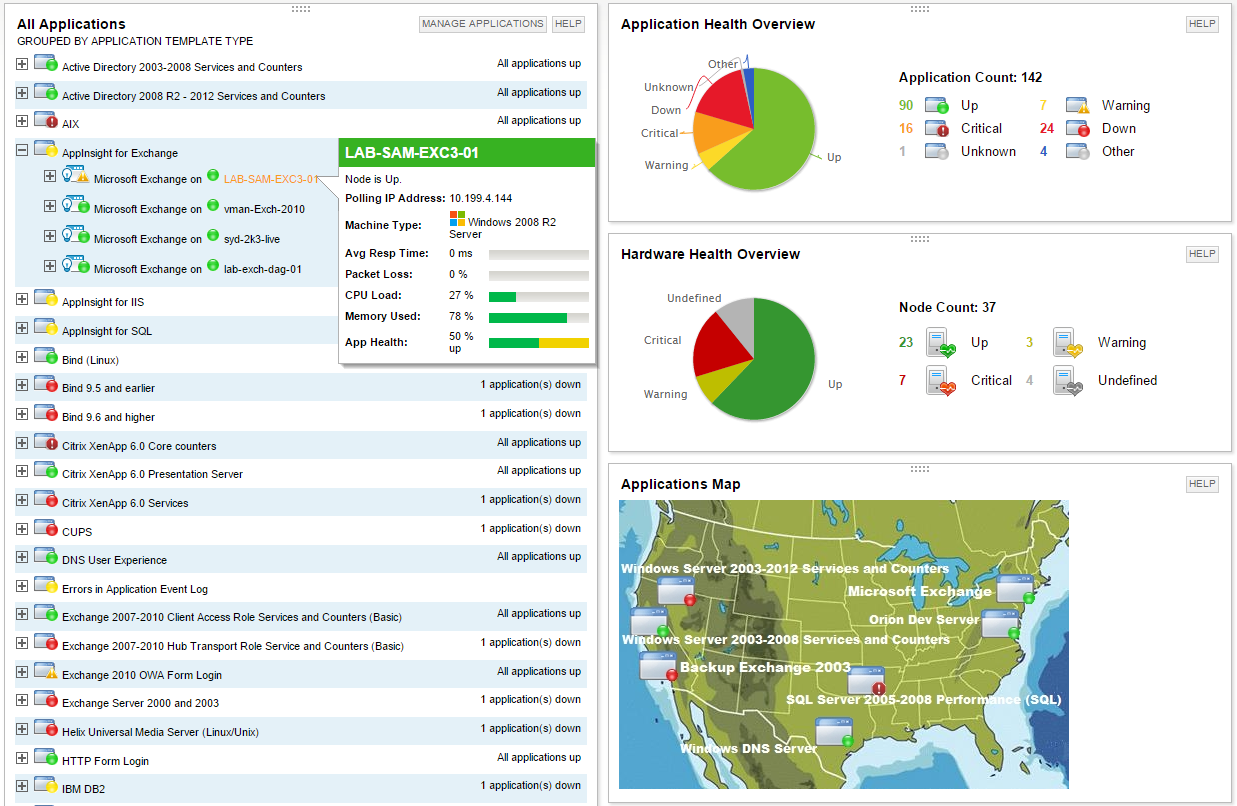      |