Risk Quantifier (RQ) translates cyber risk into clear financial terms, allowing security leaders to prioritize defenses and communicate impact in the language of business. By mapping MITRE ATT&CK techniques and vulnerabilities to financial loss scenarios, RQ enables cost-justified security decisions. Together with TI Ops and Polarity, RQ ensures that operational efforts align to risk-based priorities — bridging the gap between threat activity and executive decision-making.
N/A
UserVoice
Score9.5 out of 10
N/A
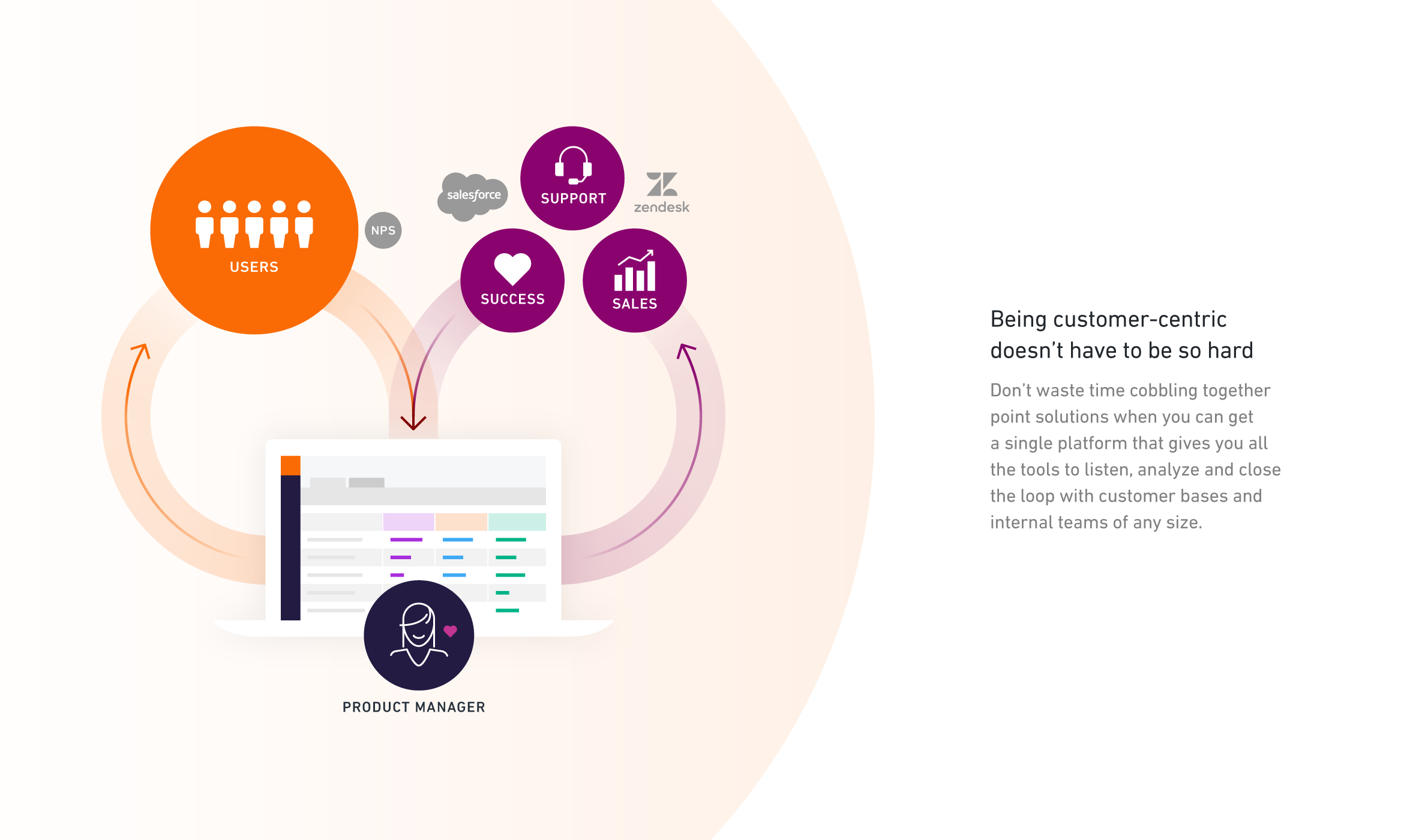
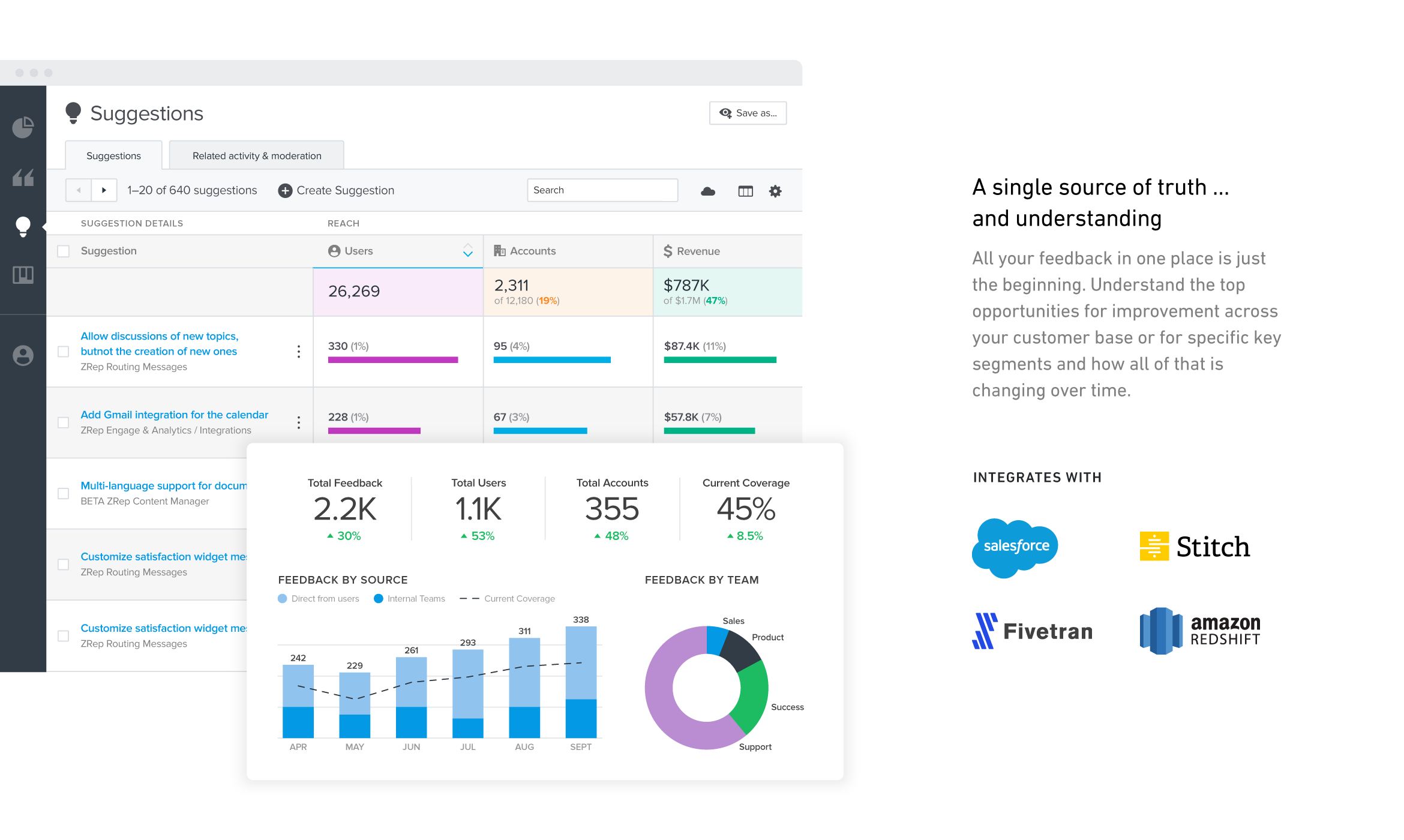
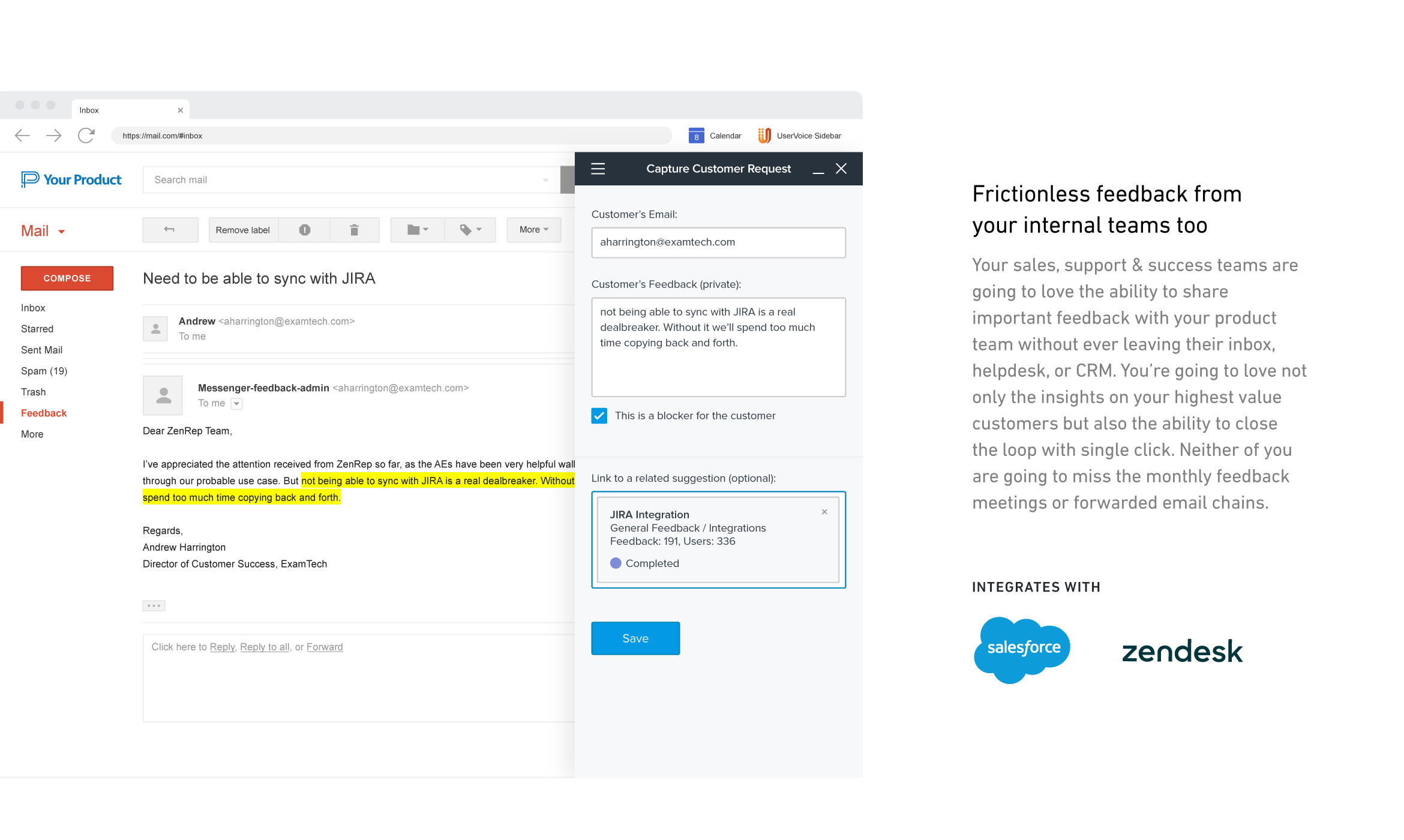
UserVoice collects and organizes feedback from multiple sources to provide a clear, actionable view of user feedback for product teams. With a customizable feedback portal, in-app widget, and direct integrations with your email client, CRM or support tool, it’s easy for your customers and internal team members to share feedback at anytime. The UserVoice platform allows you to manage all this feedback in a single view, analyze your data to make product decisions based on customer…
Well-Suited Scenarios: Reporting to management where financial risk metrics are required. - Vulnerability prioritization when you need to rank issues by real exploit risk and financial/business impact. Less-Appropriate Scenarios: Fast-changing cloud environments where asset data needs updates too frequently for accurate models required all the time. - Incident investigation, as ThreatConnect Risk Quantifier™ (RQ) is not designed for real-time check
UserVoice can be an affordable and powerful tool to start engaging customers and employees. It can help manage the entire feedback loop process. But your product management and development teams still need to do their jobs. Remember to have a response SLA in place and ownership for prioritizing and responding to the feedback.
User interface is very simple. Learning the product and teaching the team how to use the product took hardly any time at all.
Gives visibility into what others are logging. We are able to append 'votes' to certain ideas, rather than having to create an existing idea from scratch.
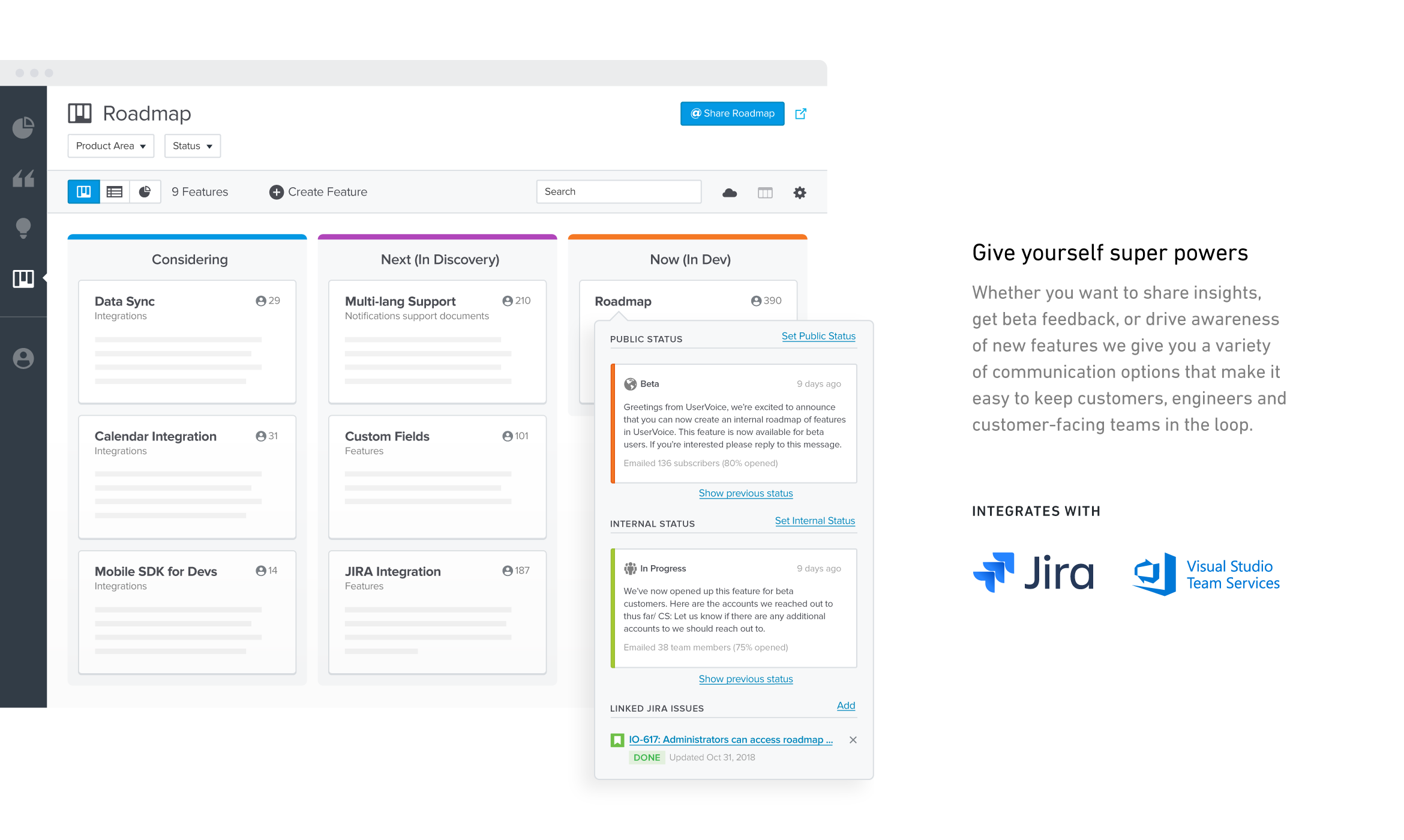
Reporting. Tags allow to easily filter through ideas for roadmap planning.
A de minimis incentive was given to thank the reviewer for their time. The incentive was not used to bias or drive a particular response, nor was the incentive contingent on a positive endorsement. More Info
Dashboards can be customized to offer more options, especially for technical teams that require deeper drill-downs and also more simpler and user-friendly.
Processing large data files can be slow sometimes, especially during large builds or bulk updates.
Risk modules sometimes need manual intervention for multi-client environments, which can be time-consuming.
A de minimis incentive was given to thank the reviewer for their time. The incentive was not used to bias or drive a particular response, nor was the incentive contingent on a positive endorsement. More Info
I rate ThreatConnect Risk Quantifier™ (RQ) an 8 because it’s generally easy to use once the integrations are set up. The dashboards, risk scores, and financial impact metrics are very straightforward and help make quick decisions for executives. However, the initial configuration and model tuning can be a bit complex it's not a perfect 10 for me.
Have clear goals and owners established before you start using any tool like this. Very important to get accounts and rights setup so that there's no lag time in customer response once things go live. Make sure IT is involved if you plan to use the Single-Sign On (SSO) or any of the access control tools.
ThreatConnect Risk Quantifier™ (RQ) stacked up better than RiskLens, better for our organization, is mainly because it integrates directly with our scanners, SIEM, and CMDB, allowing automatic, real-time risk monitoring. It also combines exploit intel, asset value, and vulnerability data more efficiently, giving us clearer technical priorities for the business impact. We chose ThreatConnect Risk Quantifier™ (RQ) because it provides faster, more actionable risk scoring with less manual modeling than RiskLens.
I like the ease of integration into web and mobile apps for UserVoice. It's also a comprehensive bug reporting, user feedback, and knowledge base tool.
A de minimis incentive was given to thank the reviewer for their time. The incentive was not used to bias or drive a particular response, nor was the incentive contingent on a positive endorsement. More Info
A de minimis incentive was given to thank the reviewer for their time. The incentive was not used to bias or drive a particular response, nor was the incentive contingent on a positive endorsement. More Info